The most critical parameter to identify if the solution is acidic or not is pH. What is pH after all? Why is it an important water quality parameter? This article will give a detailed explanation of the meaning of pH, its measurement and its important uses in the industrial field.
What Does pH Stand For?
The origin of the term pH
The pH is a number scale created in 1909 by the Danish chemist Søren Peder Lauritz Sørensen to describe the number of hydrogen ions (H⁺) present in a solution. To put these very small numbers into a more convenient scale, Sørensen devised a logarithmic scale. This scale would be later named the pH scale.
Understanding the meaning of pH value
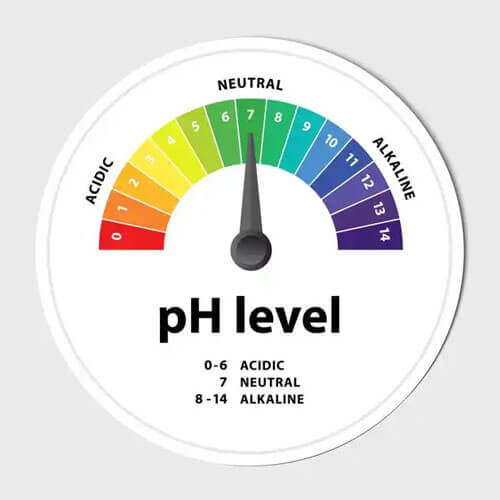
The pH value re indicates the hydrogen ion concentration (H⁺) of a solution. The pH scale is 0-14. The pH of 7 is neutral, below 7 is acidic and above 7 is basic. The equation for the mathematical calculation is pH = −log₁₀[H+].
This is a log scale so that 1 pH change equals a 10 fold change in hydrogen ion concentration. A solution that has a pH of 4 is 10 times more acidic than a solution with a pH of 5, for instance, and 100 times more acidic than a solution with a pH of 6. This is because although the change in pH is numerically small, the chemical differences are quite large.
What is pH and Why Does it Matter? Video from @fairfaxcounty
Hydrogen Ion Activity vs Hydrogen Ion Concentration
In general, people discuss the pH as being the concentration of hydrogen-ions. This explanation is simple and easy to understand and appropriate for the beginning student. The precise definition, however, as accepted by the International Union of Pure and Applied Chemistry (IUPAC), is based on activity, rather than concentration.
The concentration of hydrogen ion is the number of hydrogen ions in a specified volume of solution. For instance, an acid, when dissolved in water, releases hydrogen ions. The more hydrogen ions that are released, the more acidic it is and the lower the pH. For dilute solutions, the concentration of hydrogen ions is a good measure of acidity. That is why many basic explanations of chemistry explain that the pH is a measure of the concentration of hydrogen ions.
The activity of the hydrogen ion is a measure of its effective concentration or its availability in a solution. Hydrogen ions are not found alone in actual solutions. They will react with other dissolved ions, salts, and minerals.
Hydrogen ion activity is directly related to hydrogen ion concentration, but they are not necessarily equal. This relationship is mainly influenced by the chemical environment around the cells. In dilute solutions or water, the concentration of hydrogen ion is a good approximation of the activity concentration of the hydrogen ion. In solutions with high concentrations of dissolved salts or chemicals, however, there can be some significant difference between the hydrogen ion activity and concentration and pH may be more difficult to measure accurately.
Why pH is One of the Most Important Water Quality Parameters?
pH is one of the most common parameters which are kept track of in Chemistry. In many chemical reactions the pH conditions are very critical because the change in the acidity alters the molecular structure, solubility and the pathway of the reaction. For example, in water treatment, controlling pH is critical for chemical precipitation processes and the removal of dissolved metals. The U.S. Environmental Protection Agency (EPA) recommends a pH range of 6.5-8.5 is the ideal range for treated drinking water, as pH values above or below this range can contribute to corrosion, cause impacts on water quality, and can lead to treatment inefficiencies.
pH also plays a crucial role in biological, biochemical systems. Proteins and enzymes will only work at certain pH levels. The blood pH of humans, for instance, is extremely tightly controlled and must remain between 7.35-7.45; outside this pH range, the cells in the body will not work properly.
In industrial chemistry, pH is usually more of a parameter to control the process than just measure it. A wide range of industries, including wastewater treatment, pharmaceutical, food processing, and chemical production, are continuously measuring pH, which is important to ensure the quality of their products and to keep their equipment in good working order. For instance, in many areas, wastewater can be discharged only after the pH has been checked, because too high and too low pH levels can adversely affect the environment.
Hence, pH has been a critical monitoring parameter in the laboratories, environmental systems and industrial processes.
How pH Is Measured: From Litmus Paper to Digital Sensors
pH measurement technology has evolved in four major steps starting from simple measurement to accurate measurement and intelligent online measurement.
1. Litmus paper: the original indicator
The dyeing mixture used to produce litmus paper was derived from lichens and the paper’s history can be traced back to approximately 1300 AD. It will change color from pinkish-red to blue under acidic and alkaline conditions, but only over a narrow pH range (4.5 to 8.3). It will NOT give a “pH value”.
2. Colorimetric indicators or pH test strips
Universal indicator test strips are better than litmus paper as they contain several different dyes giving a range of colours from 0-14 pH and can be compared to a chart to give an estimation of the pH value. They give quicker and more detailed information than litmus paper but reading is still a subjective visual assessment. The accuracy is usually within ±0.5-1 pH unit and they cannot be used for coloured, turbid or opaque liquids.
3. Digital pH meters
The breakthrough was in 1906-1909 when Cremer found the voltage effect of a glass membrane and Haber and Klemensiewicz transformed it into the first “glass electrode. However, due to high internal resistance it was not feasible until 1934 when Arnold Beckman introduced a vacuum-tube amplifier, which created the first commercial pH meter.
A pH meter is much more accurate than chemical indicators at showing a particular pH and is commonly used in a laboratory, in environmental testing and in industry.
4. pH sensors
pH sensors used in industrial and IoT applications (such as Renkeer’s RS-PH-N01-3-*-T series) consist of a glass electrode and a reference electrode. When immersed in a liquid, the glass membrane responds to hydrogen ion activity and generates a small voltage. This voltage varies with changes in pH and is interpreted by a meter or transmitter to display an accurate pH value on the standard 0-14 scale. To obtain reliable measurement results, the pH sensor must be regularly calibrated using buffer solutions of known concentrations and properly maintained, as temperature, contamination, and electrode aging can all affect measurement accuracy.
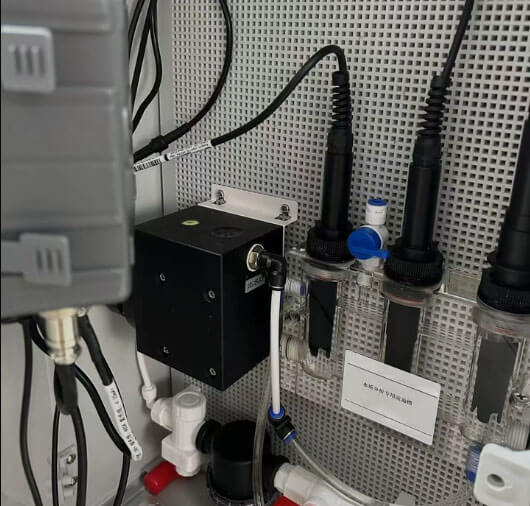
pH buffer solutions are a critical auxiliary medium for pH sensors. These are reference solutions prepared according to standardized procedures, with precisely determined pH values and good stability. During the operation of a pH sensor, buffer solutions are primarily used for sensor calibration.
During calibration, the pH sensor is inserted in a standard buffer solution and the pH scale is adjusted, depending on the difference between the output signal of the electrode and the standard value. A signal drift caused by the aging of the electrodes, environmental changes and long-term use can be compensated by regular calibration.
How Does a pH Sensor Work?
The pH sensor is usually composed of a glass electrode, a reference electrode, and a housing for the two electrodes. The pH sensor is essentially a glass electrode, with the lower part of the glass electrode having a glass membrane that is sensitive to hydrogen ions. The membrane is filled with a buffer solution with a known pH and a reference electrode is installed inside the membrane. The reference electrode is used to give a fixed voltage reference for the measurement. The common reference electrodes are calomel electrode and silver-silver chloride electrode and the reference electrode is placed in the solution under study by a salt bridge. The electrode housing is a housing for the glass electrode and the reference electrode. It is usually of insulating material.
The glass electrode is covered by the glass membrane and the hydrogen ions in the solution react with the glass membrane. The reaction produces a slight potential difference that is proportional to the concentration of hydrogen ions in the solution. This potential difference is converted to an electrical signal by the sensor, passed through a cable to the receiving device.
According to Nernst principle, the relationship between electrode potential and pH response is as follows. A pH electrode with ideal characteristics at a temperature of 25°C produces a theoretical response of ~ 59.16mV per pH unit. The difference in voltage between the measuring electrode and the reference electrode can be used to accurately measure the acidity or alkalinity of a solution.
Temperature compensation in pH measurement
If a solution is being measured, then temperature compensation must be used to reduce the impact of temperature on the measurement of pH. This is because the chemical properties of the solution and the response characteristic of the pH electrode will be affected by temperature changes.
Why does temperature affect pH measurement?
Temperature affects pH measurements in two main ways. First, temperature alters the actual pH of the solution. As temperature changes, the chemical equilibrium between hydrogen ions and other components in the solution may shift, causing the measured pH value to change even if the solution’ s composition remains constant.
Second, temperature affects the performance of the pH electrode itself. The electrical response of a glass electrode varies with temperature, which affects the electrode’ s slope; if this is not compensated for, it will result in measurement errors.
Automatic temperature compensation (ATC)
The main use of the temperature compensation function is to compensate for deviation from the calibration temperature of the standard buffer solution (usually 25°C) due to the difference in temperature between the standard buffer solution and the actual sample solution.
The modern pH sensors have an automatic temperature compensation (ATC) feature to achieve greater accuracy in measurement. The built-in temperature sensor automatically measures the sample temperature and corrects the pH measurement.
pH Measurement in Different Industries
In several industries, pH measurement is used extensively as it plays a direct role in chemical reactions, product quality, equipment performance and environmental safety.
1. Water and wastewater treatment
One of the most important parameters in the water treatment process is the pH. It affects chemical dosing efficiency, disinfection efficiency, corrosion control and contaminant removal. For instance, at a pH of 6.5, about 90% of the chlorine present is in the active disinfectant form (HOCl), but at pH 7.5, the level drops to 50% and this is a direct effect on the cost of disinfecting. To ensure treated water is complying with discharge standards, pH sensors are used.
2. Agriculture and soil monitoring
Soil pH plays a very important role in plant growth as it influences nutrient uptake and microbial life. N, K, Ca, Mg and S are most readily absorbed at a soil pH of 6.5 to 8, and elements such as Fe, Mn and Zn are more readily absorbed at a pH of 5 to 7, while P is most readily available at a pH of 5.5 to 7.5. Beyond these ranges, fertilizers will not be absorbed after being applied. Soil pH sensors are integrated in smart agricultural systems to measure soil properties.
3. Aquaculture
pH is a parameter that influences the level of toxicity of ammonia in aquaculture. The same amount of safe toxic ammonia at 28°C is 7 mg/L at pH 7.0, but only 0.12 mg/L at pH 9.0. The toxicity of a given concentration of ammonia is raised by about 58 times for every two units increase in pH. Hence, it is important to continuously monitor the pH and ammonia nitrogen concentration to ensure healthy fish and shrimp production.
4. Food and beverage safety
In the food processing industry, pH is not a preference for quality but a legal and/or regulatory requirement. Clostridium botulinum spores cannot germinate at pH 4.6 or below, a requirement of the U.S. Food and Drug Administration (FDA) for low-acid canned foods. In addition to an indicator of taste and quality, continuous pH monitoring is also a very important aspect of food safety.
5. Industrial cooling systems
In cooling towers and industrial process loops, pH is monitored using the Langlier Saturation Index (LSI). A positive value indicates scaling, while a negative value indicates that the water is corrosive. pH serves as the primary basis for operators to adjust system balance.
6. Environmental monitoring
pH is an important water quality and ecosystem health metric. pH sensors are employed in environmental monitoring systems to monitor changes in rivers, lakes, groundwater and marine environments. The pH can be abnormal because the water is polluted, there are chemical imbalances or changes in the water environment.
FAQs
1. What is a pH buffer solution? What is its function?
A pH buffer solution is a solution that resists changes in pH. When a small amount of acid or base is added, or when it is diluted, its pH remains essentially constant.
Function:
- In living organisms: The pH of human blood is maintained at a stable level of 7.35-7.45, primarily through the bicarbonate buffer system.
- In the laboratory: Used in experiments such as cell culture, DNA extraction, and electrophoresis to ensure stable reaction conditions.
- Instrument calibration: Standard buffer solutions can be used to calibrate and verify pH meters.
2. Why is the pH scale 0-14?
The pH range of 0-14 is derived from the ion product constant of water at room temperature, but theoretically, pH can extend beyond this range. This range represents the practical interval for common aqueous solutions at room temperature (25°C) and is not an absolute limit.
3. How often should a ph sensor be replaced?
The frequency with which a pH sensor needs to be replaced depends on the operating environment. Under normal conditions, it is recommended to calibrate the sensor once every three months. In harsh environments, it is recommended to calibrate the sensor more frequently. It is recommended to replace the electrode consumables every six months. For pH sensors used over the long term, it is recommended to replace them once a year.
4. Why does my ph sensor drift?
The primary causes of pH sensor drift stem from instability at the reference junction, contamination or aging of the glass membrane, lack of temperature compensation, and calibration failure, resulting in a shift in the output over time despite a constant input.
5. Can you explain the difference between pH and acidity?
pH measures the concentration of free hydrogen ions (H⁺) in a solution and reflects the “strength” of the acidity. Acidity measures the total acid content determined by titration, which includes both free H⁺ and acid molecules that have not yet dissociated, and reflects the “total amount” of acid.
6. Why is pH important in chemistry?
pH is important because it directly determines whether a chemical reaction can occur, and it has a particularly significant impact on living systems. Pepsin is most active at a pH of approximately 1.5; even a deviation of a few units can inactivate it. A drop of just 0.1 units in the pH of human blood can trigger seizures or even coma. Furthermore, since pH is a logarithmic scale, even minute changes in pH correspond to enormous differences in concentration—which is precisely why it is one of the most important parameters monitored in chemistry.

This article was written by the Renke Technical Team, a professional R&D team specializing in environmental monitoring technology, sensor development, and industrial measurement solutions. With extensive experience in pH sensors, water quality monitoring, and IoT-based sensing systems, the team focuses on delivering accurate and practical technical knowledge for engineers and industry professionals.