Cooling towers are the core of water-cooling systems and are responsible for heat dissipation. When sunlight and temperature conditions are favorable, dangerous pathogens can easily proliferate and corrode equipment. Furthermore, scale tends to form as the circulating water evaporates and becomes concentrated. Therefore, stable water quality in cooling towers is directly related to the operational efficiency of the equipment. The dosing of chemicals, blowdown cycles, and corrective actions in cooling towers all depend on an understanding of the current water quality, and continuous water quality monitoring, in turn, serves as a measure of the effectiveness of water treatment.
Next, we will explore why cooling tower water quality monitoring is so important; what the key parameters for cooling tower water treatment are; how to select water quality monitoring sensors for cooling towers; and how online water quality monitoring systems for cooling towers can reduce water treatment costs. We will provide managers with a practical roadmap for modernizing their water treatment strategies.
Why Cooling Tower Water Quality Monitoring Is Now Essential?
1. Rapid growth of data centers
The explosive growth of AI and cloud computing is reshaping cooling systems in three ways: 1. Rising power density per cabinet is driving the widespread adoption of hybrid solutions combining liquid cooling and cooling towers. 2. Cooling towers are shifting from intermittent operation to continuous, full-load operation 24 hours a day, 7 days a week. 3. Water consumption is rapidly increasing, forcing companies to prioritize water treatment.
This shift is clearly evident among leading tech companies. Google’s 2026 Environmental Report shows that data center water usage reached 10.9 billion gallons in fiscal year 2025, a 34% increase from the previous year. This is more than double the 2021 figure, which the report directly attributes to the expansion of AI infrastructure. Microsoft’s water intensity stands at 0.27 liters per kilowatt-hour, a 90% increase from two decades ago. Water consumption at North American data centers in 2025 approached 1 trillion liters, equivalent to New York City’s annual water demand.
These data points all tell us that the greater the computing power, the greater the heat dissipation pressure, and the higher the demands on the operation and management of cooling water systems. Relying solely on traditional manual inspections and rough-and-ready chemical dosing is no longer sufficient to keep pace with this sustained, high-load operational rhythm. This is why online cooling tower water quality monitoring systems are shifting from being an “optional feature” to becoming standard equipment in large data centers and industrial facilities.
2. Stringent legionella regulations
Legionella regulations are set to tighten significantly in 2026, representing the most compelling driver at present. Starting in May 2026, the New York City Department of Health will increase the frequency of Legionella testing in cooling towers from once every 90 days to once every 31 days—the strictest requirement in the United States.
At the federal level in the U.S., EPA regulations will take full effect in 2026, requiring all cooling tower discharge water to obtain an NPDES permit and setting strict limits on discharge temperature, TDS, pH, PFAS, quaternary ammonium salt biocides, and Legionella. Large facilities are also required to develop Legionella risk management plans.
Following its 2021 revision, the ASHRAE 188 standard changed its language from advisory to mandatory to facilitate its incorporation into local regulations. Currently, New York State and New York City have the most comprehensive regulations, while states such as California, New Jersey, Michigan, Illinois, and Virginia have also issued requirements for public buildings and healthcare facilities.
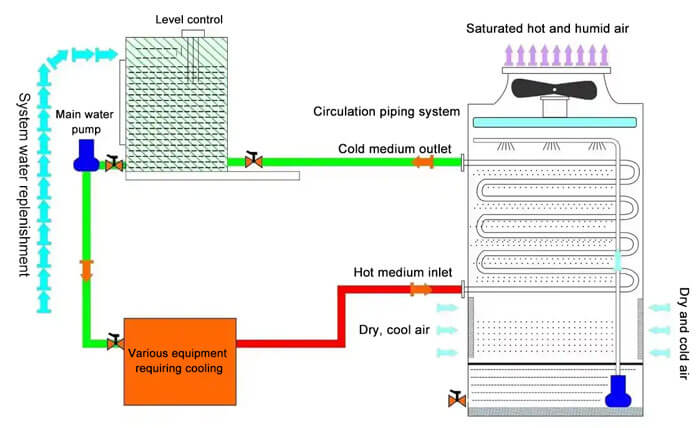
Cooling tower working principle, types and components video from @mepengineeringtutorials
Manual Water Testing vs. Real-Time Water Quality Monitoring
In the past, standard cooling tower water treatment processes have relied on manual testing. Specialists would take samples on-site, use chemical titration tests to determine water quality, and then decide whether to adjust chemical dosing or initiate blowdown based on the results. The entire process, from sampling to adjustment, was entirely manual. This meant the method was prone to “snapshot” issues, human error, and response delays.
Traditional manual sampling and analysis suffer from significant lag: test results typically take 1-3 days to be issued, making it difficult to detect water quality anomalies in a timely manner and preventing the generation of continuous trend data to support decision-making. Field data from a Renkeer client shows that in the cooling water system of a large metallurgical enterprise, by the time manual testing detected that the pH had risen from 8.2 to 9.1, scaling had already caused a 0.5 mm deposit layer, resulting in a 22% decrease in heat transfer efficiency. The time lag between when water quality begins to deviate and when the problem is detected is sufficient to cause irreversible equipment damage.
With sub-second response time, continuous data collection and intelligent early warning, in contrast, sensor-based real-time water quality monitoring systems can easily overcome the drawbacks of manual testing, including lag, low accuracy and high false negative rates. As a result, the water treatment process in cooling towers is fast being shifted from the traditional sampling and testing approach to a real-time online monitoring approach.
Key Parameters Monitored in Cooling Towers Water Treatment
For effective water treatment in cooling towers, the continuous monitoring of important water quality parameters is necessary. The concentration of dissolved substances and the associated chemical composition and amounts of microorganisms in the water, change with time, as it becomes more and more concentrated during the evaporation process. The operators can easily monitor the water quality according to the water parameters like pH, conductivity, TDS, temperature, ORP and turbidity and can take appropriate action in time to prevent the risk of scaling, corrosion and microbial growth in the system and to properly manage the chemical dosing and blowdown control.
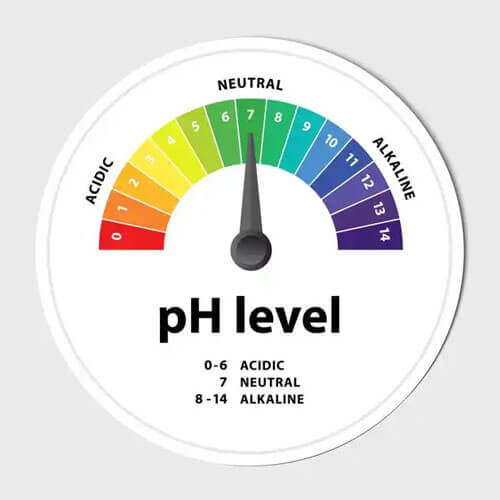
pH is one of the major variables to monitor for the acidity or alkalinity of the recirculating water in a cooling tower and has a direct impact on the potential risk of corrosion and scaling. The lower the pH, the faster the corrosion of the metals, and the higher the pH, the more likely the calcium carbonate scale is to form. The recommended range for pH is 6.5 to 8.5, internationally, and should be tailored to the type of water supply and treatment. Continuous measurement is usually done by a glass-electrode pH sensor.
Conductivity reflects the concentration of dissolved solids in water, such as minerals like calcium and magnesium. As water continuously evaporates from the cooling tower, salts and minerals gradually accumulate, causing conductivity and TDS levels to rise. Monitoring conductivity values provides insight into the concentration ratio of the recirculating water; excessively high values increase the risk of scaling. The Renkeer integrated conductivity sensor continuously monitors changes in conductivity and TDS, enabling automated blowdown control during the cooling tower water treatment process.
Temperature
The cooling water temperature is usually 20°C-45 °C, which is the same range as the temperature range where pathogenic bacteria, e.g. Legionella, can grow. Temperature monitoring can be used to determine cooling performance, and is also an important measurement for microbial growth – a significant increase in temperature typically means a reduction in the cooling tower’s ability to dissipate heat or a failure to adequately control microbial growth with the biocide.
ORP
Oxidation-reduction potential (ORP) is a measure of the water’s capacity to reduce pollutants. For cooling tower water treatment, ORP levels can be used to determine the effectiveness of an oxidative biocide like chlorine or bromine. An ORP sensor is not a water chemistry measurement of concentration of a chemical in the water, but rather a measurement of the effectiveness of the chemical in destroying biological matter. This makes ORP a very reliable real time biological indicator of the system.
Turbidity
Turbidity is a measure of the amount of suspended particles in water. When there is too much turbidity, it will lead to the formation of biological slime on the surface of the pipe, which will affect the heat exchange efficiency. Turbidity sensors based on light scattering are generally used for turbidity measurement in open cooling towers or where the water quality is not good.
What Sensors Are Suitable for Cooling Tower Water Treatment?
Modern cooling tower water treatment requires more than just equipment for one-time water quality testing; it requires an IoT water quality monitoring system capable of continuously collecting data, responding quickly to changes, and integrating with control systems.
1. Continuous monitoring
Changes in cooling tower water quality occur continuously, manual sampling or other intermittent measurement methods cannot fully capture these changes. Examples include short-term concentration caused by a make-up pump failure or sudden dilution caused by rainwater ingress. Sensors suitable for cooling tower water treatment must be capable of continuous online measurement and produce continuous curves rather than discrete data points.
2. Response in seconds
During cooling tower water treatment, changes in water quality can be influenced by various factors, including evaporation rates, make-up water quality, chemical dosing, and load fluctuations. With a response time measured in seconds, the sensor can accurately detect sudden events, such as pump failures or sudden drops in pH, without having to wait for the next data refresh cycle to identify them.
3. Integrated control
Water quality sensors are not only responsible for collecting data but must also work in conjunction with controllers, chemical dosing systems, and blowdown equipment. For example, when conductivity continues to rise and reaches a preset threshold, the system can automatically initiate a blowdown procedure; when ORP or other water quality parameters change, the control system can adjust the dosage of biocides. In the past, blowdown was controlled solely by simple timers or continuous trickle flow, resulting in extremely low efficiency. Today, real-time conductivity monitoring integrated with control systems enables scientific, automated management, thereby extending the service life of cooling towers and chillers and delivering a significant return on investment.
4. Scale resistance and corrosion resistance
Calcium ion and magnesium ion concentrations are relatively high in water during cooling tower water treatment. Mineral deposits may form on the surface of the probe with prolonged exposure, impacting measurement accuracy. Conductivity probes are generally made from graphite or a better corrosion resistant material such as titanium alloy, than standard stainless steel. To prevent drift due to contamination with chloride and sulfide, the glass membrane and reference electrode must be designed in an anti-contamination manner for pH probes.
5. Remote visualization
Facility managers now have more visibility and control than ever before thanks to the integration of the Internet of Things (IoT). IoT platforms enable the coupling of sensors and controllers to secure dashboards on the cloud that can convert raw sensor data into actionable, understandable information. Managers are able to access real-time information through their smart phone or computer while at work, at home and even when travelling for work. They can not only be alerted to anomalies in real time, but can also give instructions to the control system to make remote actions.
How to Set Up an Automatic Water Quality Monitoring System for a Cooling Tower?
Above, we have provided a detailed overview of the key parameters for cooling tower water treatment and sensor selection. Next, we will guide you through the process of setting up a comprehensive water quality monitoring system for your cooling tower. The process consists of five steps:
Step 1: Evaluate the project plan. Based on your current water treatment system, identify key control points and monitoring parameters (such as pH, conductivity, ORP, and temperature). Use this data to determine the types and quantities of sensors and controllers required.
Step 2: Select sensors and accessories. Rugged, industrial-grade water quality sensors are the best choice. Additionally, determine whether features such as self-cleaning, temperature compensation, or wireless transmission are needed, based on your objectives and the operating environment.
Step 3: Integrate the controller. Integrate the sensors with the control system and actuators to automatically control the opening and closing of the drain valve and the dosing of chemicals. When the pH or ORP deviates from the target range, the system automatically adjusts the chemical dosage to ensure precise control and prevent under- or over-dosing.
Step 4: IoT remote management. Connect the monitoring host to the cloud platform and set appropriate alarm thresholds. Establish standardized maintenance and management procedures, including regular sensor calibration, inspection of equipment operating status, replenishment of treatment chemicals, and analysis of monitoring data.
Step 5: Technical Compliance. Work with your water treatment service provider or compliance officer to ensure that remote data logging complies with all local and federal guidelines and automatically generates weekly and monthly summary reports.
Conclusion
The power of sensor-based cooling tower water treatment comes from the ability to provide data to inform decision-making, moving the water quality monitoring and management process from being “fly blind” (experience based) into a data-driven approach. Not only does it offer immediate energy savings and consumption reduction, but also it is a key element in developing modern, intelligent, sustainable industrial water systems.
How does a conductivity sensor control cooling tower blowdown?
The core logic behind using a conductivity sensor to control blowdown in a cooling tower is as follows: By continuously monitoring the conductivity of the circulating water and comparing it to a preset upper limit for the “concentration ratio,” the system automatically triggers the blowdown valve to discharge wastewater while simultaneously replenishing the system with fresh water of low conductivity, thereby maintaining the salt concentration within the system at a safe level.
Can water quality sensors replace manual cooling tower water testing?
Water quality sensors cannot completely replace manual water quality testing in cooling towers, but they can take over more than 90% of routine online monitoring tasks, significantly reducing the frequency and intensity of manual testing. Together, they form a complementary, intelligent management model.
How often should cooling tower water sensors be calibrated?
The calibration intervals for sensors should be set differently based on their type, operating environment, and accuracy requirements. The core principle is to balance operational and maintenance costs while ensuring measurement errors remain within acceptable limits. Under normal operating conditions, follow the specific intervals recommended for each parameter.
pH/ORP Sensors: Cooling tower recirculating water is a typical clear-water application. It is generally recommended to calibrate these sensors once every 1~3 months. However, if algae growth is high during the summer and fall and chemical dosing is frequent, the interval should be shortened by 30%.
Conductivity Sensors: As low-drift sensors, they typically require calibration every 3~6 months under normal operating conditions.
Turbidity Sensors: In cooling tower water treatment processes where the optical window is not prone to contamination, calibration can be performed every 3 months. However, if the bypass filter is operating under high load with a high concentration of suspended solids, the cleanliness of the optical window should be checked monthly, and calibration performed as necessary to prevent suspended solids from accumulating and affecting light transmittance.
Where should water quality sensors be installed in a cooling tower system?
| Installation location | Monitoring purpose | Description |
|---|---|---|
| Cooling tower sump | Monitor the overall water quality of the recirculating water, such as conductivity, pH, and turbidity. | This is the most basic monitoring point, used to evaluate water quality concentration ratios, corrosion, and scaling tendencies, and to serve as a basis for wastewater discharge and makeup water. |
| Recirculation pump outlet | Monitor the water quality of the water that has been cooled by the cooling tower and is about to be sent to the heat exchanger. | It is recommended to select a straight pipe section 1.5 meters downstream of the circulation pump outlet, where the water flow is stable, free of vortices, and measurements are accurate. |
| Filters / Upstream and downstream of water treatment equipment | Verify water treatment effectiveness. | Installing a sensor both upstream and downstream of filters, deionization units, or chemical dosing points allows you to determine whether the equipment is operating normally. |
| Key branch pipelines | Identify localized water quality anomalies | Installing sensors on critical branches enables rapid identification of which area is experiencing water quality issues. |
What sensors are required for a complete cooling tower water treatment monitoring system?
A complete sensor-based cooling tower water treatment system requires: a conductivity electrode to monitor total dissolved solids and control blowdown cycles; a pH electrode to maintain optimal chemical efficacy and prevent corrosion; an oxidation-reduction potential (ORP) electrode to verify the effectiveness of biocides and prevent Legionella growth; and a temperature sensor to monitor temperature conditions that affect biological risks. These sensors are connected to a host unit, which transmits the data to a cloud platform.

This article was authored by the Renke Technical Team, comprising engineers and product specialists with deep expertise in water quality sensing and industrial monitoring instrumentation. Renkeer designs and manufactures precision sensors for water treatment, environmental monitoring, and industrial process control. Our sensor solutions are engineered to meet international standards including ASHRAE and ISO, providing the accuracy and reliability that mission-critical liquid cooling infrastructure demands.