Over the past few years, large language models have demonstrated remarkable reasoning and generative capabilities. They can write code, analyze data, answer complex questions, and even assist with professional decision-making. However, when AI steps out of the digital world and into the real world, there is a noticeable gap in its capabilities.
At the CES exhibition in early 2026, NVIDIA founder Jensen Huang put forward an assertion: physical AI is crossing a critical threshold, and machines are beginning to truly understand the physical world, reason, and take action. This assertion quickly became the focus of the industry and marked a significant turning point in the evolution of AI technology—a shift from “on-screen sages” capable only of processing text and images to “real-world travelers” capable of perceiving the physical world, acting within it, and continuously learning.
What Is Physical AI and Its Current State of Development
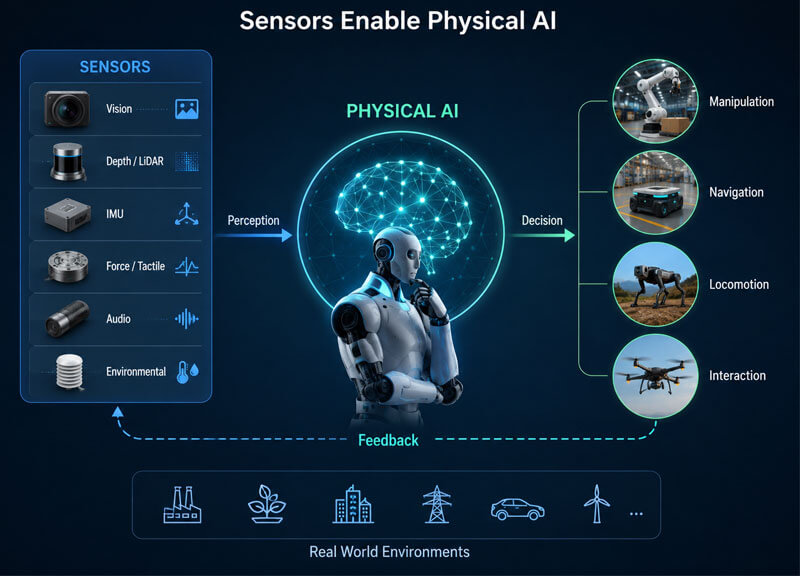
Physical AI (Physical Artificial Intelligence) refers to artificial intelligence systems capable of perceiving, reasoning, and acting in the real physical world. Unlike traditional AI or generative AI, which primarily process digital information such as text, images, and code, Physical AI extends AI’ s capabilities from the digital realm to the real world, enabling machines to observe their environment, analyze situations, and perform actions just like humans. A complete Physical AI system typically consists of three core components: Perception, Reasoning, and Action.
The emergence of Physical AI marks the beginning of AI’ s transition from the digital realm to the physical world. Several market research firms predict that the Physical AI market will reach tens of billions to nearly $10 billion by 2026 and is expected to exceed $100 billion by around 2035, with a compound annual growth rate generally projected to range between 30% and 47%.
However, the real bottleneck for Physical AI is not model scale or computing power, but the ability to accurately perceive the real world. Unlike text and images in the digital world, real-world environments are filled with complex factors such as changes in lighting, weather, occlusion, vibrations, and changes in the shape of objects. Without high-quality, multimodal, real-time data from the physical world, even the most powerful AI cannot function in the real world.
This is also reflected in the hardware architecture. McKinsey’ s analysis of the bill of materials (BOM) for humanoid robots shows that actuators account for approximately 40%~60% of the total cost, computing units account for 10%~15%, while perception systems typically account for only 10%~20%. Although their cost share is not high, perception systems serve as the robot’ s sole gateway for acquiring external information, and their performance directly determines the reliability of subsequent algorithmic inference and motion control. In other words, while sensors are not the most expensive modules, they are the critical infrastructure that determines whether Physical AI can truly be implemented.
For this reason, NVIDIA founder and CEO Jensen Huang has repeatedly referred to Physical AI in recent years as the next wave of technological innovation following generative AI. As the industry continues to pursue larger models and greater computing power, the strategic value of sensors—as the “perceptual gateway” to Physical AI—remains widely underestimated.
Video form Youtube @IBMTechnology
How Does Physical AI Work?
Physical AI carries out the entire process—from perception and analysis to decision-making and execution—primarily relying on three key technologies: sensor systems, AI model systems, and drive systems.
The sensor system serves as the interface between the AI model and the physical world. By continuously collecting data on the environment and device status, it provides the AI system with information on spatial position, motion status, applied forces, temperature changes, and visual scenes, enabling the system to perceive the external world in real time and monitor its own status.
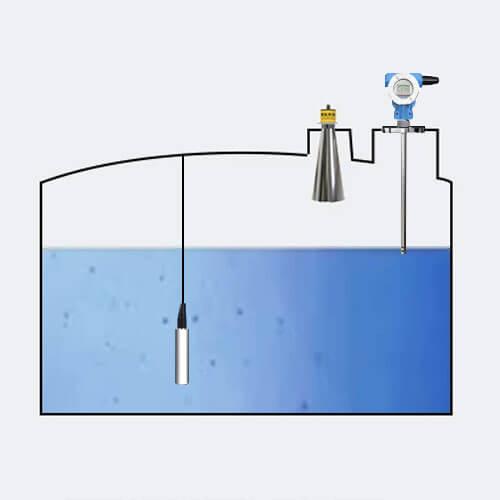
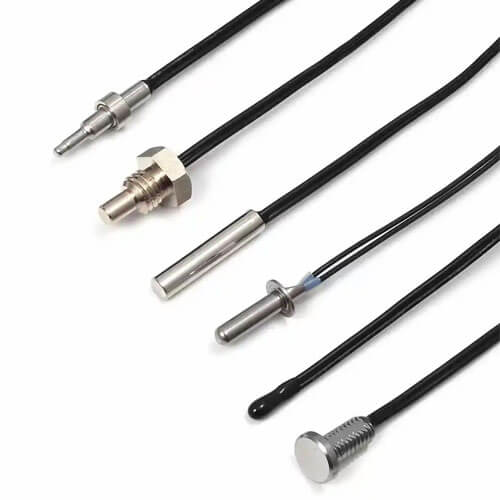
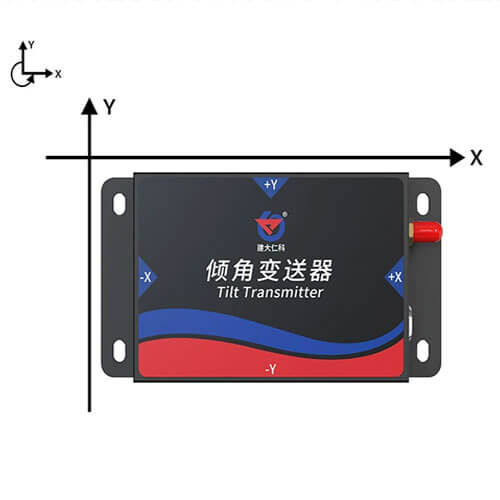
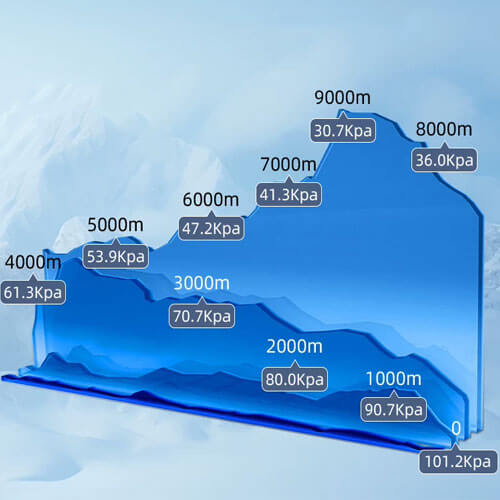
Common sensors include environmental sensors such as position and motion sensors, force and torque sensors, temperature sensors, and pressure sensors, as well as visual and spatial perception devices such as cameras and LiDAR. The system typically requires multisensor fusion to mitigate the limitations of individual sensors and improve the completeness, reliability, and accuracy of environmental perception.
The AI model system serves as the “brain” of Physical AI, responsible for processing data from sensors. Through technologies such as computer vision, machine learning, deep learning, and world models, it identifies targets, understands the environment, and predicts potential future changes.
The drive system is the component of Physical AI that translates digital decisions into physical actions. Once the AI system determines the action to be performed, the actuator converts control signals into mechanical motion or force to execute that action. The performance of the drive system depends not only on output power but also on motion precision, response speed, control stability, and the ability to coordinate with sensors in real time. In high-precision and high-safety applications, actuators typically need to form a closed-loop control system with position, velocity, force, or torque sensors, enabling the equipment to continuously monitor actual motion status and dynamically adjust control commands based on feedback.
Six Sensor Domains Powering Physical AI
Just as humans rely on sight, hearing, and touch to perceive the world, Physical AI must also possess comprehensive perception capabilities to be truly implemented. These include vision, spatial awareness, motion, touch, sound, and environmental parameters. Each of these capabilities relies on one or more sensors for implementation.
1. Vision sensors
Vision sensors serve as the primary gateway for Physical AI to acquire external information. They are responsible for identifying objects, understanding scenes, and perceiving environmental changes, providing foundational data for subsequent reasoning and decision-making.
Currently, CMOS cameras, stereo cameras, and event cameras are among the most commonly used vision sensors in artificial intelligence. CMOS cameras can capture high-resolution color, texture, and shape information and serve as the primary data source for object detection, semantic segmentation, and large-scale vision models; stereo cameras use binocular parallax to estimate object depth, enabling 3D localization; event cameras, on the other hand, record only changes in pixel brightness, featuring microsecond-level response times and high dynamic range, making them more suitable for high-speed motion and complex lighting scenarios.
Examples: These three types of sensors are currently widely deployed in conjunction with edge computing platforms such as the NVIDIA Jetson Thor, which delivers 2,070 FP4 TFLOPS of computing power(7.5 times that of the previous generation), and is specifically designed to support real-time multi-sensor fusion processing.
2. Ranging & spatial sensors
Ranging and spatial sensors provide Physical AI with 3D spatial perception capabilities, enabling it to determine a target’ s distance, position, size, and other characteristics. These sensors are key to achieving autonomous navigation, obstacle avoidance, path planning, and precise grasping.
Currently, Physical AI primarily relies on LiDAR, 3D ToF depth cameras, millimeter-wave radar, and ultrasonic sensors for spatial perception. Among these, LiDAR handles 3D mapping and localization, ToF is used for short-range depth perception, and millimeter-wave radar enhances perception capabilities in complex environments.
Examples: Innoviz’ s InnovizThree LiDAR reduces costs by more than 35% compared to the previous generation, weighs only 600 grams, and is suitable for humanoid and micro-robots; Aeva’ s Atlas Ultra uses FMCW technology to simultaneously measure distance and velocity, enabling obstacle avoidance in complex dynamic environments.
3. Motion and position sensors
Motion and position sensors (such as IMUs, encoders, etc.) enable Physical AI to perceive its own posture, motion state, and joint positions, allowing it to perform complex tasks autonomously or semi-autonomously. Currently, the industry widely employs a fusion of IMUs, encoders, vision, and LiDAR for positioning. Through algorithms such as Kalman filtering, cumulative errors are effectively reduced, achieving centimeter-level positioning and stable motion control.
Examples: Robots such as Boston Dynamics’ Atlas rely on a distributed deployment of multiple IMUs combined with joint kinematic data to achieve dynamic balance on uneven terrain. According to data from Counterpoint Research, the global installed base of commercial humanoid robots is expected to reach approximately 16,000 units by the end of 2025 and exceed 50,000 units in 2026. The reliability of motion and position sensing is a key enabler for this large-scale deployment.
4. Force and tactile sensors
Tactile and force sensations are at the core of “proximal sensing.” Tactile perception occurs at the moment of contact, providing information about the shape of the contact surface, pressure, friction, temperature, shear force, and vibration. Common sensors include 6-axis force/torque (F/T) sensors, tactile sensors, pressure sensors, and flexible electronic skin, with their operating principles primarily based on technologies such as piezoresistive, capacitive, piezoelectric, and magnetic induction. Currently, tactile sensors are evolving toward high resolution, multidimensional perception, and flexible integration, enabling physical AI to dynamically adjust gripping force based on tactile feedback.
Examples: FUTEK’ s QLA414/424 nanoscale sensors have been deployed in the fingertips and finger joints of multiple humanoid robots. The multimodal tactile solution demonstrated by ADI at the 2026 NVIDIA GTC integrates pressure, temperature, and slip sensing into a single fingertip module for scalable production of humanoid robot hands.
5. Acoustic sensors
Speech is one of the fundamental forms of human-machine communication, and acoustic input with a high signal-to-noise ratio serves as the physical foundation for speech recognition (ASR), voiceprint authentication, and affective computing. Acoustic sensors endow Physical AI with auditory perception, enabling robots to understand voice commands and recognize environmental sounds. They primarily include microphone arrays, ultrasonic sensors, and acoustic positioning sensors. Through time-difference analysis of multi-microphone arrays, AI can not only calculate the direction of a sound source (with an error of less than 3°) and track it, but also identify abnormal noises such as mechanical wear and gas leaks, thereby enabling predictive maintenance. In short, without acoustic sensors, Physical AI would be “deaf” and unable to fully perceive the dynamic physical world.
Examples: Humanoid robots such as Figure AI and Tesla Optimus use microphone arrays combined with AI speech models to understand speech and execute tasks; while home robots like Amazon Astro utilize sound source localization technology to determine the user’s location and enable proactive interaction.
6. Environmental sensors
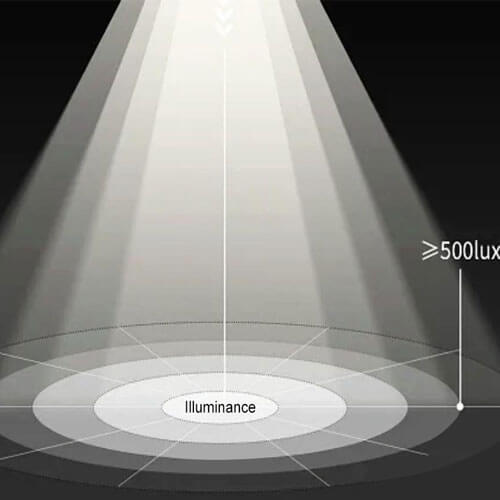
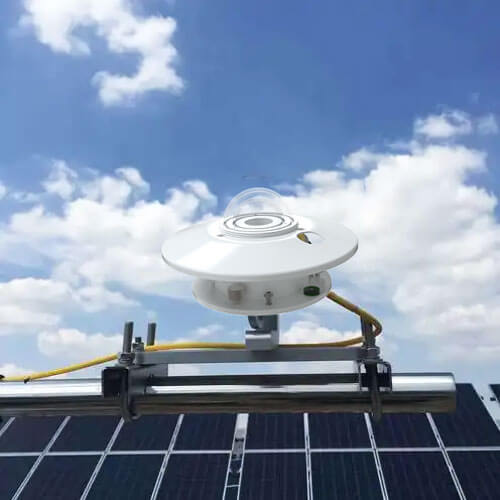
Environmental sensors enable Physical AI to perceive its external environment, allowing robots to operate stably under varying temperature, humidity, gas, and lighting conditions. These primarily include temperature and humidity sensors, pressure sensors, gas sensors, light sensors, and air quality sensors.
Among these, MEMS temperature and humidity sensors detect environmental changes through miniature sensing elements, while gas sensors use electrochemical, semiconductor, or optical principles to identify specific gas concentrations, thereby enabling robots to assess environmental safety. Currently, environmental perception is evolving from single-parameter detection toward multi-sensor fusion, enabling Physical AI to adapt to complex environments.
Examples: Boston Dynamics’ mobile robots integrate environmental sensors(including temperature, acoustic, and gas sensors) into industrial inspections to detect equipment malfunctions and hazardous areas, enabling unmanned inspections. Similarly, warehouse and factory robots use environmental sensors to monitor dust, harmful gases, and heat sources, thereby enhancing operational safety.
Multi-Sensor Fusion Is the Way of the Future
A single sensor captures only a partial view of the real world, whereas multi-sensor fusion combines spatial, motion, environmental, and state information gathered by different sensors to form a more comprehensive estimate of the environmental state. The essence of multi-sensor fusion is to convert data from different sensors into a unified estimate of the environmental state.
For example, an autonomous driving system uses a camera to identify vehicles ahead, LiDAR to determine their 3D positions, millimeter-wave radar to assess distance and speed, and an IMU to determine the vehicle’ s own motion state. Only after AI fuses this data can it accurately determine “what is ahead, where it is, how it is moving, and whether there is a risk of collision.”
More importantly, multisensor fusion enhances system reliability. When a particular sensor is affected by darkness, rain, fog, obstruction, or noise, other sensors can provide supplementary information, enabling cross-validation and fault tolerance.
Therefore, the core of physical AI is not simply “seeing the world,” but continuously and accurately understanding the physical state of the world and acting accordingly. Multi-sensor fusion is precisely the key technology that bridges “perception” and “decision-making,” enabling AI to construct an understanding of complex real-world environments from incomplete, single-point observations, ultimately forming a complete “perception—understanding—decision-making—execution” system.
Renkeer Sensors Drive the Development of Physical AI
Renkeer sensors serve as a vital perceptual interface connecting AI to the physical world. Through temperature and humidity sensors, gas sensors, vibration sensors, environmental sensors, and more, the system can continuously capture real-time data on the environment and devices, providing reliable data support for AI models. Therefore, while Renkeer sensors are not Physical AI themselves, they provide critical “perceptual capabilities” that help AI establish a physical closed-loop system—from environmental perception and state understanding to decision-making and execution.
FAQs
Are physical AI and robotics the same thing?
People often assume that physical AI and robotics are one and the same. While they are closely related, they are not identical. Robotics focuses on building machines that can move, manipulate objects, or perform mechanical tasks, but a robot does not automatically imply intelligence. Many industrial robots simply repeat the same sequences with almost no awareness of their surroundings.
Physical AI adds a “brain” to the body. When integrated into robotic systems, machines can understand their environment, adapt to changes, and make decisions in real time. Traditional factory robots place parts in the same position every cycle; robots powered by physical AI detect changes, adjust their movements, and continue working without human intervention.
However, reducing physical AI to simply “smarter robots” is too narrow a view. Physical AI is a broader layer of intelligence that fuses multiple sensor inputs (cameras, audio, vibration, temperature, etc.) to perceive and reason about the physical world in real time. Robotics is just one of its applications; its true potential extends to any scenario requiring the translation of sensor data into actionable insights.
How do sensors connect to IoT, edge computing, and AI systems?
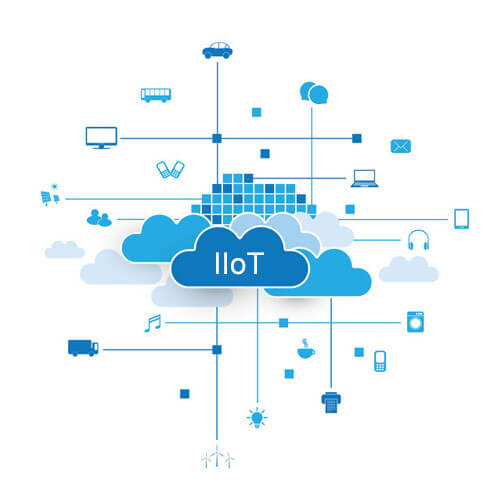
Sensors transmit the data they collect to edge devices via hardware interfaces, and then use IoT communication protocols to transfer the data. Edge nodes can preprocess the data and run AI models to enable rapid local analysis; the cloud is responsible for aggregating data, training and optimizing models, and deploying the updated models back to edge devices. Through this collaborative architecture, sensors, IoT, edge computing, and AI systems form a complete data loop.
Are Physical AI and Embodied AI the same concept?
Physical AI and Embodied AI are not exactly the same concepts, but they are closely related. Embodied AI emphasizes AI interacting with the real world through physical agents (such as robots and autonomous vehicles), perceiving the world through sensors, making decisions using AI models, and performing actions via actuators. Its core principle is “giving AI a body and enabling it to exhibit autonomous behavior.” Physical AI, on the other hand, has a broader scope and emphasizes AI’s perception, understanding, prediction, and control of the physical world. It includes not only embodied systems such as robots but also encompasses scenarios such as smart manufacturing, industrial monitoring, smart agriculture, and energy management. Therefore, it can be understood that embodied AI is one of the key application areas of physical AI, while physical AI itself constitutes a broader technological framework.
Why are sensors considered the hidden bottleneck to the widespread adoption of physical AI?
This is because sensors may be limited by factors such as accuracy, stability, environmental interference, power consumption, cost, and data compatibility. Even if AI models are sufficiently advanced, AI will struggle to make reliable decisions if the data collected by the sensors is inaccurate, unstable, or incomplete.
How does edge computing impact physical AI sensor fusion?
Edge computing transforms physical AI sensor fusion from “post-processing in the cloud” to “real-time closed-loop processing at the edge.” The key benefits include millisecond-level low-latency decision-making, a reduction in bandwidth usage of over 90%, offline autonomy, and ensuring that private data remains within the local domain.
In which industries is physical AI most widely used?
Manufacturing, transportation, logistics, agriculture, healthcare, construction, and smart infrastructure are the sectors where physical AI is most actively applied.

The Renke Technical Team specializes in the research and development of sensors and environmental monitoring instruments, with expertise spanning six core product categories: temperature/humidity, meteorological, water quality, gas, vibration, and pressure sensing. Drawing on extensive hands-on experience in sensor selection, multi-sensor fusion system integration, and industrial IoT deployment, the team closely tracks emerging developments in Physical AI and embodied intelligence, working to deliver reliable foundational data support for intelligent perception systems.