



Table of Contents With the development of Internet of Things technology, sensors and wireless transmission technology are widely used in smart agriculture. Smart agriculture is
Lora Soil Moisture Sensor
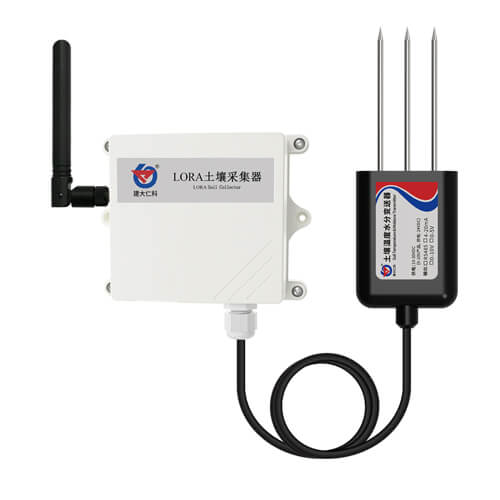
The RS-TR-LORAH-2-*-T is a low power LoRa soil moisture sensor. It adopts our company’s unique LoRa wireless communication protocol to avoid mutual interference in the signal transmission process between multiple measuring points. This LoRa soil sensor has a transmission distance of up to 3000 meters and strong signal penetration. It can monitor the moisture and temperature in the soil at the same time. It is the best choice for remote monitoring.
- Model: RS-TR-LORAH-2-*-T
- MOQ: 1 PCS
- Delivery date: within 24 hours
- Price: $75.5
About - LoRa Soil Moisture Sensor
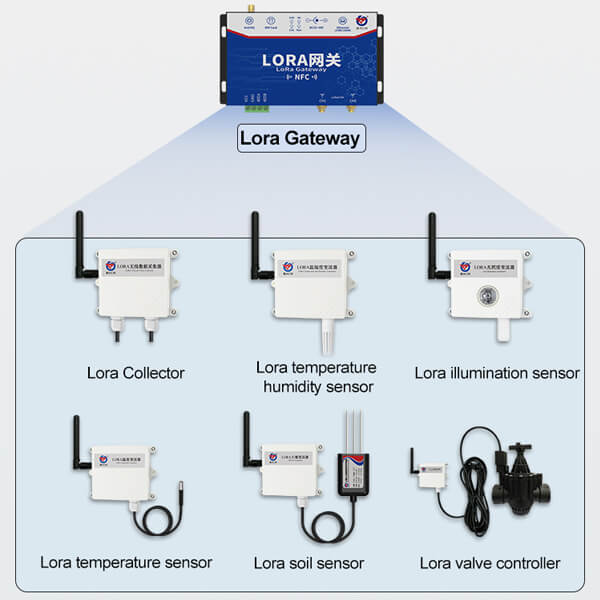
The Renke LoRa soil moisture sensor is a simple and inexpensive smart farming solution. It can simultaneously monitor soil temperature and moisture conditions. The monitoring data is wirelessly transmitted to the LoRa gateway through LoRa, and the LoRa gateway uploads the data of all measuring points to the cloud platform in a unified manner. Thereby easily creating a low-cost wireless remote monitoring network. Suitable for smart farm applications, irrigation, agriculture, etc.
Description
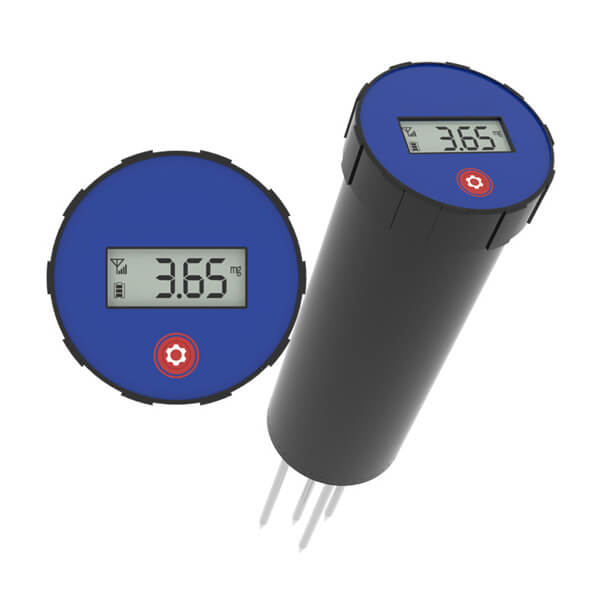
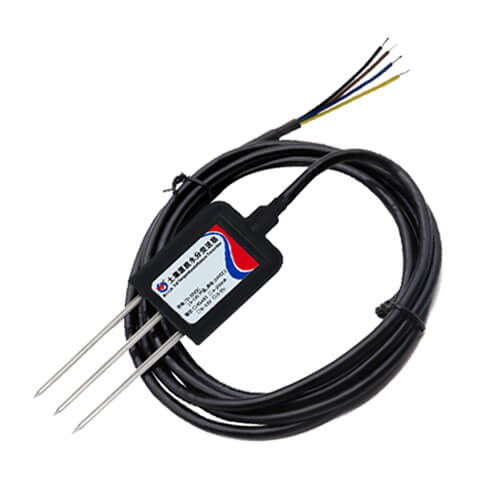
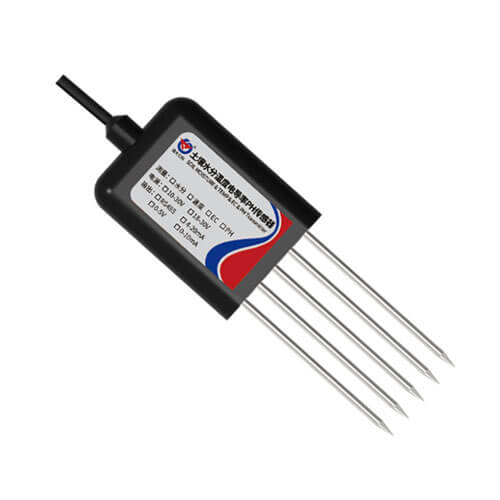
This LoRa soil moisture sensor consists of a stainless steel soil probe and a data collector. When using, insert the probe of the soil sensor into the soil, and then the data collector collects the measured value and transmits it through LoRa. The data collector is powered by a replaceable lithium sub-battery with low power consumption. Long using life. The shell is made of waterproof ABS material, and the protection level is IP65, which can be used in the outdoor environment.
Features
- The LoRa soil moisture sensor adopts LoRa spread-spectrum communication technology, featuring long transmission distance and strong anti-interference capability. The communication range can reach up to 3000 meters in line-of-sight conditions.
- The collector is equipped with a replaceable 3.6V li-Ion battery. It can monitor battery level, signal strength, and sensor data in real time, upload the information via LoRa wireless communication.
- With an IP65 protection rating, the collector is suitable for outdoor.
- The LoRa soil sensor offers high measurement accuracy, fast response speed, and good interchangeability. It is minimally affected by soil salinity, making it suitable for various soil types.
- The sensor is fully sealed, resistant to acid and alkali corrosion, and capable of long-term dynamic monitoring when buried in soil. The LORAH series supports extended transmission distance by adding LoRa intermediate repeaters.
Parameters
| Power supply | DC 3.6V Li-Ion battery | |
|---|---|---|
| Battery life | 3 years of continuous use with our company-provided battery, with data uploads every 5 minutes. | |
| Collector working temp | -20℃~+60℃ | |
| Collector output signal | LORA | |
| Transmission distance | Indoor | 3~4 walls |
| Outdoor | Sight distance 3000m | |
| Collector protection class | IP65 | |
| Working environment | -40℃~80℃, 0%RH~95%RH (non-condensing) | |
| Soil Moisture | Range | 0-100%RH |
| Resolution | 0.1%RH | |
| Accuracy | ±2% within 0-50%, @ (brown soil, 30%, 25℃) ±3% within 50-100%, @ (brown soil, 60%, 25℃) |
|
| Soil temperature | Range | -40~80℃ |
| Resolution | 0.1℃ | |
| Accuracy | ±0.5°C (25°C) | |
| Sensor protection class | IP68 | |
| Probe material | Anti-corrosion special electrode | |
| Line length | 2 meters (can be customized) | |
How to install LoRa soil moisture sensor?
Site selection
The collector should be placed as high as possible and in a relatively open place around it. It is recommended to be more than 1 meter above the ground. Do not place too many metal objects around the LoRa soil moisture sensor to prevent the wireless signal from being weakened. Electronic interference can originate from a variety of objects: generators, high-current equipment, high-voltage relays, transformers, etc. Vibration or shock can also be a source of interference, so the sensor should be installed as still as possible.
Do not install the LoRa soil moisture sensor in an environment beyond the measurement range, otherwise, the product will not work properly and the sensor will be permanently damaged. Please do not tear off the label on the product casing, which has important information such as the product’s ID.
Installation process
When installing the collector, first open the housing and insert the universal plug-in li-Ion battery (note: do not pull forcefully when opening the housing to avoid damaging internal wiring). The battery should be placed above the circuit board (note: if purchasing a battery separately, pay attention to the wiring of the connector). The indicator light will flash rapidly and then turn off once the process is complete. Reinstall the housing (ensure there are no visible gaps between the upper and lower casing to maintain waterproofing). Screw the antenna provided by our company onto the device.
For LORAH series products, users must first install the fuse holder into the designated interface. Once installed, the device will be powered on. Then, screw the antenna provided by our company onto the device
FAQs - LoRa Soil Moisture Sensor
What is a LoRa soil moisture sensor?
A LoRa soil moisture sensor is a wireless device that measures soil water content and transmits data over a long range using LoRa (Long Range) communication technology. It is ideal for smart farming and remote irrigation monitoring.
How to configure the collector of LoRa soil moisture sensor?
Configuration via mobile phone NFC. Turn on the NFC function of the mobile phone, put the mobile phone against the surface of the collector, and configure it after the connection is completed.
What should I pay attention to when using the LoRa soil moisture sensor?
- The steel probs must be fully inserted into the soil when measuring.
- Avoid strong sunlight directly on the sensor and cause the temperature to be too high. Pay attention to lightning protection when used in the field.
- Do not bend the steel needle violently, do not pull the sensor lead wire forcibly, and do not drop or violently hit the sensor.
- The sensor protection level is IP68, and the sensor can be immersed in water (the collector cannot be directly immersed in water).
- The sensor and the LoRa soil collector are connected by a plug-in cable. Please use the correct plug-in method when plugging.
How to install the LoRa soil sensor?
Method 1: Select a suitable measurement location, avoid stones, ensure that the steel needle does not touch hard objects, discard the topsoil according to the required measurement depth, maintain the original tightness of the soil below, and firmly hold the sensor and insert it vertically The soil should not be shaken left and right when inserting. It is recommended to measure multiple times within a small range of a measuring point to obtain an average value.
Method 2: Dig a pit with a diameter > 20cm vertically, insert the sensor steel needle into the pit wall horizontally at a given depth, the collector cannot be buried in the soil, and the pit should be filled tightly and stabilized for a period of time. , measuring and recording for months or longer.
How to view data?
The LoRa soil moisture sensor can connect to our LoRa gateway via LoRa wireless communication, transmitting data to the platform. Users can view real-time or historical data on the platform and also access relevant information in real time through a computer or mobile phone.
What’s included in the package?
- LoRa soil moisture sensor * 1
- Certificate of conformity, warranty card, etc.
- Expansion plugs * 2, self-tapping screws * 2 (LORAH device already installed in the housing)
- Plug-in li-Ion battery * 1 (LORAH device pre-installed inside the housing)
- Rod antenna * 1
How many sensors can connect to one LoRa gateway?
Our LoRa gateways are available in four models: RS-LGH-100-*-T, RS-LGH-200-*-T, RS-LGH-300-*-T, and RS-LGH-400-*-T.
- The 100 series supports up to 32 LoRa wireless measurement nodes.
- The 200 series supports 32 LoRa wireless measurement nodes and 32 LoRa wireless controllers.
- The 300 series supports up to 128 LoRa wireless measurement nodes.
- The 400 series supports 64 LoRa wireless measurement nodes and 64 LoRa wireless controllers.
What applications use LoRa soil moisture sensors?
Smart irrigation systems
Greenhouse automation
Orchard and vineyard management
Precision agriculture projects
Research and environmental monitoring
Why choose LoRa soil moisture sensor?
LoRa wireless transmission avoids wiring problems, and the transmission distance is long. The transmitted signal does not weaken with distance.
How to get the manual?
Please contact us for the manual.
Related Blogs
Table of Contents A wise gardener knows how to grow up plants and flowers healthily in the garden. Because he will use tools to analyze
Soil moisture is the source of the survival of plants. Soil moisture refers to the moisture content of the soil. The moisture content of the
Soil nutrients are the basis for plant growth. Just like human beings eat, they obtain various nutrients for the body’s growth and development through the
Soil moisture sensors are also known as soil moisture meters. It is mainly used for measuring soil volumetric water content, monitoring soil moisture, agricultural irrigation,
A greenhouse is a closed environment that provides optimal conditions for plant growth and promotes plant growth by controlling indoor and outdoor environments. A complete
Table of Contents Whether it is farmland or a garden, the most important thing for crops to grow and bloom beautifully is soil. Knowing our
Agricultural irrigation mainly refers to irrigation operations carried out in agricultural farming areas. Agricultural irrigation methods can generally be divided into traditional surface irrigation, ordinary
what is a soil moisture sensor? The soil moisture sensor is composed of a stainless steel probe and a waterproof probe, which can be buried
Water is an important part of plant growth, and plants cannot survive without water. Nutrients are the basis for the vigorous growth of plants. The