

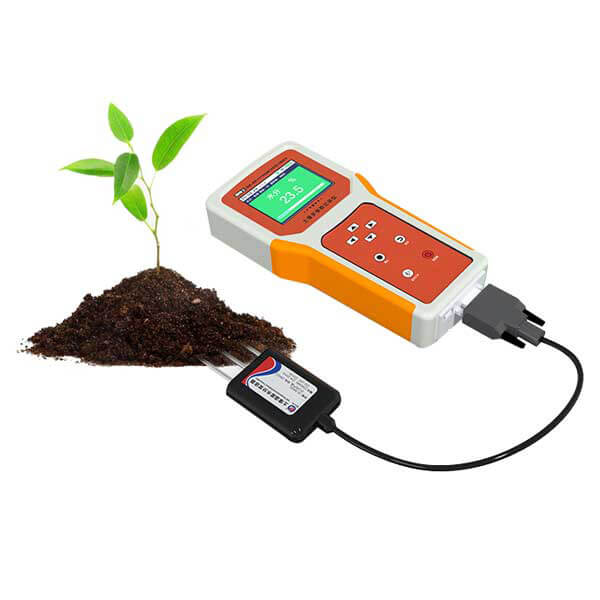

Table of Contents Gardening is a thought-provoking and enjoyable activity. Sometimes, it’s not easy to figure out exactly how much water each plant needs. This
Multi-Depth Soil Sensor
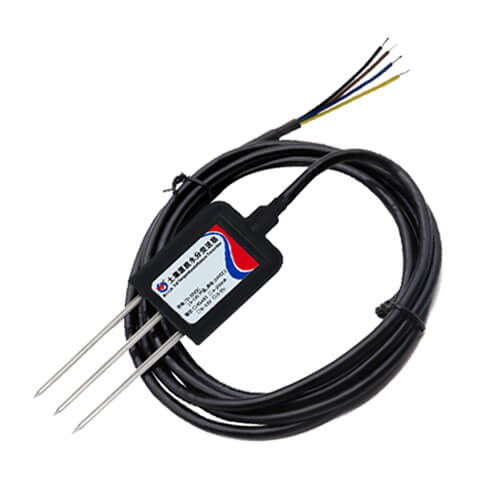
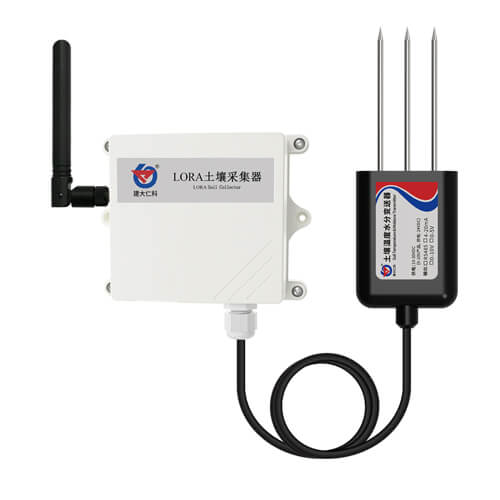
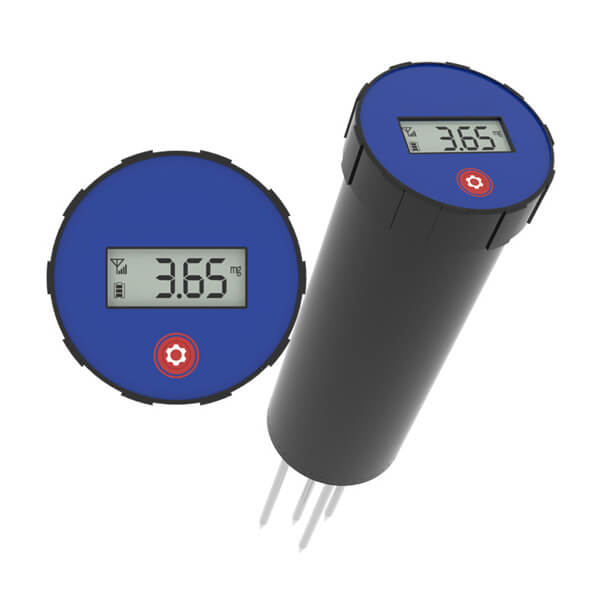
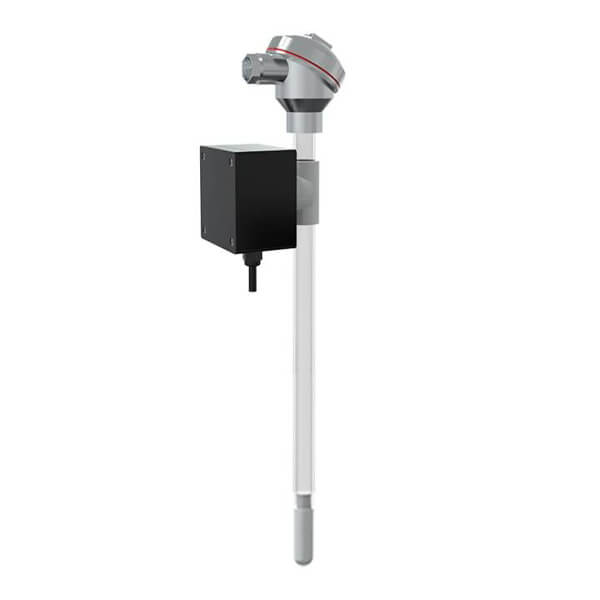
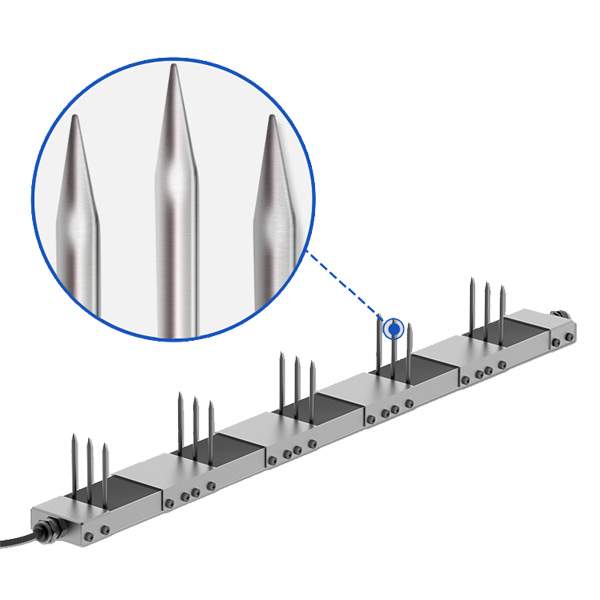
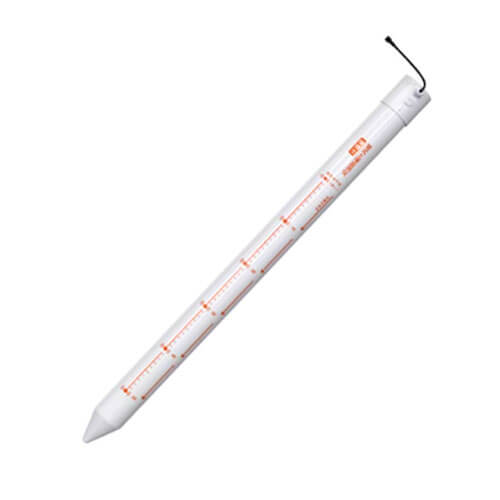
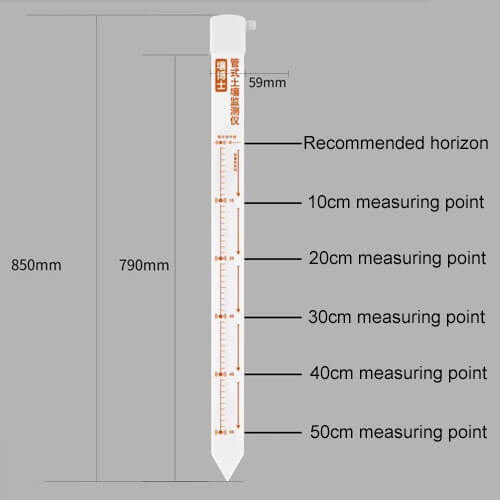
Our RS485 multi-depth soil temperature, moisture and EC sensor that can dynamically observe soil conditions at different depths. The measure depth can be customized. This multi-depth soil moisture sensor has a variety of probe lengths and can be used to measure depths from 30 cm (11 in) to 100 cm (40 in). It can quickly collect soil moisture, temperature and conductivity information.
- Model: RS-*W*S-N01-TR-6-T
- MOQ: 1 PCS
- Delivery date: within 24 hours
- Price: $99~$118
About - Multi-Depth Soil Moisture Sensor
The Renke multi-depth soil moisture sensor system is a cost-effective and scalable soil sensor network that can enable monitoring of field conditions through a free cloud platform for crop management. You can reasonably arrange the installation points of soil sensors on your farmland to easily monitor the entire farmland through a system. Renke is a manufacturer of multi-depth soil sensors, and we support customization.
Advantages
The multi-depth soil sensor operates based on the dielectric constant principle. Its housing is made of a durable PVC tube, which allows high-frequency detection waves (close to 1 GHz) to penetrate effectively without interference from soil salinity. Agricultural activities such as fertilization, pesticide application, and irrigation do not affect measurement accuracy. In addition, the PVC housing provides reliable protection for the internal circuitry, ensuring stable and long-term performance.
Our RS485 multi-depth soil moisture, temperature and conductivity sensor is engineered in accordance with industry standards, delivering high accuracy, sensitivity, and durability. By deploying sensor nodes at different depths, it enables precise and reliable three-dimensional monitoring of soil conductivity, moisture, and temperature.
Features
- The multi-depth soil moisture sensor emits high-frequency detection waves near 1 GHz, which can effectively sense the soil environment.
- An optional built-in tilt sensor can be selected to monitor soil and device status in real time.
- With only one calibration, it can achieve long-term stable real-time monitoring. The advanced model housing has an IP68 protection rating and excellent corrosion resistance.
- The sensor electrodes do not directly contact the soil, avoiding electrical interference with the soil and plants.
- Supports wide voltage input of 10-30V.
Parameters
| Power supply | DC 10~30V | ||
|---|---|---|---|
| Casing material | PVC plastic pipe | ||
| Ingress protection | IP68 (below ground level) | ||
| Output signal | RS485 (ModBus protocol) | ||
| Power consumption | three-layers | 0.7W | |
| five-layers | 0.96W | ||
| Measuring point spacing | 10cm | ||
| Response time | ≤60s | ||
| Operating temperature | -40°C~80°C | ||
| Detect elements | Soil Moisture | Soil Temperature | Soil Conductivity |
| Measure range | 0~100%RH | -15℃~35℃ | 0-20000μS/cm |
| Accuracy | ±5% (@50%, 25°C) | ±0.5°C (25°C) | 0~10,000 μS/cm is ±3% FS; 10,000~20,000 μS/cm is ±5% FS (brown soil, 60%, 25°C) |
Installation - Multi-Depth Soil Moisture Sensor
How to choose the installation location?
1. The multi-depth soil sensor should be installed after crop sowing.
2. The installation site must be flat.
3. Under full irrigation, select an area with relatively lower soil moisture as the monitoring location; under partial irrigation, select a wetter area as the monitoring location.
4. Choose a location where crop growth is uniform and representative of the majority of the field conditions.
5. To understand the root distribution of the monitored crops, the sensor is generally installed near the crop’s water-absorbing roots.
Note: The installation site should be on relatively higher ground to prevent rainwater from entering the device, which may cause short circuits or wiring failures.
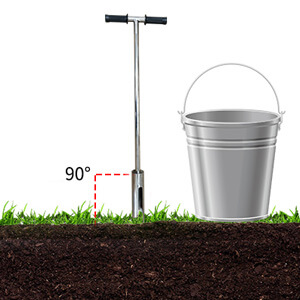
Drill a hole at the appropriate location using a soil auger
- Place the soil auger vertically on the ground, hold the handle firmly with both hands, press downward, and slowly rotate it clockwise. (Note: Do not apply excessive force. Be sure to rotate slowly several times to prevent the auger from deviating inside the hole.)
- Remove the soil auger from the hole and collect the soil inside the auger into a bucket for preparing slurry. (Note: Do not collect the surface soil, as it contains too many impurities.)
- Repeat the drilling and soil collection steps. During this process, try to gently place the sensor into the hole (do not force it to the bottom) to test whether the hole depth is suitable. If the depth is insufficient, continue drilling with the soil auger until the sensor can be smoothly placed in and removed. Once the hole depth aligns with the sensor’s installation mark, the drilling is complete.
Making the slurry
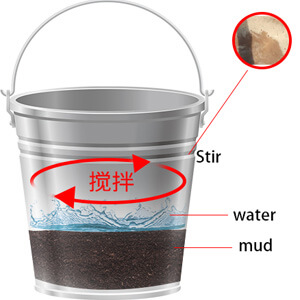
- Remove impurities such as stones, grass roots, and hard-to-dissolve clods from the soil taken out by the soil auger. Break the soil into fine particles to facilitate mixing into slurry.
- Add an appropriate amount of water and stir thoroughly until it becomes viscous. For loam, the slurry should not be thicker than the consistency of “sesame paste.” Slurry preparation is now complete.
Grouting and installation
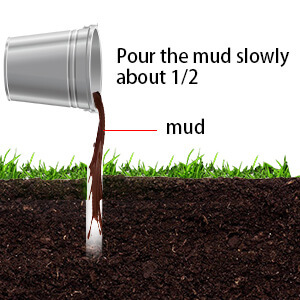
- Slowly pour the slurry into the hole until it reaches about 1/2 of the hole depth. Adjust the amount as needed according to the actual situation.
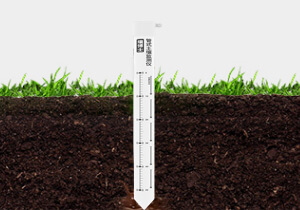
- Slowly place the sensor into the hole, gently rotating it in one direction while pressing it down. Moving too quickly may prevent air bubbles from being completely expelled. (Note: Do not pull the sensor upward during the process of rotating and pressing down, to avoid air being drawn back into the hole.)
- Once the sensor has been installed to the correct depth, some slurry will overflow around the device. At this point, the sensor depth should be level with the hole opening. (Note: Remove excess slurry beyond 3 cm around the sensor to prevent clumping that may affect water infiltration.)
Start the device
After connecting the sensor’s power cable and 485 communication cable, turn on the power. The device will emit a short “beep” sound, indicating that it has powered on and is functioning properly. It is recommended to power on the device only after the slurry has stabilized.
Installation on other soil types
Essentials of sand installation
The installation of sandy soil is the same as the standard loam installation steps. What needs special attention is to prepare enough water, not less than 5 liters. Before grouting, pour water into the hole to wet the entire wall until excess water appears at the bottom of the hole. Then, according to the steps, slowly pour the slurry into half of the hole. The remaining installation steps follow the loam installation.
Essentials of clay installation
For the installation process in clay soil, after drilling, pour the collected soil into a prepared bucket and remove impurities. Then add water and soak the clay in water for more than 4 hours to soften it, which helps to stir it into a relatively uniform slurry. After soaking, stir into a thick paste and proceed with grouting. The remaining installation steps follow the loam installation.
FAQs - Multi-Depth Soil Moisture Sensor
What is a multi-depth soil sensor?
A multi-depth soil sensor is a device that measures soil parameters(such as moisture, temperature, and sometimes salinity)at multiple depths simultaneously. It provides a vertical profile of soil conditions for precise irrigation and agricultural management.
What is the working principle of the multi-depth soil moisture sensor?
Our multi-depth soil moisture sensor operates based on the TDR (Time Domain Reflectometry) principle. It measures soil moisture by detecting the significant influence of water content on the soil’s dielectric properties. This method provides high accuracy and has low sensitivity to soil type, making it suitable for all kinds of soils. The sensor features vacuum potting for waterproofing and moisture resistance, allowing long-term burial in soil while being resistant to electrolytic effects and corrosion.
Why use a multi-depth soil sensor instead of a single-depth sensor?
Multi-depth soil sensors provide data at various soil layers, allowing more accurate irrigation planning, root-zone monitoring, and drought management. Single-depth sensors only provide information for one layer, which may not reflect the full soil profile.
How to connect the wires?
Connect the brown wire to the power positive (10-30VDC), the black wire to the power negative, the yellow (or green) wire to 485-A, and the blue wire to 485-B.
What parameters do multi-depth soil sensors measure?
Common parameters include:
Soil moisture (volumetric water content)
Soil temperature
Electrical conductivity (EC) for salinity monitoring
Some models can also measure pH, nutrient levels, or matric potential
What is the application of multi-depth soil moisture sensor?
The multi-depth soil moisture sensor is suitable for the detection of soil moisture and drought information, or real-time detection of weather, water and rain, moisture, agricultural conditions, water conservancy projects, and other places.
How to power the sensor?
Our multi-depth soil sensor offers two power supply options:
1. Mains electricity.
2. Solar panel power.
You can choose the appropriate method based on the requirements of the measurement site.
Can multi-depth soil sensors help save water?
Yes. By providing detailed soil moisture profiles, they allow precise irrigation scheduling, preventing overwatering or underwatering, which improves water efficiency and crop yield.
How often should data from a multi-depth soil moisture sensor be checked?
Depending on crop type and weather conditions, data can be monitored continuously via IoT platforms or checked daily to weekly for irrigation decision-making.
Related Blogs
Table of Contents What is soil water? Soil water is a general term for all forms of water in the soil, including water present in
Soil moisture is the source of the survival of plants. Soil moisture refers to the moisture content of the soil. The moisture content of the
Soil moisture sensors are also known as soil moisture meters. It is mainly used for measuring soil volumetric water content, monitoring soil moisture, agricultural irrigation,
Table of Contents What is IoT? IoT is the “Internet of things“. It is an extended and expanded network based on the Internet. It combines
Agricultural irrigation mainly refers to irrigation operations carried out in agricultural farming areas. Agricultural irrigation methods can generally be divided into traditional surface irrigation, ordinary
Water is an important part of plant growth, and plants cannot survive without water. Nutrients are the basis for the vigorous growth of plants. The
Table of Contents Soil is the fundamental basis for crop growth, and factors such as soil moisture, temperature, and nutrients play a critical role in