

Table of Contents What is Hydrology? Hydrology refers to the various phenomena of water changes and movement in nature. It studies the formation, circulation, spatial
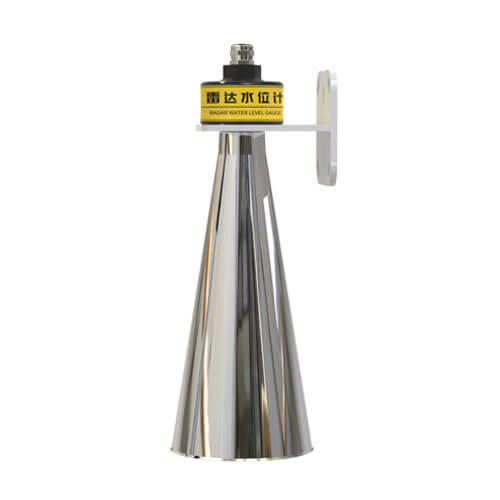
Radar Level Sensor
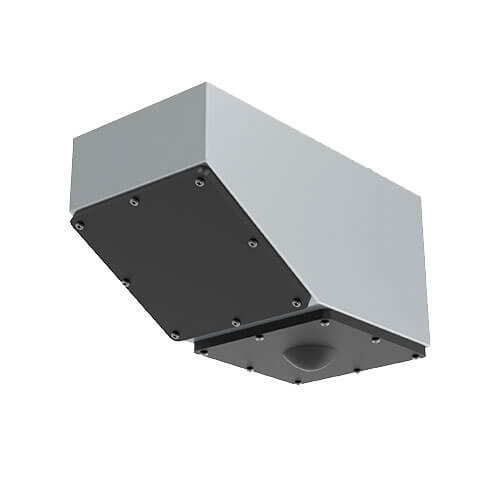
The RS-RAD-N01-1-T is a compact radar level sensor that uses non-contact measurement technology. With no moving parts, it offers stable operation and low maintenance, making it an ideal choice for industrial and commercial liquid measurements. The sensor uses non contact radar technology to calculate the distance between the liquid surface and the radar transmission point, as well as parameters such as distance change rate (radial velocity), azimuth angle, and height.
- Model: RS-RAD-N01-1-T
- MOQ: 1 PCS
- Delivery date: within 24 hours
- Price:$147
About - Radar Level Sensor
Our radar level sensor is an instrument designed for real time water level monitoring. It uses non contact radar technology to measure water surface height, providing high measurement accuracy and fast response while maintaining stable performance in harsh environments. The device supports a maximum measurement range of 65 meters, with a blind zone of less than 15 cm. For convenient installation, we provide a dedicated mounting bracket compatible with rain monitoring station poles and controllers. This radar level sensor is not affected by the measured medium or environmental conditions, enabling continuous delivery of accurate and reliable data.

Features
1. Renke’s radar level sensor is based on radar measurement principles, the device enhances signal anti interference capability and improves the signal to noise ratio, enabling high precision water level monitoring.
2. The working bandwidth is large, which enables the product to have higher resolution and accuracy.
3. The narrowest 8° antenna beam angle, the interference in the installation environment has less impact on the level meter, and the installation is more convenient.
4. The integrated lens design is compact and easy to install.
5. Low power consumption and long life.
6. Renke is a professional manufacturer of environmental monitoring equipment with 15 years of production and R&D experience. Our water quality sensors, weather sensors, level sensors and flow meters have ISO9001, CE, RoHS and FCC certifications. At present, Renke brand overseas market is constantly expanding and is your excellent choice.
Parameters
| Power supply | DC10-30V |
|---|---|
| Max. power consumption | 0.6W |
| Measure range | 0.15 m ~ 65 m |
| Accuracy | ±1mm@(40%RH, 25℃) |
| Resolution | 1mm |
| Beam angle | 8° |
| Working environment | -40℃~+80℃, 0%RH~95%RH (non-condensing) |
| Signal output | RS485 Output |
| Protection level | IP67 |
Applications
This radar level sensor features excellent anti interference performance, making it highly suitable for a wide range of industrial applications. The non contact radar technology is easy to configure and provides stable operation, effectively reducing both time and operational costs.
The radar level sensor is widely used in factory open channels, circulating water systems, small reservoirs, fish ponds, and water conservancy applications. It provides reliable data support for refined water resource management, helping improve the operational efficiency of water facilities and water utilization efficiency.
Installation
Installation requirements
During installation, it is essential to ensure that the instrument is perpendicular to the water surface and to avoid the radar beam being directed at obstructions that may cause false echoes. The specific requirements are as follows:
1. Ensure that the radar level sensor is installed perpendicular to the water surface. Any tilt may weaken the received signal amplitude, affecting accurate distance measurement.
2. Ensure that there are no obstructions within the beam range, such as riverbanks or other nearby structures.
Wiring requirements
Our radar level sensor supports a wide input voltage range of 10~30V. When connecting the 485 signal lines, please ensure that the A and B wires are not reversed and that device addresses on the bus do not conflict with one another. Serial port parameters: Interface: RS485, Baud Rate: 9600, Data Bits: 8, Stop Bits: 1, Parity: None. The power supply voltage should be within the 10~30V range, with a recommended 12V supply. For wiring, follow the color coding: Brown is VCC (Power +), Black is GND (Power -), Yellow is 485A, Blue is 485B.

Basic communication parameters
| Encoding | 8-bit binary |
|---|---|
| Data bits | 8 bits |
| Parity bit | None |
| Stop bit | 1 bit |
| Error check | CRC (redundant cyclic code) |
| Baud rate | 9600 bit/s |
FAQs - Radar Level Sensor
How does a radar level sensor work?
In continuous non-contact radar level measurement, the sensor emits radar pulses downward toward the medium from above. The surface of the medium reflects these pulses back to the sensor. By analyzing the received microwave signals, the sensor determines the exact distance to the material surface and uses this data to calculate the current liquid level.
Radar level sensor advantages and disadvantages
Advantages:
Using the principle of microwave reflection, it has strong anti-interference ability
Automatically and continuously monitors the changes in water level without manual operation
No mechanical wear, non-contact measurement, easy maintenance
The measurement process is independent of water quality and is not affected by floating objects such as floating ice
No wave-breaking well is required, and it has no effect on the water flow
Solar power supply
No complex installation process is required, and it will not affect the surrounding environment
Low cost and long life
Disadvantages:
Liquid overflow and liquid foam will interfere with the measurement of the radar level meter
There must be no obstacles in the measurement area
The deviation of the installation angle will affect the accuracy of the measurement results
What are the components of a radar level sensor?
The specific uses and structures of various radar water level sensors are different, but the basic forms are the same, including: transmitter, transmitting antenna, receiver, receiving antenna, processing part and display. There are also auxiliary equipment such as power supply equipment, data recording equipment, anti-interference equipment, etc.
What are the application areas of radar level sensor?
- Automatic monitoring of river water level and open channel water level
- Reservoir dam front and dam tailwater level monitoring
- Pressure regulating tower (well) water level monitoring
- Automatic tidal level monitoring system, urban water supply, sewage level monitoring system
Radar vs Ultrasonic level sensor
- Working Principle: The radar level meter measures using electromagnetic waves, while the ultrasonic level meter operates based on sound wave principles.
- Application Scenarios: The radar level meter is suitable for environments with high temperatures, high pressure, vacuum conditions, or high steam levels and requires certain dielectric properties of the medium. The ultrasonic level meter is suitable for atmospheric pressure environments, with the probe unable to withstand high temperatures, typically not exceeding 100°C. Additionally, the temperature and pressure of the medium affect the speed of ultrasonic waves.
- Measurement Range: Some radar level meters on the market offer a range of 0-100 meters, whereas ultrasonic level meters can only meet a range of 0-30 meters.
- Measurement Accuracy: The accuracy of radar level meters is significantly higher than that of ultrasonic level meters, typically reaching millimeter-level precision. The measurement accuracy of ultrasonic level meters may be affected by medium characteristics such as viscosity and density.
- Price: Radar level meters are generally more expensive than ultrasonic level meters.
How to maintain the radar level sensor?
The radar level sensor has no moving parts, resulting in minimal faults during use. Occasionally, volatile organic substances in the storage tank may crystallize on the horn or antenna of the radar level meter, which can be resolved by regular inspection and cleaning.
For routine maintenance, a PC can be used to remotely monitor the reflected wave curve. If new interference waves appear, the level meter’s false wave recognition function can be utilized to eliminate their impact, ensuring accurate measurement.
What's in the packing list?
Radar water level gauge sensor and matching nut *1
Certificate of conformity, warranty card
How to obtain the manual?
Please contact us to obtain the manual.
Related Blogs
Table of Contents What are wireless sensors? Wireless sensors are miniature electronic devices that integrate sensing, data processing, and wireless communication functions. They are capable
Table of Contents Water leak detection is designed to detect and repair leaks in pipes, equipment or building structures in a timely manner to prevent
Long-term rainfall and melting snow have raised water levels and flooded city roads, causing flooding. Frequent and extreme flooding is inevitable and endangers community safety.
Natural disasters such as floods and heavy rains pose threats to lives and property around the world. Without a proper flood monitoring system, these natural
Table of Contents Water is the source of life, integral to every aspect of human production and daily living. In many scenarios, ensuring health and
Table of Contents Have you or your friends ever experienced a burst pipe or indoor flooding? Even if you don’t live in a flood-prone area,
Table of Contents What is a water level sensor? A water level sensor is a device designed to measure the height of a liquid, typically