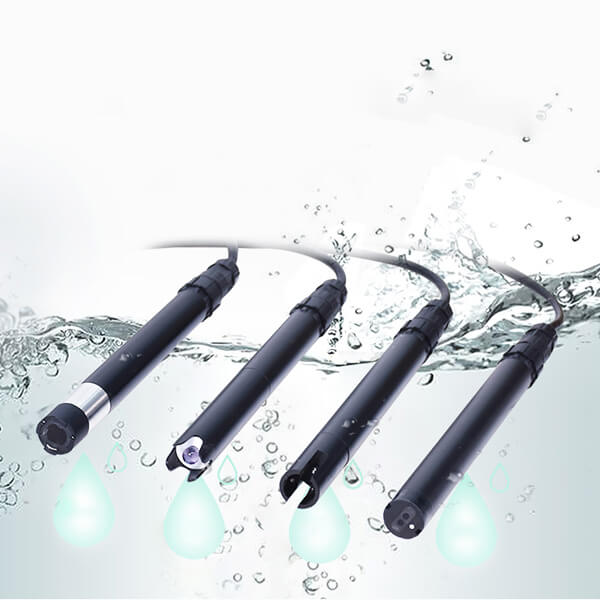
Water is the source of life, integral to every aspect of human production and daily living. In many scenarios, ensuring health and quality requires monitoring water quality, and water quality sensors are essential tools for achieving this goal. If you have questions about selecting or purchasing water quality sensors, maybe this article can help you. As a trusted brand, Renke will guide you through the 12 most common types of water quality sensors.

What is a water quality sensor?
A water quality sensor is a device that measures specific physical, chemical, or biological parameters in water to assess its quality.
List of water quality sensors and their principles
| Types | Working principle | Range |
|---|---|---|
| pH sensor | Glass electrode method | 0-14 pH |
| EC Sensor | Electrolytic conductivity principle | 1~2000 μS/cm 10~20000 μS/cm |
| Dissolved oxygen sensor | Fluorescence principle | 0-20 mg/L |
| Free chlorine sensor | Membrane polarographic method/Amperometric method | 0-2 mg/L, 0-10 mg/L, 0-20 mg/L |
| Turbidity sensor | 90° light scattering principle | 0~50NTU, 0~200NTU, 0~1000NTU, 0~4000NTU |
| ORP sensor | Electrochemical principle | -1999~1999 mV |
| COD sensor | UV absorption method | 0~500mg/L equiv.KHP |
| Ammonia nitrogen sensor | Electrochemical/Photometric method | 0-10mg/L, 0-100mg/L, 0-1000mg/L |
| Chlorophyll sensor | Fluorescence principle | 0~400 μg/L, 0~100 RFU |
| Green algae sensor | Fluorescence principle | 0~300000 cells/ml |
| Total suspended solids sensor | Optical principle | 0-200mg/L, 0-1000mg/L, 0-5000mg/L, 0~20000mg/L |
| Oil in water sensor | Fluorescence method | 0~50 ppm, 0~100 RFU |
| Water color sensor | Absorption method | 0~500 Hazen |
Water quality sensors utilize chemical, physical, or biological reactions to measure parameters such as conductivity, dissolved oxygen, pH, COD, residual chlorine, and turbidity in solutions. These sensors provide valuable data support for researchers and are widely used in laboratory studies, marine water quality assessments, aquaculture, and wastewater treatment.
12 types of water quality sensors
Next, we’ll introduce the 12 types of water quality sensors commonly used in projects today:
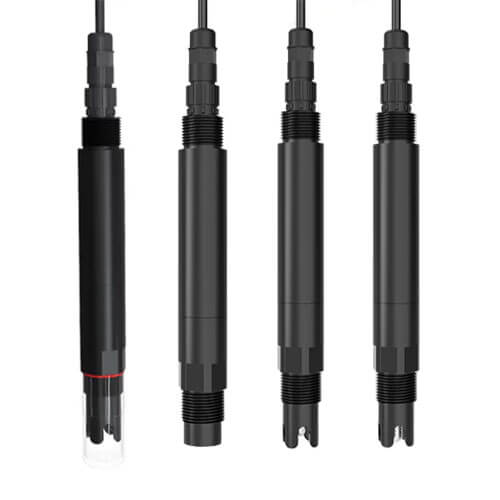
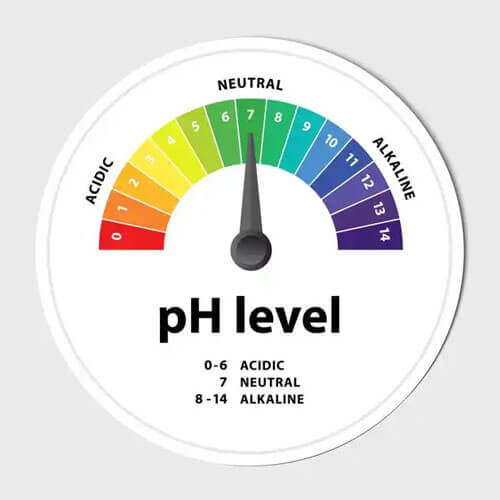
When it comes to water quality testing, pH is probably the parameter you hear about most. Household water should sit between 6.5 and 8.5, since most microorganisms thrive within a pH range of 4.5 to 9, with 6.5 to 7.5 being their comfort zone. Industrial water pH targets vary quite a bit by application, from acidic process water to alkaline boiler feedwater. Drop below 6.5, and fungi start crowding in on bacteria’s territory. Push past 4.5, and fungi tend to take the upper hand. Climb above 9, and most microorganisms find their metabolism significantly slowed.
In order to monitor the pH value of industrial wastewater, we generally use pH sensors. A pH sensor is an electronic device used to measure the acidity or alkalinity of a liquid. It typically consists of a glass electrode, a reference electrode, and an electrode housing. When the glass electrode and the reference electrode are both immersed in the solution being tested, a potential difference is generated between them; this potential difference is linearly related to the solution’ s pH value.
Did you know? There are many types of pH sensors, and you should choose the best sensor according to the properties of the measured solution. Experienced Renke experts have provided six types of pH sensors for different solution properties. They include:
- Combination electrode – used in non-corrosive weak acid and weak alkali solutions
- Flat-surface FGD electrode – used in wet flue gas desulfurization processes
- PTFE electrode – used in strong acid and strong alkali solutions
- Electroplating electrode – used in solutions with high organic content
- Glass electrode – used in corrosive liquids
- Antimony electrode – used in solutions containing hydrofluoric acid
For more details, you can check out this article on types of pH sensors.
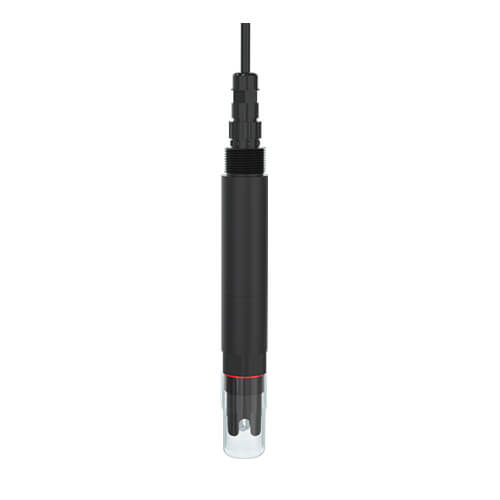
Conductivity is a solution’ s ability to conduct electric current, and it’ s a key indicator water quality sensors track. The higher the conductivity, the more dissolved ions in the water, and the better it conducts electricity. This closely tracks TDS (Total Dissolved Solids), which reflects the concentration of dissolved minerals and solids in water, usually estimated from conductivity itself. A high TDS means more dissolved substances; a low TDS points to purer water and lower conductivity.
Currently, conductivity sensors on the market fall into two main types based on their measurement principle. Electrode conductivity sensors work on a resistance measurement approach, while inductive conductivity sensors rely on electromagnetic induction. Both types are widely used today.
Free Chlorine Sensor
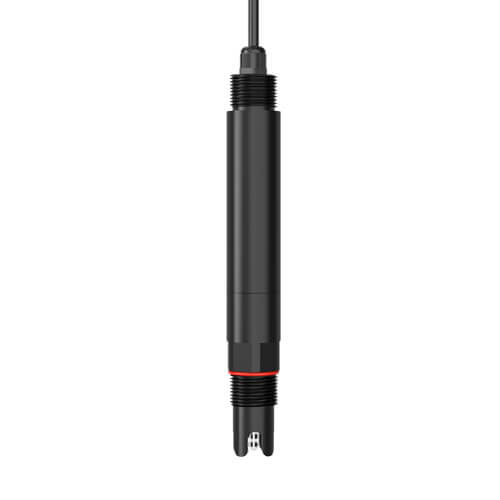
You should know that both drinking water and swimming pools use disinfectants for sterilization, and these disinfectants are chlorine-based compounds. Residual chlorine refers to the total amount of free chlorine and combined chlorine remaining in the water after chlorination. Too much chlorine will give the water a bad smell, and too little will make the water lose its ability to maintain sterilization. Therefore, you need to use a residual chlorine sensor to monitor its concentration.
Our residual chlorine sensor (RS-CL-*-2-20-*-T) can help you measure residual chlorine, chlorine dioxide and ozone in water. It has a simple structure and is easy to clean and replace. It can be used in drinking water companies, canning factories, swimming pools, cooling water circulation and other occasions where continuous monitoring of chlorine content is required.
Turbidity Sensor
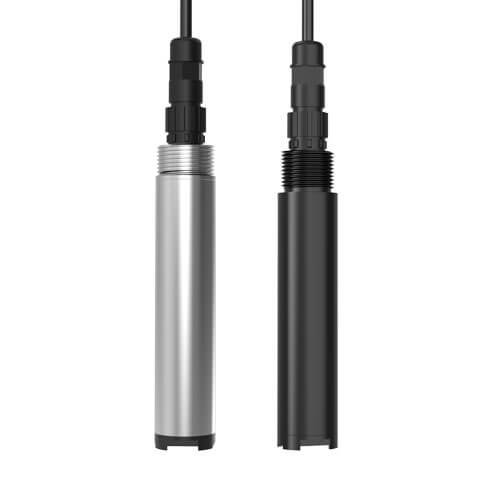
Your eyes can clearly see whether the water is clear or not, which is related to turbidity. Turbidity is related to suspended particles in water, and suspended particles will diffusely reflect the incident light. Therefore, turbidity sensors usually use scattered light in a 90-degree direction as a test signal, and calculate the turbidity value by measuring the intensity of the scattered light. It is worth noting that scattered light and turbidity conform to a multi-segment linear relationship, so the sensor needs to be calibrated at multiple points.
Most turbidity sensors use the principle of light scattering(like RS-ZD-*-T). By precisely measuring the amount of light passing through the water, it calculates the concentration of suspended solids. The content of suspended matter is closely related to the turbidity of the water, and the final value is output after linearization. This sensor is widely used for accurate measurement of rivers, wastewater, and sewage.
Dissolved Oxygen Sensor
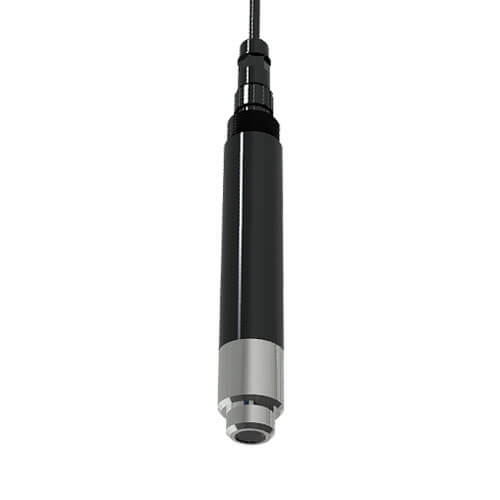
Dissolved oxygen, as the name suggests, refers to molecular oxygen dissolved in water. I think you should have guessed that this is a very important parameter for aquariums or aquaculture industries. Because the oxygen content in water directly affects the growth and health of aquatic organisms. So we need to accurately monitor the dissolved oxygen content.
Dissolved oxygen sensor (like RS-LDO*-*-T) can automatically and continuously monitor dissolved oxygen values. This process does not consume oxygen and does not require electrolytes. It typically comes in two types: freshwater and saltwater types, enabling monitoring in various environments such as aquaculture, aquariums, and saltwater water quality.
ORP Sensor

ORP (Oxidation-Reduction Potential) reflects the relative concentrations of oxidizing and reducing agents in water, measured in millivolts (mV). The higher the ORP, the stronger the oxidizing power and the weaker the reducing power. It can reflect the ability of lakes or rivers to decompose organic pollutants by electrochemical means. ORP monitoring is beneficial to water treatment, environmental monitoring, industrial production and other fields.
When selecting an ORP sensor, a high-purity platinum electrode is a good choice. It offers excellent resistance to acids, alkalis, and oxidation. Suitable for a variety of environments, such as industrial wastewater containing cyanide or chromium, natural water bodies like rivers and lakes, and aquaculture.
COD Sensor
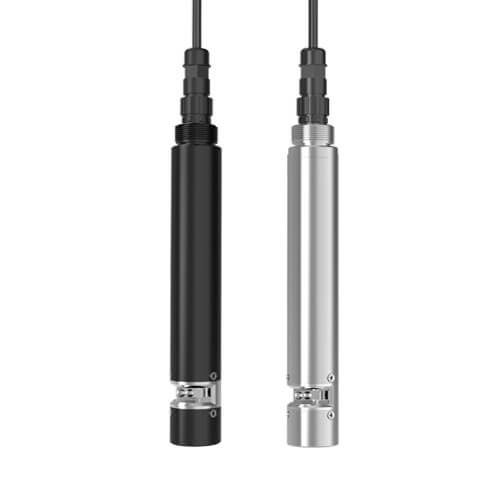
COD is chemical oxygen demand. Under certain conditions, COD is an indicator of the amount of reducing substances (especially organic matter) in water. The larger the COD value, the more serious the organic pollution in the water. Many organic substances dissolved in water absorb ultraviolet light. Therefore, by measuring the degree of absorption of 254nm wavelength ultraviolet light by these organic substances, the content of dissolved organic pollutants in water can be accurately measured.
COD sensor uses two light sources, one ultraviolet light is used to measure the COD content in the water, the other reference light is used to measure the turbidity of the water body, and the light path attenuation is compensated by a specific algorithm and can be used to a certain extent. Eliminate the interference of particulate suspended matter impurities, so as to achieve more stable and reliable measurement.
Ammonia Nitrogen Sensor
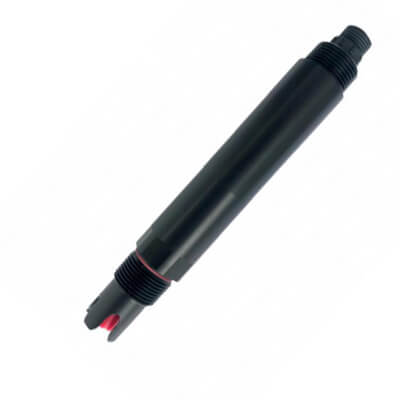
As we all know, high levels of ammonia nitrogen in water can be toxic to fish and shrimp. In aquariums and aquaculture environments, the main sources of ammonia nitrogen are feed and excrement from aquatic organisms. In nature, the primary sources of ammonia nitrogen in rivers and oceans are various forms of pollution. Therefore, we need to rely on ammonia nitrogen sensors to monitor the concentration of ammonia nitrogen in the water.
Ammonia nitrogen sensors calculate the concentration of ammonia-nitrogen by measuring the concentration of ammonium ions in water. This method is susceptible to interference from potassium ions and pH; therefore, selecting an ammonia nitrogen sensor with K+ ion and pH compensation functions yields more accurate measurement results.
Chlorophyll Sensor
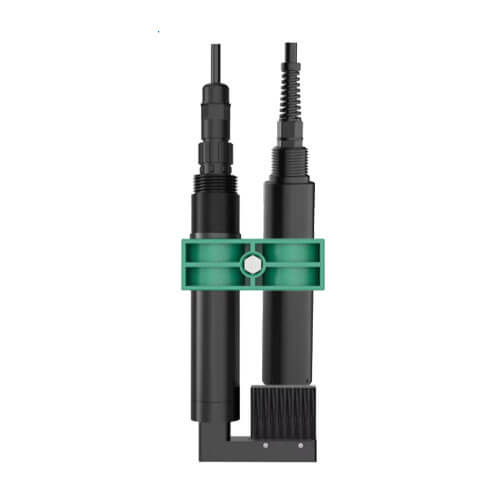
When blue-green algae bloom, chlorophyll a content in the water rises accordingly. Chlorophyll a levels closely track water quality and eutrophication. In reservoirs, below 5 μg/L signals excellent quality, 5~10 μg/L is good, 10~30 μg/L points to moderate eutrophication, and above 30 μg/L means poor quality. Chlorophyll sensors are a convenient tool to monitor the algal conditions in rivers, lakes, ponds, and aquaculture environments.
Designed using fluorescence principles and fiber-optic transmission, this chlorophyll sensor is highly resistant to external light interference. It facilitates the analysis of the relationship between fluorescence intensity and chlorophyll concentration based on actual conditions.
Green Algae Sensor
Did you know? Compared to traditional manual counting methods, blue-green algae sensors using fluorescence principles offer better repeatability and stability, enabling real-time online monitoring. Equipped with an automatic cleaning brush, can eliminate bubbles and reduce the impact of contamination on measurements. This sensor can serve as an early warning system for algal blooms.
The blue-green algae sensor is widely used in river sections, lakes, reservoirs, and other environments. It is the best choice for monitoring phytoplankton, algal growth, water eutrophication, algal bloom early warning, and studying aquatic ecosystems.
Total Suspended Solids Sensor
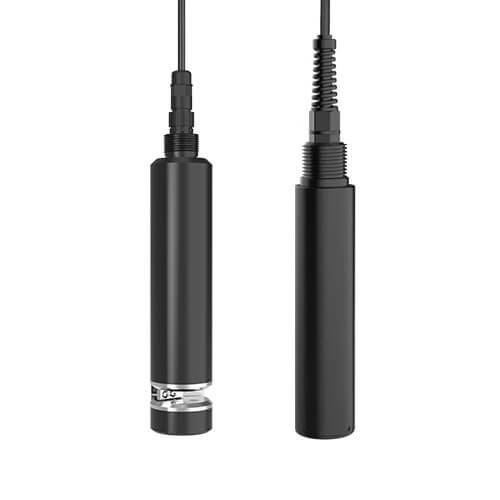
Suspended solids are organic and inorganic particles suspended in water that cannot pass through 0.45-micrometer filter paper (or a filter). Examples include sludge, clay, organic matter, algae, and microorganisms that are poorly soluble in water. The concentration of suspended solids in water is one of the indicators used to measure the degree of water pollution.
The core principle of a TSS sensor is optical scattering. Suspended particles in a solution cause light signals to scatter; the sensor detects the intensity of the scattered light to calculate the concentration of suspended solids. No chemical reagents are required, and the measurement data is more accurate.
Water Ion Sensor
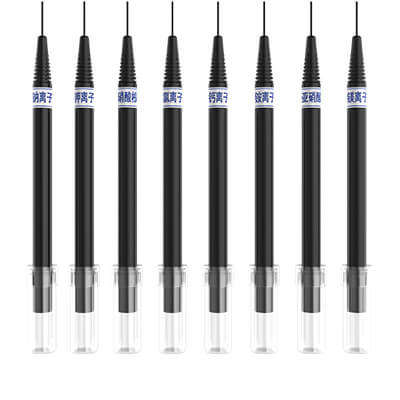
Our water ion sensors are devices that measures the concentration of various ions in water. There are eight types of ammonium ions, nitrites, nitrates, magnesium ions, sodium ions, potassium ions, chloride ions, and calcium ions.
Ion sensors are widely used in industrial wastewater, surface water, drinking water, seawater and ion on-line automatic continuous analysis and detection in industrial production process control. The ion concentration and temperature values of the aqueous solution are continuously monitored.
Water quality monitoring system

The following are the main components and functions of a water quality monitoring system:
1. Water quality sensors: Water quality monitoring systems use a variety of sensors to measure physical, chemical, and biological parameters in water bodies, such as pH, dissolved oxygen concentration, temperature, turbidity, chemical oxidation-reduction potential (ORP), etc. Sensors are usually installed in water bodies or water treatment equipment and send data to data acquisition devices through wiring or signal transmission devices.
2. Data collectors: Data collectors are used to store and record data collected from sensors. Data collectors can be dedicated monitoring hosts or computer systems connected using a network. Data acquisition devices are also responsible for managing the transmission, storage, and backup of data.
3. Data management tools: Water quality monitoring systems use data processing and analysis tools to evaluate the collected data. These tools can process and analyze data according to preset standards and thresholds, generate water quality assessment reports, and detect abnormal conditions or potential pollution events.
4. Reporting and alert systems: Water quality monitoring systems can also generate regular water quality reports, providing detailed data analysis and evaluation to help users understand the health of water bodies. In addition, the system can also set up an alarm mechanism. Once it detects that the preset threshold is exceeded or an abnormal situation occurs, an alarm message will be sent to relevant personnel immediately so that timely measures can be taken.

Water quality monitoring spans a wide range of fields, and different environments call for different parameters. Renke, with over 15 years of R&D and manufacturing experience, has built up deep expertise serving customers worldwide. We're happy to answer your questions and help you quickly find accurate, cost-effective sensors, whether for research or industrial integration. Explore our lineup, or reach out to our team for tailored recommendations.