
Turbidity is used to measure the degree to which suspended particles in water obstruct the transmission of light. Due to the presence of various suspended substances such as silt, clay, organic matter, inorganic matter, plankton, and microorganisms, light can be scattered or absorbed, thereby affecting the water’s transparency. At present, turbidity is an important indicator for assessing whether water is polluted.
What is Turbidity?
Turbidity is a physical indicator used to measure the clarity of a liquid. It describes the extent to which suspended substances in water hinder the transmission of light. It is caused by particulate matter in the water(such as clay, silt, colloidal particles, plankton, and other microorganisms) and is one of the key physical indicators for assessing water quality.
- NTU < 1: Water is very clear
- NTU = 5: Slight turbidity visible to the naked eye
- NTU = 50: Noticeably turbid
- NTU > 100: Highly turbid, mud-like appearance
Turbidity Units
Turbidity is determined by measuring the degree of light scattering and absorption in water. The most commonly used unit of measurement is NTU (Nephelometric Turbidity Unit). Other units include FTU, FAU, and FNU, which are generally interchangeable in practical applications. Currently, there are two measurement standards depending on the standard solution used.
The first type is a kaolin or diatomaceous earth standard. This standard defines a turbidity of 1 degree for a 1 mg/L suspension of diatomaceous earth or kaolin, and the unit of measurement is “degree,” “mg/L,” or “JTU.” The preparation of this standard solution can refer to the Japanese Water Quality Test Method (JIS (1985)) and the American Standard Test Method (JTU). The JTU is the Jackson Turbidity Unit, the oldest unit. Due to its low precision, it has been phased out.
The second standard is the formazin standard. Using a formazin standard solution, this standard uses the unit “NTU” or “TU” when measured with a scattered light turbidimeter. The unit used in the European ISO 7072 method is “FNU.” When measured with a transmitted light turbidimeter, this standard uses the unit “FTU,” which can also be expressed as “FAU,” representing the formazin attenuation unit. Furthermore, the unit of turbidity measurement in the winemaking industry is “EBC.”
There is a certain conversion relationship between these units: 1 NTU = 1 FTU = 1 FAU = 1 FNU = 4 EBC.
What Is the Difference Between Turbidity, Color and Transparency?
Turbidity, color, and transparency are common parameters for water quality testing and frequently appear in various water quality monitoring programs. So, what are the differences and connections between them? Read on to help you make the right choice when purchasing a turbidity sensor or colorimeter.
Turbidity reflects the degree to which suspended matter in water obstructs the passage of light. In other words, due to the presence of insoluble matter in the water, some light passing through the water sample is absorbed or scattered, preventing it from passing straight through. Therefore, it is an optical property of water.
Although both turbidity and color are optical properties of water, they are distinct. Color is caused by dissolved substances in water, while turbidity is caused by insoluble substances. Therefore, some water can have high color without being turbid. Generally speaking, the more insoluble substances in water, the higher the turbidity, but there is no direct quantitative relationship between the two.
Because turbidity is an optical effect, its magnitude depends not only on the amount and concentration of insoluble matter but also on properties such as particle size, shape, and refractive index. In water quality analysis, turbidity measurement is typically used for natural and drinking water. Since domestic and industrial wastewater contain large amounts of suspended pollutants, only the suspended matter concentration needs to be monitored.
Transparency refers to the clarity of water. Clean water is transparent. The more suspended matter and colloidal particles in the water, the lower the transparency. Groundwater generally has higher transparency. Transparency is a water quality indicator influenced by both color and turbidity.
Why Measure Turbidity?
It is a crucial water quality parameter for both drinking water and industrial water treatment. Reducing turbidity helps lower the levels of harmful substances in water, including bacteria, coliforms, viruses, Cryptosporidium, iron, and manganese. Studies have shown that when turbidity is reduced to 2.5 NTU, about 27.3% of organic matter can be removed. Further reducing to 0.5 NTU increases organic matter removal efficiency to 79.6%. At turbidity levels of 0.1 NTU, nearly all organic matter is effectively eliminated, and the content of pathogenic microorganisms is significantly decreased. This makes controlling turbidity especially important in the drinking water industry.
For drinking water
In drinking water, turbidity reflects the presence of bacteria, pathogens, or harmful particles during disinfection. High levels not only impact the water’s sensory qualities but also reduce the effectiveness of disinfectants like free chlorine. Therefore, treatment systems must closely monitor this parameter to ensure it meets safety standards for human consumption.
Additionally, turbidity is a core water quality control metric specified by the WHO Guidelines for Drinking-water Quality and national drinking water standards, where values generally should not exceed 1 NTU. Exceeding these limits increases the risk of waterborne diseases.
For industrial process
In industrial production, turbidity measurement is a critical quality control parameter, especially in the food and beverage manufacturing sector. It directly affects the product’s appearance, stability, and market acceptance. Elevated turbidity levels may result from raw material impurities, process inconsistencies, or microbial contamination.
In the brewing and winemaking industries, turbidimeters are widely used for both online and offline monitoring of haze levels in products. This helps assess the concentration of suspended solids such as yeast residues, protein aggregates, or insoluble polyphenols. The measured values guide key processing steps like clarification, filtration, and cold storage, serving as essential tools to ensure the brightness and taste quality of beverages.
For aquaculture
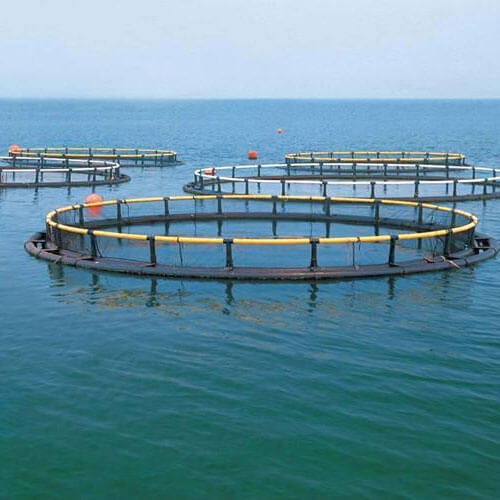
In aquaculture, feed residues, organic debris, algae, or sediment disturbances can reduce water transparency, adversely affecting the habitat of fish and other aquatic organisms. Turbidity, as an important physical parameter indicating the concentration of suspended particles in water, directly impacts the health, growth performance, and water quality stability of aquatic animals. High level has the following effects on aquaculture:
- Damage to fish gill tissues: Prolonged exposure to suspended particles can irritate the gills, leading to tissue lesions or secondary infections.
- Reduced photosynthesis: Low water transparency diminishes light penetration, inhibiting photosynthesis by phytoplankton and thereby lowering dissolved oxygen levels.
- Promotion of harmful microorganisms: Increased turbidity is often accompanied by organic matter accumulation, creating a breeding ground for pathogenic microbes and raising the risk of waterborne diseases.
- Impact on fish and shrimp health: Decreased water clarity reduces feeding efficiency, leading to feed waste and further deterioration of water quality.
Research shows that clear-water species like rainbow trout and salmon perform best when turbidity levels range from 5 to 20 NTU, with stress occurring above 25 NTU. More tolerant species such as bass, grouper, and white shrimp can tolerate 20 to 80 NTU. However, levels exceeding 150 NTU significantly impair gill function and feeding behavior.
Factors Affecting Turbidity Measurement
Particle characteristics
Particle properties are key factors affecting the accuracy of turbidity measurements, including particle size, shape, and refractive index. Smaller particles scatter light more strongly, which can cause readings to be overestimated. Irregularly shaped particles lead to uneven light scattering directions, increasing measurement errors. Additionally, differences in refractive indices among particles of different materials can alter scattering intensity, impacting the final readings. Therefore, sensors exhibit selective responses to the physical characteristics of particles, and particle distribution features must be carefully considered in practical applications.
Optical interference
Light scattering effects vary with different wavelengths and particle types. Most sensors use a wavelength of 850 nm (infrared light) to minimize color interference in measurements; however, some particles still exhibit wavelength-dependent scattering. Additionally, contamination of the sensor’s light source or receiver—such as algae buildup, oil films, or scale deposits—can reduce light intensity or cause abnormal scattering, compromising measurement accuracy. Regular cleaning and maintenance are therefore essential.
Sample water properties
The physical and chemical characteristics of the water sample significantly affect turbidity measurements, including factors such as color, temperature, pH, and conductivity.
Water color
If the water sample contains a large amount of dissolved colored substances(such as humic acids, iron rust, or algal metabolites), these materials absorb light and interfere with the light scattering signal. This can cause readings to be either overestimated or underestimated. Such interference is particularly noticeable when measurements are taken using visible light, while using infrared light (e.g., 850 nm) can partially reduce this effect.
Water temperature
Temperature itself does not directly change turbidity values but influences particle motion and distribution in water, thereby indirectly affecting measurements. At higher temperatures, decreased water viscosity allows particles to remain suspended longer, increasing particle concentration in the sensor’s detection area and potentially raising readings. Conversely, lower temperatures increase viscosity, causing particles to settle, which may lead to lower measured values.
Water pH and conductivity
Changes in pH and conductivity impact particle surface charge, affecting their aggregation or dispersion. Under neutral or mildly alkaline conditions, colloids tend to remain stable and particles resist aggregation. In strongly acidic or alkaline environments, particles may aggregate and settle, influencing the measurement.
Water flow conditions
When water is flowing, suspended particles are continuously stirred and distributed more evenly, resulting in more accurate measurements. However, excessively fast flow can introduce bubbles, vibrations, or disturb sediment, causing sudden spikes in measured values. In still water, larger particles tend to settle due to gravity, leading to lower particle concentrations and underestimation in measurements. Therefore, laboratory procedures often specify settling times or require uniform stirring to ensure reliable data.
Sensor types and installation
Common measurement methods include transmission, scattering, and 90° scattering (the most widely used). Each method differs in sensitivity to particle characteristics. High-precision applications may use multi-angle measurements for more comprehensive data. Sensors must be periodically calibrated with standard solutions (such as formazin or formazin substitutes); inaccurate or infrequent calibration can cause measurement errors.
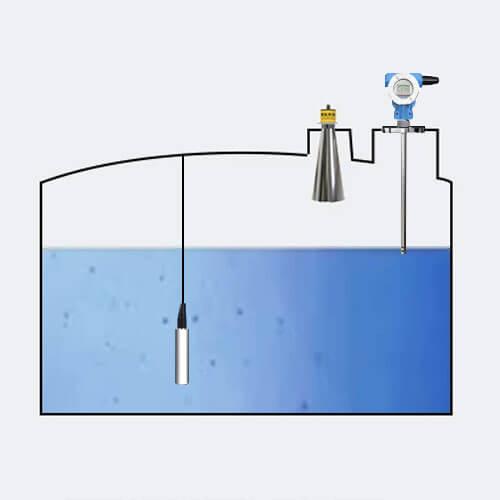
Additionally, sensor installation location affects results. Installing too low, near the bottom, exposes turbidity sensors to sediment interference. Installing too high may result in insufficient suspended particle detection, especially in low-flow conditions. Therefore, selecting an appropriate height and angle for installation is essential.
Oils and surface films
When oils or surface films adhere to the sensor’s optical window (either the light source or receiver), they alter the light path, causing abnormal absorption, refraction, or scattering. This can lead to elevated or fluctuating measurement values. Due to high surface tension, oil films create uneven interfaces, resulting in multiple reflections or bending of incident light. These films are especially prone to accumulation in still or slow-flowing water, interfering with accurate readings.
Floating oils and films on the water surface possess reflective and scattering properties, which sensors may mistakenly interpret as suspended particles, causing false increases in measured values. This effect is particularly pronounced in instruments using the 90° scattering measurement method