Chlorine based disinfection is the foundation of safe drinking water treatment worldwide. However, not all chlorine in water behaves the same way, and understanding the differences between its various forms is essential for effective monitoring and regulatory compliance.
This article provides a professional overview of the differences between a free chlorine sensor and a total chlorine sensor, helping you choose the most suitable chlorine sensor for your application.
Forms of chlorine in water
Before learning about a free chlorine sensor and a total chlorine sensor, you first need to understand the forms in which chlorine exists in water, as this is the foundation of all chlorine measurement technologies. Chlorine in water is generally classified into free chlorine, combined chlorine, and total chlorine.
- Free chlorine refers to chlorine that exists in a free state in water and still retains strong disinfection capability, mainly hypochlorous acid (HOCl) and hypochlorite ions (OCl⁻).
- Combined chlorine refers to chlorine compounds formed when free chlorine reacts chemically with ammonia nitrogen or nitrogen containing organic substances in water. The most common forms are chloramines.
- Total chlorine refers to the total amount of all chlorine based disinfectant components present in water, including free chlorine and combined chlorine.
Now that you understand the different forms of chlorine in water, let us move on to the detailed knowledge of free chlorine sensors and total chlorine sensors.
What is a free chlorine sensor?
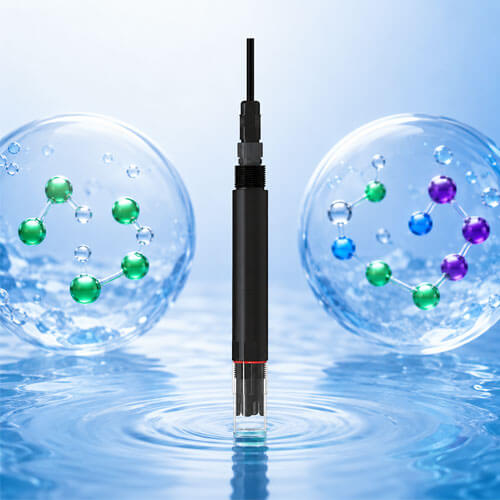
A free chlorine sensor is a water quality monitoring instrument that uses electrochemical or amperometric principles to continuously measure the concentration of free chlorine in aqueous solutions, including hypochlorous acid (HOCl) and hypochlorite ions (OCl⁻). It is typically expressed in mg/L or ppm (parts per million).
Unlike manual DPD (N,N-Diethyl-p-phenylenediamine) colorimetric methods that depend on chemical reagents, these sensors output a continuous electronic signal. This allows for seamless data integration and immediate response, as seen in industry standard models such as the Renke RS-CL-N01-3-*-T and the Sensorex FCL.
What is a total chlorine sensor?
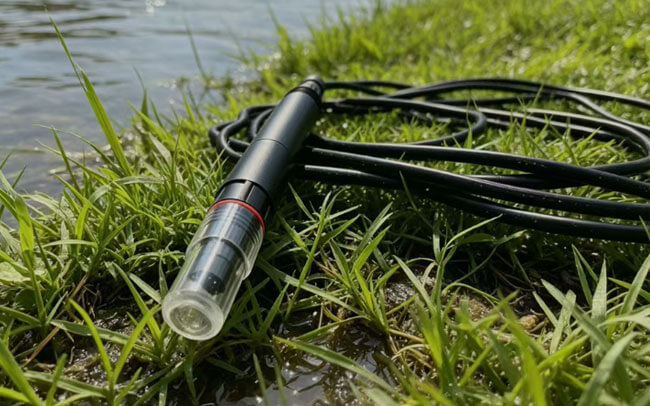
A total chlorine sensor is a water quality monitoring instrument used to measure the sum of free chlorine and combined chlorine (chloramines) in water. Common methods include colorimetric (DPD) and amperometric techniques.
These membrane based sensors enable online monitoring without the need for chemical reagents. By providing a continuous electronic output with minimal maintenance, they ensure highly accurate and consistent readings for critical water treatment processes.
Difference between a free chlorine sensor and a total chlorine sensor
1. Difference in monitored components
The difference between a free chlorine sensor and a total chlorine sensor lies in the substances they measure and the water quality meaning they represent.
A free chlorine sensor measures only the active chlorine species in water that provide immediate disinfection capability, including hypochlorous acid (HOCl) and hypochlorite ions (OCl⁻). These species can rapidly inactivate pathogens. Therefore, free chlorine is a key parameter for controlling disinfection performance in drinking water, swimming pools, and industrial water systems. If free chlorine levels are too low, microbial control may fail even if the total chlorine level appears to be within an acceptable range.
A total chlorine sensor measures all chlorine present in water, including both free chlorine and combined chlorine, mainly chloramines formed when chlorine reacts with ammonia or organic nitrogen. This means total chlorine reflects not only the remaining disinfectant but also the chlorine that has already reacted and been consumed. As a result, it represents the overall chlorine content in solution rather than a direct indicator of disinfection capability.
So the core difference is that free chlorine tells you how much active disinfectant you have right now, while total chlorine tells you how much chlorine is present in all forms, including less effective or spent forms.
2. Difference in measurement principle
Although both types of sensors frequently utilize amperometry, their internal chemical mechanisms are distinct. A free chlorine sensor employs a selective membrane and a specific electrolyte that exclusively allows hypochlorous acid (HOCl) to reach the electrode for measurement.
In contrast, a total chlorine sensor is more complex. It generally includes a specialized catalyst or a different electrolyte solution designed to decompose stable chloramines. This process ensures that both combined chlorine and free chlorine are reduced at the electrode, providing a comprehensive reading.
3. Difference in pH influence
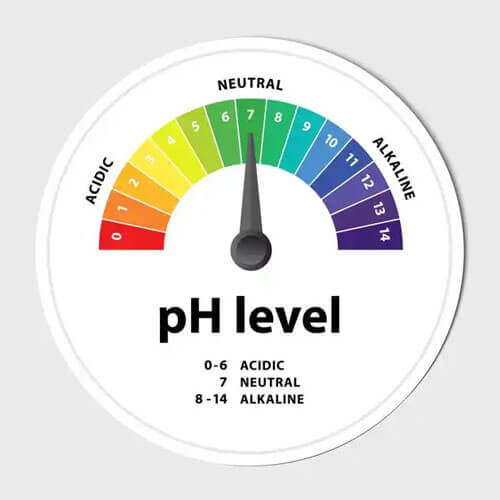
The two sensors respond differently to the surrounding water environment, particularly regarding pH levels. The accuracy of a free chlorine sensor is highly dependent on pH because the equilibrium between HOCl and OCl⁻ shifts as acidity changes. Consequently, these sensors usually require integrated pH compensation to maintain precision.
In contrast, a total chlorine sensor is more stable and less sensitive to pH fluctuations, making it more suitable for “dirty water” applications or industrial processes where water chemistry may vary significantly.
How to choose between a free chlorine and a total chlorine sensor?
1. Determine the primary objective
The choice between a free chlorine sensor and a total chlorine sensor mainly depends on what you aim to control: real time disinfection performance, or overall chlorine chemistry and by product accumulation.
Free chlorine sensors are the industry standard in drinking water plants and swimming pools because they directly measure the remaining “disinfection capacity” in water, ensuring effective pathogen control. On the other hand, total chlorine sensors are commonly used in wastewater treatment and environmental monitoring. They are essential for compliance with discharge regulations, which often limit the total amount of oxidants released into natural ecosystems to protect aquatic life.
Therefore, if your main objective is to control active disinfection, a free chlorine sensor is the ideal choice. If you are concerned with overall water quality conditions and chlorine consumption behavior, a total chlorine sensor is more suitable, as it provides a more complete picture of chlorine consumption and potential by product formation.
A simple rule engineers often use is: if the failure risk is microbial safety, prioritize a free chlorine sensor; if the failure risk is water quality drift or chloramine accumulation, choose a total chlorine sensor.
2. Determine water quality
Water quality is another critical factor in determining whether to select a free chlorine sensor or a total chlorine sensor. This is because water quality influences chlorine speciation (how chlorine exists in the water), chlorine demand (how quickly it is consumed), and interference chemistry (how other substances react with the sensor signal). These three elements directly affect the suitability of each measurement method.
In clean water with extremely low levels of ammonia or organic nitrogen, the values for free and total chlorine are nearly identical. In such cases, a free chlorine sensor is the more efficient and sensitive choice. However, in water characterized by high organic matter, high nitrogen, or high turbidity, most of the chlorine reacts rapidly with contaminants to form chloramines. Under these conditions, a total chlorine sensor is the optimal choice for accurate monitoring.
3. Determine pH stability
The pH level of the water and your ability to control it should also be considered when selecting a sensor. Because free chlorine sensors are highly sensitive to pH fluctuations, they are best suited for systems with stable pH levels, typically between 6.5 and 7.5, or systems that already integrate pH sensors for automatic compensation.
If your process experiences significant pH variations and you do not have the infrastructure for advanced compensation, a total chlorine sensor may provide more stable and reliable readings, as its measurement principle is less affected by water acidity or alkalinity.
4. Determine maintenance costs
Free chlorine and total chlorine sensors differ significantly in maintenance requirements. A free chlorine sensor has a relatively simple structure, typically consisting of a selective electrode, a membrane, and an electrolyte system. Its maintenance focus is mainly on membrane cleaning, electrolyte condition, electrode polarization stability, and proper flow conditions.
In contrast, a total chlorine sensor usually requires the addition of reagents, such as potassium iodide or DPD solution, which increases operating costs. If maintenance resources at your site are limited, a reagent free membrane type free chlorine sensor may be more practical, provided that it meets your regulatory and process requirements.
How to use a free chlorine sensor or a total chlorine sensor correctly?
1. Stable flow conditions
The core component of both a free chlorine sensor and a total chlorine sensor is a membrane covered electrode, which is highly sensitive to water flow conditions. Therefore, the sensor must never be placed directly into stagnant water or pipelines with unstable flow rates. Users should use a dedicated constant flow chamber and strictly maintain the flow rate between 30 and 50 liters per hour.
If the flow rate is too low, diffusion efficiency decreases, resulting in slow response times. If the flow rate is too high, signal fluctuations or membrane damage may occur. Therefore, using a dedicated flow cell or constant flow device not only ensures sufficient chemical reaction conditions at the electrode surface, but also effectively protects the sensitive membrane from physical damage caused by pressure fluctuations.
In addition, the sensor should not be installed in:
- Locations where bubbles easily accumulate
- Pipeline dead zones
- Areas with strong vibration
- Water systems with frequent start stop cycles
These factors can all affect the stability of the electrochemical signal.
2. Perform proper power polarization
When a free chlorine sensor or total chlorine sensor is installed for the first time, restarted after a long power outage, or after replacement of the electrolyte or membrane assembly, sufficient power polarization is usually required. Polarization refers to the process of continuously powering the sensor under its normal operating voltage so that the electrochemical reaction at the working electrode gradually reaches a stable state and the background current becomes stable.
Under normal conditions, the polarization time for a free chlorine sensor is typically more than 2 hours. Due to its more complex internal chemical reaction pathways, a total chlorine sensor may require 6 hours or even longer for polarization, depending on the manufacturer’s specifications.
3. Pay attention to pH and temperature compensation
The physical and chemical parameters of water can significantly interfere with chlorine concentration measurements. For free chlorine sensors, when the pH level increases, hypochlorous acid, which has strong disinfecting capability, is converted into hypochlorite ions, resulting in a significant reduction in sensor signal.
Therefore, in applications with large pH fluctuations, a pH sensor must be integrated for coordinated compensation. In addition, since temperature affects ion diffusion rates, ensuring that the sensor’s automatic temperature compensation function is enabled is a fundamental technical requirement for obtaining reliable measurement data.
4. Regular calibration
Online chlorine sensors are not permanently maintenance free devices after installation. Due to factors such as electrode aging, membrane contamination, electrolyte degradation, and water quality changes, sensor signals will gradually drift over time, making regular calibration necessary.
In practical applications, the DPD colorimetric method is commonly used as a reference standard to manually verify online measurement data. Depending on operating conditions, the calibration interval may range from several weeks to several months.
5. Regular cleaning
After long term operation, the membrane surface of a free chlorine sensor or total chlorine sensor can easily accumulate contaminants such as scale, biofilm, suspended solids, oil residues, or iron and manganese deposits. These contaminants hinder chlorine diffusion, resulting in slower response times or lower measurement readings.
Therefore, the sensor should be cleaned regularly according to water quality conditions to restore its electrochemical activity and extend its overall service life.

This article was written by the Renke Technical Team. Shandong Renke is a leading global manufacturer of environmental monitoring instruments and industrial Internet of Things technology. We specialize in smart water management, industrial sensor networks, and advanced monitoring solutions, dedicating ourselves to bridging the gap between complex electrochemical principles and practical engineering applications. Driven by our commitment to data precision and environmental safety, we publish professional technical articles to help engineers, plant operators, and environmental compliance officers worldwide solve challenging installation and water treatment issues.