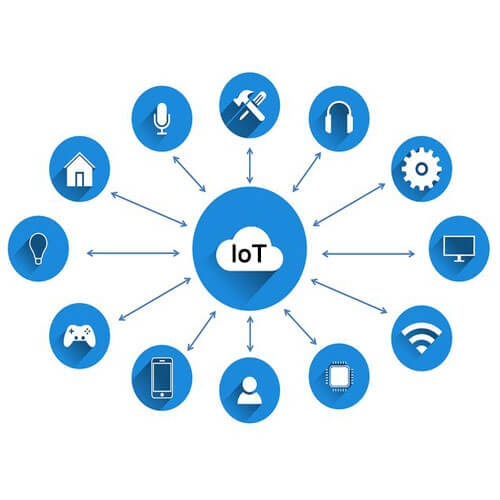
“IoT devices” is one of the most familiar terms in the tech world today. From the smartwatch on your wrist to the robot vacuum in your living room, and the machinery humming on a factory floor, everything seems to be connected.
But when you actually sit down to build a project or plan an IoT solution for your organization, the picture gets a lot less clear. Sensors, MCUs, communication modules, power management — what does each one do, how do you choose the right combination for your specific needs? What communication protocols do IoT devices use? How are they applied in real-world scenarios? That’s exactly what we’re going to dig into today.
What are IoT devices?
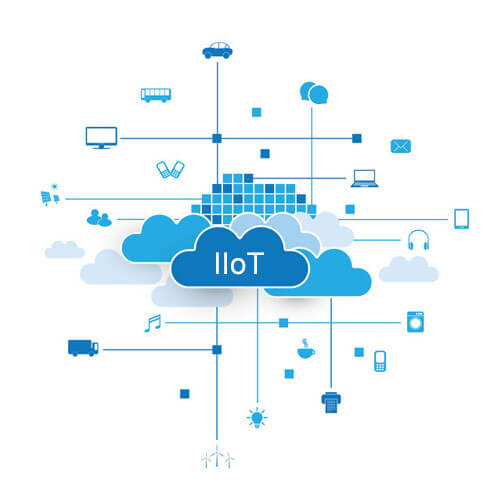
IoT devices are physical devices connected to the internet via a network. Using sensing technologies such as radio-frequency identification (RFID), QR code recognition, and smart sensors, they collect real-time information on an object’s location, status, and environmental parameters. This data is then transmitted and shared between devices via communication networks, thereby building a data bridge between the physical and digital worlds and enabling the interconnection of all things.
What components make up the structure of an IoT device?
The structure of an IoT device typically consists of sensors, an MCU (microcontroller unit), a communication module, and a power management module. Specifically:
1. Sensors
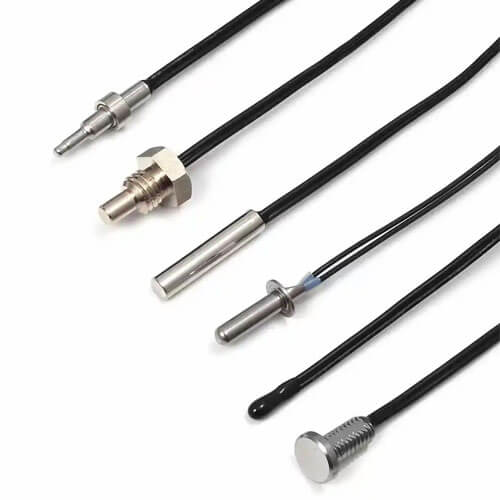
Sensors (such as temperature and humidity sensors, RFID, cameras, etc.) are a critical component of IoT devices, used to detect the state of objects or collect environmental information. Sensors convert physical quantities into electrical signals, which are then processed and transmitted.
Here are some key points to keep in mind regarding sensors:
- Don’t pay for precision you don’t need. For example, for indoor temperature monitoring, an accuracy of ±0.5°C is sufficient; insisting on ±0.1°C will only increase costs.
- The measurement range must cover all possible extreme values.
- Many sensors are sensitive to supply voltage and require a stable LDO power supply. Analog signals may require op-amps for amplification, filtering, and other signal conditioning before being fed into an ADC.
- The accuracy listed in sensor data sheets is typically measured under ideal laboratory conditions. In real-world environments, electromagnetic interference, temperature drift, and installation location can all affect readings. Therefore, on-site calibration and long-term testing are essential. For example, if a CO2 sensor is installed near an air conditioning vent, the readings will be completely distorted.
2. MCU (Microcontroller Unit)
The MCU (Microcontroller Unit) is the core of an IoT device, responsible for processing data and executing control commands. It converts sensor data into meaningful information and executes instructions according to predefined programs.
Factors to consider when selecting an MCU include:
- For battery-powered devices, prioritize MCUs that support multiple low-power modes (such as Stop and Standby), while also considering wake-up speed and the variety of wake-up sources.
- Determine the number and types of peripheral interfaces required based on actual needs. For example: How many ADC, UART, I2C, and SPI channels are needed to connect sensors and communication modules?
- If the device requires sensor fusion (such as Kalman filtering), protocol stack processing, or on-device AI inference, identify the most complex computational tasks in advance and use this to determine the required clock speed, Flash, and RAM specifications.
- Comprehensively evaluate chip pricing, the ease of use of development tools, the availability of community resources, and the stability of mass production supply. Common options currently include: the STM32L series or TI’s MSP430 for ultra-low-power scenarios; the ESP32 for scenarios requiring integrated WiFi/Bluetooth; and the Raspberry Pi CM4 or NXP’s i.MX RT for high-performance edge computing.
Video from @HowtoElectronics
3. Communication modules
Communication modules serve as the interface for IoT devices to exchange information with the outside world. They include wireless communication modules (such as Wi-Fi, Bluetooth, Zigbee, NB-IoT, LoRaWAN, 4G/5G, etc.) and wired communication modules (such as Ethernet, RS-485, RS-232, USB, etc.). Through these communication modules, IoT devices can transmit sensor data to other devices or to the cloud for processing.
How to select a communication module?
Integrated vs. Separate design
- Integrated design: Modules such as ESP32 integrate both the MCU and Wi Fi/Bluetooth functions internally, offering high cost performance and simpler development.
- Separate design: Uses an MCU combined with an independent communication module, such as STM32 + LoRa module. This approach provides greater flexibility and allows optimal component combinations, but the overall design is more complex.
Antenna design
Antenna design is critical to communication quality. PCB onboard antennas have lower cost, but their performance is easily affected by surrounding circuits. External antennas provide better performance, but increase both cost and device size. It is important to follow the RF layout guidelines provided by the module manufacturer, and proper impedance matching must be ensured.
4. Power supply
The power supply provides electrical power to IoT devices and can utilize various energy sources, such as batteries or solar panels. To reduce power consumption, many IoT devices employ low-power designs.
Key points on power management:
- Regulate the battery voltage to the level required by the MCU and sensors. Low-dropout (LDO) linear regulators have low ripple but low efficiency; switching regulators (DC-DC) are highly efficient but may introduce noise.
- Do you need to know the remaining battery charge in real time? This requires an additional battery monitor chip (such as TI’s BQ series), which increases cost and complexity. In many cases, simple voltage monitoring is sufficient.
- Unused peripherals and I/O ports must be completely disabled via software. When the MCU is in sleep mode, ensure that communication modules and sensors also enter the lowest power consumption state.
Other auxiliary components: Depending on the specific type of IoT device and application scenario, additional auxiliary components may be included, such as mechanical structures, drivers, and actuators.
What protocols do IoT devices use?
Communication protocols are the “language” of IoT devices. The choice of protocol directly determines network coverage, device power consumption, the number of connections, and cost. There is no ‘best’ protocol; there is only the protocol that is “most suitable” for a given scenario.
Based on the transmission medium, IoT communication protocols are divided into two major categories: wired and wireless. Based on functional layers, they can be further divided into link-layer protocols, which handle “how to transmit,” and application-layer protocols, which handle “what to transmit.” In practical deployments, these three types are often used in combination.
Wired communication protocols
Wired communication protocols include RS-232, RS-485, CAN bus, Modbus, and Ethernet. They are suitable for scenarios requiring high stability and real-time performance where devices are fixed in location, such as factory workshops and building automation. Their advantages include strong resistance to interference and reliable transmission; their disadvantages are the need for cabling and limited deployment flexibility.
| Protocol | Typical Distance | Data Rate | Topology | Applications | Cost |
|---|---|---|---|---|---|
| RS-232 | <15m | Low speed | Point-to-point | Equipment debugging, short-range serial communication | Extremely low |
| RS-485 | <1200m | Medium speed | Bus topology | Industrial control, building automation | Low |
| CAN bus | <1000m | Medium speed | Bus topology | Automotive electronics, industrial equipment | Low |
| Modbus | <1200m | Low speed | Master-slave topology | Industrial instruments, PLC communication | Extremely low |
| Ethernet | <100m | High speed | Star topology | Industrial gateways, edge computing nodes | Medium |
Wireless communication protocols
Wireless communication protocols include short-range (<100m) protocols such as WIFI, BLE, Zigbee, and NFC, as well as long-range (>1km) protocols such as LoRa, NB-IoT, and 4G/5G LTE. Their advantages include no need for cabling and flexible device deployment, making them the preferred choice for most IoT scenarios.
| Protocol | Typical Distance | Power Consumption | Data Rate | Topology | Applications | Cost |
|---|---|---|---|---|---|---|
| BLE | <100m | Extremely low | Medium speed | Star/Mesh | Wearable devices, near-field interaction | Low |
| Zigbee | <100m | Low | Low speed | Mesh | Smart home automation | Low medium |
| Z-Wave | <30m | Low | Low speed | Mesh | Smart home | Medium |
| Thread | <100m | Low | Medium speed | Mesh | Smart home Matter ecosystem | Medium |
| Wi-Fi | <100m | High | High speed | Star | Smart appliances, video streaming | Medium |
| Wi-Fi HaLow | <1km | Low | Medium speed | Star | Industrial sensing, smart agriculture | Higher |
| LoRa | >10km | Extremely low | Very low speed | Star (to Gateway) | Wide-area sensing, agriculture | Medium |
| NB-loT | Same cellular network | Very low | Very low speed | Star (to Base) | Utilities, static monitoring | Medium |
| 4G/5G LTE | Same cellular network | High | High speed | Mesh (to Base) | Connected vehicles, video surveillance | High |
Application layer protocols
Application layer protocols operate on top of wired or wireless communication and define the formats and rules for data exchange between devices and the cloud. A single application layer protocol can run on different underlying communication methods; for example, MQTT can run on both WIFI and 4G. In addition to MQTT, CoAP, HTTP, Modbus, and AMQP are also commonly used application layer protocols.
Example of end-to-end data flow for IoT devices
Take a LoRa-based agricultural soil sensor node as an example:
- Scheduled wake-up: When the MCU’s RTC (Real-Time Clock) timer expires, it wakes the MCU from deep sleep.
- Power-on and data acquisition: The MCU controls the PMU to supply power to the soil moisture sensor (analog output). After waiting for the sensor to stabilize, the ADC is activated to read the analog voltage value.
- Data processing: The MCU converts the ADC value into a percentage humidity value based on the sensor’s characteristic curve. A simple moving average filter may also be applied to eliminate random fluctuations.
- Data encapsulation: Encapsulate information such as humidity values, device ID, and battery voltage according to a predefined application-layer protocol (e.g., JSON or a custom binary format).
- Initiate communication: The MCU wakes up the LoRa module via UART and sends an AT command to transmit the data packet. The LoRa module transmits the data via radio waves using specific SF and BW parameters.
- Return to sleep: After the MCU confirms that data transmission is complete, it uses AT commands to set the LoRa module to sleep mode, then shuts off power to the sensors, and finally reconfigures itself to deep sleep mode, awaiting the next RTC wake-up cycle.
In this cycle, the device remains in sleep mode for over 99% of the time, operating for only a few seconds, thereby achieving ultra-long battery life.
What are the main applications of IoT devices?
IoT devices for agriculture
IoT devices in agriculture cover every stage from cultivation to storage management. For example, various soil sensors are used to enable automatic irrigation and fertilization; a weather station is deployed to continuously collect and analyze meteorological data; and grain moisture sensors are used to monitor temperature and humidity inside grain storage facilities to prevent mold and insect infestation. The introduction of IoT technology is driving agriculture from experience based, extensive management toward data driven precision agriculture.
IoT devices for smart homes
IoT devices are the foundation of smart home systems. Household appliances, security equipment, and energy systems are connected through IoT technology to form a unified and manageable intelligent system. Lighting and air conditioning can be controlled to improve living comfort, while smart cameras, door locks, and door and window sensors help ensure residential security.
IoT devices for industry
IoT devices in industrial applications are mainly used to improve production efficiency, optimize equipment maintenance, ensure worker safety, manage energy consumption, and enhance supply chain coordination. For example, vibration sensors continuously collect and analyze operating data from production equipment, helping enterprises implement predictive maintenance. In transportation and warehousing, temperature and humidity data loggers are used to ensure that sensitive products are always kept under optimal environmental conditions.
IoT devices in healthcare
IoT devices can be used for locating medical equipment, managing medications, and monitoring ward environments, thereby improving operational efficiency and reducing management costs. In addition, through wearable devices or various physiological sensors, the system can collect real-time data on heart rate, blood oxygen levels, blood pressure, body temperature, and other parameters, and upload this data to a cloud platform or hospital information system, enabling long-term tracking and dynamic management of patients.
IoT devices for water quality monitoring
The application of IoT devices in water quality monitoring has brought about a fundamental shift from manual, periodic sampling and testing to round-the-clock automated monitoring. Water quality sensors deployed in rivers, reservoirs, drinking water distribution networks, and industrial discharge outlets can collect real-time data on key parameters such as pH, dissolved oxygen, turbidity, conductivity, ammonia nitrogen, and heavy metal concentrations, providing a comprehensive picture of the water body’s health.
IoT devices for environmental monitoring
IoT devices can detect various air pollutants, such as particulate matter, nitrogen dioxide, and carbon monoxide. Governments and environmental agencies use real time data from particulate matter sensors and gas sensors to develop science based policies to reduce pollution and protect public health in urban areas. In addition, IoT devices can also monitor vegetation moisture and temperature, helping to prevent the occurrence of forest fires.

This article was written by the Renke Technical Team. Renke is a leading provider of environmental monitoring technologies and IoT solutions. Through years of designing, manufacturing, and deploying IoT devices in real world environments, our engineering team has gained extensive practical experience in sensor selection, low power MCU design, and communication protocol integration across diverse applications. We share these insights with the goal of turning field proven engineering knowledge into practical guidance that helps developers, engineers, and solution providers make better technical decisions when building reliable IoT systems.