A rain sensor is a device that detects whether it is raining and measures the amount of rainfall. From automatic windshield wiper systems and weather stations to flood early warning systems, rain sensors are widely used in various aspects of industry and daily life. Are you feeling overwhelmed in the midst of all the options for rain sensors? Which sensor will be able to provide accurate readings in freezing weather? Does it measure precipitation both rain and snow? Which one is right for you for price?
If you have these questions, then this article is for you. It offers you an in-depth guide to the five major rain sensors, covering their functioning, pros, cons, and the conditions under which they are best suited, to make the best selection.
5 core types of rain sensors
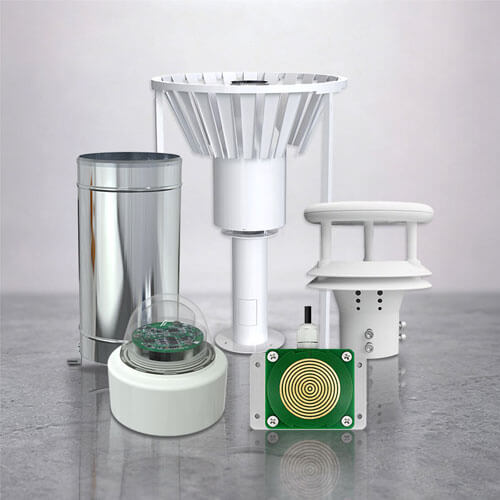
Based on the different working principles, rain sensors can be classified into five types: tipping bucket, weighing, piezoelectric, optical, and conductive (capacitive or resistive).
1. Tipping bucket rain gauges
Tipping bucket rain gauge working principle
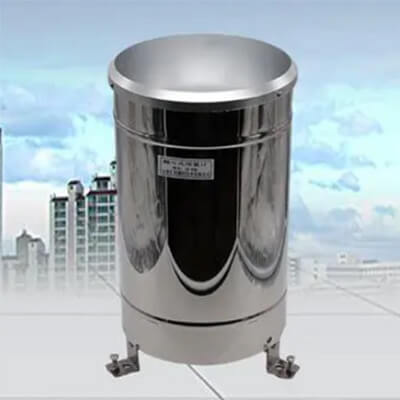
The tipping bucket rain gauge operates based on the movement of a mechanical tipping bucket. When it rains, rainwater is first collected through the rain inlet and passes through a filter into the upper tipping bucket. When the rainwater in the bucket reaches a preset volume, the bucket loses its balance due to a shift in its center of gravity and tips over, while the other bucket rotates to the receiving position to continue collecting rainwater. When the tipping bucket tilts, it triggers a reed switch to generate a pulse signal. Each pulse represents one complete tip of the bucket, and each tip corresponds to a fixed rainfall amount (e.g., 0.1 mm, 0.2 mm, or 0.5 mm). The cumulative rainfall is calculated precisely by counting the number of tips and multiplying it by the preset rainfall increment.
Tipping bucket rain gauge advantages
- Simple structure: The mechanical design is ingenious and relatively simple, with components working in coordination to ensure a low failure rate. It operates stably based solely on its mechanical principles.
- High accuracy: Tipping-bucket rain gauges can accurately measure trace amounts of rainfall, with a resolution of 0.1 mm or higher, and measurement accuracy that exceeds the industry Class I standard (≤±1%).
- Continuous monitoring: Tipping-bucket rain gages have the capability of operating continuously 24 hours per day, providing real-time, uninterrupted measurements of rainfall data and converting it to a digital output.
- Easy operation and maintenance: No complex procedures are needed for operation, and easy to learn. To clean the rain collection cup, use a clean soft cloth to wipe the inside of the cup periodically.
- High adaptability: widely used in various fields for rainfall measurement, and able to meet the needs in various scenarios.
Tipping bucket rain gauge disadvantages
- Discrete data: Since rainfall is measured by the number of times the bucket tips, it can only provide discrete data on rainfall events and cannot perform continuous rainfall measurement.
- Limitations in measurement: Heavy or torrential rain will cause the response to lag behind the intensity of the rainfall, and it is not possible to obtain a measure of rainfall intensity in real time.
- Environmental interference: Lack of clearance from debris; leaves, twigs, mud and other materials can clog the funnel or drain outlet, interfering with the normal measurement.
- Mechanical wear: Mechanical parts like tipping bucket bearings and supports could wear out after extended use, impacting measurement accuracy, and must be frequently inspected and calibrated.
Tipping bucket rain gauge applications
- Meteorological observation: Observation of precipitation, weather analysis, weather forecast and early warning of extreme weather events.
- Hydrological monitoring: Used for real-time precipitation monitoring in water conservancy projects such as reservoirs and dams to help assess trends in water levels.
- Agricultural irrigation and drainage: Assists farmers in tracking precipitation and planning a schedule for irrigation.
2. Weighing rain gauges
Weighing rain gauge working principle
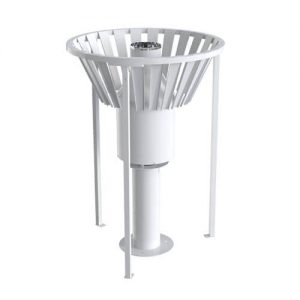
The basic principle of a weighing rain gauge is to “weigh precipitation”. In any precipitation, whether it be rain, snow or hail, the moment it hits the collection container, the load cell in the container will detect the weight change in real-time. The system is based on algorithms, which translate the weight rise into precipitation data, allowing the simultaneous measurement of liquid and solid precipitation.
Weighing rain gauge advantages
- High accuracy: No mechanical errors – does not use a tipping bucket. It guarantees measurement accuracy under all conditions: light drizzle or heavy downpour.
- It can measure all types of precipitation: solid (snow, hail), liquid (rain), and mixed solid/liquid (mixed snow and rain), accurately.
- Not a single mistake: The weighing rain gauge was able to continuously measure the weight changes, which meant it was a more accurate measure of the process of precipitation and precipitation intensity.
- Good stability: The weighing rain gauge’s stability is high and it is not affected by the external environment, such as temperature, humidity, air pressure, etc.
Weighing rain gauge disadvantages
- More expensive: High accuracy measurement units, data processing systems and other auxiliary components like wind and evaporation protection make them very costly compared to other rain gauges.
- High power consumption: Most of the rain gauges of weighing type has heating functions, which causes high power consumption.
- Complex installation: The installation levelness, foundation stability and environmental conditions of the weigh system are more stringent.
- Regular maintenance: It is necessary for the collection vessel to be cleaned regularly and the weighing system needs to be calibrated periodically to ensure the long-term stability of the measurement results.
Weighing rain gauge applications
- Meteorological research: It can record the data of liquid and solid precipitation comprehensively and can meet the requirements to record the data of meteorological research department which has high requirements of data quality, so it can meet the needs of long-term meteorological climate analysis.
- Hydrological monitoring: Provides accurate measurements of snowfall and sleet and enhances runoff modelling and water allocation in river basins and upstream of reservoirs.
- High altitude, heavy snow areas: With heating and wind protection devices the system is reliable from -35°C to 65°C and is able to measure several types of precipitation at the same time, such as rain, snow and hail.
- Traffic management: Provides information on snow accumulation to assist in road icing warnings and planning snow removal operations.
3. Piezoelectric rain sensors
Piezoelectric rain sensor working principle
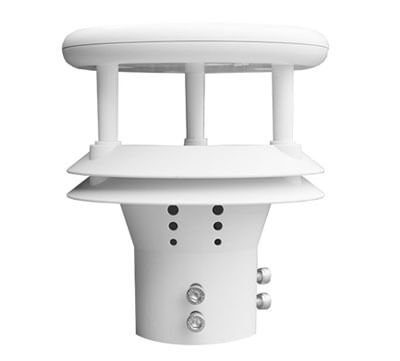
The principle of piezoelectric rain sensor is based on the impact measurement. The sensor’s rain-sensing surface converts the mechanical force of hitting raindrops into electrical signals. The system uses the signal strength to estimate the weight of a single raindrop and, therefore, the overall amount of rain. The size of the rain and the force it makes determines the amount of signal the sensor receives; this means that a change in the diameter distribution of raindrops and/or rainfall intensity can also be reflected in the sensor’s signal.
Piezoelectric rain sensor advantages
- Integrated design: With no mechanical moving parts, there is no problem of mechanical wear during long use.
- Fast response: Real-time electronic signal detection eliminates the need to wait for rainwater to have a certain level. This enables quick identification of the time of rainfall as well as the duration of the precipitation.
- Easy installation: The monolithic design facilitates easy installation and can be seamlessly integrated with automatic weather stations, road weather systems and other IoT devices.
- Low maintenance: Easy to be maintained by the simple design, which doesn’t clog up. The rain-sensing surface is easy to clean and can be done routinely for long-term unattended operations.
Piezoelectric rain sensor disadvantages
- Low resistance against interference: strong wind, mechanical vibration, loose fixture installation or vibration of the surrounding environment may cause measurement error. If the rain is heavy and/or the rainfall rate is high, numerous raindrops may hit the sensor surface at the same time leading to signal overlap or saturation, which will impact the accuracy of the rainfall calculations.
- Excessive cost: Module with built-in piezoelectric sensor and AI algorithm (AI module) is higher in component costs which causes overall costs to be higher than traditional tipping bucket rain gauges.
- Strong algorithm dependence: Data quality is dependent on the algorithms which are embedded into the data; the degree of algorithm optimisation has an impact on data monitoring accuracy, which is why it is important to choose products from reputable manufacturers.
- Requires professional calibration: As electronic sensing devices, these units require professional personnel for subsequent calibration, and the process is somewhat complex.
Piezoelectric rain sensor applications
- Road weather monitoring
- Bridge and overpass monitoring
- Wind farms and solar power plants
- Mobile weather platforms
4. Optical rain sensors
Optical rain sensor working principle
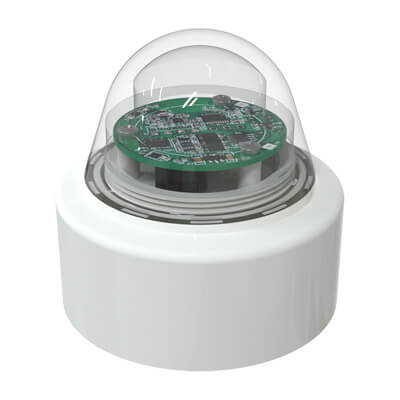
The optical rain sensors are mainly based on infrared light as the rain detection method. If the surface of the sensor is not wet, the infrared light sent by the transmitter inside the sensor is always received by the receiver on a fixed path. Raindrops falling on the detection area or passing through the light path change the light, resulting in changes to the received signal. The sensor uses the amplitude and frequency of these changes to the light signal to determine whether there’s rain falling and to measure the change in rainfall intensity. Certain high-quality optical rain sensors also can provide estimates of rain intensity and rainfall totals.
Optical rain sensor advantages
- Fast response: Real-time optical signal detection, it will not delay or lag, and is not affected by vibration or dust. Rapidly detects beginning and end of precipitation, intensity of precipitation.
- Simple operation: Compact and lightweight optical rain sensor is easy to carry and install, and can be quickly deployed in various places.
- Mechanical wear free: It is an optical detection system without moving parts and has excellent stability and no wear during long-term operation.
Optical rain sensor disadvantages
- Poor accuracy: The measurement results of optical rain gauges are affected by algorithms and calibration levels.
- Easily interfered by interference: When dust, silt or scale deposits on optical surfaces interfere with light signal transmission, inaccurate measurements will result.
- Optical measurement process can be disturbed by significant errors due to heavy rain, high density fog, snow accumulation or icing.
Optical rain sensor applications
Intelligent transportation systems (ITS) and road weather monitoring
Airport and aviation weather monitoring
Smart building automation systems
Vehicle rainfall detection systems
Urban micro-weather monitoring networks
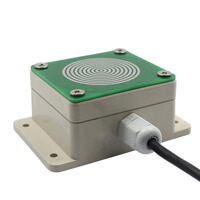
Capacitive rain sensors and resistive rain sensors are very similar and are generally plastic boards with an array of curved, or comb-like metal patterns coated on the board surface. But how they are detected is different.
Capacitive rain sensors are based on the principle that when there is precipitation, rain, snow or moisture on the surface of the sensor, the capacitance changes. They work on the principle of the difference in dielectric constants of water and air.
Resistive rain sensors based on the principle that precipitation causes resistance to change when the falling water creates an electric connection between the electrodes. Then the conductivity between electrodes decreases due to rainwater if it accumulates on the sensor surface, and a as a result a rainfall detection signal is output. They work on the principle of conductivity of water.
Capacitive and resistive rain sensors advantages
- Simple to fabricate: There are comparatively compact designs for both capacitive and resistive sensors and they can be fabricated directly as surface-mount PCB sensors, and so can easily be mass-produced and integrated into various devices.
- Low cost: These capacitive and resistive rain sensors can be used for large-scale deployment on budgets.
- Fast response: Rainfall is detected immediately upon contact with either capacitive or resistive rain sensors, without the need to accumulate rainfall data. Changes in signal amplitude can also reflect rainfall intensity trends to some extent.
Capacitive and resistive rain sensors disadvantages
- Sensitive to environmental elements: Both these types are surface-contact sensors and are sensitive to their installation environment. Obstructions like complete leaf coverage, dust or soiling can directly influence the accuracy of the detection result.
- Sensitive to interference: Dew, fog or condensation in the atmosphere can act as interference causing a delayed trigger or false trigger.
- Short service life: due to the various factors of degradation that can affect the surfaces of coatings (e.g., coating wear, contamination buildup, UV decomposition), there is the possibility of sensitivity drift that may necessitate frequent maintenance and/or calibration.
Capacitive and resistive rain sensors applications
Automatic windshield wiper systems for cars
Smart home and building automation
Personal projects
Rain sensor comparison table
| Types | Tipping bucket rain gauge | Weighing rain gauge | Piezoelectric rain sensor | Optical rain sensor | Capacitive (or resistive) rain sensor |
|---|---|---|---|---|---|
| Working principle | Tipping bucket principle | Weighing principle | Impact measurement principle | Optical principle | The principle of dielectric constant (or the conductivity of water) |
| Rainfall intensity measurement range | Max. 4 mm/min | 0 mm~400 mm | 0~8 mm/min | / | /(Only determine whether it is raining or snowing) |
| Instantaneous rainfall | / | / | / | 0.4mm/s | / |
| Operating temperature | 0℃~50℃ | -45℃~50℃ | -40℃~60℃ | -25℃~80℃ | -40℃~60℃ |
| Accuracy | ≤±3% | ±0.4mm (≤10mm); ±4% (>10mm) | ±4% (daily cumulative rainfall) | ≤5% | / |
| Measurement elements | Liquid precipitation amount, precipitation intensity, and start and end times of precipitation. | Total precipitation (liquid and solid), start time of precipitation, and precipitation intensity. | Liquid precipitation amount and precise duration of rainfall. Estimated raindrop diameter, rainfall intensity distribution, and start time of rainfall. | Precipitation amount. | Whether there is rain or snow, and a rough estimate of rainfall intensity. |
| Advantages | High reliability and wide applicability | Unaffected by environmental interference and large storage capacity | Compact, maintenance-free, and highly accurate | Compact size, easy to use, and simple to install | Simple structure, low cost, compact size, and easy installation |
| Disadvantages | Requires manual maintenance; mechanical data may contain some errors. | Errors are more likely to occur during light rainfall; requires daily manual maintenance. | During heavy rainfall, overlapping raindrop signals may cause counting errors; PVDF membranes are prone to aging when exposed to the elements over long periods. | During heavy rainfall, overlapping raindrops can obscure the sensor and affect accuracy; the optical window must be cleaned regularly to prevent dust buildup. | Cannot measure specific precipitation amounts; prone to misjudgment due to surface stains or salt deposits. |
| Cost | Medium | High | High | Medium | Low |
| Applications | Real-time rainfall monitoring for weather stations, hydrological stations, flash flood early warning systems, geological monitoring, and more. | Measurement of solid and liquid precipitation for meteorological observation sites, urban roads, scientific research, and more. | Rainfall measurement for geological hazards, water resources and hydrology, smart cities, smart agricultural irrigation, and more. | Weather monitoring, hydrological monitoring stations, agricultural monitoring stations, smart homes, and more. | Automotive automatic windshield wiper systems, smart homes (automatic window closing/clothes drying racks), and consumer-grade weather stations. |
| Price range | $30~$260 | $1600~$10000+ | $300~$3000 | $50~$200 | $3~$40 |
How to select rain sensor for your project?
- For recording different precipitation involved (rain, snow & hail), we suggest using a weighing rain gage. It records all types of precipitation, which is why it is one of the few tools that is able to measure them without differentiation.
- For environments that are very cold, we recommend that you choose an optical rain sensor or piezoelectric rain sensor. Both types operate at a minimum therm of less than -25°C and can be used to operate in very cold regions.
- When monitoring rain droplet size distribution or issuing heavy rainfall warnings: We recommend a piezoelectric rain sensor. It captures signals drop by drop, offering response speeds and data precision that cannot be matched by other types.
- For long duration standard meteorological observations, recommended is a tipping bucket rain gage. Can be used independently or easily embedded in a weather station system, it is the preferred product of leading meteorological institutions today.
- For situations where the budget is a factor and the main concern is to see if it is raining or not, a resistive or capacitive rain sensor is recommended. They are lowest in cost and can be used for consumer applications like in-vehicle systems and smart homes.
- If accuracy and maintenance costs are primary factors, recommend use of a tipping bucket rain gage. This is because the most technically developed, and thus lowest-cost, rain measurement instrument is the tipping bucket rain gauge.

This article was written by the Renke Technical Team, Renke is a manufacturer specializing in environmental monitoring instruments and IoT sensing solutions. We have developed and deployed a wide range of weather stations, rain gauges, and environmental sensors in projects worldwide. The information presented in this guide is based on practical engineering experience, product development knowledge, and real-world monitoring applications. Our goal is to provide accurate, unbiased, and easy-to-understand technical information to help users select the most suitable rain sensor for their specific requirements.