
Table of Contents What is the wind speed and direction? Wind is a physical quantity that represents the movement of air currents. It has
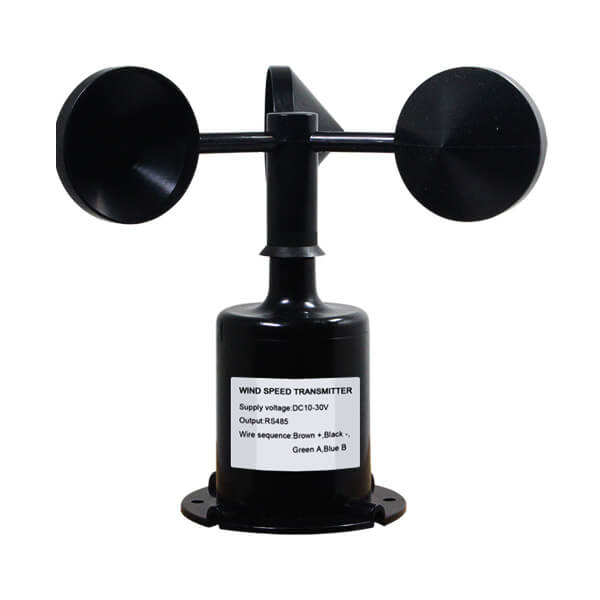
Polycarbon Wind Speed Sensor
Our wind speed sensor, small and light, easy to carry and assemble. The three-cup design concept can effectively obtain wind speed information. The shell is made of polycarbonate composite material, which has good anti-corrosion and anti-corrosion features, which can guarantee the long-term use of the anemometer is free from rusting, and the internal smooth bearing system ensures the accuracy of information collection.
- Model: RS-FSJT-*-T
- MOQ: 1 PCS
- Delivery date: within 24 hours
- Price: $23
About - Wind Speed Sensor
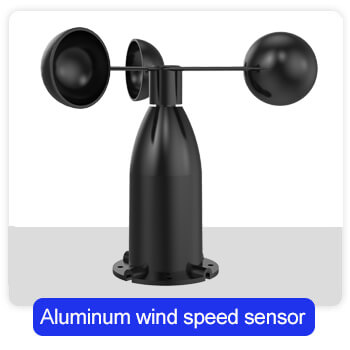
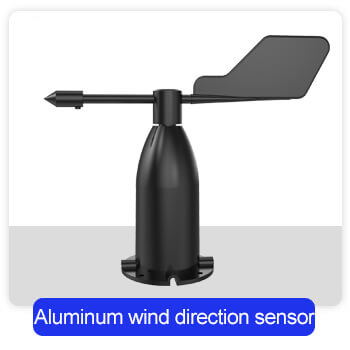
The wind speed sensor is the best device to measure the wind speed in the environment, the most common is the three-cup wind anemometer. The three-cup wind anemometer has two kinds of materials: polycarbonate wind speed sensor and aluminum wind speed sensor. Renke provides unmatched wind speed and direction sensors for both professionals and enthusiasts. Our wind monitoring devices are designed for a wide range of applications, including marine ultrasonic anemometers, traffic wind sensors, and construction wind sensors. The ultrasonic anemometers we offer measure wind speed and direction using ultrasonic technology, eliminating the need for any moving parts.
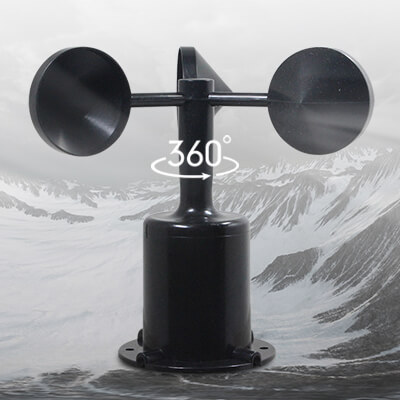
Wind speed sensor features
- Measuring range: 0-70m/s, resolution 0.1m/s.
- Internal anti-electromagnetic interference treatment.
- The bottom outlet method is adopted to eliminate the aging problem of aviation plug rubber pads, and it is still waterproof after long-term use. Free cloud platform.
- Using high-performance imported bearings, low rotation resistance, accurate measurement.
- Polycarbonate shell, high mechanical strength, high hardness, corrosion resistance, no rust, and long-term use outdoors.
- The structure and weight of the equipment are carefully designed and distributed, with a small moment of inertia and sensitive response.
- Multiple output modes are optional: RS485, 0-5V, 0-10V, 4-20mA, or pulse output.
Wind speed sensor datasheets
| Output signal | RS485 | 4~20mA/0~5V/0~10V | Pulse |
|---|---|---|---|
| Power supply | 10~30V DC | 10~30V DC | 5~30V DC |
| Power consumption | ≤0.3W | 1.2W | — |
| Working environment | -40℃~+60℃, 0%RH~80%RH | ||
| Measure range | 0~70 m/s | 0~30m/s (optional 0~70m/s) | 0~70 m/s |
| Accuracy | ±(0.2 + 0.03V)m/s, @(0-30 m/s, 25°C) V is wind speed | ||
| Resolution | 0.1 m/s | ||
| Dynamic response time | ≤1s | ≤1s | ≤0.5s |
| Load capacity | — | Voltage output: ≤250Ω Current output: ≤600Ω | PNP: ≥100mA NPN: ≥100mA |
How wind speed sensors work?
When the wind generated by the airflow drives the sensor to rotate, the central axis drives the internal sensing element to generate a pulse signal. Within the wind speed measurement range, the wind speed has a certain linear relationship with the pulse frequency. The wind speed can be calculated accordingly. The protection level of the wind speed sensor is IP68, even if it is used outdoors for a long time, it can be effectively waterproof and moisture-proof.
Advantages - Wind Speed Sensor
Top brand
Renke is a leading manufacturer with 15 years of experience, accepts customization. Reliable quality. Free cloud platform.
More types
Best wind sensors for environmental measurement. variety of materials is available. Large in-stock can deliver immediately.
Cheap price
The wholesale price is 37% below the market. Support secondary development. We provide customized services. Contact us.
Widely use
It is widely used for wind speed measurement in greenhouses, weather stations, ships, breeding, and other environments.
Wiring
Wiring mode of wind sensor with different output modes:
RS485 ouput wind speed sensor wiring
The wiring of the rs485 wind speed sensors have four colors. When using, connect the black wire to the negative of the power supply, the brown wire to the positive of the 10-30VDC power supply, the green wire to the signal wire 485-A, and the blue wire to the signal wire 485-B. That’s it! The wide voltage power input is 10~30V. When wiring the 485 signal line, pay attention to the two wires A\B not to be reversed, and the addresses of multiple devices on the bus cannot be conflicted.
Pulse output wind speed sensor wiring
When using the pulse-type wind speed sensor, connect the black wire to the power supply and signal ground, the brown wire to the 5-30VDC power supply, the green wire to the pulse signal PNPOUT, and the blue wire to NPN (NPNR) OUT. That’s it! Wide voltage power input is 5~30V.
Analog output wind speed sensor
For analog type, we provide three outputs: 0-10V, 0-5V and 4-20ma. When in use, connect the black wire to the power and signal ground, and the brown wire to 10-30VDC (0-10V output wind speed sensors can only use 24V power supply) and measure the analog voltage on the blue wire. That’s it! It can be applied to both four-wire system and three-wire system at the same time.
Types
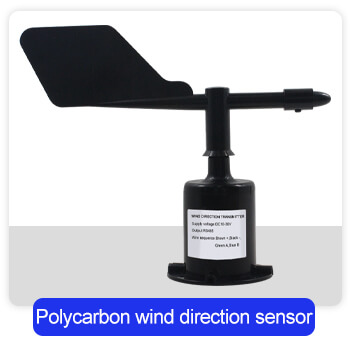
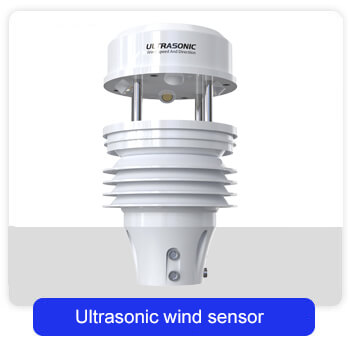
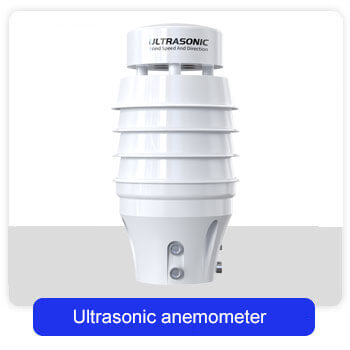
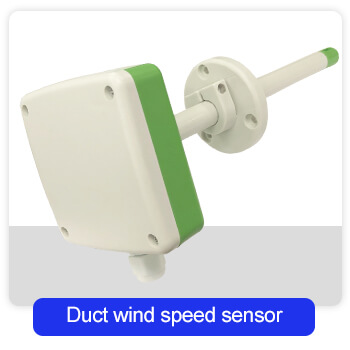
FAQs - Wind Speed Sensor
Why measure wind speed?
Wind speed is a critical weather parameter that must be monitored and recorded across many fields, including meteorology, aviation, maritime navigation, industry, and construction. Common applications include supporting weather forecasting, ensuring the operational safety of machinery such as cranes and lifts, estimating the efficiency of wind farms, enhancing maritime navigation and safety, improving aircraft safety, and even controlling odors at wastewater treatment plants and landfills.
Wind speed is generated by pressure gradients or the boundaries between frontal systems, with air flowing toward low-pressure areas. The stronger the pressure gradient, the stronger the wind. In addition, many other factors influence wind speed, including the Coriolis effect, friction, and terrain. In the United States, wind speed is typically expressed in meters per second (m/s) or miles per hour (mph). In the maritime industry, it is often measured in knots (1 knot equals 1 nautical mile per hour, approximately 1.15 mph or 0.5 m/s).
Our sensors are quick to install, requiring only a few minutes, and provide accurate, continuous, long-term monitoring even under harsh environmental conditions. The cup anemometer adopts a three-cup configuration. The sensor uses a quick-connect cable system that can be extended hundreds of feet without compromising measurement performance.
Why is polycarbonate used for the cups?
Polycarbonate is strong, lightweight, UV-resistant, and durable under harsh weather conditions, making it ideal for long-term outdoor wind monitoring.
How to install this wind speed sensor?
The sensor is installed using a flange mount. The threaded flange connection ensures that the lower pipe section of the wind speed sensor is securely fixed to the flange plate. The base plate has a diameter of Ø80 mm, with four Ø4.5 mm mounting holes arranged on a Ø68 mm circumference. Bolts are used to firmly attach the sensor to the support structure.
This installation method keeps the instrument properly leveled, ensuring accurate wind speed data. The flange connection is user-friendly, provides stable support, and is capable of withstanding significant pressure.
How to extend the service life of the wind speed sensor?
- Do not disassemble the device or touch the sensor core, as this may cause permanent damage.
- Keep the sensor away from high-power interference sources, such as inverters or motors, to avoid inaccurate measurements. Always disconnect the power supply before installing or removing the wind speed sensor. Water ingress will cause irreversible damage to the device.
- Protect the sensor from direct exposure to chemicals, oil, and dust. Do not operate it for extended periods in environments with condensation, extreme temperatures, or sudden thermal shocks.
What maintenance is required?
The design has no moving parts prone to wear other than the rotating cups. Occasional cleaning to remove dust, insects, or ice is recommended. Bearings may need replacement after years of continuous operation.
What applications use this type of wind speed sensor?
It is widely used in meteorological stations, environmental monitoring, wind power projects, agriculture, building safety monitoring, and smart city systems.
Related Blogs
A greenhouse is a closed environment that provides optimal conditions for plant growth and promotes plant growth by controlling indoor and outdoor environments. A
Table of Contents What is an anemometer? An anemometer is a meteorological instrument used to measure air velocity and, in many configurations, wind direction.
The weather station can provide users with comprehensive weather information over the years. Regular maintenance of weather stations is an important operation to ensure
Table of Contents How wind sensor work? Wind speed sensor working principle Wind speed sensor is a physical device used to measure wind speed.
Table of Contents Where to mount wind sensor? Installing wind sensor on the weather station The wind sensor is a crucial component of a
A complete set of a weather station is composed of two parts: hardware and software. The hardware part includes various weather station sensors, connecting
Table of Contents Do you know where to mount weather station? The weather station should be installed as far as possible on the open
Difference between wind speed sensor and air volume sensor The difference between the wind speed sensor and the air volume sensor starts with the