
Table of Contents “IoT devices” is one of the most familiar terms in the tech world today. From the smartwatch on your wrist to
Leak Detection Cables
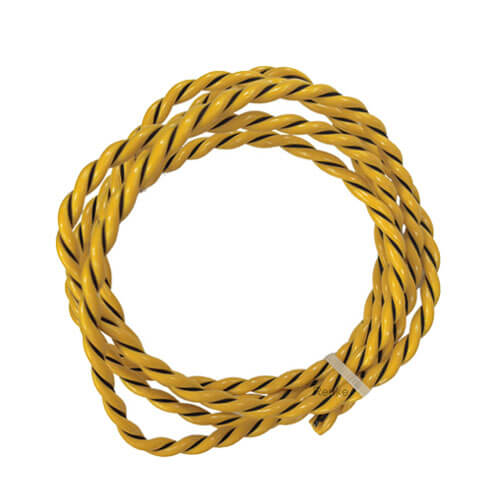
Leak detection cable is designed to detect liquid leaks in the installation area. We offer a variety of leak detection cables to help users monitor different media, such as water, oil, or acids. They are commonly used in areas requiring protection, such as beneath raised floors and around storage tanks or pipelines.
- Model: RS-PJ-LSS-SJ-T
- MOQ: 1 PCS
- Delivery date: within 24 hours
- Price: $1~$42
Renke Leak Detection Cable Types
Leak detection is a critical step in protecting facilities from the risks of liquid leaks, whether in industrial, commercial, or residential settings. A reliable leak detection system not only helps detect leaks early but also minimizes downtime and prevents costly repairs. Modern systems utilize advanced sensor cables paired with a leak detector to detect leaks of liquids such as water, oil, or acids with extremely high precision. Below is a detailed introduction to the six types of leak detection cable offered by our company:
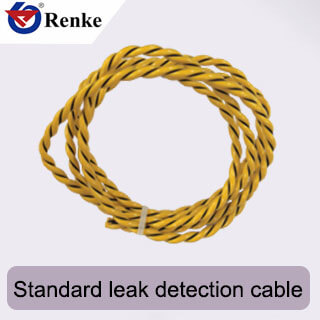
Standard leak detection cable (RS-PJ-LSS-SJ-T)
The standard leak detection cable offers low cost and high reliability, suitable for a variety of locations with water leakage risks. It is constructed from two lightweight high-density polyethylene conductors pressed together around a spiral core, providing mechanical strength and corrosion resistance. Made of corrosion-resistant, non-toxic materials, it meets EU environmental standards.
The spiral structure of the leak detection cable not only reduces electromagnetic interference and false alarms, but also significantly enhances the cable’s strength and service life. The standard leak detection cable features a two-core design and is compatible with any short-circuit-based leak detection system. It is compatible with our water leak sensors as well as non-positioning water detection systems from other domestic and international brands.
| Standard leak detection cable datasheets | |
|---|---|
| Cable Diameter | 5.5 mm |
| Material | PVC |
| Cable Color | Yellow (Custom colors available upon request) |
| Cable Weight | 36 g/m |
| Tensile Strength | Over 90 kg |
| Fire Resistance | V0 Flame Retardant |
| Maximum Exposure Temperature | 85°C |
| Alarm Dimensions | Any location on the sensing cable |
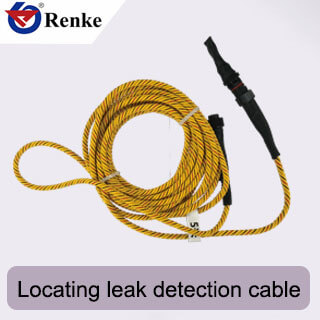
Locating leak detection cable (RS-PJ-LSS-DWSJ-T)
Our locating leak detection cable can detect the presence of water at any location along its cable. This cable must be used in conjunction with our positioning water leak detector. This locating leak detection cable utilizes conductive polymer technology and fluoropolymer materials, resulting in strong mechanical properties and corrosion resistance. The spiral cable construction ensures no exposed metal.
We offer locating leak detection cables in various lengths to meet diverse detection ranges. The cable’s uniform resistance, with an error within 0.5%, provides enhanced detection and location stability and accuracy for leak detection systems where resistance is a critical parameter.
| Locating leak detection cable datasheets | |
|---|---|
| Cable Diameter | 6.0mm |
| Continuity and Signal Wires | 2 x 26 AWG with Polymer Insulation |
| Sense Wires | 2 x 30 AWG with Conductive Alloy Conductor |
| Carrier | Polymer |
| Cable Weight | 120g/m |
| Cable Color | Light Yellow |
| Test Core Resistance | 13.1 Ω/m ± 1% |
| Test Core External Resistance | 5k Ω/200m |
| Abrasion Resistance | >65 cycles |
| Maximum Exposure Temperature | 75°C |
| Fire Resistance | Class 2 Pressure Ventilation Cable |
| Tension Resistance | 90kg |
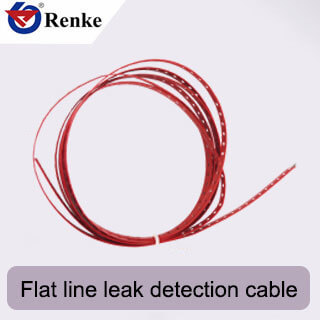
Flat line leak detection cable (RS-PJ-LSS-SJBP-T)
This leak detection cable features a flat design that allows it to be installed flush with the floor or embedded in gaps, making it ideal for use in tight spaces. Its design makes it easy to conceal, so it does not detract from the aesthetics of the area. Compared to standard leak detection cables, it offers a larger contact area. It can be used in conjunction with our company’ s water leak sensors.
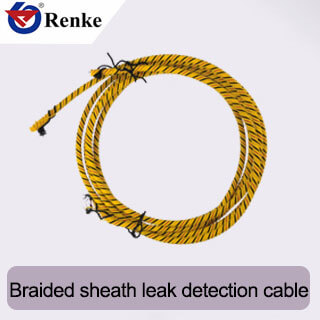
Braided sheath leak detection cable (RS-PJ-LSS-DWSJHT-T)
It features a braided sheath that encases the sensing wire, providing greater durability and environmental adaptability while maintaining its positioning function (the ability to detect the location of a leak). The braided sheath is designed to fit snugly against metal pipes and metal floors, preventing false alarms caused by electrostatic interference and effectively preventing contamination from dust or metal shavings. The braided sheath has strong water-absorbing properties; for leaks in overhead pipes, it can quickly collect leaked fluid to trigger an alarm and effectively prevent water droplets from falling directly onto equipment below.
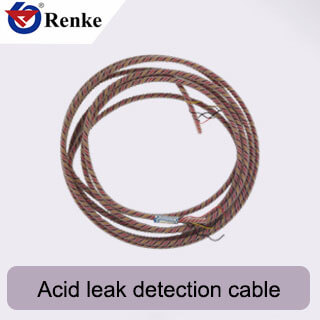
Acid leak detection cable (RS-PJ-LSS-DWSJLS-T)
This leak detection cable is characterized by its resistance to strong acid corrosion and excellent chemical resistance. At 25°C, it remains fully functional after 7 days of exposure to chemicals(For example: 100% trichloroethylene, 98% sulfuric acid, 37% hydrochloric acid, 100% hexane, 100% methanol, 10% sodium hydroxide, 100% xylene). Prolonged exposure to concentrated ketone chemicals may cause a temporary decrease in sensitivity. This property applies only to the detection cable; it does not apply to lead wires or termination jumper wires.
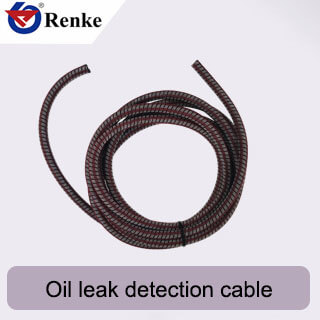
Oil leak detection cable (RS-PJ-LSS-DWSJLY-T)
This oil leak detection cable is non-reusable (single-use) and must be replaced after coming into contact with hydrocarbon liquids. When exposed to these chemicals(10% sulfuric acid, 10% hydrochloric acid, 10% nitric acid, 10% sodium hydroxide) at 23°C, the cable remains fully functional after 7 days. It offers excellent water resistance; after 90 days of immersion in saltwater, the cable’s leakage current remains below 10 μA. It is widely used to monitor leaks of gasoline, diesel, xylene, and JP-8 jet fuel.
Leak Detection Cable FAQs
1. How do you install a leak detection cable?
Choose a Location: Place it under an air conditioner, next to water pipes, or in low-lying areas of the floor to ensure that any leaks will come into contact with the cable immediately.
Lay Flat Against the Floor: Lay the cable flat and press it down firmly to prevent it from curling up; you can lay it in loops to increase the contact area.
Avoid Interference: Do not allow contact with metal conductors, and do not bundle it with high-voltage wires to prevent false alarms.
Wiring:
Connect the sensor cable to the lead wires: First, secure the connectors; connect the lead wires (no polarity distinction) to the controller’s LA and LB ports.
Power Cables: Connect the black wire to V- and the red wire to V+.
Audible and Visual Alarm: Connect the black wire to V- and the red wire to COM.
For some models, connect from V+ to NO to form a circuit
Wiring may vary by model; refer to the product manual for specific instructions.
2. Can leak detection cable detect chemicals?
Standard leak detection cables cannot detect organic chemicals; it is necessary to use detection cables specifically designed for certain chemical substances (particularly non-conductive hydrocarbons and solvents).
3. How does a sensing cable detect a leak?
Leak sensing cables detect leaks by sensing changes in resistance or capacitance when the sensing wires come into contact with a liquid. Conductive liquids (such as water) directly establish a conductive path, while non-conductive hydrocarbons cause structural changes in the swollen polymer material. Some products can also locate leak points using resistance distribution or TDR technology and are widely used for early warning in leak-prone environments such as utility tunnels and equipment rooms.
4. What is the difference between locating and non-locating leak cable?
A locating leak cable can accurately display the location of a leak (with an error margin of ≤0.5 meters), while a non-locating leak cable can only issue an alarm indicating “a leak has been detected” but cannot specify the exact location.
5. Where should water leak cable be installed?
- Precision air conditioning areas: Below condensate drain pipes, around humidifier inlet/outlet ports, and along the edges of the drip pans at the bottom of air conditioning units.
- Pipes and valves: Water pipe joints, valve connection points, fire sprinkler system connections, and the floor along the route of central air conditioning water supply pipes.
- Low-lying areas and entrances: Inside the gaps at the bottom of windows and doors, concealed spaces under the floor, around floor drains, and below roof downspouts.
- Areas around specific equipment: The bottom of server racks (to prevent dripping from above), near the liquid cooling heads of liquid-cooled servers, the bottom of storage tanks and pump rooms, and elevator pit bottoms.
6. How do you prevent false alarms from leak detection cable?
- Prevent metal contact: Never tie the detection cable directly to metal posts or pipes, or secure it with metal clips. You must use plastic or nylon cable ties or a dedicated insulated base to prevent a short circuit between the two conductors caused by ground contact, which could trigger an alarm.
- Avoid high-humidity areas: Avoid laying the cable in areas directly exposed to air conditioning vents, on walls prone to condensation, or in low-lying areas with poor drainage. If environmental humidity remains consistently high, install dehumidification equipment or raise the sensor cable a few centimeters to keep it away from areas where condensation may drip.
- Regular cleaning: Periodically wipe the cable with a dry cloth to remove dust, dirt, or insect remains (conductive contaminants can cause changes in resistance). Inspect the cable for signs of aging or damage and check connections for looseness or oxidation; replace any damaged sections immediately.
- Proper installation: Ensure the cable lies flat against the ground but does not overlap (overlapping sections are prone to false alarms due to compression or trapped moisture), and maintain the cable’s spiral structure. Connectors must be properly waterproofed and insulated to prevent moisture intrusion.
Related Blogs
Table of Contents In the fields of electrical engineering and electronics, we frequently encounter various analog signals such as voltage and current. In nature,
Table of Contents Water leak detection is designed to detect and repair leaks in pipes, equipment or building structures in a timely manner to
Long-term rainfall and melting snow have raised water levels and flooded city roads, causing flooding. Frequent and extreme flooding is inevitable and endangers community
Table of Contents The key to the smart industry lies in the collection of data and information. Sensors are the nerve endings of the
Table of Contents Have you or your friends ever experienced a burst pipe or indoor flooding? Even if you don’t live in a flood-prone
Table of Contents What is a water level sensor? A water level sensor is a device designed to measure the height of a liquid,