What is Heat Flux?
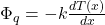
Heat flux, also known as heat flow density, refers to the amount of heat transferred per unit area per unit time. It is a physical quantity that describes the rate and direction of heat transfer. In the International System of Units (SI), the unit is watts per square meter (W/m²). Since it has both magnitude and direction, it is considered a vector. The formula is:
![]()
As a core concept for understanding and quantifying thermal phenomena, heat flux plays a crucial role in fields ranging from large-scale industrial production to the thermal management of microelectronic devices, and even in research on Earth’s climate change.
Types of Heat Flux
Based on the heat conduction method
According to the different modes of heat transfer, It can be divided into heat conduction, heat convection, and heat radiation. Both conduction and convection require an intermediate medium, while radiation does not.
Heat conduction
Heat conduction belongs to contact heat transfer. The collisions among a large number of molecules, atoms, or electrons in a substance cause energy to transfer from the higher-temperature region to the lower-temperature region. It is the most fundamental form of heat transfer. Its calculation follows a fundamental physical law—Fourier’s Law of Heat Conduction (
). This law clearly states that the magnitude of conductive heat flux mainly depends on two core factors: first, the material’s intrinsic thermal conductivity (k), which determines its heat conduction ability; second, the temperature gradient (dT/dx), that is, the rate of temperature change in space, which constitutes the driving force of heat flow.
Heat convection
Heat convective is the process in which heat energy is transferred from a high-temperature region to a low-temperature region due to fluid motion (such as air or water). It occurs within the boundary layer between the fluid and the solid surface. Its core principle follows Newton’s Law of Cooling (q = h(Ts − Tf)). The intensity of this process mainly depends on two factors: first, the temperature difference between the surface and the fluid, which serves as the driving force of heat transfer; second, the more critical factor, the convective heat transfer coefficient (h). According to the driving force of fluid motion, convection can be divided into two forms: natural convection, driven by density differences caused by temperature gradients (such as a radiator heating a room), and forced convection, driven by external forces such as fans or pumps (such as a computer cooling fan), with the latter usually achieving much higher heat transfer efficiency than the former.
Heat radiation
Heat radiation refers to the amount of heat per unit area per unit time emitted or absorbed by an object through electromagnetic waves (mainly infrared). It does not rely on a medium and can transfer through a vacuum, just as the Sun radiates heat to the Earth. This process follows the Stefan-Boltzmann Law (

), whose core principle is that the radiation intensity is proportional to the fourth power of the object’s absolute temperature, which means that at high temperatures, radiation becomes an extremely important, even dominant, mode of heat transfer. At the same time, radiative capability also depends on the surface characteristics of the object, measured by emissivity (ϵ); dark, rough surfaces usually radiate and absorb heat more effectively than light-colored, smooth surfaces.

Based on the application method
Soil heat flux
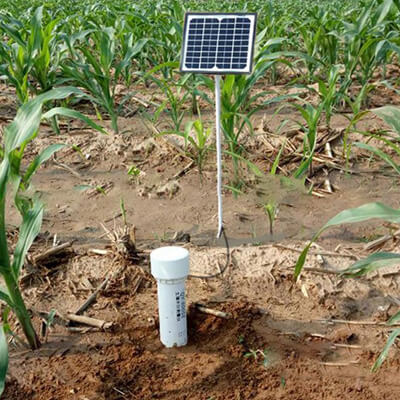
Soil heat flux is the amount of heat per unit time passing through a unit cross-sectional area in the vertical direction, representing the heat exchange at the soil surface. Its value is determined by the temperature gradient between the upper and lower soil layers and the soil’s thermal conductivity, and is influenced by factors such as soil type, vegetation cover, and absorption of solar radiation. It exhibits significant diurnal and annual variations and is closely related to net radiation flux, soil temperature, and moisture content. Its numerical variations can be measured using soil heat flux plates.
Sensible heat flux
Sensible heat flux is the process by which the surface and the atmosphere directly exchange heat due to temperature differences. This exchange is realized through turbulent motion, which transfers sensible heat vertically and directly alters atmospheric temperature. Its magnitude is influenced by factors such as the surface-air temperature difference, surface properties, atmospheric stability, wind speed, and season. Sensible heat flux can be estimated using formulas or precisely measured using techniques such as the eddy covariance method. It is a core component of the surface energy balance.
Latent heat flux
Latent heat flux refers to the energy exchange between the surface and the atmosphere per unit time and per unit area caused by phase changes of water. It mainly transfers heat through phase change processes such as surface water evaporation, plant transpiration, and ice or snow sublimation.
- Energy absorption (evaporation/transpiration): When liquid water transforms into water vapor (for example, evaporation from oceans and lakes, soil moisture evaporation, or plant transpiration), a large amount of energy must be absorbed from the surrounding environment. This energy is called “latent heat of evaporation.” This energy does not raise the temperature of the water but is stored in the water vapor molecules.
- Energy release (condensation): When water vapor carrying energy cools in the air and condenses into tiny liquid droplets or ice crystals, it releases the previously stored latent heat into the atmosphere. This process is known as “latent heat release from condensation.”
Difference Between Heat Flux and Heat Flow
Heat flow and heat flux are two related but distinct physical quantities used to describe the process of heat transfer.
Heat flux refers to the rate of heat transfer per unit area, reflecting the spatial distribution density of heat, and is commonly measured in W/m²; whereas heat flow represents the rate of heat transfer over a whole or total area, indicating the total amount of heat being transported, and is commonly measured in W. The relationship between the two is: heat flow equals heat flux multiplied by the effective area of heat transfer, i.e., Q = q × A.
Imagine a river: “heat flow” is like the total volume of water passing through a cross-section of the river every second. It is a macroscopic concept that tells us the overall transport capacity of the river, measured in watts (W), representing the total energy transferred per second. It does not concern itself with whether the water is flowing faster or slower at specific locations, only the total flow across the cross-section.
In contrast, “heat flux” is like observing a specific point in the river. It describes the intensity or density of flow at that point, i.e., how much water passes through a small unit area per second. This is a measure of intensity, expressed in watts per square meter (W/m²). In the center of the river, where the water is turbulent, the heat flux is high; near the riverbanks, where the water flows gently, it is low.
Why measure heat flux?
1. Scientific research
It is a key parameter for studying energy exchange between the Earth’s surface and the atmosphere. By measuring heat flux, a complete surface energy balance equation can be constructed, revealing the mechanisms of surface temperature variation, the development of the atmospheric boundary layer, and local climate characteristics. At the same time, it also serves as essential baseline data for climate modeling, water cycle studies, and analysis of energy flows within ecosystems.
In agricultural production, it is directly related to crop evapotranspiration and can reflect crop water requirements. Measuring this value can help formulate irrigation plans, avoid over- or under-irrigation, and thus conserve water resources and increase yields. Furthermore, changes in heat flux can serve as a key indicator for drought monitoring. When latent heat flux decreases significantly while sensible heat increases, it often indicates insufficient soil moisture, providing a basis for drought warning.
3. Engineering and industrial applications
In industrial and energy sectors, it is an important method for evaluating equipment safety and efficiency. For example, in systems such as boilers, heat exchangers, and nuclear reactors, measuring this value can determine whether heat transfer performance is normal and whether it is approaching safety limits such as the critical heat flux (CHF). In the construction industry, measuring heat flux through building envelopes can assess insulation performance, guiding energy-saving retrofit designs.
4. Environmental protection and energy utilization
In renewable energy development, it can be used to evaluate the heat absorption efficiency of solar collector systems or determine the output capacity of geothermal energy. In urban planning and environmental protection, monitoring sensible heat flux across different surface types can quantify their contribution to urban heat island effects, providing scientific guidance for cooling greening, material selection, and layout optimization.
How to Measure Heat Flux?
1. Heat flux sensors
The most common and direct method is to use heat flux sensor. It is based on Fourier’s Law of Heat Conduction and calculate the heat flux passing through the sensor by measuring the temperature gradient across the sensor surface. The sensor typically integrates multiple thermocouples or resistive temperature detectors to detect temperature differences and convert them into voltage signals. A typical contact heat flux sensor consists of a thin resistive layer and a thermopile made of multiple pairs of thermocouples connected in series at both ends.
2. Thermocouples
Thermoelectric measurement utilizes the thermoelectric potential generated by thermocouple sensors at the contact point between two dissimilar metals to accurately measure temperature differences. By placing thermocouples at different locations within the measured medium or material, real-time temperature data is collected. Fourier’s law of heat conduction is applied to calculate heat flux, combining the material’s thermal conductivity and spatial spacing. This method offers a simple structure and rapid response, suitable for steady-state and quasi-steady-state heat flow measurements. It is widely used in material thermal performance evaluation, building energy efficiency analysis, and industrial process monitoring, offering excellent measurement stability and high accuracy.
Infrared thermal imagers
Infrared thermal imagers detect infrared radiation emitted from an object’s surface to obtain high-resolution temperature distribution images, enabling non-contact temperature measurement. By combining heat conduction theory with boundary conditions, infrared thermal imagers can indirectly estimate the heat flux distribution on material or structural surfaces, assisting in the identification of heat loss, local overheating, and thermal anomalies. This technology offers advantages such as rapid response, non-destructive inspection, and broad applicability, and is widely used in building energy efficiency diagnostics, equipment fault detection, and industrial process monitoring, serving as an important auxiliary tool for heat flow analysis and thermal management.