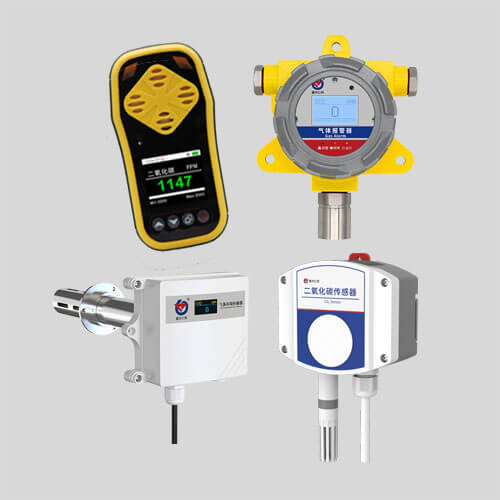
In the field of gas monitoring, carbon dioxide gas concentration is a critical parameter. CO2 sensors are used in industrial, agricultural, and residential settings alike. In greenhouses or mushroom farms, they ensure that plants grow under optimal CO2 levels. In factories or production workshops, they provide timely alerts when concentrations deviate from safe ranges, preventing potential safety hazards.
Many users face a common challenge: even top brand CO2 sensors often behave unpredictably after installation. Readings may drift over time, fluctuate more than expected, or show significant differences when measured in similar locations. In greenhouses, CO2 levels may not match target concentrations; in production workshops, alarms may trigger unexpectedly; in warehouses, long-term trends can be difficult to interpret.
These issues are often attributed to sensor quality. In reality, they usually arise from how the CO2 sensor interacts with the actual operating environment.
This article will focus on the factors that truly determine the effectiveness of CO2 monitoring in real-world applications.
Why do some CO2 sensors perform poorly in applications?
CO2 sensor accuracy is determined under standardized laboratory conditions. Temperature, humidity, and gas concentration are controlled, airflow is uniform, and the test duration is limited. Under these constraints, accuracy figures are meaningful and repeatable.
Industrial plants, warehouses, and greenhouses operate under very different conditions.
- Temperature may fluctuate daily or seasonally
- Humidity can vary significantly, especially in agricultural environments
- Airflow is driven by mechanical ventilation, fans, open doors, or natural convection
- CO2 sources are localized and intermittent
In such environments, a CO2 sensor is not measuring a stable gas concentration. It is sampling a dynamic, non-uniform atmosphere. Expecting laboratory accuracy to directly translate to these conditions is unrealistic. This does not invalidate accuracy specifications. It highlights their limited scope.
For industrial applications
- In industrial workshops and warehouses, localized high concentrations of CO2 can be generated by welding, combustion equipment, or densely packed work areas. These instantaneous emissions can cause sensor readings to fluctuate rapidly over a short period, leading to measurements that deviate from the spatial average. Even if the sensor itself is highly accurate, local emissions may introduce uncertainty into the actual readings.
- Airflow in industrial environments is often complex. Mechanical ventilation, exhaust systems, and natural airflow can quickly mix the air within a space or create dead zones. Such variations in airflow can result in significant differences in CO2 concentration at different locations, affecting the stability and repeatability of sensor measurements.
- Temperatures in industrial production environments may fluctuate due to equipment heat, day-night temperature differences, or process variations, and humidity can change with seasons or operational activities. These environmental factors can influence the electrochemical or optical response characteristics of the sensor, potentially causing measurement errors under certain conditions.
- Dust, particulate matter, and other suspended solids can accumulate on the sensor surface, while long-term temperature and humidity cycles can cause sensor drift. These gradual changes may not be noticeable in routine monitoring but can progressively affect accuracy and reliability.
For agricultural applications
- In greenhouses, CO2 enrichment systems may produce gas concentrated near the injection points, and insufficient airflow or uneven ventilation can create concentration gradients within the space. The CO2 values measured by the sensor may differ from the actual exposure experienced by the crop canopy.
- The height and specific placement of CO2 sensors directly affect the representativeness of their measurements. If the sensor is installed at the top of the greenhouse or far from the plant canopy, the recorded data may not reflect the actual CO2 concentration absorbed by the plants, impacting enrichment and ventilation control strategies.
- Temperature and humidity in greenhouse environments fluctuate significantly, and water vapor evaporation can affect sensor response speed and stability. In high-humidity conditions, some optical or electrochemical sensors may experience drift or delayed response, affecting actual control accuracy. Renke has developed a CO2 sensor(RS-CO2*-*-2D-T) specifically designed for use in greenhouses or mushroom houses to address this environment.
- Agricultural greenhouses often maintain continuous CO2 enrichment. In such conditions, automatic baseline calibration may misinterpret high concentrations as zero-point drift, causing the sensor to gradually underestimate the actual CO2 levels. This can influence control system decisions, preventing crops from reaching the target CO2 concentration.
What CO2 sensor parameters should be considered?
1. Repeatability
In both industrial and agricultural applications, CO2 data is rarely used as a single absolute value. It is used to detect changes, control processes, or verify trends. Examples include:
- Triggering ventilation when CO2 rises above a threshold
- Maintaining CO2 enrichment within a target range
- Comparing zones over time
- Evaluating system performance or energy efficiency
Under these conditions, the repeatability and stability of a sensor often prove more critical than its peak accuracy. A sensor that consistently reports slightly elevated readings can still deliver actionable data if its behavior is predictable, whereas a sensor that fluctuates unpredictably(despite a lower nominal error) can undermine control logic and erode confidence in the system. Experienced operators therefore focus on long-term signal stability, low noise under variable airflow conditions, and consistent response characteristics, rather than chasing the lowest possible accuracy specification.
2. Installation height
In real projects, CO2 sensor placement is frequently treated as a minor detail. In practice, it can dominate measurement results.
In industrial environments, locating a sensor near supply air outlets can result in readings that underestimate actual CO2 levels, while proximity to heat sources can introduce thermal bias, and stagnant air zones can slow response times. Similarly, in agricultural settings such as greenhouses, sensor height relative to the plant canopy, CO2 injection points, and fan placement determines whether the readings reflect the air experienced by the crops or simply background levels.
A sensor that appears “inaccurate” is often merely measuring the wrong air mass. Achieving meaningful measurements is less about finding a perfect location and more about selecting a position that aligns with the monitoring objective and maintains consistency over time.
3. Automatic calibration
Automatic baseline calibration (ABC) is a common method used to compensate for sensor drift, relying on the assumption that CO2 levels will periodically return to a known baseline concentration. While this approach can be effective under controlled conditions, many industrial and agricultural environments do not satisfy this assumption. Production facilities often operate continuously, warehouses experience constant human and vehicle activity, and greenhouses are frequently maintained at elevated CO2 levels for crop growth. In such cases, ABC can gradually interpret sustained elevated concentrations as sensor drift, leading to systematic underestimation. This type of error can be far more consequential than random measurement noise, as it may compromise ventilation control, safety margins, or crop management decisions.
For CO2 sensors deployed in industrial or greenhouse settings, calibration strategy must therefore be deliberate and context-specific. Operators need to consider whether manual calibration or reference checks are required, when ABC is appropriate, and the assumptions underlying the calibration process. Calibration should not be treated as a simple feature of the sensor; rather, it is an operational decision that directly affects the reliability of the measurement system.
4. Long-term stability
In industrial workshops, warehouses, and greenhouses, environmental conditions such as temperature swings, humidity fluctuations, dust accumulation, and airborne contaminants can all gradually affect sensor performance. Even the most accurate sensor under laboratory conditions can begin to drift when exposed to these real-world stresses. Similarly, continuous CO2 enrichment or localized emissions can influence automatic calibration routines, subtly shifting baselines and compromising long-term data reliability. CO2 sensors that exhibit high long-term stability, on the other hand, resist these influences and deliver consistent, predictable readings. This stability not only reduces the need for frequent manual calibration but also ensures that control systems, ventilation strategies, or crop management decisions are based on dependable data rather than transient or skewed measurements.
Ultimately, long-term stability transforms CO2 sensors from simple measurement devices into reliable components. It ensures that the data remains actionable over time, allowing operators to maintain environmental conditions with confidence, optimize energy usage, and safeguard both human and plant health. In fact, stability is one of the most important factors in determining whether a CO2 sensor is reliable.
CO2 monitoring is a control problem
In real industrial projects, a CO2 sensor is never working alone. Its readings are used to start or stop ventilation, adjust airflow, trigger alarms, or support operational decisions. Once CO2 data is connected to equipment and people, measurement stops being an abstract number and becomes part of a control process.
This is where many problems begin. A sensor that produces unstable or inconsistent readings does not just create “bad data”, it causes real operational issues. Ventilation systems may cycle on and off more frequently than necessary, energy consumption increases, and operators start questioning whether the automation can be trusted. Over time, this leads to manual overrides or disabled control logic, not because the system is poorly designed, but because the sensor behavior does not match how the system is expected to work.
On the other hand, CO2 sensors with steady, predictable behavior make control simpler and more reliable. Even if the absolute value is not perfect, consistent readings allow systems to respond to real changes instead of noise. Ventilation reacts when it should, enrichment stays within range, and operators gain confidence that the numbers reflect actual conditions. In practice, this kind of stability often delivers better results than chasing the highest accuracy on paper.
Choosing CO2 sensors must be selected and deployed with the entire operational context in mind. This is why experienced users evaluate CO2 monitoring solutions as complete systems rather than isolated devices. The right question is not “Which sensor is the most accurate?” but “Which sensor behaves reliably in this environment and supports stable control over time?” When CO2 sensors are selected with their real operating context in mind, they stop being just measurement tools and become dependable parts of everyday operations.
After reading this article, you will have a clearer and more practical understanding of how to select the right CO2 sensor. High accuracy is important, but a good CO2 sensor should not be judged by peak accuracy alone. It should also have the following characteristics:
- Predictable behavior under variable conditions
- Long-term stability in continuous operation
- Compatibility with ventilation and control systems
- Clear understanding of limitations and trade-offs
When these factors are prioritized, CO2 sensors become reliable tools rather than sources of confusion. Accuracy is an important specification, but in industrial CO2 sensors, real success depends on how the sensor behaves in complex, dynamic environments over extended periods.

This article was written by the Renke Technical Team. The team focuses on collecting, analyzing, and addressing real customer challenges, and shares practical solutions through technical articles to help other users solve similar problems. Renke is a trusted sensor manufacturer with more than 15 years of hands on experience in hardware and software research and development. The company designs and produces a wide range of environmental monitoring sensors that are widely deployed across global markets. Supported by extensive field application experience and continuous technological innovation, we provide reliable and experience based insights into the development of Internet of Things and sensor technologies.