

Table of Contents The commonly used communication method for data acquisition and control is RS-485. RS-485 is a general communication standard. It can not only
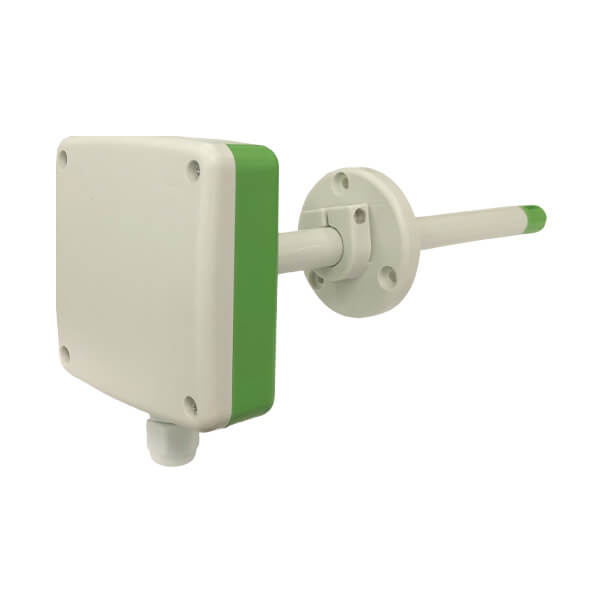
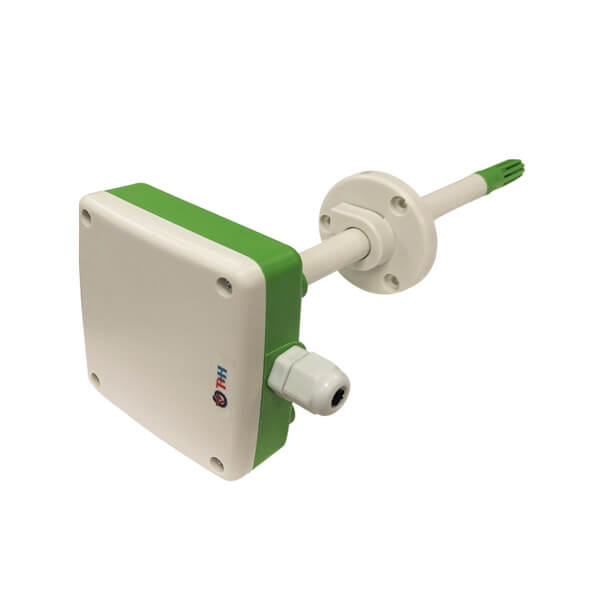
Duct Type Wind Speed Sensor
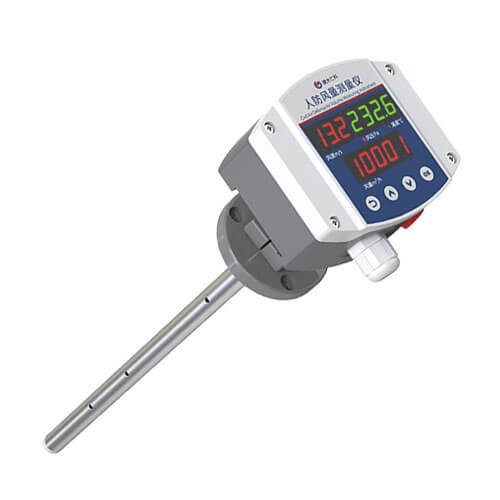
This air velocity sensor is a device used to measure the wind speed in the pipe. The air velocity sensor operates on the hot-wire anemometer principle. Using a self-developed high-precision wind speed measurement unit, it is sensitive and can quickly and accurately measure small air flows, with good stability, small drift, and high accuracy.
- Model: RS-FS-*-9TH-*-T
- MOQ: 1 PCS
- Delivery date: within 24 hours
- Price: $60.8
About - Air Velocity Sensor
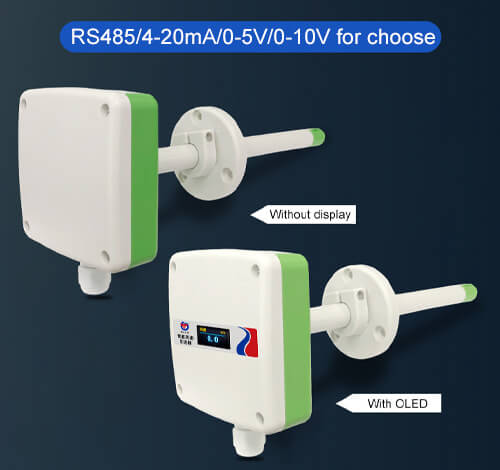
The duct type wind speed sensor can calculate the real-time air volume value according to the cross-sectional area of the pipe set to be measured. It is easy to install on-site, and the product adopts an anti-interference circuit design inside, which can withstand various strong electromagnetic interferences such as on-site inverters. The transmitter adopts imported screw-free terminal wiring, which is more convenient to use. There are two options of RS-FS-*-9TH-T (air velocity sensor without display) and RS-FS-*-9TH-OLED-T (air velocity sensor with display).
Features
- High-precision wind speed measurement unit with low starting threshold and fast response, suitable for harsh environments such as ventilation ducts and fume extraction pipelines.
- Equipped with a proprietary full-range secondary calibration method, ensuring excellent linearity and high accuracy.
- Flange-mounted design with high-quality silicone sealing ring, providing minimal air leakage and long-lasting durability.
- The duct cross-sectional area can be configured, enabling real-time air volume output based on the preset duct size.
- RS485 output air velocity sensor with configurable communication address and baud rate; device address can be set via software or DIP switch.
- Analog output air velocity sensor with DIP switch selectable wind speed ranges (e.g., 0~20 m/s, 0~30 m/s, 0~10 m/s, 0~15 m/s), allowing users to conveniently adjust the range on-site.
- Imported tool-free, screwless wiring terminals for quick and easy connection—simply press and insert.
- Integrated EMC anti-interference components, capable of resisting strong electromagnetic interference from inverters and other on-site equipment.
- Clear airflow direction markings for straightforward and accurate installation.
Installation
Please note that the duct must be installed on the side or bottom. It cannot be installed from top to bottom.
First, drill a 20 mm diameter hole in the ventilation duct and insert the air velocity sensor probe into the hole. Adjust the orientation of the device so that the arrow marking on the air velocity sensor aligns with the airflow direction. You can adjust the sensor height by repositioning the flange. Finally, secure the device by tightening the three screws on the mounting flange to complete the installation.
The air velocity sensor is suitable for cleanroom ventilation monitoring, fan supply, and exhaust tracking. Air velocity sensors are ideal for various HVAC measurement and control applications. Applications include zone control in HVAC systems and cleanroom systems. Air velocity sensors are ideal for monitoring airflow.
Datasheets
| Output | RS485 | 4~20mA/0-5V/0-10V |
|---|---|---|
| Power supply | 10-30V DC | 10-30V DC |
| Max. power consumption | 0.5W | 0.6W |
| Measure media | Air, Nitrogen, Exhaust Gas | Air, Nitrogen, Exhaust Gas |
| Measure range | Default 0~30m/s | 0~20m/s (Max. range: 0~30 m/s) |
| Accuracy | ±(0.2+2%FS)m/s (25°C) | ±(0.2+2%FS)m/s (25°C) |
| Resolution | 0.1m/s | 0.1m/s |
| Operating environment | -40°C~+60°C | -40°C~+60°C |
| Response time | 2s | 2s |
| Long-term stability | ≤0.1m/s/year | ≤0.1m/s/year |
| Parameter settings | Software-configured | — |
| Load capacity | — | Current output: ≤600Ω, Voltage output: ≤250Ω |
FAQs - Air Velocity Sensor
What is a duct airflow sensor?
A duct airflow sensor is a device installed inside HVAC or ventilation ducts to measure the speed and volume of airflow. It helps monitor system performance, ensure proper ventilation, and optimize energy efficiency.
Why is airflow measurement important in ducts?
Accurate airflow measurement ensures proper indoor air quality, balanced ventilation, energy savings, and compliance with building regulations. It also helps prevent equipment failure caused by insufficient airflow.
Where should a duct air velocity sensor be installed?
It should be installed in a straight section of the duct, away from bends, dampers, or fans, to avoid turbulence. Proper positioning ensures accurate and stable readings.
Can duct airflow sensors measure both velocity and volume?
Yes. Velocity can be measured directly, and when combined with the duct’s cross-sectional area, the sensor can calculate airflow volume (CFM or m³/h).
Why choose Renke duct air velocity sensor?
- High-precision measurement unit
Equipped with a high-precision airflow measurement unit, featuring low starting wind speed and fast response. Suitable for harsh environments such as ventilation ducts and fume extraction systems. - Full-range secondary calibration
Utilizing Renke’s self-developed full-range secondary calibration method, ensuring excellent linearity and high measurement accuracy. - Superior sealing performance
Designed with a flange-mounted installation and high-quality silicone sealing ring, minimizing air leakage and providing long-term durability. - EMC anti-interference components
Integrated with specialized EMC anti-interference devices to withstand strong electromagnetic disturbances from inverters and other electrical equipment. - Hot-film principle
Based on the hot-film principle, delivering outstanding stability, high precision, and extended service life.
Do duct air velocity sensors require calibration?
Yes. Regular calibration ensures long-term accuracy. Many manufacturers recommend yearly calibration depending on operating conditions.
Are duct airflow sensors suitable for cleanrooms and labs?
Yes. They are widely used in cleanrooms, pharmaceutical facilities, and laboratories to maintain strict air quality and pressure balance requirements.
What outputs does duct air velocity sensor provides?
They usually provide analog signals (0-10V, 4-20mA) or digital outputs (RS485/Modbus) for integration with building management systems (BMS).
Related Blogs
Table of Contents Accurately measuring rainfall has long been a challenge, owing to its pronounced regional and diurnal variability. The emergence of modern Western scientific
A greenhouse is a closed environment that provides optimal conditions for plant growth and promotes plant growth by controlling indoor and outdoor environments. A complete
Table of Contents Modern companies are placing an increasing emphasis on the value of collected data. As a result, central data centers, IDCs, and similar
Table of Contents Have you or your friends ever experienced a burst pipe or indoor flooding? Even if you don’t live in a flood-prone area,
Table of Contents What is an anemometer? An anemometer is a meteorological instrument used to measure air velocity and, in many configurations, wind direction. In
Table of Contents How wind sensor work? Wind speed sensor working principle Wind speed sensor is a physical device used to measure wind speed. The
Table of Contents Where to mount wind sensor? Installing wind sensor on the weather station The wind sensor is a crucial component of a weather
Difference between wind speed sensor and air volume sensor The difference between the wind speed sensor and the air volume sensor starts with the wind