Table of Contents A consistently balanced pool pH is essential for ensuring water quality, user safety, and equipment longevity. The pH value indicates the acidity
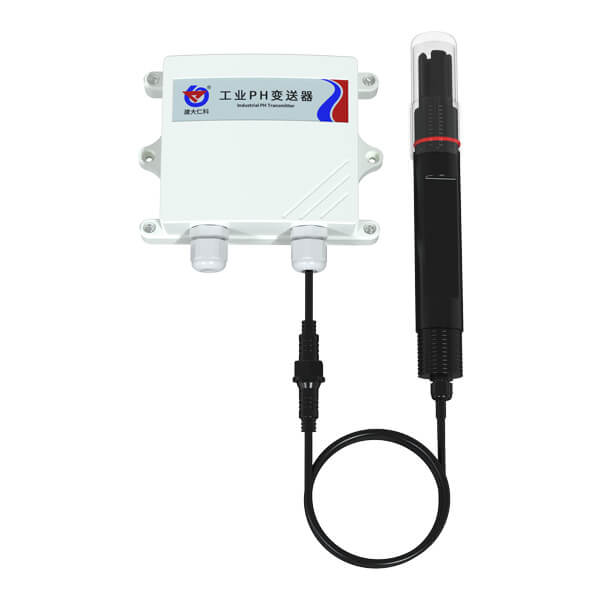
Industrial water pH sensor
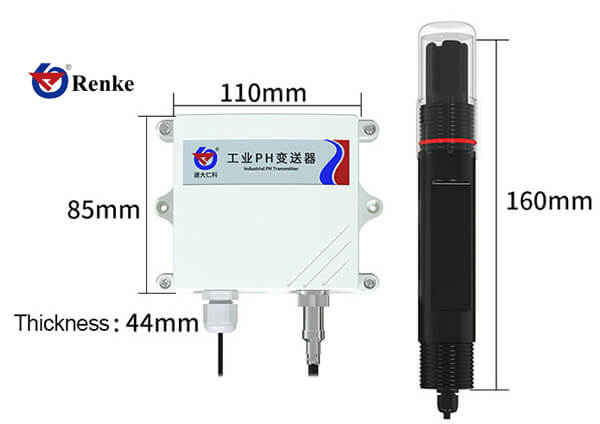
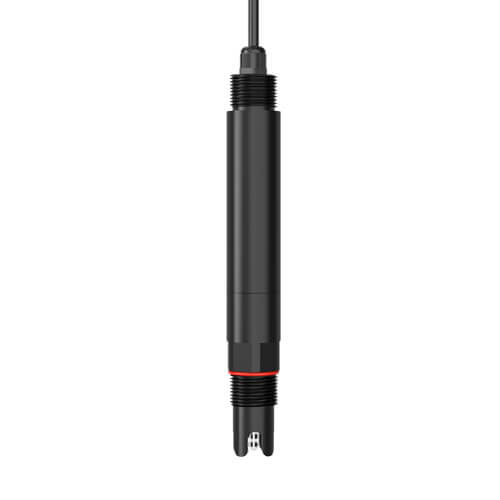
The industrial water PH sensor (RS-PH-*-2-*-EX) is a device for measuring the pH value (hydrogen ion concentration index, pH) of a solution. With automatic temperature compensation function. It is suitable for industrial sewage, domestic sewage, agriculture, aquaculture, and other scenarios in a non-corrosive weak acid and weak alkali environment. The output signal has RS485, 4-20mA, 0-5V, 0-10V.
- Model: RS-PH-*-2-*-EX
- MOQ: 1 PCS
- Delivery date: within 24 hours
- Price: $77.60
About - Industrial pH Sensor
Features
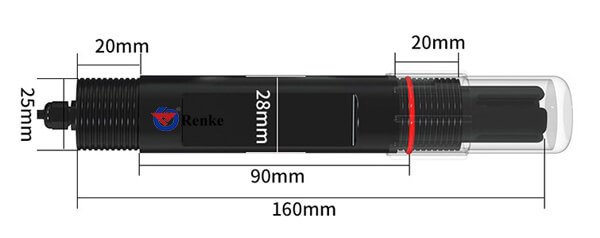
RS-PH-*-2-*-EX industrial pH sensor adopts conventional composite electrode, which is suitable for the measurement of conventional sewage, tap water, environmental sewage, domestic sewage and other solutions. The pH measure range is between 0~14pH, and the resolution is 0.01pH. The adaptation temperature of the electrode is 0-80℃. This water pH sensor consists of two parts: a data collector and an electrode probe. The ph electrode probe has four lengths of 5m, 10m, 15m, and 20m. The housing of the data collector is IP65 protection grade, which can be used in outdoor rain and snow environment.
When it detects that the PH concentration exceeds the preset alarm value, it can provide multiple alarm methods such as interface alarm, sound and light alarm, SMS alarm, telephone alarm, email alarm, etc., to remind managers to troubleshoot the cause of excessive PH value in time, and record the event for information Call and analyze.
Datasheets
| Output signal | RS485 | 4-20mA/0-5V/0-10V |
|---|---|---|
| Power supply | DC 10~30V | DC 10~30V |
| Power consumption | 0.6W | 1.2W |
| pH measure range | 0~14.00pH; Resolution is 0.01pH | 0~14.00pH; Resolution is 0.01pH |
| pH measure error | ±0.15pH | ±0.15pH |
| Repeatability error | ±0.02pH | ±0.02pH |
| Temperature range | 0~80℃; Resolution: 0.1℃ (The set temperature is used during manual temperature compensation; the default is 25℃) | — |
| Temperature measure error | ±0.5℃ | — |
| Working environment | 0-60℃, <85% | -20℃~+80℃, 0%RH~95%RH (non-condensing) |
| Electrode operating temperature | 0~80℃ (0~60℃ for 202/202T planar desulfurization electrode) | |
| Electrode withstand voltage | 0.6MPa | 0.6MPa |
| Electrode wire length | Default 5m (10m, 15m, 20m customizable) | |
| Electrode service life | 6~12 months | 6~12 months |
The output signal types of this industrial water PH meter are divided into RS485 and analog. The data collected by the RS485 industrial PH sensor can be connected to the environmental monitoring host through RS485 wiring, and then uploaded to the environmental monitoring cloud platform through the Enternet. Real-time monitoring is realized through the environmental monitoring cloud platform to ensure the safe discharge of industrial wastewater. In addition, the environmental monitoring cloud platform also has functions such as historical data analysis, viewing, exporting, and remote setting of data parameters, and supports multiple login methods on the computer terminal, mobile phone APP, and WeChat official account.
Types of pH Electrodes
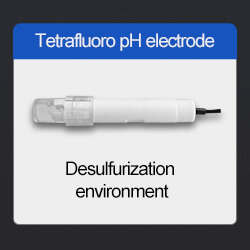
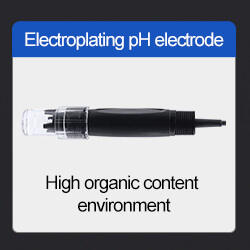
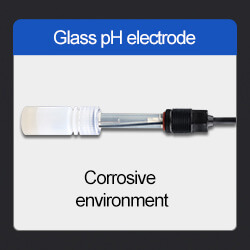
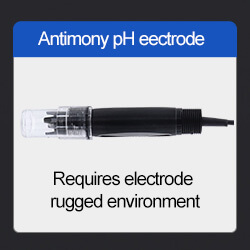
There are different types of pH electrodes for different measurement environments. The six most commonly used electrode types are listed on the right.
pH sensor widely use in:
Industrial waste water applications
Sanitation chemicals – chlorine, bleach, caustic, acids, bases
Pharmaceutical waste water
Sewer water
Cooling towers
Commercial swimming pools
Aquaculture industry
Aquarium measurement pH
| Electrode Type | PH range | Temperature(℃) | Pressure resistance(Mpa) | Internal resistance MΩ (25℃) | Zero potential | Theoretical percent slope(%) |
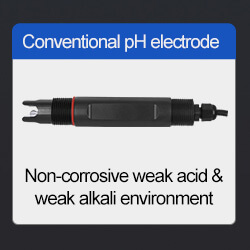
| Conventional pH electrode | 0-14 | 0-80 | 0.6 | ≤250 | 7±0.2 | ≥95 |
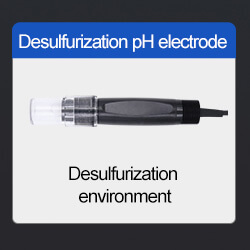
| Desulfurization pH electrode | 0-14 | 0-60 | 0.6 | ≤250 | 7±0.2 | ≥95 |
| Tetrafluoro pH electrode | 0-14 | 0-80 | 0.6 | ≤250 | 7±0.2 | ≥95 |
| Electroplating pH electrodes | 0-14 | 0-80 | 0.6 | ≤250 | 7±0.2 | ≥95 |
| Glass pH electrode | 0-14 | 0-80 | 0.6 | ≤250 | 7±0.2 | ≥95 |
| Antimony pH electrode | 0-14 | 0-80 | 0.6 | / | 7±0.2 | ≥95 |
Installation
- Submerged type: the lead of the pH electrode is threaded out of the stainless steel tube, and the 3/4 thread on the top of the pH electrode is connected to the stainless steel 3/4 thread with a raw material tape. Make sure that no water enters the top of the electrode and the electrode wire.
- Duct mount: Connect to the pipe through the 3/4 thread of the pH electrode.
FAQs - pH Sensors
Why is pH important in water quality monitoring?
pH plays a critical role in determining whether water is safe, stable, and suitable for its intended use.
Incorrect pH levels can:
Harm aquatic life
Reduce the effectiveness of disinfectants like chlorine
Accelerate corrosion or scaling in pipes and equipment
Affect taste and odor of drinking water
Interfere with industrial and chemical processes
Because of these impacts, pH is one of the most frequently monitored water quality parameters worldwide.
What is pH sensor?
The pH sensor is a key instrument for determining pH levels and is widely utilized in water quality assessment. It measures the acidity or alkalinity of water and various solutions. When applied correctly, pH sensors help maintain the safety and quality of both products and operational processes, especially in wastewater treatment and industrial manufacturing environments.
How does pH sensor work?
When the sensor is placed in a liquid:
The hydrogen ions in the solution interact with the glass membrane.
This interaction generates a small voltage (electric potential) that changes depending on the pH of the solution.
The sensor compares this voltage to the reference electrode.
The resulting voltage difference is converted into a pH value by the transmitter or pH meter.
How to maintain the pH sensor?
If you want the pH sensor to keep in good condition, you must maintain the pH electrode regularly. Without proper maintenance, some common problems that may affect the electrode include: oily coating on the electrode, blockage or fouling of the reference contact, malfunction or breakage of the PH bulb, and short electrode life due to reference poisoning.
If the electrodes are usually coated with oil and other substances, consider using a sensor that includes a non-porous reference junction. The use of automated systems for cleaning electrodes can further reduce your maintenance needs. If the reference junction is often clogged or fouled, a non-porous electrode can also be used as a solution to this problem. If your pH bulb breaks when it comes in contact with sewage, you can use a bulb guard to protect it. As for the problem of reference poisoning, the use of non-porous electrodes can avoid these problems.
How to clean the pH sensor?
It only takes a few simple steps to clean your electrode to properly maintain and clean the pH electrode. Whenever handling pH electrodes, it is important to wear safety glasses and gloves. When the electrodes are not in use, they should always be kept in a liquid solution. If the electrode dries out, it can no longer be used. Most electrodes can only be purchased in saline solution, and you can continue to use them in the future.
In order to clean the electrode, you should put it in a solution consisting of 95% water and 5% hydrochloric acid. When the electrode is placed in this solution, most of the coating will dissolve. The sensor should be soaked for 5-10 minutes and then rinsed off. If the coating around the sensor is particularly heavy, the above steps should be repeated several times. Be sure to wipe the sensor with a soft cloth, as any abrasive cloth or brush will damage the electrode.
Why are different types of pH sensors important?
With modern water pollution becoming more and more serious today, it is urgent to protect the environment and protect water resources. Countries all over the world are paying attention to this issue. In some countries, industry is the backbone of the national economy. They know that it is not good to exchange economic development at the cost of the environment, but they have to do so. Therefore, water pollution is already a headache for the whole world. Sewage treatment equipment was developed under this background. Sewage treatment equipment can effectively treat domestic sewage and industrial waste water in urban areas to prevent sewage and pollutants from directly flowing into waters. PH sensor is an important part of sewage treatment equipment.
The pH value is one of the most commonly used water quality testing indicators, and the pH value of natural water is mostly in the range of 6-9. The pH value of drinking water should be between 6.5 and 8.5. The pH value of some industrial water should be guaranteed to be between 7.0 and 8.5, otherwise it will have a corrosive effect on metal equipment and pipelines. pH value and acidity, alkalinity are both different and connected. The pH value indicates the strength of the acidity and alkalinity of the water, and the acidity or alkalinity is the content of acid or alkali substances in the water. The change of pH in water quality indicates the degree of water pollution.
If the water pH is too high or too low, the aquatic organisms in it will die. PH value also affects the dissolved oxygen and toxicity of chemicals and heavy metals in the water. Most aquatic organisms like the pH range between 6.5 and 9.0, but some can live in water bodies with a pH beyond this range.
Therefore, whether it is industrial production, aquaculture, sewage treatment or agricultural production, a ph sensor is needed to detect the ph value in the liquid, which requires us to choose the appropriate ph sensor.
What does a pH sensor consist of?
A typical pH sensor (usually a glass electrode) consists of:
Measuring electrode: Contains a special pH-sensitive glass that reacts with hydrogen ions in the solution.
Reference electrode: Provides a stable voltage for comparison.
Internal buffer solution: Usually a pH 7 solution sealed inside the sensor.
Temperature sensor (in modern sensors): Helps adjust readings because pH can vary with temperature.
What is temperature compensation in pH sensors?
Temperature compensation corrects pH readings to account for temperature-related changes in electrode response.
Most modern pH sensors include:
Automatic Temperature Compensation (ATC)
Built-in temperature sensors
This feature improves accuracy, especially in environments where water temperature fluctuates.
What are the advantages of our pH sensor?
- High performance: high accuracy, fast response, good repeatability
- Universal protocol: MODBUS RS-485 or 4~20mA current
- Wide-range power supply: 10V ~ 30VDC
- Robustness: suitable to be immersed in water for a long time
- Maintainance-Free: advanced junction design, no clogging
- Durable: anti-corrosion, automatic temperature compensation
- User-friendly: Easy to install and integrate
What are the output modes of our pH sensor?
Our pH sensors have two output modes: RS485 and analog.
Related Blogs
Table of Contents What do pH Mean in Water? The water pH is an important indicator of its acidity or alkalinity. pH (Potential of Hydrogen)
Table of Contents What is conductivity in water? Conductivity in water is the ability of water to conduct electricity. It is primarily related to the
What is dissolved oxygen? Dissolved oxygen (DO) refers to molecular oxygen dissolved in water. The unit is mg/L, which means how many milligrams oxygen in
Long-term rainfall and melting snow have raised water levels and flooded city roads, causing flooding. Frequent and extreme flooding is inevitable and endangers community safety.
Table of Contents The commonly used communication method for data acquisition and control is RS-485. RS-485 is a general communication standard. It can not only
What is a karst cave? The karst cave is a treasure given to mankind by nature and is called a “disposable non-renewable resource” by experts.
Table of Contents Everyone knows that the choice of water quality sensors is very important. In water measurement, the ph sensor is one of the
Table of Contents Have you or your friends ever experienced a burst pipe or indoor flooding? Even if you don’t live in a flood-prone area,
Table of Contents What is a water level sensor? A water level sensor is a device designed to measure the height of a liquid, typically