What is the industrial internet of things (IIoT)?
In the industrial environment, IIoT (Industrial Internet of Things) is used to connect sensors, machines and control systems to gather data at all times and analyse the data to support monitoring, automation and maintenance decisions.
The Industrial Internet of Things (IIoT) is dependent on various key technologies such as sensors, devices, connectivity technologies, transmission protocols, edge computing, cloud platforms, data analytics and artificial intelligence. These technologies are used together to enable IIoT to perform tasks like smart manufacturing, energy management, remote monitoring, and predictive maintenance.
What is IIoT? (Industrial Internet of Things) video from Youtube @simplex-it
IIoT architecture and components
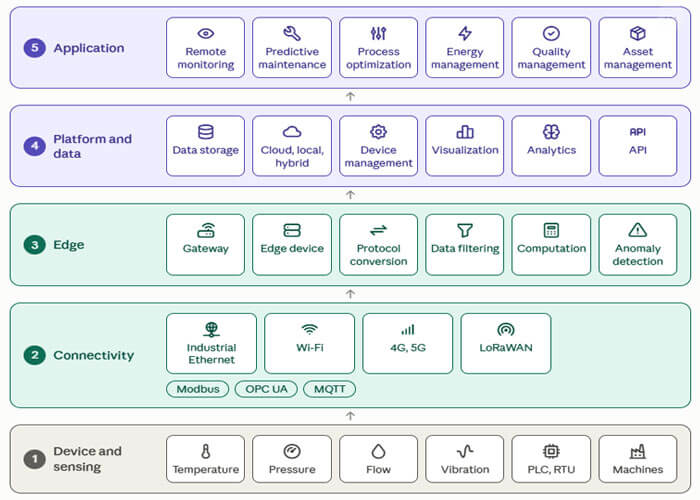
1. Device & sensing layer
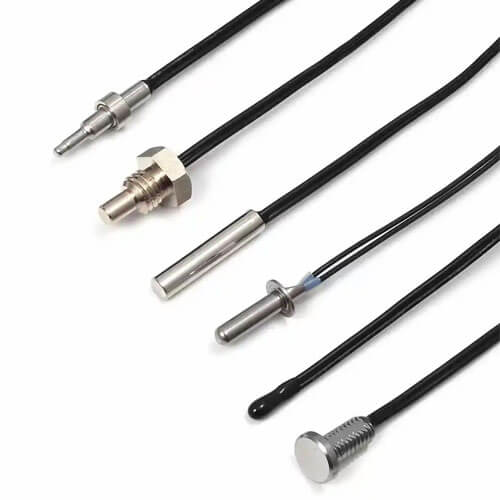
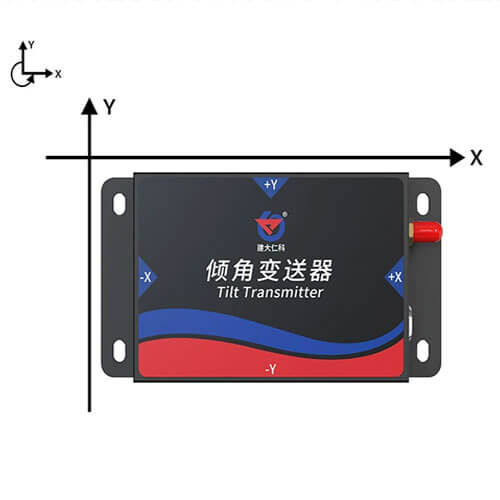
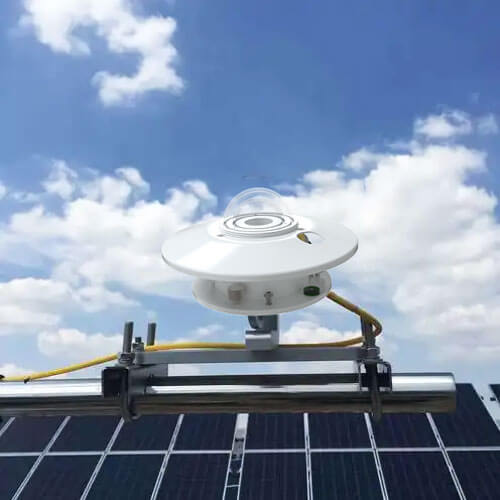
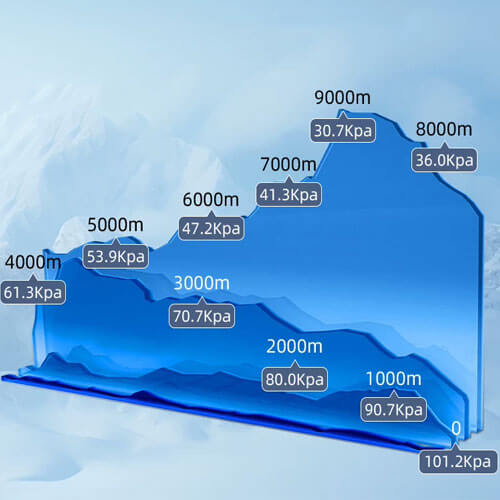
Responsible for collecting industrial field data, including data from temperature sensors, level sensors, water quality sensors, pressure sensors, flow meters, vibration sensors and so on, as well as PLCs, RTUs, industrial equipment, and machines. Sensors are a crucial data source for IIoT to acquire field data.
2. Connectivity layer
Responsible for transmitting field device and data data to upper-layer systems. Common technologies include Industrial Ethernet, Wi-Fi, 4G/5G, and LoRaWAN. Common industrial communication protocols include Modbus, OPC UA, and MQTT.
3. Edge layer
Typically composed of industrial gateways and edge computing devices. It can perform data acquisition, protocol conversion, data filtering, computation, and anomaly detection close to the devices, reducing the need for directly uploading large amounts of raw data to the cloud.
4. Platform & data layer
Responsible for receiving, storing, and managing industrial data. It can be deployed in the cloud, on local servers, or in a hybrid environment. IIoT platforms typically also provide device management, data visualization, data analysis, and API functionalities.
5. Application layer
Transforming industrial data into real business value, such as remote equipment monitoring, predictive maintenance, production process optimization, energy management, quality management, and asset management.
What are the differences between IoT, IIoT, and AIoT?
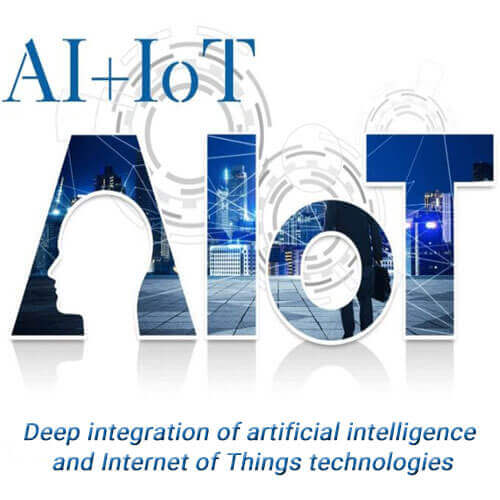
There are also some differences between them because they are all technologies connected with the Internet of Things (IoT), Industrial Internet of Things (IIoT), and Artificial Intelligence of Things (AIoT) with different focuses and application scenarios. True, IoT is targeted at simple device connectivity and data collection, while IIoT is an evolution of IoT in the industrial sector, and AIoT extends this to advanced intelligent analysis and automation with AI technology.
- IoT: Connects various devices (such as sensors and smart devices) via the internet, enabling information exchange and communication between devices. It is widely used in smart homes, smart cities, and health monitoring. Its core is device connectivity and data collection, but it doesn’t necessarily involve complex data processing or analysis.
- IIoT: The application of IoT in the industrial field, focusing on device connectivity and data exchange in industrial environments. It is typically used to improve production efficiency, equipment monitoring, predictive maintenance, and supply chain optimization. It is usually associated with critical industrial operations.
- AIoT: Combines AI (Artificial Intelligence) technology with IoT, enabling devices to perform smarter data processing and decision-making. It uses AI technology to analyze data, thereby achieving automated decision-making and optimization. It is applied in fields such as intelligent transportation, automated manufacturing, and intelligent healthcare.
Main types of IIoT sensors
The widespread applications of IIoT devices are in the areas of equipment monitoring, process control and safety early warning, and most of the sensors are classified into multiple types—temperature, pressure, vibration, gas, displacement, vision, proximity, and flow. Below are 12 main types of IIoT sensors.
| Type | What it measures | Applications |
|---|---|---|
| Temperature sensors | Temperature | Equipment monitoring, HVAC, process control |
| Pressure sensors | Liquid or gas pressure | Hydraulic systems, pipelines, process monitoring |
| Flow sensors | Liquid or gas flow | Water systems, energy management, process control |
| Level sensors | Liquid or material level | Tanks, silos, water treatment |
| Humidity sensors | Relative humidity | HVAC, warehouses, data centers |
| Gas sensors | Gas concentration | Safety monitoring, leak detection, air quality |
| Vibration sensors | Vibration and acceleration | Predictive maintenance, machine condition monitoring |
| Water quality sensors | pH, DO, EC, turbidity, etc. | Water treatment, aquaculture monitoring |
| Proximity sensors | Object presence or distance | Automation, position detection, counting |
| Position sensors | Position, distance, displacement | Motion control, measurement, robotics |
| Machine vision sensors | Images, shapes, defects | Quality inspection, object recognition |
| Motion sensors/encoders | Motion, rotation, speed, position | Motors, robots, conveyors, automation |
How IIoT devices connect
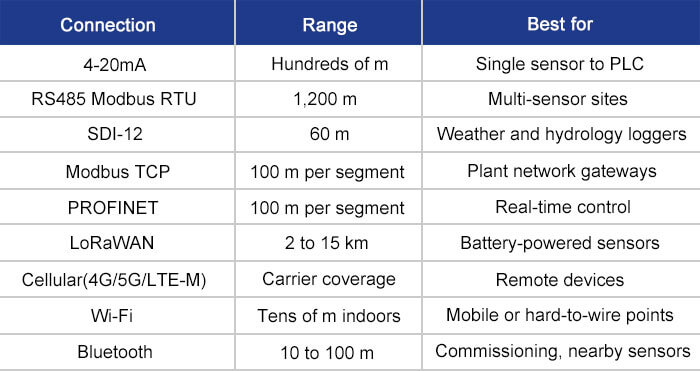
The communication technology dictates the manner in which IIoT devices communicate, such as range, bandwidth, power, and networking needs.
- Bluetooth: Short range, low power, Bluetooth Low Energy (BLE), for short-range wireless temperature and vibration sensors, condition monitoring.
- Wi-Fi: Easy deployment with high bandwidth Wi-Fi in areas with reliable network coverage. Ideal for applications that need to send data frequently or for equipment monitoring.
- LoRaWAN: long range, low power, low bandwidth. Ideal for remote and distributed sensors that transmit small amounts of data.
- 4G/LTE and 5G: Give wide area connectivity without the need for local Wi-Fi. Ideal for mobile, outdoor and remote resources.
- Modbus RTU / RS-485: A popular wired solution for industrial sensors, meters, PLCs and industrial process instrumentation used particularly in existing industrial systems.
- PROFINET: A real-time Industrial Ethernet standard protocol that is used to link PLCs, sensors, drives and other industrial devices in automation systems.
IIoT applications and use cases
Specific IIoT application scenarios include:
Smart manufacturing and factory
Enhance the efficiency of machines and equipment with the help of automation and self-optimization. Data is taken and monitored in real time which optimises operations, eliminates failures and automates quality inspection.
Energy and utilities
Smart grid and monitoring/control energy flow, optimizing energy usage and minimizing energy waste using IIoT. In the oil and gas industry, IIoT can be used for real-time monitoring and predictive maintenance of drilling equipment.
Transportation and logistics
Real-time tracking, predictive maintenance and smart logistics for operational efficiency, lower costs and better customer service.
Healthcare
The transformation of the health-care system using remote consultation, telemedicine, smart hospitals and predictive analysis.
Safety production and emergency response
Installing safety monitoring equipment, such as gas sensors, video surveillance, and smoke detectors, to monitor on-site safety hazards in real time and trigger alarms.
Asset management
Monitoring and managing different physical assets of a company in real time using sensors and positioning technology, such as equipment, raw materials, finished goods, etc.
Automated order fulfillment
Seamlessly connecting customer orders with production processes to automate order fulfillment.
Compliance assessment
Automated tracking and recording of various data during the production process to ensure that every step of the production process complies with industry regulations and legal standards.
IIoT vs Industry 4.0 vs Smart Manufacturing: What Is the Difference?
- IIoT: Solves the problem of “how devices connect and how data is collected.” Its core components are sensors, networks, gateways, and data transmission.
- Industry 4.0: Solves the problem of “how industry can achieve full digitalization and intelligence.” It’s a broader development concept, with IIoT being a crucial technological foundation.
- Smart Manufacturing: Solves the problem of “how to use these technologies to improve production.” Examples include automated production, predictive maintenance, intelligent quality inspection, and production optimization.
Therefore, IIoT is the technological foundation, Industry 4.0 is the development framework, and smart manufacturing is the practical application.
How do industrial IoT sensors support predictive maintenance?
Industrial Internet of Things (IIoT) sensors provide real-time data for predictive maintenance by continuously monitoring equipment operating status. For example, vibration sensors monitor abnormal vibrations in motors and bearings; temperature sensors detect overheating; and pressure and flow sensors detect changes in operating parameters. After the sensors upload the data to the IIoT platform, the system analyzes the data to identify abnormal trends and detect potential faults in advance.
Which component of IIoT allows networked devices to exchange information?
Communication network (connection layer). This is the component that enables data exchange between devices and between devices and the cloud, and includes both wired and wireless types. Common wired networks include Industrial Ethernet, Modbus, and PROFIBUS, while common wireless networks include Wi-Fi, Bluetooth, LoRaWAN, NB-IoT, and 4G/5G.
How IIoT improves manufacturing efficiency?
The Industrial Internet of Things uses real-time data to identify problems and optimize production. This is specifically reflected in four aspects:
Pre-fault warnings to reduce downtime
Real-time process monitoring to reduce scrap
Energy consumption metering at each stage to reduce waste
Remote equipment monitoring to reduce manual inspections
How to plan an IIoT project?
Although the process of planning an Industrial Internet of Things (IIoT) project can be broken down into five steps, they are as follows:
- Define the objectives: Start by determining the problems to be addressed, whether it is minimizing downtime or energy use, and establish measurable indicators.
- Evaluate current condition: Review and identify existing equipment, networks and systems to ensure that data can already be collected and which devices need sensor installation.
- Design the solution: Choose sensors, gateways, communication protocols and platforms and take into account data security and integration with systems in place.
- Small scale pilot: Make a selection of a production line or type of equipment to first test the results. Determine the expansion of rollout based on the indicators.
- Phase-based rollout: Gradually expand the scope, providing supporting personnel training and data management, and continuously optimize.

Written by the Renke Technical Team, a group of engineers and technical specialists with expertise in industrial sensing, IoT technologies, and environmental monitoring systems. The team focuses on sensor applications, industrial communication, data acquisition, and monitoring solutions, sharing practical technical insights based on real-world engineering applications.