
Have you ever faced unexpected equipment failures that forced production to halt? Or struggled with high repair costs and unplanned downtime? Predictive maintenance (PdM) offers a proactive approach to safeguarding your machinery.
By deploying real-time condition sensors on every piece of equipment and integrating temperature or vibration data with AI-driven analytics, predictive maintenance shifts maintenance practices from reactive responses to proactive strategies. This transformation enhances equipment reliability, stabilizes operations, and reduces overall lifecycle costs. Let’s take a closer look at why predictive maintenance is essential for modern industrial machinery.
What is Predictive Maintenance?
Predictive maintenance refers to the use of monitoring data to analyze and forecast whether equipment is developing a fault, enabling companies to repair or replace components before a failure occurs. Machinery typically exhibits early warning signs(such as abnormal vibration, temperature changes, or performance deviations) before a fault develops.
By identifying these indicators in advance, companies can schedule maintenance proactively. This approach reduces unplanned downtime, avoids excessive wear caused by overuse, and minimizes the high costs associated with unexpected failures, including parts replacement and labor expenses.
Video from @realpars
Key Components of Predictive Maintenance
Predictive maintenance is not a single technology. It is a complete framework for industrial intelligence. With the support of IoT systems, the full process can be divided into three parts: data acquisition, analysis and decision-making, and execution. Together, they form a closed maintenance cycle.
1. Data acquisition
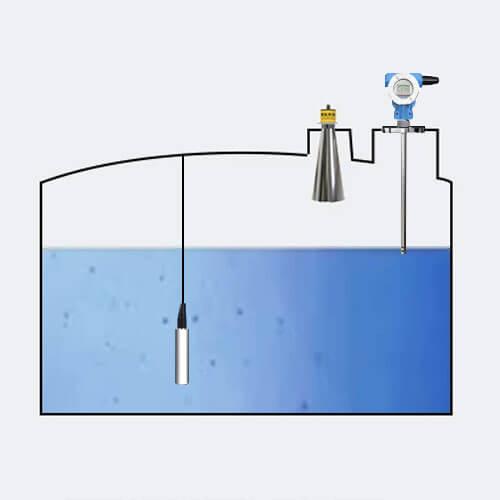
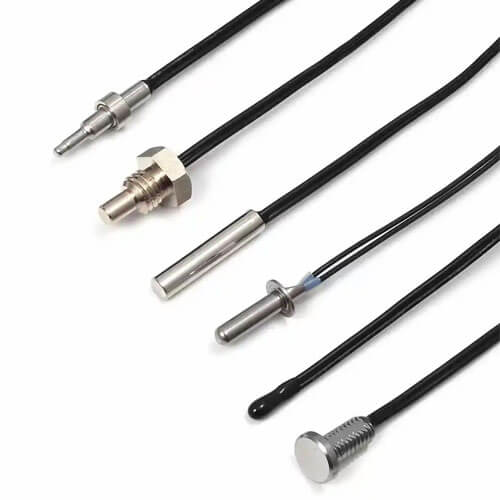
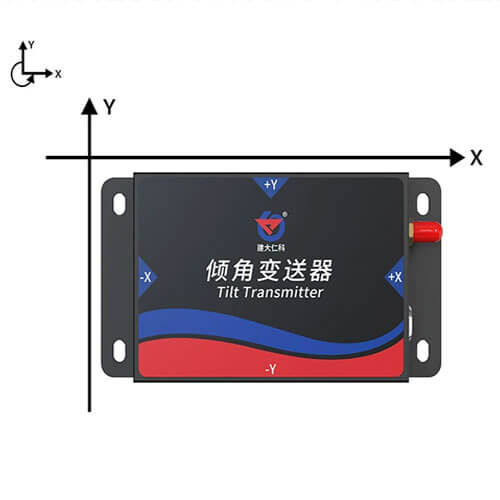
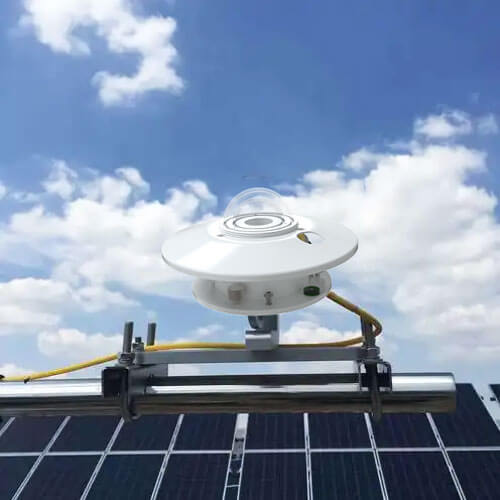
This process involves transforming equipment status into measurable data. Various state sensors (such as temperature sensors, humidity sensors, pressure sensors, noise sensors, vibration sensors, etc.) are used to accurately and continuously capture equipment operating status data, which is then uploaded to the platform via Internet of Things (IoT) technology.
2. Analysis and decision-making
Analysis and decision-making are the intelligent core of predictive maintenance, transforming raw data into interpretable health insights and future risk predictions. This process applies artificial intelligence, machine learning, statistical modeling, and deep learning techniques to identify abnormal patterns, diagnose potential failures, and predict the remaining useful life of equipment from complex data.
3. Execution
Based on the diagnostic results, the system can trigger an automatic response or notify maintenance personnel to take action. After the repair is completed, new real-time data flow back to the analysis layer. The system checks whether vibration patterns, temperature curves and current signals have returned to a normal operating state. This feedback helps improve the accuracy of future predictions.
Application of Predictive Maintenance Technology
You can use condition monitoring to analyze maintenance needs. It helps prevent downtime, unnecessary operations and equipment failures. During condition monitoring, maintenance is triggered when certain thresholds are exceeded. If there are signs that a failure is about to occur, the process can begin in advance. The main methods of condition monitoring include:
1. Temperature and thermal imaging
Cameras are an essential part of the thermal imaging process. When used for equipment evaluation, the camera captures infrared radiation images. Temperature changes are analyzed based on the infrared radiation emitted by the equipment.
In most cases, temperature variations can reveal potential issues and trigger maintenance. Thermal imaging can detect disconnection, wear, corrosion and delamination that cannot be seen with the naked eye. This technique can be applied to electrical connections and systems, discharge patterns, roof maintenance and fluid analysis.
2. Vibration analysis
Vibration monitoring sensors detect vibrations caused by a damaged equipment component. Changes in vibration require the use of wideband vibration analysis and shock pulse analysis. These methods help identify defects within parts.
A vibration monitoring system can detect imbalance, looseness, resonance and gear failures in rotating equipment and machines such as compressors, pumps and engines.
3. Electrical signature analysis
Electrical signature analysis determines the overall health of a motor. A motor circuit analyzer can easily identify faults in the motor and its components. This method applies to both AC and DC motors, and it can be used in online mode (while the motor is running) or offline mode (when the motor is powered off).
Electrical signature analysis can identify issues related to the power supply input, and it can evaluate the motor circuit, motor components, gear systems and motor connections.
4. Ultrasonic analysis
Ultrasonic monitoring detects high-frequency sound waves (30-40 kHz) and analyzes them by converting these signals into audio and digital data. Technicians then perform further vibration analysis on defective equipment to determine the root cause of the issue.
Ultrasonic analysis can be used to detect leaks and cracks, inspect electrical equipment, test valves and optimize lubrication work.
5. Laser shaft alignment
Improper equipment installation can lead to mechanical failures. When shafts are misaligned, bearing failures may occur. Laser shaft alignment is used to check whether the shafts are properly aligned and to verify correct installation, helping prevent performance problems in the future. This technique can detect various surface and subsurface defects in different materials.
6. Oil analysis
This method is used to evaluate the quality of lubricating oil. If the oil becomes degraded due to contamination by wear particles, viscous substances or water, equipment failures may occur. Oil analysis is commonly applied to compressors and gearboxes.
Advantages of Predictive Maintenance
Predictive maintenance offers the following benefits for factories:
- Reduced maintenance costs: Studies show it can lower maintenance costs by 25-30%.
- Eliminated production downtime: Studies show it can reduce production downtime by 70-75%.
- Reduced equipment or process downtime: Studies show it can reduce equipment or process downtime by 35-45%.
- Increased production efficiency: Studies show it can improve production efficiency by 20-25%.
- Material cost savings: Studies show it can save up to 19.4% in material costs.
- Reduced inventory for maintenance and repairs: Studies show it can reduce inventory requirements for maintenance and repairs by 17.8%.
- High return on investment: Studies show the average payback period for predictive maintenance is 14.5 months.
Currently, industrial equipment maintenance can be broadly divided into three types: corrective maintenance, preventive maintenance, and predictive maintenance. Corrective maintenance is carried out after a failure occurs, as a reactive repair. Preventive maintenance relies more on experience and judgment, aiming to intervene before a failure happens. Predictive maintenance, on the other hand, continuously monitors the condition of critical components and diagnoses potential faults during machine operation, achieving true proactive maintenance.
Predictive Maintenance vs. Preventive Maintenance
Both preventive maintenance and predictive maintenance are proactive strategies designed to address issues before equipment failure occurs. However, they differ significantly in methodology, decision logic, and operational requirements.
Predictive maintenance is a condition-based strategy that relies on continuous or periodic monitoring of equipment health. By using technologies such as vibration analysis, thermography, ultrasonic inspection, or electrical monitoring, maintenance teams can detect early degradation, diagnose faults, and predict the equipment’s remaining useful life. Corrective actions are performed only when data-driven assessments indicate an upcoming failure. The effectiveness of predictive maintenance depends heavily on the quality of sensor data, diagnostic accuracy, and the organization’s ability to interpret and act on the results.
Preventive maintenance, in contrast, is a time or usage-based strategy derived from reliability engineering principles and historical failure statistics. Maintenance actions(such as inspections, part replacements, or calibrations) are performed at predetermined intervals defined by design reliability, reliability testing, or manufacturer recommendations. This approach does not require condition monitoring, maintenance is executed regardless of the actual wear state of the component. While preventive maintenance is simpler to implement, it may lead to unnecessary part replacement or fail to detect early-stage failures that do not follow predictable aging behavior.
In summary, preventive maintenance relies on scheduled intervals, whereas predictive maintenance relies on real-time equipment condition. Predictive maintenance generally provides higher efficiency and reduced downtime, while preventive maintenance offers a lower-technology, standardized approach suitable for components with well-understood wear patterns.