Environment Monitoring Sensors Manufacturer

Soil Tensiometer

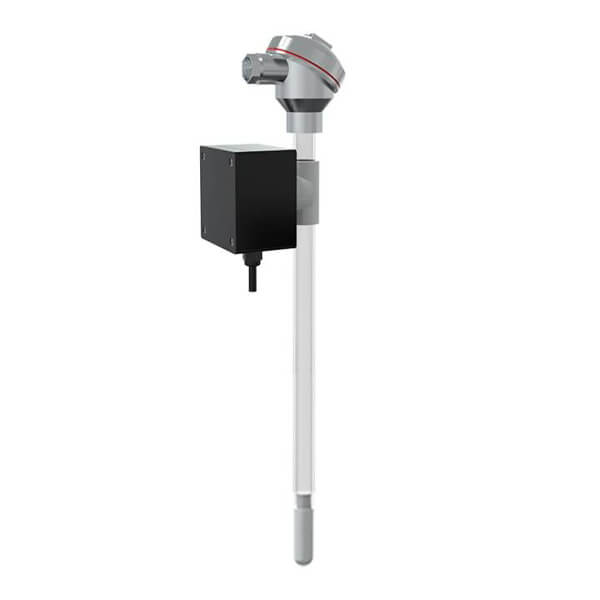
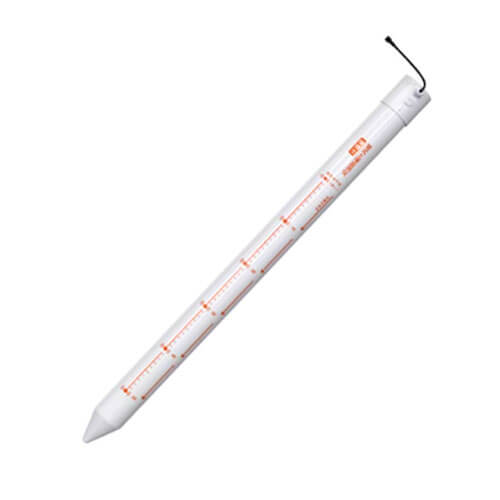
This soil tensiometer uses the principle of negative pressure to measure soil moisture and studies soil moisture movement from an energy perspective. The transparent PVC pipe can clearly see the water volume, and the low end is equipped with a high-quality clay head, which is fast and airtight, and the measurement is accurate. We offer rs485 soil tension meter and 4-20ma soil tension meter for your choice.

  • Model: RS-TRZL-*-1-*-EX
  • MOQ: 1 PCS
  • Delivery date: within 24 hours
  • Price: $73~$92.5

About - Soil Tensiometer

The soil tensiometer can accurately give an irrigation point. Clearly inform the grower whether the plants are short of water, how often they will be short of water, and how often they will be irrigated. Thereby improving the product and quality of crops.

soil tensiometer types

Description

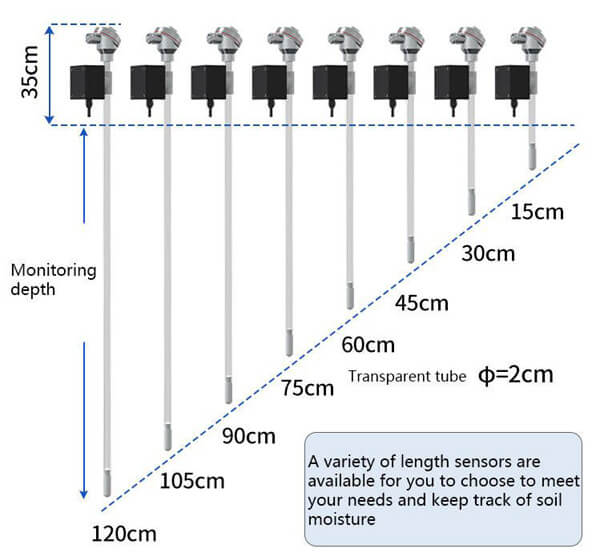
This soil tensiometer is a common device used for measuring soil moisture in agricultural irrigation, providing growers with a cheap and reliable method of measuring soil moisture. The measurement process is not affected by soil salinity and does not require on-site calibration, which is very convenient. Our RS-TRZL-*-1-*-EX soil tension meter has measuring depths of 15cm, 30cm, 45cm, 60cm, 75cm, 90cm, 105cm, 120cm, etc., and supports customer customization. The overall appearance is composed of high-quality transparent PVC pipes and clay heads, which can visually display the soil moisture content. Renke soil tension sensor has two output types, RS485 and analog. The analog output is 4-20ma.

Parameters

Power supply10~24V DC
Power consumption0.5W (4-20mA), 0.8W (RS485)
Component temperature resistance0~80°C
Measuring range-100kPa-0
Accuracy±0.5kPa (25°C)
Resolution0.1kPa
Casing materialtransparent PVC tubing
Protection ratingIP67
Output signal4-20mA/RS485
Response time200ms

Features

  • The shell is made of transparent PVC plastic pipe, which can directly observe the water level, has a fast response speed.
  • The high-quality clay head is fast and airtight.
  • Not affected by salt ions in the soil, agricultural activities such as chemical fertilizers, pesticides, and irrigation will not affect the measurement results, and the data is accurate.
  • Support 10-24V wide voltage power supply, support standard Modbus-RTU485 communication mode, the longest communication is 2000 meters, and also support 4~20mA current signal output.

Use

How to use the soil tensiometer?

  1. Prepare cooled, boiled water (ensure the water is free of dissolved air). Boil tap water for 20 minutes, then allow it to cool and set aside.
  2. Expel air from the porous clay tip. Unscrew the top cover, remove the silicone plug, and fill the porous clay tip completely with the cooled, boiled water. Keep the tensiometer upright for 10–40 minutes (do not replace the cover). When water begins to drip from the surface of the porous clay tip, reinsert the silicone plug. Wrap the porous clay tip with tissue to absorb excess water so that the soil tension reaches approximately −40 kPa. If air bubbles rise, gently shake the instrument to help purge the air. Repeat this process 2–3 times.
  3. Immerse the porous clay tip in water. When the soil tension recovers to within −10 kPa, refill the device until full, insert the silicone plug, tighten the top cover, and the instrument will be ready for use.

How to maintain the soil tensiometer?

  1. Keep the porous clay tip free of oil contamination to avoid clogging the micropores, which may cause instrument failure.
  2. The instrument’s measurement range is −100 kPa to 0 kPa; exceeding this range may cause the porous clay tip’s tube wall to rupture and leak, rendering the instrument unusable.
  3. Check regularly and refill with cooled, boiled water approximately every two weeks to one month (or when the water level falls near the top of the air-collection tube). Do not loosen the sensor during refilling.
  4. If ambient temperatures are expected to fall below 0 °C, retrieve any outdoor instruments to prevent freezing damage.

FAQs - Soil Tensiometer

What is soil tension?

Soil tension is the soil water potential, which is an index of soil moisture intensity. Its size is closely related to the fluidity and penetration depth of soil moisture, the effectiveness and difficulty of plants to absorb soil moisture. At the same time, it can indirectly reflect soil moisture. Generally speaking, the lower the soil moisture, the greater the soil tension, and the stronger the water suction, making it difficult for plants to absorb water in the soil. The greater the soil moisture, the weaker the soil’s suction power for water, and the easier it is for crops to absorb water from the soil.

A soil tensiometer is an instrument that measures soil water tension (or matric potential), which indicates how strongly water is held in the soil and how difficult it is for plants to extract it.

The soil tension is composed of a pressure gauge, a PVC pipe and a ceramic probe. After the PVC pipe is filled with water, the ceramic probe is moist and can prevent external air from entering the ceramic probe. When there is a pressure difference between the water potential of the tested soil and the tensiometer, the water in the tensiometer penetrates into the tested soil until it reaches an equilibrium state. At this time, the value displayed by the pressure gauge is the water potential of the tested soil.

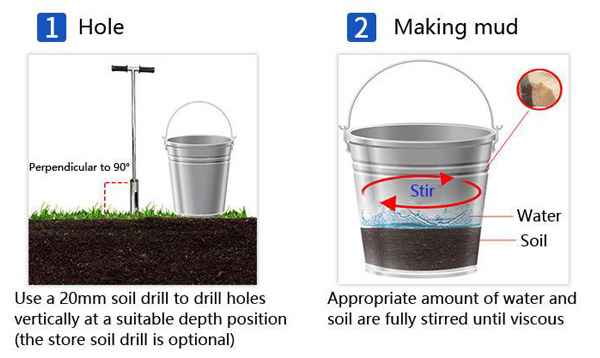
  1. Use a 20 mm soil auger, keeping it vertical to the ground. Hold the handle firmly with both hands and press down while slowly rotating clockwise. (Note: Do not apply excessive force. Rotate slowly and make more turns to prevent the hole from tilting.)
  2. Remove the auger from the hole and collect the extracted soil in a bucket. This soil will be used later to prepare the slurry.
  3. Repeat the above steps of drilling and soil collection. During this process, gently lower the sensor into the hole (without forcing it to the bottom) to test whether the depth is appropriate. If the sensor gets stuck, use the auger to adjust the hole, ensuring smooth insertion and removal. Continue until the hole depth matches the installation mark on the sensor. At this point, hole drilling is complete.
  4. Prepare the slurry. Remove impurities such as stones, roots, and large, hard-to-dissolve clods from the soil. Break the soil into finer particles, add an appropriate amount of water, and stir thoroughly until a viscous paste is formed. For loam, the slurry should not be thicker than the consistency of tahini. The slurry is now ready.
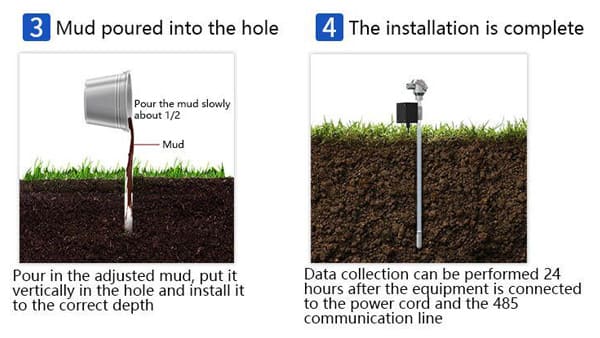
  5. Slowly pour the slurry into the hole until it is about half full (adjust as needed). Then gently insert the sensor into the hole, rotating it in one direction while pressing down slowly.
    (Note: If inserted too quickly, air bubbles may not be fully expelled. Do not pull the sensor upward during the process to avoid reintroducing air into the hole.)
  6. When the sensor reaches the correct installation depth (the zero mark flush with the ground surface), some slurry will overflow around the device, indicating proper grouting. (Note: Remove excess slurry within 3 cm around the sensor to prevent clumping, which may interfere with water infiltration.)
soil tensiometer use
soil tensiometer installation

1. Install the device after crop sowing.
2. Choose a location with flat terrain.
3. Under full-field irrigation, prioritize areas receiving relatively less water as monitoring sites. Under localized irrigation, select a spot within the irrigated zone.
4. Select a location where crop growth is uniform and representative of the majority of crops.
5. Consider the root distribution of the monitored crop; generally, choose a spot close to the crop’s water-absorbing roots.
Note: The soil tensiometer should be installed at a relatively elevated location to prevent rainwater backflow into the device, which may cause short circuits or circuit failures.

4~20 mA Output
Yellow wire: Power positive (10–24 VDC)
White wire: 4–20 mA signal output

RS485 Output
Brown wire: Power positive (10–24 VDC)
Black wire: Power negative
Yellow (or green) wire: RS485-A
Blue wire: RS485-B

Tensiometers indirectly measure soil moisture tension. After the tensiometers are installed, they can provide readings at the same location for a long period of time. Tensiometer readings are easy to interpret and indicate the soil moisture conditions experienced by plant roots. Soil salinity does not affect the reading.

  • Precision irrigation scheduling
  • Agricultural water management
  • Greenhouse and horticulture monitoring
  • Research on soil-plant-water relationships

A two-year warranty is provided for use in a normal environment.

Related Blogs

Soil Moisture Sensor FAQ

Soil moisture is the source of the survival of plants. Soil moisture refers to the moisture content of the soil. The moisture content of the

Soil moisture sensors for agriculture

Soil moisture sensors are also known as soil moisture meters. It is mainly used for measuring soil volumetric water content, monitoring soil moisture, agricultural irrigation,

Soil Fertility and How to Measure

Table of Contents Whether it is farmland or a garden, the most important thing for crops to grow and bloom beautifully is soil. Knowing our

Update cookies preferences