Dissolved Oxygen (DO) indicates the oxygen in water that has been dissolved. It is measured in terms of mass (in milligrams per litre (mg/l) usually) of oxygen in water. Dissolved oxygen in water is present in the form of molecule.
In water that are not polluted by oxygen consuming substances, mainly organic matter, dissolved oxygen is usually at or near saturation. For instance, if the surface water is transparent a dissolved oxygen should be near saturation level. If the concentration of organic matter in water is high, then the process of consuming oxygen will be more than the process of adding oxygen. This causes the dissolved oxygen to slowly deplete and in some instances become low. In this oxygen deficient environment, organic matter breaks down without oxygen, causing putrefaction and fermentation to greatly affect the quality of the water. Thus, for water quality monitoring system, dissolved oxygen sensor is one of the most crucial sensor instruments.
What is a Dissolved Oxygen Sensor?
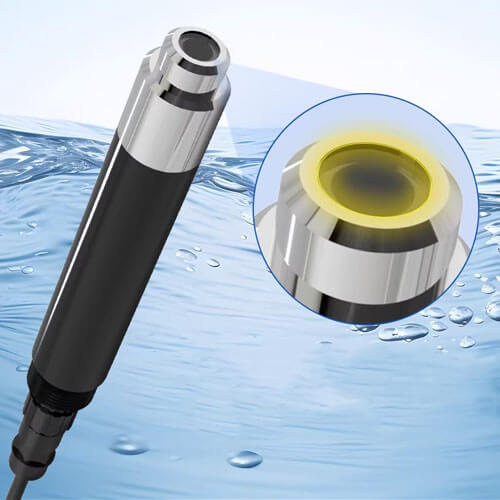
A dissolved oxygen sensor is a device that determines the amount of oxygen (DO) present in water or another liquid and produces an electrical measurement.
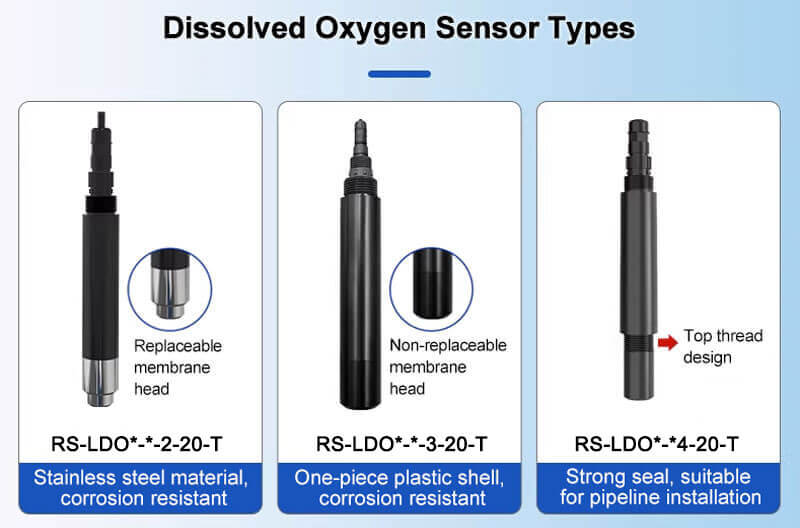
Renke provides affordable dissolved oxygen sensors to be used for freshwater or seawater monitoring project. Please review the following models and applications to select the sensor type that best suits your needs.
How Does a Dissolved Oxygen Sensor Work?
There are currently two methods of dissolved oxygen sensor made by membrane electrode: Optical Fluorescence Method, Polarographic electrode Method.
The working principle of a dissolved oxygen sensor based on fluorescence is the dissipation of fluorescence. When blue light is applied to a fluorescent material it gets excited and releases red light. Oxygen molecules will take some of this energy by a quenching effect, therefore, the lifetime of the emitted red light will decrease with increasing O2 concentration, and so will the intensity. The phase differential between the emitted red LED light and a known signal is then measured and compared to internal calibration data to determine concentration of dissolved oxygen.
Many difficulties with conventional measurement methods, such as the complex working process and the need of oxygen consumption during measurement, maintenance costs and incapable of continuous online monitoring with the fluorescence method, can be solved. This is an excellent measurement principle for measuring because it has low levels of interference, stability, and no need to use chemical reagents and therefore no secondary pollution.
Fluorescence light source module
| Light source types | Features |
|---|---|
| Light emitting diode (LED) | Low operating voltage, high reliability, long lifespan |
| Incandescent light source | Wide spectral range, prone to heat generation, low efficiency |
| Semiconductor laser | High optical efficiency, susceptible to temperature changes, good monochromaticity |
| Fiber laser | Good tunability, high electro-optical efficiency, good stability, expensive |
The working principle of a polarographic dissolved oxygen sensor is based on an electrochemical reduction reaction. Dissolved oxygen at the surface of the gold electrode accepts electrons to form oxygen anions, which are then converted into hydroxide ions. The concentration of dissolved oxygen is determined by measuring the resulting change in electrical current during this process.
Polarographic dissolved oxygen sensors have a relatively simple structure and are cost effective while offering a full range of functions. They are widely used for dissolved oxygen measurement in wastewater treatment plants, drinking water facilities, monitoring stations, hydrological monitoring, aquaculture, and various industrial applications.
Why is Dissolved Oxygen Measurement Necessary?
Low dissolved oxygen in rivers and lakes can be a sign of pollution or eutrophication, and can result in fish death and biodiversity loss. In aquaculture systems, a high or low concentration of dissolved oxygen can have adverse impact on fish health. Wastewater treatment, the dissolved oxygen is an important parameter to control the operation of aeration system in order for the microorganisms to break the pollutants effectively and improve the efficiency of the wastewater treatment. Besides, the DO level of industrial boiler systems should be kept to a minimum to avoid corrosion and scaling, while production processes (food fermentation and beer brewing) demand a careful control on the DO level in order to guarantee the quality of the produced goods.
Comparison Between Optical and Polarographic Methods
Optical methods and polarographic methods represent two fundamentally different approaches to dissolved oxygen measurement. One relies on optical signal quenching, while the other is based on an electrochemical reduction reaction. Their different ways of sensing oxygen determine the measurement behavior, data characteristics, and sources of error.
1. Measurement principle
The polarographic method measures the electrical current generated when dissolved oxygen participates in an electrochemical reaction at the electrode surface. In essence, dissolved oxygen is converted into a measurable electrical signal. As a result, the measurement depends on the diffusion of oxygen molecules to the electrode surface. Dissolved oxygen acts both as the measured parameter and as a reactant in the process.
In contrast, the fluorescence method does not consume oxygen. It indirectly reflects oxygen concentration through the quenching effect of dissolved oxygen on the excited state lifetime or intensity of a fluorescent material. Here, oxygen functions as a quenching agent in an energy transfer process rather than as a reacting substance. This makes the fluorescence method closer to a non intrusive measurement approach.
2. Signal stability
In the polarographic method, the output signal comes directly from the reduction current of oxygen. The signal amplitude is typically high and shows a clear linear relationship with oxygen concentration. However, its stability strongly depends on the condition of the electrode, the composition of the electrolyte, and the integrity of the membrane. Any factor that alters the electrochemical reaction environment will directly affect the output signal.
For the fluorescence method, the measurement signal is derived from the optical system detecting changes in fluorescence decay characteristics. The signal does not depend on electrode chemistry, but rather on the stability of the light source, the optical path, and the condition of the fluorescent sensing layer. It generally exhibits high repeatability and low noise, although slow signal drift may occur over time due to aging of the fluorescent material.
3. Temperature influence
Polarographic method is temperature, pressure and flow sensitive as the rate of diffusion of oxygen and the kinetics of the electrochemical reaction depend on these factors. The dissolved oxygen is not only physically soluble in water in varying amounts based on water temperature changes; its rate of electrode reaction is also changed by these temperature variations. So it is necessary to use the function of temperature compensation for a correct measurement.
The temperature compensation is necessary in the fluorescence method as well, but it is for different reasons. Temperature affects the excited state lifetime of the fluorescent molecules and the quenching constant, rather than the mass transfer of oxygen. In addition, the fluorescence method is largely insensitive to flow conditions. This characteristic arises from its fundamental measurement mechanism, not from structural or mechanical optimization.
What Factors Affect Dissolved Oxygen Sensor Measurements?
1. Temperature
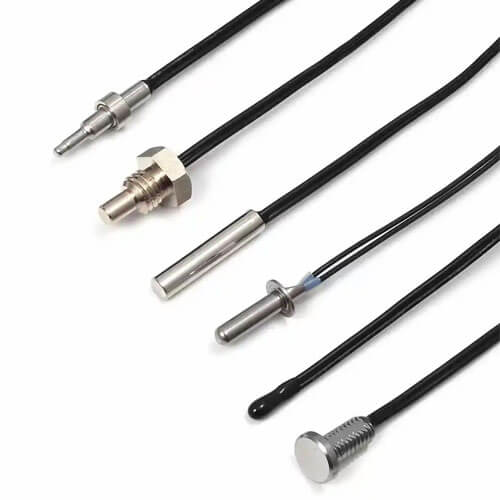
The solubility of oxygen in water is strongly related to temperature. Oxygen’s solubility increases with a decrease in temperature. The solubility of oxygen decreases with increasing temperature. Dissolved oxygen sensors are used to measure the partial pressure of oxygen and this needs to be converted to concentration (mg/L) as a function of temperature. All dissolved oxygen sensors now have an auto-compensation temperature sensor that is built into the instrument. However, if the temperature sensor is in error or damaged the compensated dissolved oxygen concentration will be in error also.
2. Salinity and altitude effects
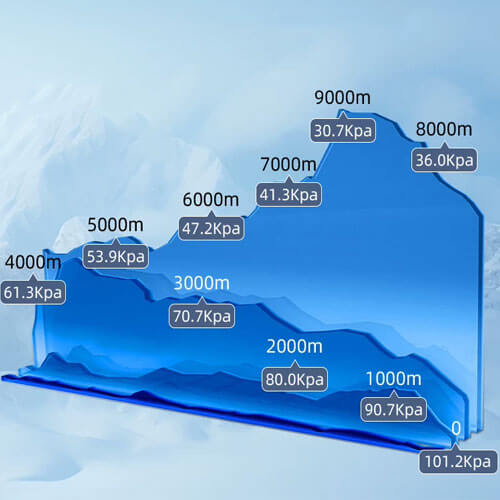
Other factors that affect oxygen solubility in water are salinity and atmospheric pressure. Salinity has opposite effect, the solubility of oxygen diminishes with increase in salinity, and likewise the atmospheric pressure decreases with increase in altitude, which also decreases the solubility of oxygen. If standard sea level and standard pressure are not used in measurements of brackish water, seawater or freshwater at high altitude, the readings obtained without salinity or pressure compensation will be higher than actual, because many seawater sensors are designed for use in freshwater under standard pressure and sea level. The advanced dissolved oxygen sensors(such as Renke RS-LDO*-N01-2-20-T) offer both manual salinity input and automatic barometric pressure compensation. Care should be taken setting in advance these parameters.
3. Sample contamination
There is a potential for the water sample to pick up oxygen at sampling time, and during measurement. Vigorous shaking of the sample bottle can introduce air into the water causing artificially high readings, for instance. Therefore, it is recommended to take use of individual sampling devices, avoid stirring and, as far as possible, make in situ measurement by inserting the probe directly into the water. When you must sample, do so with narrow neck bottles, fill completely (no air pockets) and immediately measure.
4. Chemical interference
Some gases that are soluble in water can go through the sensor membrane and react at the electrode in the side reaction e.g. hydrogen sulfide (H2S), sulfur dioxide (SO2) and chlorine (Cl2). This may cause readings to be higher or lower than the actual value, or even poison the electrode. When measuring dissolved oxygen in water, it is important to understand the water chemistry in advance and select sensors or measurement methods with stronger resistance to interference. For example, optical methods are not sensitive to H2S.
How to Calibrate a Dissolved Oxygen Sensor?
Calibration methods for fluorescence based dissolved oxygen sensors mainly include zero point calibration, air saturated calibration, and multi point calibration. The following describes each method in detail.
Zero point calibration
The dissolved oxygen sensor is placed in an oxygen-free environment during zero point calibration. This can be done by preparing deionized water with a very low concentration of dissolved oxygen (less than 0.05 mg/L) boiling the water and then letting it cool in an oxygen-free container, or by using an oxygen scavenger(such as sodium sulfite) and lowering the concentration of dissolved oxygen to near 0 mg/L. Once the reading from the sensor has reached a steady state, the output value is set to zero.
Air saturated calibration
In air saturated calibration, the dissolved oxygen sensor is exposed to air so that the fluorescent membrane surface is saturated with water vapor but no liquid droplets form. Under these conditions, the oxygen partial pressure is equal to that of the ambient air. Based on the current atmospheric pressure and temperature, the instrument automatically calculates the theoretical dissolved oxygen value at 100 percent air saturation. The fluorescence response under this condition is then used as the full scale reference point. This method is simple to perform and is particularly suitable for field calibration and routine verification.
Multi point calibration
For applications requiring high accuracy, a multi point calibration method can be used. Several standard solutions with different dissolved oxygen concentrations are prepared, covering the full measurement range of the sensor. Typical concentrations may include 0 mg/L, 2 mg/L, 4 mg/L, 6 mg/L, and 8 mg/L. The sensor is placed sequentially into each standard solution, and once the readings stabilize, the corresponding output values are recorded. These calibration data are then used, either through software or manual calculation, to establish a calibration curve that more accurately relates the sensor output to the actual dissolved oxygen concentration. Multi point calibration improves accuracy across the entire measurement range, but it is more complex and time consuming to perform.

This article was written by the Renke Technical Team, a professional engineering group specializing in the design, research, and manufacturing of environmental monitoring instruments. Renke is a trusted sensor manufacturer with over 15 years of hands-on experience in both hardware and software R&D. The company develops and produces a wide range of water quality sensors, including dissolved oxygen sensors, which are widely deployed in wastewater treatment plants, hydrological monitoring systems, environmental protection projects, and aquaculture operations worldwide. Backed by long-term field applications and continuous technological innovation, the Renke Technical Team provides reliable, experience-driven insights into water quality monitoring and sensor technology.