

Table of Contents What is a vibration sensor? Vibration sensor is a device that measure the vibration speed and frequency of mechanical motion and convert
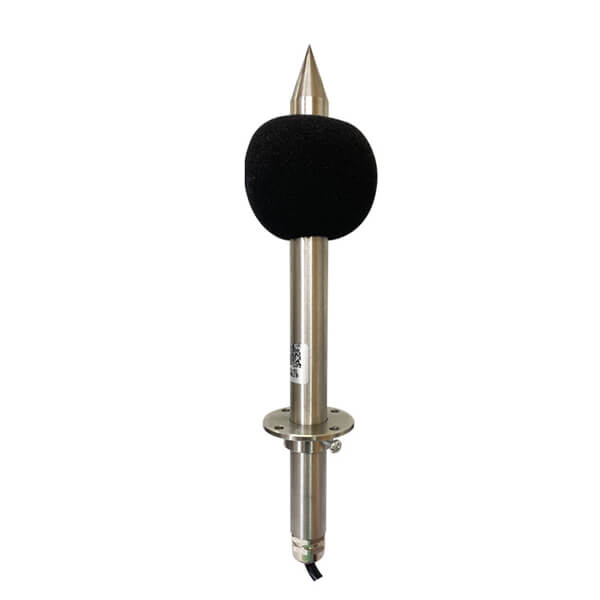
Industrial Noise Detector
This long rod noise detector is a high-precision sound measurement instrument with a range of 30dB to 120dB. It features a 304 stainless steel housing and a built-in high-precision sensor. Its high sensitivity and high and low-frequency acquisition capabilities allow it to quickly capture dynamic and subtle sounds. Renke noise detector are widely used in industrial noise monitoring.
- Model: RS-ZS-*-FL-T
- MOQ: 1 PCS
- Delivery date: within 24 hours
- Price: $40
About - Noise Detector
This RS-ZS-*-FL-T noise detector uses a high-sensitivity condenser microphone with stable signal and high precision. It has the characteristics of wide measuring range, good linearity, easy to use, easy to install, and long transmission distance. Continuous power function and rugged design can simplify your long-term testing. The robust rain and snow enclosure makes it an ideal solution for remote noise monitoring.
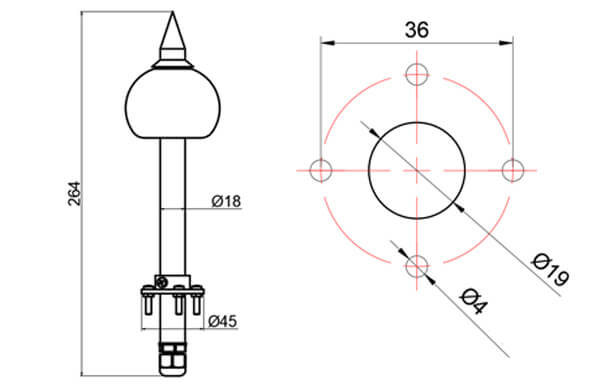
Noise detector features
- Entirely constructed of stainless steel, it effectively resists rain, snow, and insects.
- Utilizes a highly sensitive condenser microphone for stable signal and high accuracy.
- Lightweight and compact, it easily integrates into urban infrastructure.
- Adopt high-quality four-core waterproof cable, which is waterproof, oil-proof and has a long service life.
- Flange installation method, firm and easy to disassemble.
- Its high measurement range meets everyday measurement needs. It is widely used in various applications, including homes, offices, workshops, automotive measurement, and industrial measurement.
Long rod noise detector datasheets
| Power supply | 10-30V DC |
|---|---|
| Max. power consumption | 0.18W (analog), 0.1W (TTL or RS485) |
| Measurement range | 30dB-120dB (analog), 30dB-130dB (TTL or RS485) |
| Accuracy | ±0.5dB (at reference pitch, 94dB @ 1kHz) |
| Resolution | 0.1dB |
| Circuit operating environment | -20°C-+60°C, 0%-95% RH (non-condensing) |
| Frequency range | 20Hz-12.5kHz |
| Response time | ≤3s |
| Stability | Less than 2% over the life of the instrument |
| Output signal | RS485/TTL/4-20mA/0-5V/0-10V |
Notice
- Users are prohibited from disassembling or touching the sensor core to avoid damaging the noise detector.
- To avoid inaccurate measurements, keep the device as far away from high-power interference devices as possible, such as inverters and motors. Always disconnect the power supply when installing or removing the noise detector. Do not allow water to enter the device to prevent irreversible damage.
- Prevent chemicals, oil, dust, etc. from directly invading the sensor. Avoid prolonged use in environments with condensation or extreme temperatures, and take strict measures to prevent thermal shock.
Renke noise sensors
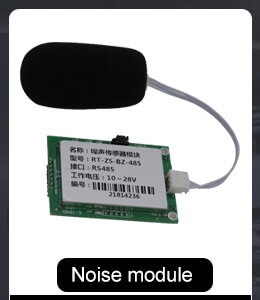
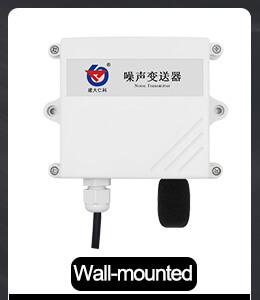
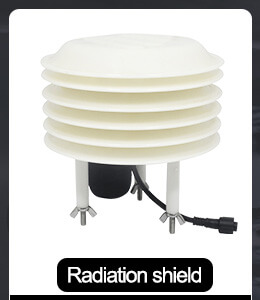
FAQs - Noise Detector
What is a long rod noise sensor?
A long rod noise sensor is a specialized acoustic sensor with an extended rod-like structure used for precise noise detection in hard-to-reach or directional environments, such as tunnels, ducts, or outdoor monitoring.
Where are long rod noise sensors typically used?
They are commonly used in industrial areas, transportation systems, construction sites, and environmental noise monitoring, especially where accurate placement and directional pickup are required.
What are the advantages of long rod noise sensors?
Long rod noise sensors offer high directionality, reduced interference, and access to confined or remote noise sources. They help improve measurement accuracy in complex sound fields.
How does a long rod noise sensor work?
It detects sound pressure through a microphone installed at the end of a rod structure. The rod helps isolate ambient noise and enhances directional focus for more accurate readings.
Can long rod noise sensors be used for environmental monitoring?
Yes. They are ideal for outdoor environmental noise monitoring, including traffic, industrial zones, and urban construction sites, due to their extended reach and accuracy.
What frequency range do long rod noise sensors support?
Most long rod sensors support standard environmental monitoring frequency ranges, typically from 20 Hz to 20 kHz, depending on the model and application.
Are long rod noise sensors weatherproof?
High-quality models are designed with weatherproof materials, allowing them to be used in harsh environments with rain, dust, and temperature fluctuations.
What is the typical length of a long rod noise sensor?
Lengths vary by model, but they typically range from 30 cm to over 1 meter, depending on the application’s requirement for directionality and placement.
How do long rod noise sensors compare with standard noise sensors?
Compared to standard sensors, long rod sensors offer enhanced directionality, reduced interference, and better performance in specialized or obstructed environments.
Related Blogs
The weather sensors are the sensing end of the weather station and collect various weather-related data. The weather station can obtain the main parameters and
Table of Contents Smart buildings are the product of the development of modern science. The smart building system is mainly composed of Internet of Things
Table of Contents The key to the smart industry lies in the collection of data and information. Sensors are the nerve endings of the smart
In the current society, noise pollution has become the third-largest source of pollution after air and water pollution. To ensure normal rest and sleep, the
Table of Contents What is IoT? IoT is the “Internet of things“. It is an extended and expanded network based on the Internet. It combines
A complete set of a weather station is composed of two parts: hardware and software. The hardware part includes various weather station sensors, connecting lines,
Table of Contents What are industrial sensors and actuators? Industrial sensors are devices that can convert physical or chemical quantities in the environment into electrical