

Table of Contents Dissolved Oxygen (DO) indicates the oxygen in water that has been dissolved. It is measured in terms of mass (in milligrams per
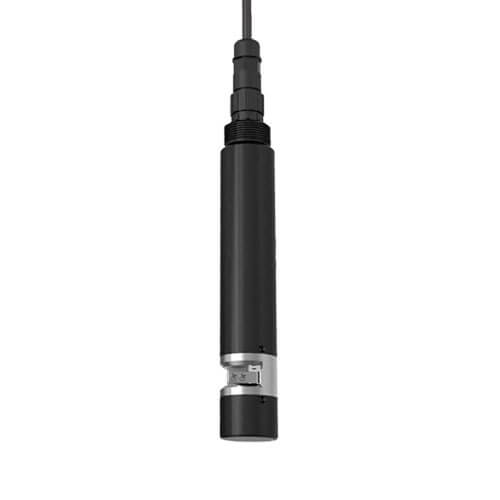
Water Color Sensor
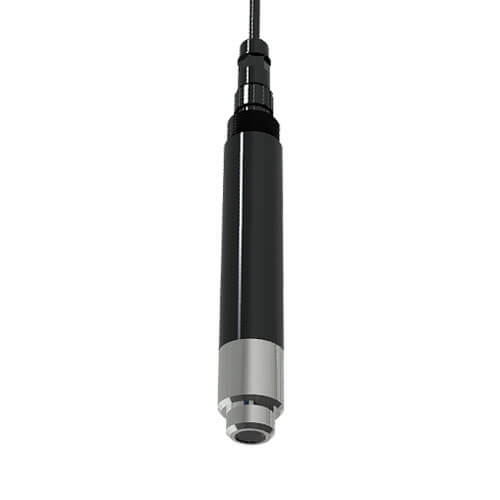
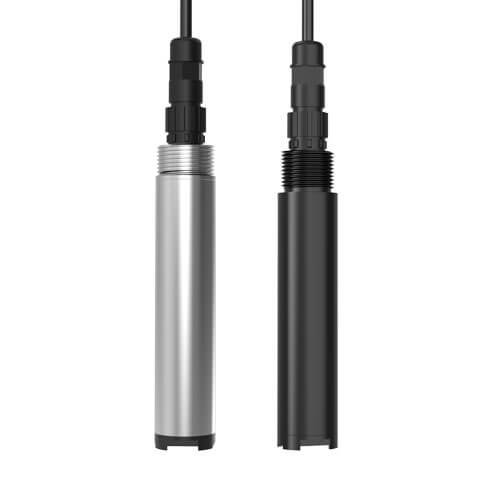
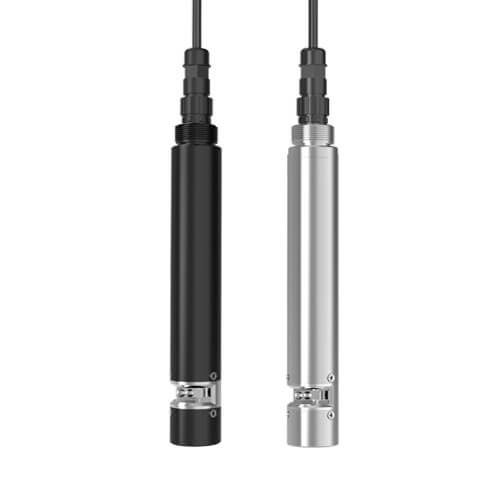
RS-WSD-N01-1-T is a cost effective water color sensor that stands out for its high color accuracy and excellent repeatability. It is based on the optical absorption principle and can detect subtle color changes. It features built in temperature compensation, delivering high accuracy and strong stability. The sensor adopts an integrated structural design with excellent waterproof performance, enabling reliable operation even in harsh environments. It is suitable for long term online color monitoring of water and wastewater.
- Model: RS-WSD-N01-1-T
- MOQ: 1 PCS
- Delivery date: within 24 hours
- Price: $419
About - Water Color Sensor
Color is an important indicator of water pollution. High water color is usually caused by pollutants such as organic compounds and metal ions, which may affect human health, for example by causing digestive system diseases, and reduce the survival capacity of aquatic organisms. By measuring color, it is possible to determine whether natural water bodies are polluted or to prevent pollution by monitoring color changes. It can also be used to evaluate the effectiveness of wastewater treatment processes and to determine whether treated wastewater meets discharge standards.
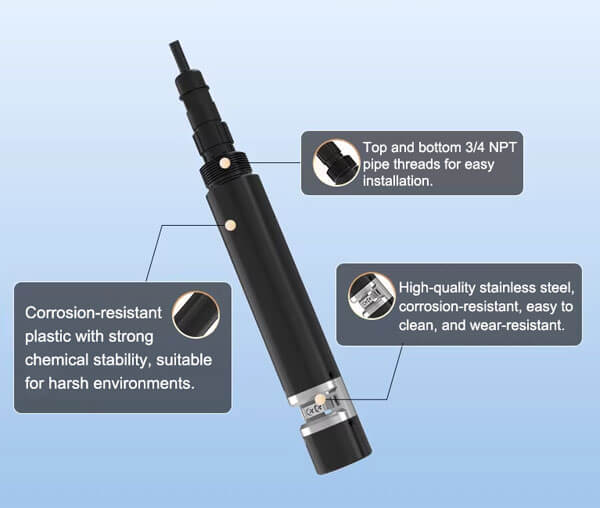
Features
Our water color sensor(RS-WSD-N01-1-T) is a device designed to measure the color of solutions. It is based on the optical absorption principle and does not require chemical reagents, making it simple to use. The product integrates an automatic self cleaning function that effectively prevents the adhesion of biological growth and contaminants. Our water color sensor has a built in temperature transmitter with automatic temperature compensation and uses modulated light signals to reduce visible light interference, resulting in more accurate measurements. In addition, the sensor includes a turbidity measurement channel that effectively compensates for the influence of turbidity on color measurement. At present, our color sensors are widely used in industries such as water treatment, aquaculture, and environmental monitoring.
Parameters
| Power supply | DC 9~30V | |
|---|---|---|
| Power consumption | ≤0.8W (normal); ≤1.5W (when self-cleaning system is working) | |
| Communication interface | RS485, standard Modbus-RTU protocol. Communication baud rate: Default 4800 (1200, 2400, 4800, 9600, 19200, 38400, 57600, 115200 adjustable). | |
| Working principle | Absorption method | |
| Measurement range | Color | 0~500 Hazen |
| Turbidity | 0~500 NTU | |
| Measurement error | Color | ±5%FS (25℃) |
| Turbidity | ±5%FS (25℃) | |
| Resolution | Color | 0.1 Hazen |
| Turbidity | 0.1 NTU | |
| Temperature resolution | 0.1℃ | |
| Temperature error | ±0.5℃ | |
| Repeatability | ±1%FS (25℃) | |
| Response time | ≤30sec | |
| Operating conditions | 0~40℃ | |
| Waterproof rating | IP68 | |
| Flow rate | <3m/s | |
| Pressure resistance | <0.1MPa | |
| Electrode wire length | Default 5m (Customizable) | |
| Housing material | Corrosion-resistant plastic, stainless steel | |
| Recommended maintenance and calibration frequency | 3 months | |
| Self-cleaning system lifespan | 18 months | |
How to calibrate the water color sensor?
Turbidity calibration
- Zero point calibration: Take an appropriate amount of zero turbidity solution in a beaker and place the color sensor vertically into the solution. Keep the electrode about 2 cm away from the beaker wall. After the reading becomes stable, perform zero point calibration. Refer to the register information in the product manual for the specific command.
- Second point calibration: Place the color sensor into a 500 NTU standard solution. After the reading becomes stable, perform second point calibration. Refer to the register information in the product manual for the specific command.
Color calibration
- Preparation of standard solution: Prepare a standard solution equivalent to 500 Hazen color intensity. Weigh 0.0875 g of potassium dichromate ((K₂CrO₂)₂) and 2.0000 g of cobalt sulfate (CoSO₄·7H₂O), place them in a 100 mL beaker, and dissolve them with a small amount of distilled water. Add 1.0 mL of sulfuric acid (95%–98% H₂SO₄), transfer the solution to a 1000 mL volumetric flask, and dilute to volume with distilled water. This solution is prepared according to the chromium-cobalt standard solution for colorimetric method in YS/T 5226-2016.
- Calibration (two point calibration): First, place the water color sensor into distilled water or deionized water, ensuring that the electrode is immersed at least 2 cm below the surface and that there are no air bubbles or obstructions in the optical path. After the reading becomes stable, perform zero point calibration according to the register command information in the manual. Then place the sensor into the 500 Hazen color standard solution. After the reading becomes stable, perform second point calibration according to the register command information.
- Note: During calibration, turbidity must be calibrated first, followed by color. Please wear gloves during operation.
Related Blogs
Table of Contents In various fields such as water quality monitoring, drinking water safety, and marine research, total dissolved solids (TDS), electrical conductivity (EC), and
Table of Contents Turbidity is used to measure the degree to which suspended particles in water obstruct the transmission of light. Due to the presence
Table of Contents In wastewater treatment projects, it is essential to monitor water quality at every stage to ensure that the treated water meets discharge
Table of Contents In daily life, industrial production, and laboratory research, the terms “distilled water” and “purified water” are often mentioned. Many people mistakenly assume
Table of Contents What do pH Mean in Water? The water pH is an important indicator of its acidity or alkalinity. pH (Potential of Hydrogen)
Table of Contents We need to understand what is turbidity, before learning the turbidity sensor. Turbidity is a measure of water quality that reflects the
Table of Contents Everyone knows that the choice of water quality sensors is very important. In water measurement, the ph sensor is one of the
Table of Contents Water is the source of life, integral to every aspect of human production and daily living. In many scenarios, ensuring health and