


Table of Contents What is ozone? Ozone gas is a trace gas in the atmosphere. At room temperature and pressure, ozone is colorless at
Chlorine Gas Sensor
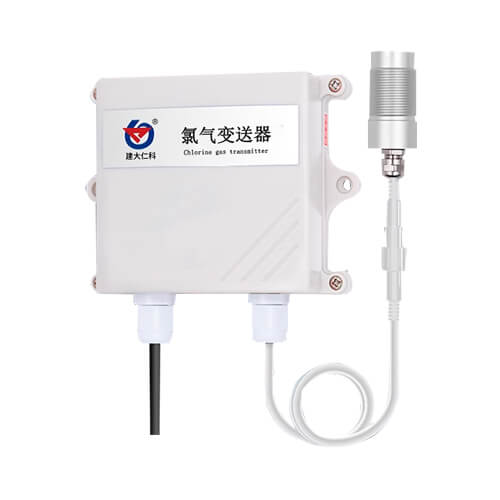
Renke has developed a variety of chlorine gas sensors suitable for different applications, including wall-mounted, duct-mounted, and explosion-proof chlorine sensors. They offer multiple output signals, including analog and RS485. Measurement ranges cover 0~20ppm, 0~50ppm, and 0~100ppm. Customized OLED displays, cable lengths, and logos are supported.
- Model: RS-CL2-*-*-T
- MOQ: 1 PCS
- Delivery date: within 24 hours
- Price:$85.7~$197.2
Types - Renke Chlorine Gas Sensors
The chlorine gas sensor developed by our company adopts electrochemical sensor. The measurement process is sensitive and anti-interference ability is strong. With our unique compensation algorithm and multi-segment standard gas calibration, the chlorine sensor is highly accurate and stable. The sturdy waterproof housing can effectively protect the sensor module, preventing the erosion of the sensor by soot and water vapor, and prolonging the service life. Suitable for workshops, chemical plants, electronic industry, closed living places and other occasions where real-time monitoring of chlorine concentration is required.

Wall-mounted chlorine gas sensor
This chlorine gas sensor features a wall-mounted waterproof housing for easy installation. It has high level of protection against moisture and dust, suitable for harsh environments. It is highly sensitive and accurate, with an accuracy within ±10% and repeatability within 3%. This chlorine gas sensor is highly customizable. It can be equipped with integrated temperature humidity sensors for simultaneous online monitoring of temperature, humidity, and chlorine levels, or an OLED display for real-time display. It can also be fitted with a dedicated external probe to measure chlorine concentration in specific pipelines. The default probe cable length is 80cm, with a maximum of 15m. This sensor is mainly used for real-time chlorine detection in factories, mines, chemical plants, pharmaceutical companies, and materials synthesis plants.
- Measure range: 0-20ppm, 0-50ppm, or 0-100ppm
- Output signal: RS485/4-20mA/0-5V/0-10V
Duct-mounted chlorine gas sensor
The duct mounted chlorine gas sensor is a specialized instrument for detecting the concentration of chlorine gas in closed pipelines. It is flange-mounted. During installation, a hole is drilled in the pipeline, and the stainless steel probe is inserted and secured. The stainless steel components offer excellent corrosion resistance and can be used in pipeline systems for extended periods. An internal waterproof rubber strip protects the sensor and extends its service life. The internal anti-interference circuitry of the ducted chlorine gas sensor allows it to withstand various electromagnetic interferences, such as those generated by on-site frequency converters. An OLED display can be added for real-time data viewing. Other measurement ranges can also be customized.
- Measure range: 0-20ppm, 0-50ppm, or 0-100ppm
- Output signal: RS485/4-20mA/0-5V/0-10V


Explosion-proof chlorine gas sensor overall shell made of stainless steel, high-quality explosion-proof shell, waterproof and dustproof effect. Built-in industrial-grade electrochemical sensors, strong anti-interference ability, even in the flammable and explosive harsh environment can work. Equipment with liquid crystal display and sound and light alarm function. When the management personnel can not close contact with the equipment, they can configure the parameters through the infrared remote control function. This chlorine sensor supports customized range to meet the different needs of customers. Commonly used in gas stations, chemical plants, gas stations and other dangerous places.
- Measure range: 0-20ppm, 0-50ppm or 0-100ppm
- Output signal: RS485/4-20MA/0-5V/0-10V
Chlorine gas sensor datasheets
| Power supply | 10~30V DC |
| Output signal | 4-20mA/0-5V/0-10V/RS485 |
| Power consumption | 0.25W(analog), 0.12W (RS485) |
| Working environment | -20℃~50℃, 15%~90%RH No Condensation |
| Pressure range | 90~110kPa |
| Stability | ≤2% signal value/month |
| Chlorine gas zero-point drift (-20℃~40℃) | ±3%FS |
| Repeatability | ≤3% |
| Service life | ≥24Months |
| Measurement range | 0~20ppm/0~50ppm/0~100ppm |
| Accuracy | ±10% |
| Resolution | 0~100ppm:1ppm 0~20ppm/0~50ppm:0.1ppm |
| Response time | ≤60s |
| Preheating time | ≥5mins |
Wall-mounted chlorine gas sensor model
| RS- | Renke’s company code name | ||||
|---|---|---|---|---|---|
| CL2- | Single chlorine gas sensor | ||||
| CL2WS- | Temperature humidity and chlorine gas sensor | ||||
| N01- | RS485 (Modbus protocol) | ||||
| I20- | 4-20mA current output signal | ||||
| V05- | 0-5V voltage output signal | ||||
| V10- | 0-10V voltage output signal | ||||
| 2- | Wall-mounted | ||||
| OLED- | Wall-mounted with OLED | ||||
| 2Y- | Wall-mounted with epitaxial probe | ||||
| 2YOLED- | Wall-mounted with epitaxial probe and OLED | ||||
| 20P | Measuring range 0-20ppm | ||||
| 50P | Measuring range 0-50ppm | ||||
| 100P | Measuring range 0-100ppm |
FAQs - Chlorine Gas Sensors
What is chlorine gas?
Chlorine gas is a simple substance formed from the element chlorine, and its chemical formula is CL2. It is a yellow-green toxic gas with a strong pungent odor.
Why is measuring chlorine gas important?
Chlorine is a toxic gas, excessive inhalation can lead to poisoning and death. Therefore, chlorine gas detectors should be installed in chlorine production, storage and use places for real-time monitoring. Once chlorine leakage is detected, timely measures will be taken. You can choose the right CL2 gas sensor according to your environment.
How do chlorine gas sensors work?
Most chlorine gas sensors measure the concentration of chlorine in the environment via electrochemical principles.
What are the types of chlorine gas sensors?
Depending on the use environment, chlorine gas sensor can be categorized into wall-mounted, duct type, portable and explosion-proof.
How accurate are Renke chlorine sensors?
Our chlorine gas sensor has a high measurement accuracy within ±10% and repeatability within 3%.
Where should a chlorine gas transmitter be installed?
The chlorine gas transmitter should be installed in a location free from impact, vibration, and strong electromagnetic interference, and easily accessible for maintenance. The clearance between the installation site and surrounding process piping or other equipment should not be less than 0.5m. It is recommended to install the device 0.3m to 0.6m from the bottom of the measuring space.
What industries use chlorine gas sensors?
Laboratory
Chlorine gas is one of the commonly used reagents in laboratories, and a leak could pose a serious threat to laboratory personnel and equipment. Therefore, the use of chlorine gas sensor in chemical laboratories can monitor the concentration of chlorine gas in time to prevent accidents.
Chemical Plant
Chlorine gas is widely used in chemical production, such as the production of plastics, dyes, disinfectants and so on. To prevent chlorine leakage, chlorine gas sensor needs to be installed for real-time monitoring.
Sewage Treatment Plants
Chlorine gas is often used in wastewater treatment plants for disinfection to kill harmful bacteria and viruses in wastewater. The use of chlorine gas sensor can help wastewater treatment plants monitor chlorine concentrations to ensure safety during the disinfection process, while also protecting the health of staff.
Agriculture
Chlorine gas can be used in agriculture for disinfection and pest control, but too much chlorine can also damage crops and pollute the environment. The use of chlorine gas sensor can help agriculturalists monitor chlorine concentrations and minimize the impact on crops and the environment.
How do you calibrate chlorine gas sensors?
Our chlorine sensors are factory calibrated and ready for use. After long-term use, please contact technicians for calibration.
Where should a chlorine transmitter not be installed?
To ensure proper use of this equipment and prevent malfunctions, please do not install it in the following locations:
1. Locations directly affected by steam or fumes.
2. Locations with high airflow, such as near air inlets, exhaust fans, or doors.
3. Locations with high moisture content or water droplets (relative humidity ≥95%RH or locations where condensation may occur).
4. Locations exceeding the equipment’s operating temperature range.
5. Locations with strong electromagnetic fields.
How to wire this chlorine gas sensor?
RS485 signal output:
Brown wire to positive power supply (10~30V DC), black wire to negative power supply, yellow wire to RS485-A, blue wire to RS485-B.
Analog signal output:
Brown wire to positive power supply, black wire to negative power supply, blue wire to chlorine signal positive, green wire to chlorine signal negative.
Related Blogs
Table of Contents Carbon dioxide is a colorless, odorless gas that is widely present in the atmosphere. In the natural world, the levels of
Table of Contents Carbon monoxide is a colorless and odorless toxic gas at room temperature. People cannot perceive its presence through smell. Therefore, carbon
Table of Contents Ammonia is the most dominant alkaline gas in the atmosphere and plays an important role in aerosol nucleation. It is also
Table of Contents Biologists estimate that the human nose can distinguish on the order of ten thousand odor types, while dogs can identify hundreds
Table of Contents Carbon dioxide is a gaseous compound produced by the reaction of carbon and oxygen. Its chemical formula is CO2. A carbon
Gas sensors application in a wide range. Mainly used to detect the concentration of gas, such as carbon dioxide, oxygen, nitrogen, argon, etc. In