Before the advent of AIoT, traditional monitoring systems primarily relied on a “passive data collection + manual judgment” model. This process generates massive amounts of data every day, but what managers truly need to focus on is often not the 99% of normal data, but rather that 1% of abnormal changes. Unfortunately, traditional monitoring systems can only record data; they cannot promptly identify problems and report them to managers. As a result, abnormal data must be screened manually, leading to significant data lag.
The emergence of AIoT has completely transformed this situation. It can automatically identify anomalous patterns, filter out irrelevant information, and correlate data from multiple monitoring points to quickly pinpoint the issues that truly require attention within the ever-growing data stream.
Why Introduce AIoT into Monitoring Systems?
To understand this, you first need to know what challenges traditional monitoring systems currently face, as well as what AIoT is and what problems it can solve.
Problems with traditional monitoring systems
According to IBM statistics, 90% of the data collected in the industrial sector has never actually been used. Cisco’ s research paints an even more extreme picture: connected factories generate up to 1 PB of data daily, 99.9% of which is never analyzed. McKinsey’ s findings are equally striking—globally, only 1% of the data generated is actually analyzed.
This is not alarmist rhetoric, but rather the structural fate of traditional monitoring systems. Traditional IoT monitoring systems require data collection, analysis, and the generation of reports. This process resembles a team that lacks coordination. Sensors are responsible for collecting data, data acquisition devices for uploading it, and monitoring platforms for storing it—yet whether action is ultimately taken depends on manual analysis and judgment. However, by the time managers identify problems amid the deluge of data, downtime, repairs, and losses have already become a fait accompli.
Definition and advantages of AIoT
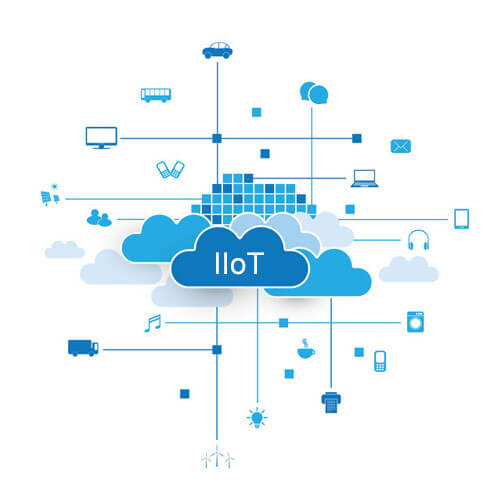
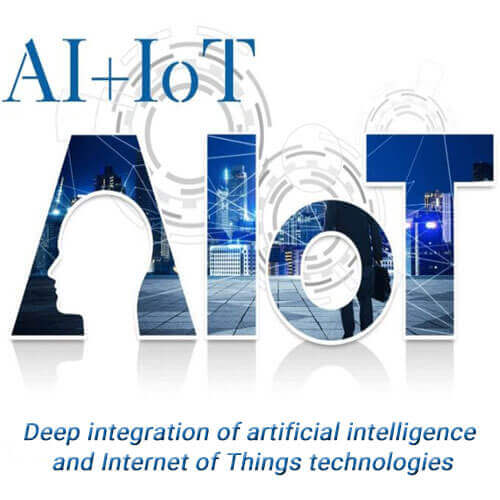
AIoT is the deep integration of AI (Artificial Intelligence) and IoT (Internet of Things). While traditional IoT primarily addresses connectivity between devices and data collection, AIoT introduces artificial intelligence as the “brain,” enabling it to analyze, learn from, and make autonomous decisions based on the vast amounts of collected data. The core objective is to enable the physical world to achieve intelligent perception, analysis, and interaction, thereby driving interoperability and integration among devices, platforms, and scenarios.
The core advantage of AIoT lies in upgrading monitoring systems from “passive data collection” to “active intelligent decision-making,” endowing them with the capabilities for data processing, scientific analysis, and intelligent decision-making.
Video from Youtube @icpdasusa
AIoT-Driven Transformation of Monitoring Systems
1. Changes in the perception layer
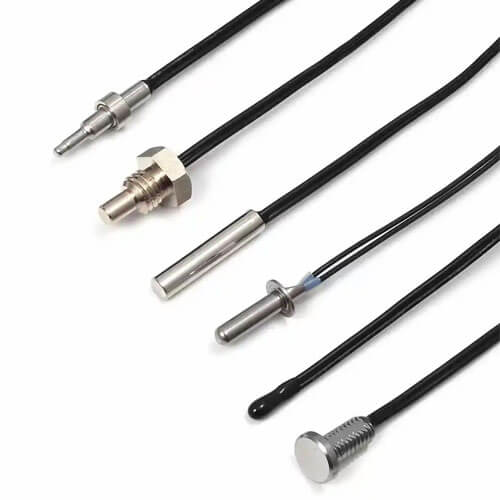
AIoT is driving the evolution of the perception layer from simple “data collection” to “intelligent perception.” Sensors no longer merely measure physical quantities such as temperature, humidity, vibration, and pressure then transmit the data; instead, through built-in AI chips, they perform preliminary identification, classification, and anomaly detection directly on-site, thereby reducing the upload of irrelevant data.
Furthermore, sensors can dynamically adjust their own parameters based on data analysis results to maintain optimal operating conditions. For example, when equipment is running smoothly, they automatically lower the sampling frequency; once signs of an anomaly are detected, they immediately increase the sampling density to ensure no incidents are missed.
Example: The IIS3DWB10IS industrial-grade vibration sensor launched by STMicroelectronics in 2026 is a prime example. The sensor features a built-in ISPU 2.0 (Intelligent Sensor Processing Unit), enabling signal processing and AI inference, such as FFT (Fast Fourier Transform), envelope analysis, and anomaly detection, to be performed directly within the sensor. An edge inference framework proposed in a 2025 study published by MDPI reduces energy consumption by up to 31% and inference latency by 27% compared to existing methods through adaptive quantization and energy-aware scheduling. Research on adaptive sampling shows that strategies such as dynamically adjusting the sampling frequency can achieve optimal data throughput efficiency of 85-95% with extremely low computational overhead.
2. Changes at the transport layer
The first transformation AIoT brings to the transport layer is a shift from periodic full uploads to event-driven transmission. Now that edge nodes have the ability to make judgments, uploads are triggered only when changes or anomalies occur. This helps reduce communication energy consumption and improves system response speed and data processing efficiency.
The second transformation involves changes to transmission links. In the past, networking primarily relied on single links, either wired (such as RS485) or wireless (such as Wi-Fi, 4G, etc.), which remained largely unchanged once deployed. In contrast, modern AIoT monitoring systems enable the communication methods themselves to make dynamic decisions, automatically selecting transmission links or combining them based on latency requirements, device status, or available bandwidth.
Example: An empirical study published in MDPI’ s *Energies* shows that event-driven transmission solutions using LoRaWAN and NB-IoT reduced packet transmission volumes by 76.11% and 86.81%, respectively, significantly outperforming fixed-interval uploads. Empirical data from an arXiv paper indicates that a multi-link combination of cellular and satellite networks can achieve a downlink speed of 100 Mbps with a service interruption rate of only 0.5%.
3. Changes in the decision-making layer
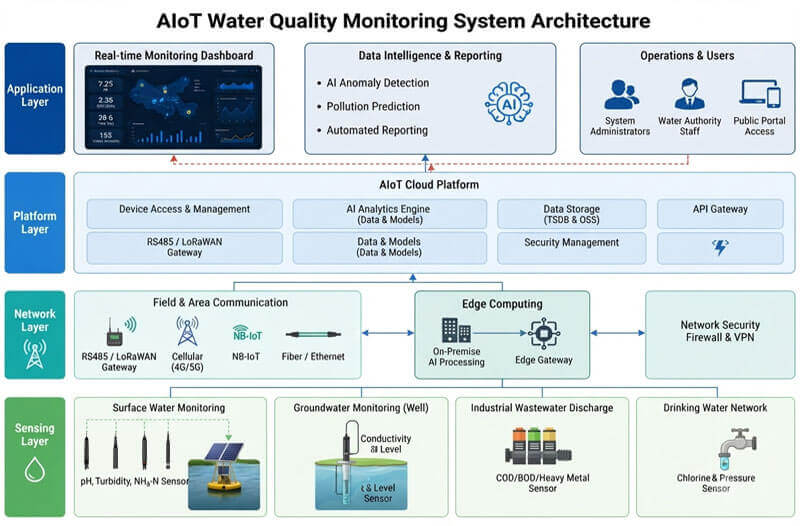
AIoT has transformed the previously highly centralized cloud computing model into a distributed architecture featuring cloud-edge-device collaboration. Computing power is dynamically allocated between the cloud and the edge based on the task at hand. Furthermore, decision-making logic has shifted from fixed thresholds and rule-based judgments to model-driven prediction and anomaly detection, thereby adding a new responsibility to the platform: continuously training, validating, and updating models distributed across a vast number of devices. Finally, the platform architecture has shifted from a collection of independent applications to a unified, event-driven architecture connected via APIs. By integrating device telemetry, historical data, and other contextual information into a single operational view, decision-making gains cross-tier explainability, rather than merely passively storing and forwarding data.
Example: An MDPI study on water quality monitoring compared three architectures: pure cloud, pure edge, and cloud-edge collaboration. The pure edge architecture had a latency of 20.33 milliseconds and a delivery rate of 97.47%; the cloud-edge collaboration architecture further improved classification accuracy to 94.43% while consuming the least energy.
4. Changes in the control layer
AIoT has shifted the control and execution layers from “following orders” to “autonomous decision-making.” In the past, control systems relied on fixed rules and were updated only through periodic fine-tuning by engineers. In contrast, next-generation control systems can learn from data, predict optimal outcomes, and act in real time. The execution layer no longer merely receives instructions but actively participates in the decision-making process itself.
Furthermore, when communication is interrupted, the execution layer can continue to operate based on local judgment without having to wait for the decision-making layer to reissue instructions. AI technology also enables execution devices to learn and optimize their own actions, no longer limited to the fixed programs they were programmed with at the factory.
Example: In General Electric’ s industrial predictive maintenance program, unplanned downtime has been reduced by approximately 20%-50%, with equipment decisions triggered and executed by local predictive models. In Siemens’ industrial deployments, the combination of MindSphere and edge analytics has decentralized certain control decisions to the device level, reducing response latency from seconds to milliseconds and enabling local closed-loop control.
AIoT Application Cases
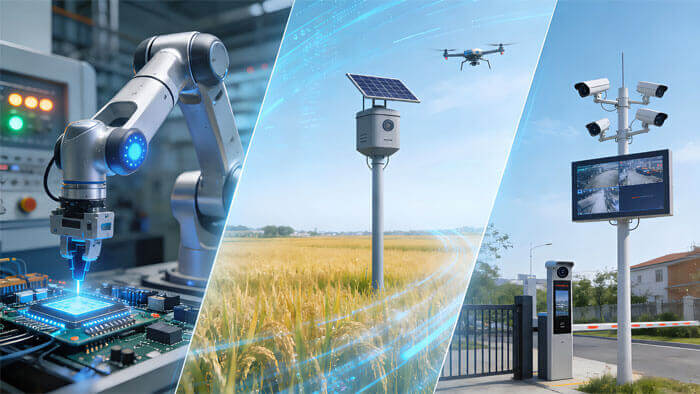
1. Industrial predictive maintenance
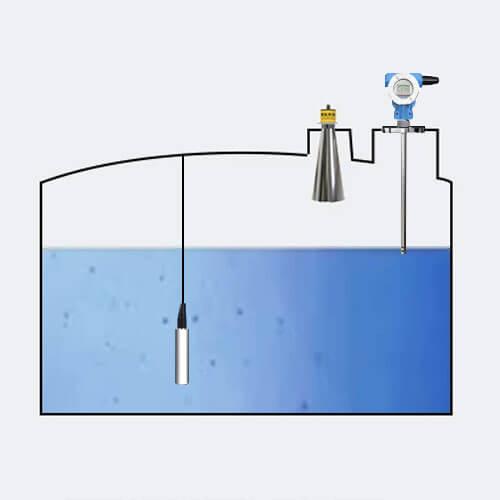
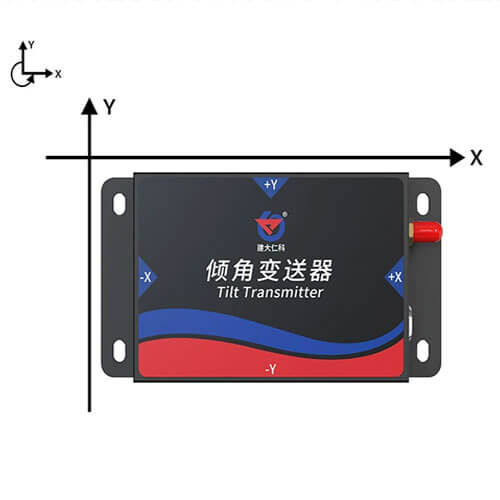
Predictive maintenance is one of the most typical applications of AIoT. Vibration sensors collect data, which is then analyzed in real time using edge computing or cloud-based AI models. When equipment bearings exhibit latent faults such as early wear, insufficient lubrication, or imbalance, the AI model can identify potential failure trends in advance by comparing historical failure samples with real-time data. In such industrial IoT solutions, Renkeer’ s temperature and vibration transmitters are highly regarded by users for their excellent performance and precise diagnostics.
2. Smart agriculture
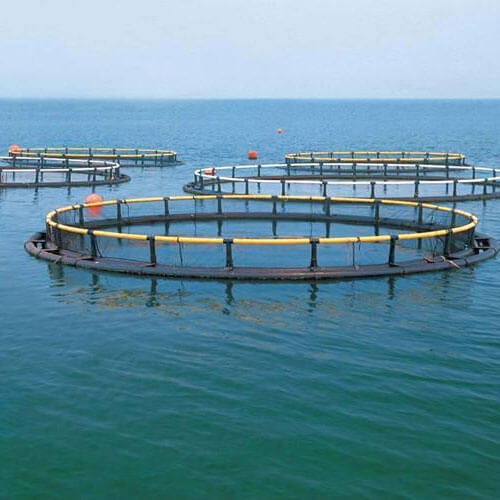
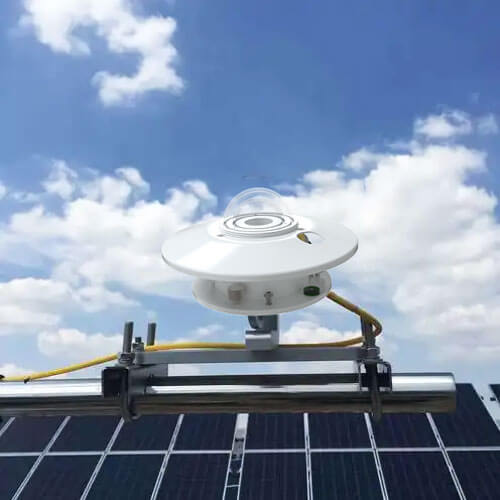
In the field of smart agriculture, AIoT enables closed-loop automatic control of environmental and water-fertilizer systems. The system monitors greenhouse temperature, humidity, carbon dioxide levels, and soil nutrients in real time, while AI precisely calculates irrigation and fertilization amounts based on crop growth cycles. By automatically controlling water-fertigation systems, shade curtains, supplemental lighting, and ventilation equipment, the system not only conserves water and fertilizers but also ensures higher crop yields. Renkeer’ s extensive portfolio of practical case studies involving soil and meteorological products provides a reliable data foundation for these AI models.
3. Smart cities
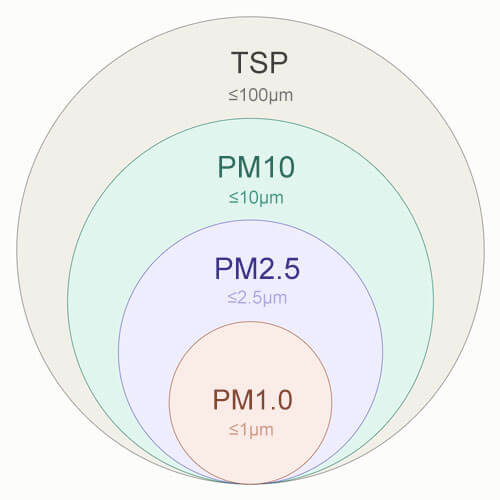
In smart city environmental monitoring networks, the value of AIoT lies primarily in its ability to coordinate and optimize large-scale, multi-node systems. Urban air quality, water quality, and noise monitoring typically consist of widely distributed sensor networks, with complex and highly fluctuating data sources. AIoT can dynamically adjust sampling frequencies and data upload strategies based on environmental changes, increasing sampling density during periods of high pollution risk or abnormal fluctuations while reducing resource consumption during stable conditions. At the same time, AI can model and analyze pollution dispersion pathways to enable regional-level risk early warning.
4. Smart buildings
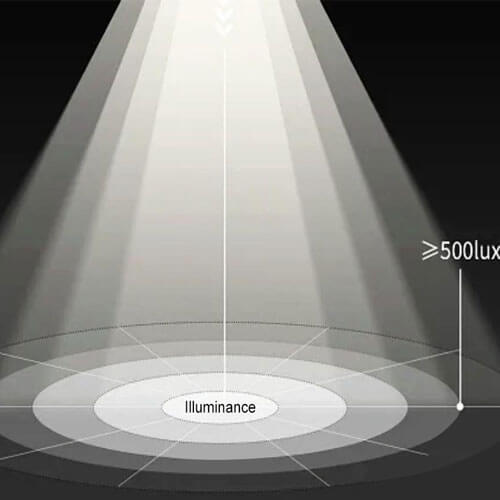
In smart building and energy management scenarios, AIoT primarily serves to optimize energy consumption while balancing comfort levels. Data on indoor temperature, humidity, lighting, and other factors are collected by sensors. AI uses machine learning to dynamically optimize HVAC and lighting strategies, reducing energy consumption while maintaining comfort levels. Some practical case studies show energy savings of 15% or more.
How Does Renke Support the Implementation of Artificial Intelligence of Things (AIoT)?
The quality of AI model predictions depends largely on the accuracy and stability of the input data; even the most powerful algorithms cannot compensate for errors and drift inherent in the sensors themselves. Renke’ s sensor products span multiple fields, including agriculture, industry, and meteorology. The company’ s long-standing expertise in high-precision data collection provides upper-layer AI algorithms with authentic and reliable raw data—a prerequisite for AIoT systems to make accurate predictions.
At the protocol and interface level, Renke’ s products generally support industrial standard communication protocols such as RS485 and Modbus RTU. This means the sensors can be directly connected to PLCs, gateways, and cloud platforms from different vendors without the need for additional adaptation layer development. This compatibility based on standard protocols reduces the integration complexity for enterprises when building AIoT systems and ensures that sensor data flows seamlessly into AI analytics platforms, preventing it from becoming an information silo within the overall system.
Renke’ s product line also includes numerous multi-parameter integrated sensors, such as those that combine multiple environmental metrics(including temperature, humidity, atmospheric pressure, light intensity, noise, and particulate matter) into a single device, enabling coverage of multiple monitoring dimensions with a single deployment. This is highly significant for AIoT systems, as AI models often require the fusion analysis of multivariate data to uncover correlations that cannot be detected by a single metric. Integrated sensors reduce deployment density and cabling costs while improving the consistency of data collection.
From industrial equipment monitoring and precision irrigation in agriculture to ambient air quality monitoring, Renke’ s product line covers some of the most widely implemented AIoT scenarios. Enterprises do not need to seek out separate sensor suppliers for different scenarios; instead, they can use a single product ecosystem with unified communication standards to support the upgrade path from point-to-point monitoring to full-system intelligence.

This article was written by the Renke Technical Team, whose engineers specialize in sensor development and Artificial Intelligence of Things (AIoT) system integration for industrial, agricultural, and environmental monitoring applications. Drawing on years of practical experience deploying sensor solutions and supporting smart upgrades for clients in these industries, the team offers field-proven, practical insights.