What Is Water Temperature?
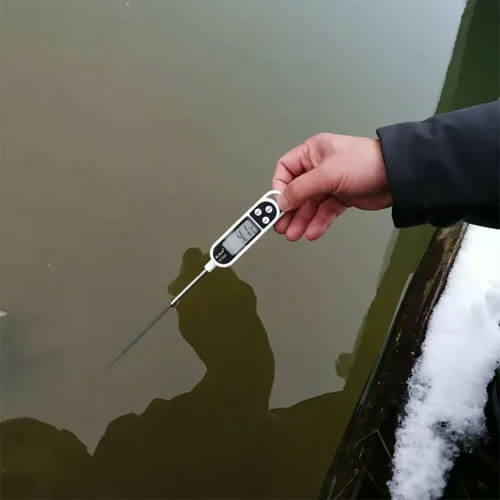
Water temperature is the hotness or cooltness of the water. It is a physical water quality parameter and is normally measured in degrees celsius (℃). It does not show the extent of pollution as COD or ammonia nitrogen, but nonetheless, it has an impact on the aquatic environment and water treatment.
Why Is Water Temperature Important for Water Quality?
On the one hand, water temperature can be used to detect potential water quality abnormalities due to the effects of solar radiation, ambient temperature, seasonality and human activity upon the water. For example, strong solar radiation in the summer season can result in increased temperatures of the shallow waters; industrial discharges might result in localized increases in water temperatures. Monitoring water changes in real time allows early identification of issues and action to be taken.
On the other hand, temperature is correlated with many other water quality parameters. Parameters like DO, pH and conductivity are influenced by temperature. For instance, the conductivity increases by about 2% for every 1 °C increase in temperature, and measurement results are typically reported with 25°C as the reference temperature. Therefore, there are temperature compensation features on high-quality water quality sensors to negate ambient temperature effect on measurements.
Water temperature: Why it matters? Video from @DataStreamInitiative
How Does Water Temperature Affect Water Quality?
The temperature impacts on the physical properties of water, the rate of chemical reactions as well as the metabolism, growth and reproduction of microorganisms, aquatic plants and animals. Let’s look at how water temperature impacts the quality of water in a few ways below.
Effects of water temperature on dissolved oxygen
As the temperature of the water changes, so does the amount of oxygen that can be dissolved in the water. Typically, as temperature increases, dissolved oxygen decreases. For instance, under the same atmospheric pressure and in freshwater environment, the saturated dissolved oxygen level will decline from about 14.6 mg/L to 7.6 mg/L (nearly half) with an increase of water temperature from 0°C to 30°C. This implies that in hot seasons, natural waters are less effective in keeping dissolved oxygen in the water. In addition to this, with the rise in temperature, aquatic organisms and microorganisms also increase their respiration, also consuming oxygen, and thus lowering water oxygen even more. So, when conducting water quality monitoring, it is better to use a dissolved oxygen sensor that is temperature compensated to get a measurement result.
Effects of water temperature on pH and electrical conductivity
Both the sensitivity of pH electrodes and the dissociation constant of water are temperature-sensitive. First, the potential response of a pH electrode follows the Nernst equation. As water temperature increases, the slope of the response curve changes, thus affecting the measurement results. Second, temperature alters the dissociation equilibrium constant of water, thereby changing the balance between hydrogen ions (H⁺) and hydroxide ions (OH⁻). For example, at only 25°C, the neutral pH of pure water is 7.0; at 0°C, the neutral pH is approximately 7.47; and at 50°C, the neutral pH is approximately 6.63.
The conductivity of water varies with temperature. As water temperature increases, the migration rate of ions accelerates (by approximately 2% per degree Celsius), and the conductivity of water also increases accordingly. The conductivity of the same water sample measured at 15°C was about 20% lower than that measured at 25°C. Typically, conductivity sensors will use temperature compensation technology to ensure a consistent reference temperature (25°C) is used to convert the measured results. This minimizes the effect of temperature changes on the readings, and facilitates staff to determine the changes in ion levels in the water.
Effects of water temperature on microbial activity
Temperature affects microbial enzyme activity, membrane fluidity, and metabolic rates. Within the optimal range, for every 10-degree Celsius increase in temperature, microbial growth and metabolic rates roughly double, thereby increasing the oxygen demand in water. Furthermore, when water temperatures rise and nutrients are abundant, algae are prone to proliferate, leading to harmful algal blooms. During water quality monitoring, continuous temperature monitoring helps assess the degradation of organic matter and the efficiency of wastewater treatment.
Temperature also increases the poisonous nature of the ammonia nitrogen. Ammonia exists in water as 2 forms: nonionic ammonia (highly toxic), ammonium ions (less toxic). The percent of nonionic ammonia increases with both an increase in temperature and pH. Nonionic ammonia typically makes up about 4% (at 20℃) and 5% (at 25℃) of total ammonia at pH 8.
Effects of water temperature on chemical reactions
For most chemical reactions in water, the higher the temperature, the faster the reaction will go. The higher the water temperature, the more chemical substances like ammonia nitrogen, organic matter and pollutants are converted in the water, as in the oxidative degradation of organic matter, transformation of ammonia nitrogen to nitrate and nitrite, and the transformation of pollutants.
In addition, temperature changes can affect the dissolution and precipitation of minerals. The solubility of most solids decreases with increasing water temperature, but not calcium carbonate; it precipitates more quickly as the temperature of water increases, a major reason for scaling in hot water systems and cooling towers.
What Factors Affect Water Temperature?
Changes in water temperature are mainly due to natural factors and human activities. It is important to recognise how these will affect temperature changes so that water quality can be understood and the reasons for abnormalities can be determined.
Solar radiation and ambient temperature
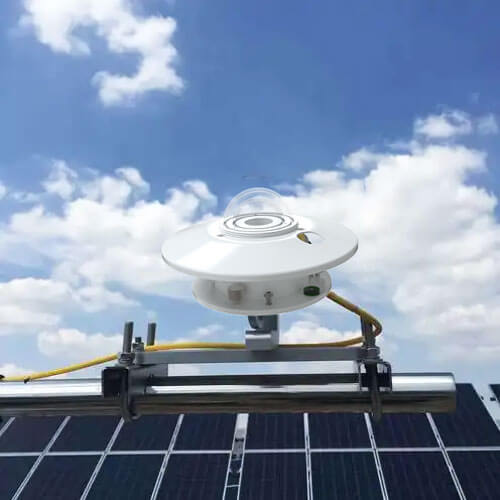
Solar radiation is the primary energy source for heating water, while ambient temperature regulates the upper and lower limits of water temperature through heat exchange.
The principal source of energy for water is solar radiation, and water can absorb short-wave radiation and heat up, but can also release heat to the atmosphere by long-wave radiation, evaporation and conduction. Generally, the higher the radiation intensity and the longer the duration, the higher the temperature.
The influence of ambient temperature on the water temperature is by sensible heat transfer. If the air temperature is higher than the water temperature, the heat will be transferred from the air to the water, and if the water temperature is higher than the air temperature, the heat will be transferred from the water to the air. The specific heat capacity of water is about 4.2 kJ/(kg·°C), which means that it takes longer to heat up and cool down than air. As a result, the changes in water temperature are generally delayed in time when compared with the changes in air temperature and water temperature will not fluctuate as much as air temperature from one day to the next.
Water depth and flow rate
The vertical distribution of heat in the water depends on water depth. In summer, deep lakes or reservoirs develop distinct temperature stratification: the surface water warms up due to radiation, forming a warm layer; while the bottom water remains cold; a thermocline exists between the two, preventing heat exchange between the two layers. The shallow waters are small in volume and have low heat capacity and hence are responsive to meteorological conditions more rapidly and in greater magnitude.
Water velocity also impacts water temperature. Fast flow in the river allows heat exchange to occur between different layers of water, and creates a more even temperature distribution. Heat, on the other hand, is likely to build up on a local level in slow or stagnant water, creating temperature differences.
Seasonal and saily temperature changes
Seasonal and diurnal differences in water temperature. The intensity of solar radiation and the ambient temperature are the most important parameters that determine seasonal effects. For instance, during the summer season, water can absorb more heat and can become relatively hotter and during winter season it might take less heat and become relatively cooler.
Diurnal changes in temperature are due to solar radiation and the impact of these changes is greatest in the upper layer of the water. Solar radiation during the day heats up the water in a rapid rate and during the night the water radiates heat outwards, causing the temperature to drop. The daily range of temperature is generally small (1°C to 5°C), compared to the seasonal range of temperature.
Industrial discharges and human activities
Human activities have different effects on water temperature. The most obvious is the emission of heat, and the power industry is the primary emitter. Hot water from power plants, manufacturing facilities, and industrial cooling systems are pumped into nearby rivers or lakes, thus increasing the water temperature.
In 2015, the total U.S. water withdrawal from thermal power plants was roughly 133 billion gallons per day (about 500 million cubic meters per day), or 41% of the nation’s total water withdrawal. Of this, just 4% was from recirculating cooling plants and the majority was from direct cooling, where water which has been heated during its use is returned directly to the water source. The cooling water needed for a 1MW unit is around 30-50m³ per second and the water is normally returned at a temperature 7-10℃ above the intake.
The indirect impacts of urbanization on water temperature are related to the alteration of land cover with respect to the local climate. The water that runs off from surfaces is heated before it reaches water bodies in urban environments due to the amount of impervious surfaces and the lack of shade from vegetation. Concurrently, the urban heat island effect increases air temperatures at local levels and the water temperature is influenced by these.
How Is Water Temperature Measured and Monitored?
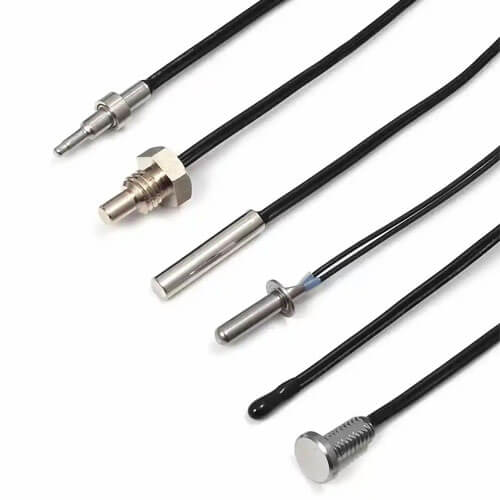
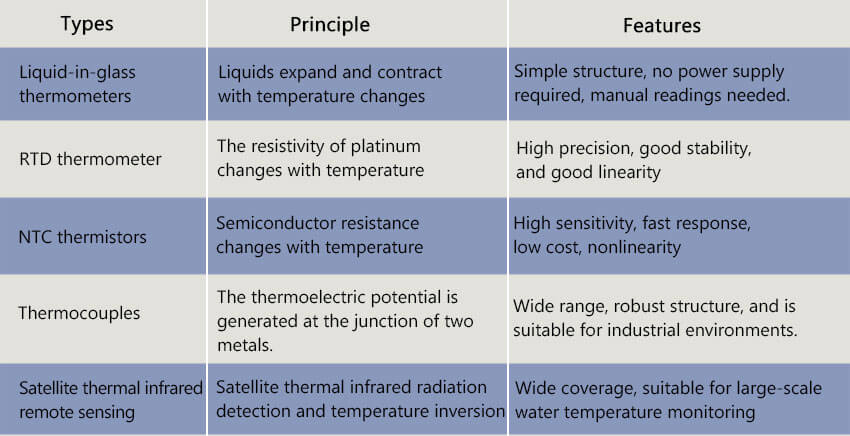
Temperature is an important water quality parameter. This mainly uses contact measurement technology, where temperature sensitive elements are in contact with the water and when temperature changes, send a signal or temperature reading proportional to the change. Choosing correct measurement equipment in water quality monitoring situations like wastewater treatment, aquaculture, lakes and rivers will make the data more accurate and continuous. The major types of water quality temperature sensors are:
1. Liquid-in-glass thermometers
It utilizes the principle of thermal expansion and contraction of liquids to measure water temperature by measuring changes in the height of the liquid column. It does not need a power supply and is a simple design but manual readings do need to be taken, so it is not suitable for continuous monitoring. It is widely used as a field reference and calibration instrument.
2. RTD temperature sensors
These sensors are based on the temperature variation of the resistance of platinum; the most popular types are the PT100 and PT1000. They have good linearity and high stability, and are recommended for high precision online monitoring but come at a higher cost. They are very common for industrial and environmental monitoring.
3. NTC thermistors
This technique takes advantage of the fact that the resistance of a semiconductor material is logarithmic of the temperature. It features high sensitivity, quick response and low cost. It offers enough accuracy in the common temperature range of 0-40°C and/or is typically integrated into water quality sensors. It has the disadvantages of nonlinearity and a relatively small measurement range.
4. Thermocouples
The temperature difference is converted into an electromotive force for measurement by utilizing the thermoelectric effect between two different metallic conductors. It can be used as a method for monitoring high-temperature industrial water, such as power plant discharge and boiler water, with a wide measurement range, robust construction and fast response time.
5. Satellite thermal infrared remote sensing
The surface water temperature is derived from measurement of the thermal radiation emitted from the water surface. This method has a broad range of coverage and can be used to monitor temperature patterns in lakes and reservoirs. But it only measures the surface temperature and can be influenced by cloud cover, has limited resolution and needs to be calibrated against observed data.
FAQs:
1. Why is temperature compensation important in water quality monitoring?
Change in temperature will not only cause change in the response of the sensors but will also cause change in the chemical equilibrium of the solution, which will cause the data from the sensors to drift and become undeniable. Temperature correction is required for all three types of sensors that measure dissolved oxygen, pH, and conductivity and ammonia nitrogen. The intent of compensation is to remove artifacts from the data due to temperature and to show real water quality.
2. What is the best sensor for measuring water temperature?
Basically, resistance temperature detectors (RTD) especially PT100 and PT1000 are suitable for water temperature measurement with precise and stable accuracy. The RTD is widely used in continuous water quality monitoring because of its high sensitivity, quick response and low cost.
3. Can a pH meter measure water temperature?
A pH meter can be used to measure the temperature of water, however the main use of this measurement is for temperature compensation rather than to measure the temperature. The response of a pH electrode (the Nernst slope) varies with temperature, so almost all digital pH meters have a temperature sensor to allow automatic temperature compensation (ATC). The sensor could either be an integral part of the tip of the pH electrode, or it could be a separate temperature probe. The instrument automatically compensates for the pH reading based on the temperature measured and sometimes shows the temperature on the display.
4. What factors affect water temperature measurement accuracy?
- Sensor type: The self-heating effect is an inherent issue with resistive sensors (RTDs, thermistors); long-term drift is a common irreversible change in NTC-type sensors; and response lag can also affect data accuracy.
- Environmental interference: Solar radiation may cause measurement data to be higher than actual; biofouling or sediment can alter heat transfer; and pressure effects must be considered for deep-water measurements.
- Operational errors: Insufficient equilibration time (typically 10-15 minutes) is the most common issue; measurements taken out of the water after sampling will equilibrate with ambient air temperature and no longer represent the in-situ water temperature.
- Spatial representativeness: There is a significant temperature difference between the upper and lower parts of the thermocline; readings vary depending on the sensor’s measurement depth; water temperatures may also differ at various locations within a cross-section.
5. Why are my dissolved oxygen readings lower in the afternoon even though the water looks clean?
As the day goes on, the sunlight weakens and the rate of oxygen production slows down; the biological respiration and bacterial breakdown still require oxygen. This is because oxygen production is not able to meet oxygen demand, leading to a decrease in dissolved oxygen. In addition, water temperature is usually at its peak in the afternoon, and the warmer the water, the less oxygen it can carry, thus reducing the amount of oxygen in the water.
6. Do I need a separate temperature sensor if my pH probe already has one?
This is dependent on what you are trying to measure. When the temperature measurement is only for automatic temperature compensation (ATC) of the pH, the pH probe typically includes a suitable temperature sensor. If temperature is a separate parameter that must be accurately recorded or reported, however, a separate, dedicated temperature sensor may be required.

This article was written by the Renke Technical Team at Shandong Renke Control Technology Co., Ltd. With expertise in water quality sensing, temperature measurement, and environmental monitoring systems, the team focuses on developing sensor technologies for reliable water parameter monitoring. Its technical knowledge spans temperature sensing principles, measurement accuracy, and multi-parameter water quality monitoring, supporting practical applications in water treatment, aquaculture, and natural water monitoring.