


Table of Contents The Internet of Things (IoT) is one of the hottest technology words in the past few years, which can collect, share, analyze
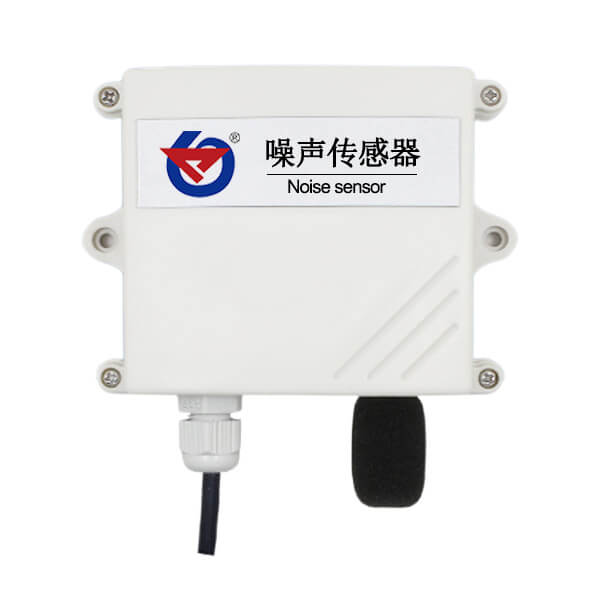
Noise Sensor
The RS-ZS-*-2-T noise sensor is a high-precision sound measuring instrument that uses a high-sensitivity condenser microphone. The range is as high as 30dB~120dB, which meets daily measurement needs. There are two output modes: rs485 and analog (4-20ma, 0-5v, 0-10v). The installation is simple and the price is cheap.
- Model: RS-ZS-*-2-T
- MOQ: 1 PCS
- Delivery date: within 24 hours
- Price: $ 25.2
About - Renke Noise Sensor
Features
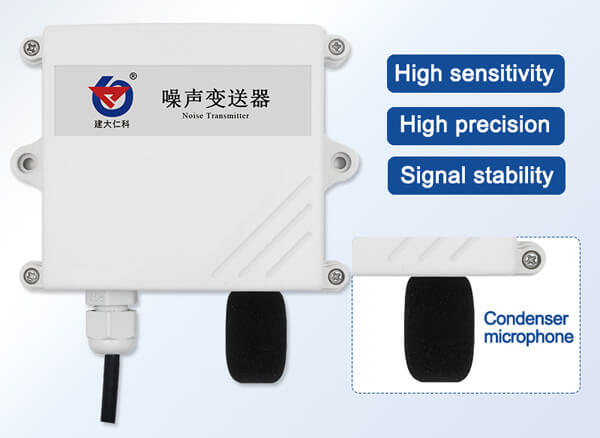
RS-ZS-*-2-T noise sensor uses an A-weighting frequency weighting method and a capacitive microphone, ensuring stable signals and high accuracy. It features a wide measurement range and built-in temperature compensation, minimizing the influence of temperature variations. The housing is made of high-density materials, with all joints fully sealed using waterproof strips, achieving an IP65 protection rating for reliable operation in harsh weather conditions. As an industrial-grade noise sensor, it is commonly used in applications such as construction noise monitoring and industrial noise control. It converts sound waves into electrical signals, followed by amplification, processing, and analysis to obtain the parameter information of the sound signal.
Datasheets
| Power supply | 10-30V DC (24V DC recommended for 0-10V output models) |
|---|---|
| Max. power consumption | 0.4W (RS485), 1.2W (analog) |
| Resolution | 0.1dB |
| Measure range | 30dB-130dB (RS485), 30dB-120dB (analog) |
| Frequency range | 20Hz-12.5kHz |
| Response time | ≤3s |
| Stability | <2% over the lifecycle |
| Noise accuracy | ±0.5dB (at reference pitch, 94dB @ 1kHz) |
| Circuit operating environment | -20°C-+60°C, 0%-95% RH (non-condensing) |
| Output signal | RS485/0-5V/0-10V/4-20mA |
This wall-mounted noise sensor is IP65 rated and can be used in both indoor and outdoor environments. We provide you with a free cloud platform, you can remotely view data in real-time through a PC or app and export historical data. If you need to monitor noise at multiple locations, you can choose our environmental monitoring host. It can simultaneously collect data from multiple noise sensors and upload it to the cloud platform.
Types
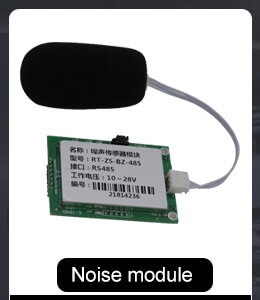
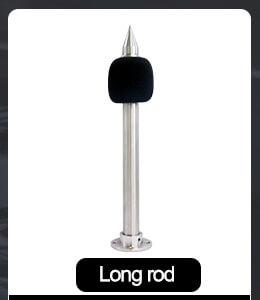
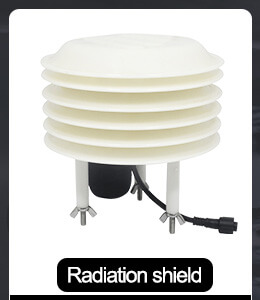
Renke has four types of noise sensors: RS-ZS-*-2-T noise sensor, RT-ZS-BZ-*-T noise module, RS-BYH-M-T outdoor noise sensor and RS-ZS-*-FL-T long rod noise sensor. All three models can be used for long-term detection of indoor noise levels, or outdoor sound levels in the environment. Noise sensors can be widely used for industrial noise measurement of various machines, vehicles, ships, electrical appliances, etc., and can also be used for environmental noise, labor protection, and industrial hygiene measurement.
FAQs - Noise Sensor
What is noise detection?
Noise is a sound with irregular changes in the intensity of sound waves. Physiologically speaking, all sounds that hinder people’s normal rest, study and work, and sounds that interfere with the sounds that people want to hear. There are many sources of noise, such as the sound of cars on the street, the sound of talking in a quiet library, the sound of machinery on construction sites, and the excessively loud sound of neighboring TV sets. In the field of communications, the energy field that interferes with signal transmission is called noise. The source of this energy field can come from the internal system or the external environment.
How does noise monitoring work?
The noise sensor has a built-in condenser electret microphone that is sensitive to sound. The total electric charge of the electret remains unchanged. When the plate retreats under the pressure of sound waves, the capacitance decreases, and the voltage between the two poles of the capacitor will be inversely proportional. On the contrary, when the capacitance increases, the voltage between the two poles of the capacitor will decrease in inverse proportion. Then the voltage at both ends of the capacitor is taken out through the field effect with very high impedance, and the noise sensor is amplified at the same time, so that the voltage corresponding to the sound can be obtained.
What kind of noise is considered excessive?
The noise in residential areas should not exceed 50 decibels during the day and less than 45 decibels at night. If it exceeds this standard, it will cause harm to the human body.
What is a sound sensor?
A sound sensor is defined as a module that detects sound waves through its intensity and converting it to electrical signals.
How to view the data of the noise sensor?
The monitoring data can be uploaded to the free cloud platform provided by our company or the customer’s own platform, and the data can be viewed through a mobile phone or computer after logging in to the account.
Where can I download the noise sensor manual?
In order to protect the patented technical parameters, please leave a message to get the manual.
Popular Environmental Sensors
Related Blogs
Table of Contents The commonly used communication method for data acquisition and control is RS-485. RS-485 is a general communication standard. It can not only
Table of Contents Smart buildings are the product of the development of modern science. The smart building system is mainly composed of Internet of Things
Table of Contents The key to the smart industry lies in the collection of data and information. Sensors are the nerve endings of the smart
In the current society, noise pollution has become the third-largest source of pollution after air and water pollution. To ensure normal rest and sleep, the
Table of Contents What is IoT? IoT is the “Internet of things“. It is an extended and expanded network based on the Internet. It combines
A complete set of a weather station is composed of two parts: hardware and software. The hardware part includes various weather station sensors, connecting lines,
Table of Contents Do you know where to mount weather station? The weather station should be installed as far as possible on the open ground
An automatic weather station is an information detection device that can convert the detected measurement information into electrical signals or other signals according to certain