
The root system of a plant can be compared to a discerning gourmet, while the soil serves as its private kitchen. Within this kitchen, soil pH plays a critical role—it determines which “nutrients” are readily available and which remain locked away. When the pH level is unbalanced, even the most fertile soil may leave plants facing either “starvation” from nutrient deficiency or “toxicity” from excessive absorption.
What are the types of soil pH ranges?
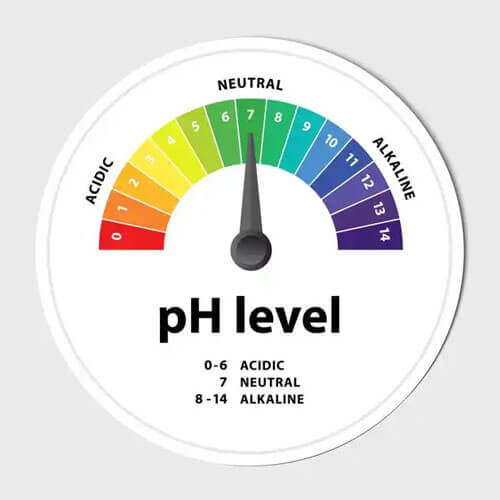
- Ultra Acidic / Extremely Acidic: pH<3.5
- Extremely Acidic: 3.5 – 4.4
- Very Strongly Acidic: 4.5 – 5.0
- Strongly Acidic: 5.1 – 5.5
- Moderately Acidic: 5.6 – 6.0
- Slightly Acidic: 6.1– 6.5
- Neutral: 6.6 – 7.3
- Slightly Alkaline: 7.4 – 7.8
- Moderately Alkaline: 7.9 – 8.4
- Strongly Alkaline: 8.5 – 9.0
- Extremely Alkaline: pH > 9.0
The classification of soil pH is not arbitrary. It was systematically established by the USDA NRCS in the Soil Survey Manual and has since been widely adopted by the FAO and agricultural research and extension agencies worldwide.
The purpose of this classification is to transform abstract numerical values into intuitive descriptive terms, allowing professionals to quickly assess soil conditions. For example, when soil is identified as moderately acid (pH 5.6–6.0), experts immediately recognize the potential risk of limited calcium, magnesium, and phosphorus availability, and can accordingly recommend management practices such as liming.
How to assess soil acidity and alkalinity?
01. Analyzing soil origins
When evaluating soil pH in the field, it is often helpful to begin with an analysis of the soil’s origin. Forest soils, especially the humus deposits that accumulate in gullies, are usually black or dark brown, loose in texture, and rich in organic matter. Such soils are well-aerated, capable of retaining both water and nutrients, and are generally very fertile. They are typical examples of acidic humus soils.
Examples:
- Pine Needle Humus Soil
Formed from the long-term accumulation and decomposition of pine needles. Because pine needles contain organic acids, their breakdown contributes to distinctly acidic soil conditions. This type of soil is common in coniferous forest regions and is well-suited for acid-loving plants. - Peat Humus Soil
Derived from mosses and herbaceous plant residues decomposed over time in moist, oxygen-deficient environments. It is dark in color, lightweight in texture, and rich in humic acids. Typically ranging from slightly to moderately acidic, it plays an important role in improving soil structure and enhancing fertility.
02. Observing surface vegetation
When collecting soil samples, it is helpful to observe the plants growing on the surface. Soils that support pine, fir, or rhododendron species are generally acidic, whereas soils where millet, sorghum, or salt-tolerant shrubs thrive tend to be alkaline. Such observations provide a useful, rapid indication of soil pH in the field.
03. Examining soil color
The color of the soil can also offer clues about its acidity or alkalinity. Acidic soils are usually darker, often black or dark brown, while alkaline soils tend to be lighter in color, such as white or yellow. In some saline-alkaline regions, the soil surface may be covered by a white layer of salt deposits, indicating high alkalinity.
04. Assessing by hand
In the field, besides observing soil color and surface vegetation, soil texture by hand can provide a quick, preliminary indication of soil pH. Acidic soils are usually loose and soft. When held in the hand, they feel crumbly and break apart easily when released, making it difficult to form firm clumps. This is mainly due to the higher organic matter content and weaker cohesion in acidic soils.
In contrast, alkaline soils tend to be firmer with tightly bound particles. When released from the hand, they often retain their shape, forming solid clumps. This firmness is attributed to the higher content of carbonates and clay minerals in alkaline soils, which increase particle cohesion.
05. Observing soil reaction to water
Water infiltration can provide additional clues about soil acidity or alkalinity. In acidic soils, water tends to percolate quickly, the surface rarely produces white bubbles, and the water may appear slightly turbid. Alkaline soils, on the other hand, generally allow water to infiltrate more slowly. The water surface may form white bubbles or froth, and sometimes a layer of white alkaline residue appears on top.
06. Examining soil structure
Soil structure also reflects its pH characteristics. Acidic soils are usually loose, with good aeration and water permeability. Alkaline soils tend to be compact and dense, prone to forming hard clumps, and are more susceptible to soil crusting or compaction.
How to test soil ph?
1. pH test strips
One of the simplest methods to determine soil pH is by using pH test strips or indicators. Take an appropriate amount of soil and mix it with distilled water at room temperature, stirring until the mixture reaches a milkshake-like consistency. Immerse the pH test strip in the mixture for 20 to 30 seconds. Since testing times may vary depending on the brand, carefully follow the instructions provided with your strips. After the recommended time, remove the strip from the mixture and briefly rinse it in distilled water to remove any soil residue. Finally, compare the strip to the color chart provided in your test kit to determine the soil’s pH value.
2. Soil pH sensors
For more precise in-field measurements, a soil pH sensor or portable soil analyzer can be used. Simply insert the probe directly into moist soil or a soil-water mixture, and the device will display the numerical pH value. This method is fast, highly accurate, and well-suited for rapid field assessments and agricultural management.
3. Laboratory standard method
For scientific research or agricultural production, the laboratory standard method can be employed. The most common approach is the soil–water suspension method. Air-dried and sieved soil is mixed with distilled water in a specific ratio, stirred thoroughly, and allowed to settle for approximately 30 minutes. The pH of the supernatant is then measured using a water pH sensor. This method provides high accuracy, typically within ±0.1 pH units, offering a reliable basis for fertilizer application and soil improvement decisions.
What is the impact of soil pH?
Effects of soil pH on plants
Most crops perform best within a pH range of 6.0-7.5, with the commonly recommended range being 6.2-6.8. Within this range, nitrogen, phosphorus, potassium, and most micronutrients are efficiently absorbed by plant roots. Some small or specialized crops, such as certain root and tuber species, may prefer slightly more acidic conditions. However, strongly acidic or strongly alkaline soils are detrimental to nearly all plants.
Acidic soils, particularly those with a pH below 5, inhibit root growth by directly damaging the root apical meristem through Al³⁺ toxicity and restricting root elongation, which leads to poor overall plant development. Soil pH also affects nutrient availability. In acidic soils, micronutrients such as iron, manganese, and zinc become more soluble and readily absorbed by plants. Conversely, in alkaline soils, the availability of these micronutrients decreases, often resulting in deficiencies such as iron chlorosis.
Improper soil pH can also weaken plant disease resistance, making them more susceptible to pests and pathogens. For instance, excessively acidic soils can increase vulnerability to fungal infections, whereas overly alkaline soils may make plants more prone to bacterial and viral attacks.
Effects of soil pH on nutrient availability
Soil pH significantly influences the availability of both macronutrients (N, P, K, Ca, Mg, S) and micronutrients (Fe, Mn, Zn, Cu, B, Mo, Cl, etc.). Key examples include:
- Nitrogen (N): Availability is highest in soils with a pH of 6–8. Below pH 6, nitrogen-fixing bacterial activity declines, while above pH 8, nitrification is inhibited.
- Phosphorus (P): Optimal availability occurs at pH 6.5–7.5. In more acidic soils (pH < 6.5), phosphorus tends to form insoluble iron and aluminum phosphates, reducing its availability. In alkaline soils (pH > 7.5), it may precipitate as calcium phosphate.
- Potassium (K), Calcium (Ca), and Magnesium (Mg): Acidic soils often exhibit strong leaching, leading to the loss of these nutrients and potential deficiencies. In highly alkaline soils (pH > 8.5), increased sodium levels can displace calcium and magnesium, forming insoluble carbonates. Thus, the availability of Ca and Mg is generally highest in soils with pH 6–8.
- Micronutrients: Iron, manganese, copper, zinc, and cobalt are more soluble and therefore more available in acidic soils. Molybdate, however, is insoluble in acidic conditions and becomes deficient. Boron shows optimal availability in soils with pH 5–7.5.
Effects of soil pH on microorganisms
Soil pH is a key factor regulating microbial communities and their ecological functions. Studies have shown that pH determines the dominance of bacteria versus fungi.
- In acidic soils, fungi are more competitive, while bacterial diversity decreases and nitrification is inhibited.
- In neutral to slightly alkaline soils (pH 6.0–7.5), both bacteria and fungi maintain maximum diversity and activity, carbon and nitrogen cycles are most vigorous, and conditions are optimal for nitrogen-fixing rhizobia and phosphate-solubilizing bacteria.
- In alkaline soils, alkaliphilic bacteria thrive, but the efficiency of nitrogen-fixing and some phosphate-solubilizing bacteria declines, often leading to nutrient imbalances.
Overall, soil pH not only shapes microbial community structure but also profoundly affects organic matter decomposition, nitrogen and phosphorus cycling, and rhizosphere symbioses. Maintaining soil pH in the range of 6.0–7.0 is most favorable for microbial diversity and agricultural productivity.
How to lower soil pH?
- Adding acidic chemicals: Soil pH can be lowered by applying chemicals such as ferrous sulfate or aluminum sulfate. Care must be taken to follow recommended application methods and concentrations to avoid damaging plants.
- Using acidic fertilizers: Fertilizers containing higher levels of acidic components, such as monopotassium phosphate, can help increase soil acidity.
- Increasing organic matter: Adding organic materials, such as leaf mold or well-decomposed compost, can also lower soil pH. As these materials decompose, they release acidic compounds, gradually acidifying the soil.
How to raise soil pH?
- Adding quicklime: Quicklime is a commonly used soil alkalizing agent that neutralizes acidic substances and raises soil pH. Careful consideration of application rates and timing is essential, as excessive use can harm plants. The amount of lime applied should be based on the specific soil conditions.
- Using alkaline fertilizers: Fertilizers with high alkaline content, such as wood ash, can help increase soil alkalinity and improve pH balance.