

Table of Contents Turbidity is used to measure the degree to which suspended particles in water obstruct the transmission of light. Due to the
Turbidity Sensor
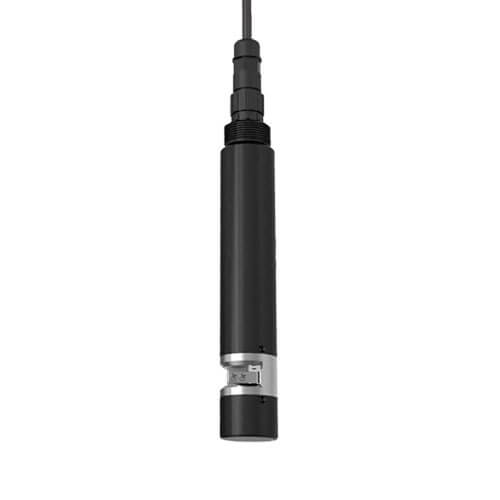
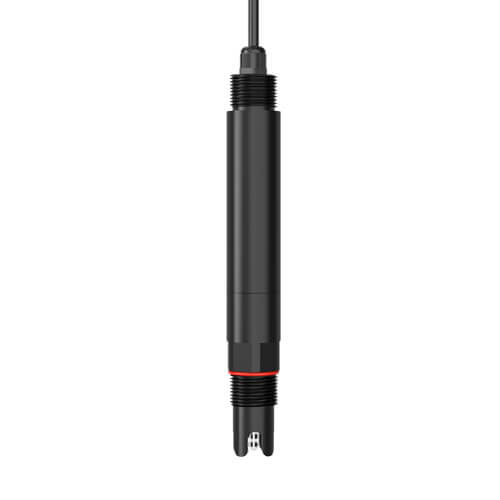
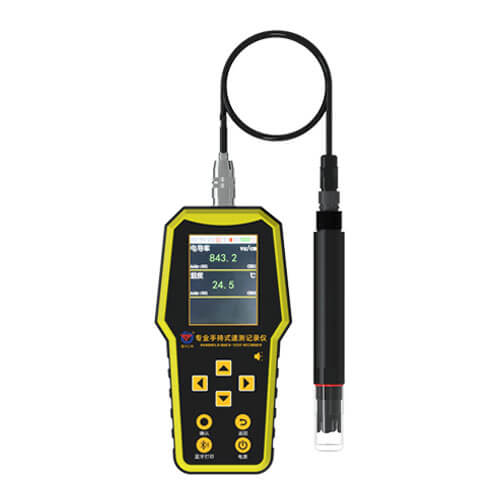
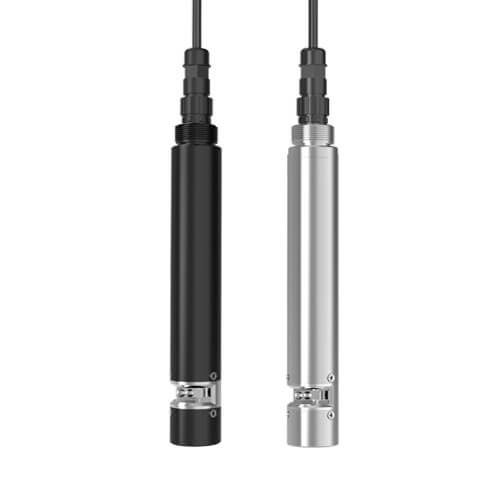
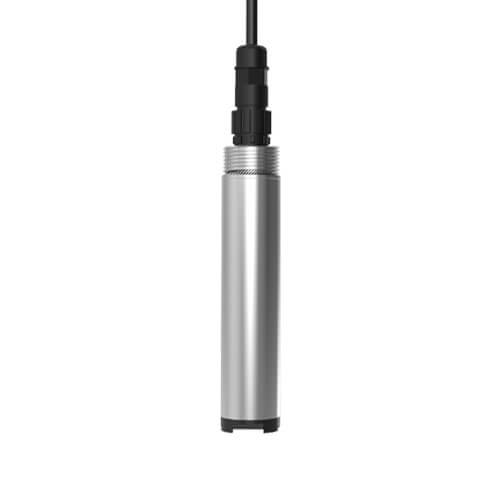
Renke is a professional water quality sensor manufacturer. Our turbidity sensor uses an 860 nm infrared LED as the light source, which is not affected by water color and delivers more accurate measurement results. The overall housing has excellent waterproof performance, with a protection rating of up to IP68. It can be used for measuring rivers and streams, wastewater and sewage, sedimentation tank control, sediment transport research, and laboratory measurements.
- Model: RS-ZD-N01-*-T
- MOQ: 1 PCS
- Delivery date: within 24 hours
- Price: $116
About - Turbidity Sensor
Turbidity is caused by suspended particles in water, which scatter the incident light. Typically, a 90-degree angle scattering light is used as the testing signal. The relationship between scattered light and turbidity follows a multi-segment linear relationship, requiring the turbidity sensor to be calibrated at multiple points. Additionally, variations in light source intensity and temperature can affect the accuracy of measurements. Through multiple experimental studies and calculations, we have developed a turbidity sensor with temperature compensation capability, high accuracy, and good stability.
Features
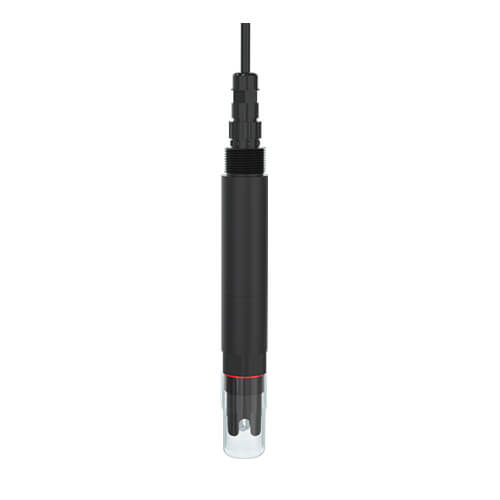
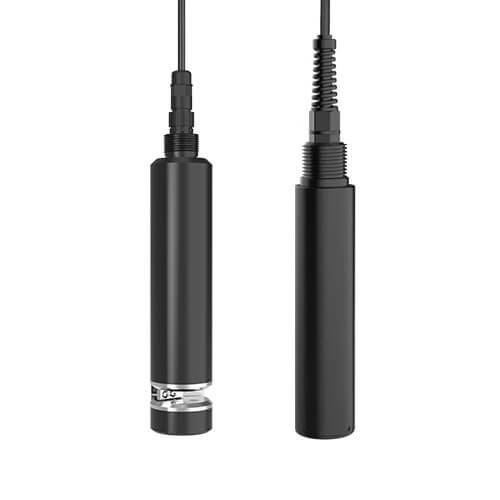
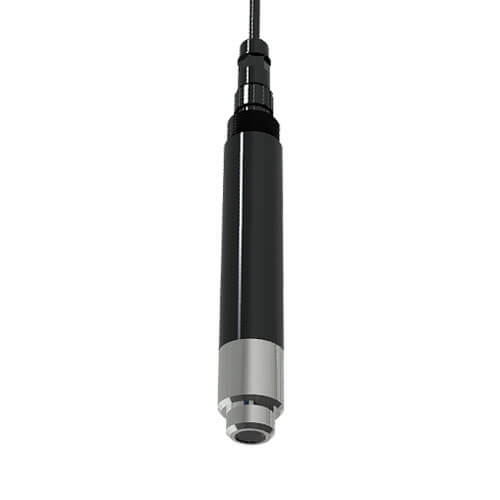
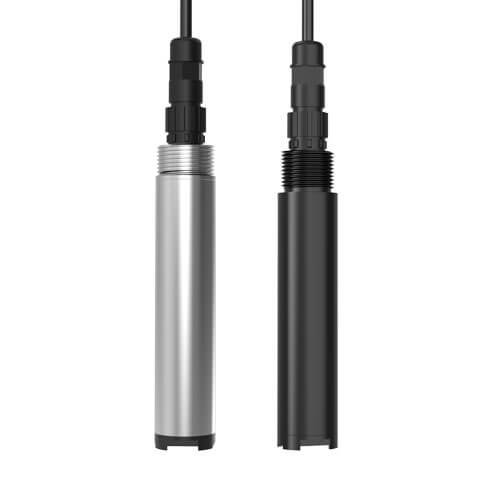
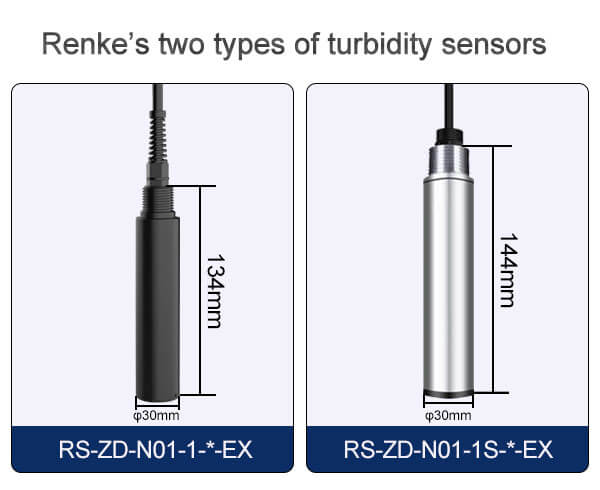
RS-ZD-N01-*-T is an integrated online turbidity sensor. It adopts the proven 90° light-scattering principle, offering high sensitivity, and incorporates fiber-optic technology to achieve excellent repeatability and stability. An internal filtering algorithm is applied to ensure that measurements are not affected by ambient light. To enable reliable operation across different environments, the sensor also features temperature compensation, minimizing the influence of ambient temperature on measurement results. Our turbidity sensor is available with either a plastic housing or a stainless-steel housing, supports RS485 signal output, and has a smooth exterior design that helps prevent entanglement with aquatic plants.
Parameters
| Power supply | DC 10~30V |
| Power consumption | 0.2W |
| Measuring range | 0.00~50.00NTU; 0.0~200.0NTU; 0.0~1000.0NTU; 0~4000NTU |
| Accuracy | ±5%FS (25°C); ±0.5°C |
| Resolution | 0.01NTU(0.00~50.00NTU); 0.1NTU(0.0~200.0NTU); 0.1NTU(0.0~1000.0NTU); 1NTU(0~4000NTU); Temperature: 0.1°C |
| Response time | ≤30sec |
| Working condition | 0~40℃ |
| Working principle | 90° light scattering method |
| Using life | 2 years in normal use |
| Protect class | IP68 |
| Wire length | default 5m (customized) |
| Housing material | Corrosion-resistant plastic or stainless steel |
Advantages
Wide measurement range
Our turbidity sensor is available with ranges of 0~50 NTU, 0~200 NTU, 0~1000 NTU, and 0~4000 NTU. It can measure water conditions from nearly clear to highly turbid, meeting the needs of water treatment plants, wastewater facilities, river monitoring and other applications.
High accuracy
It adopts the 90° light scattering principle and uses an infrared LED light source combined with a fiber optic light path design. This structure enables the sensor to capture light scattering by suspended particles more precisely, resulting in accurate turbidity readings.
Excellent protection
It features an IP68 protection rating and can operate normally at water depths of up to 20 meters. The electrode surface is treated with anti corrosion passivation, offering strong waterproof and corrosion resistant performance. It is suitable for long term underwater operation.
Anti-interference
Renke turbidity sensor uses an advanced optical filtering algorithm to effectively resist interference from ambient light. It operates stably in bright daylight as well as in complex industrial lighting environments. Built in temperature compensation automatically corrects the influence of water temperature changes on measurement results.
Factory direct supply
Renke is a leading environmental monitoring brand with a mature and professional production line, providing customization and secondary development services. Each turbidity sensor is strictly calibrated before shipment and can be used immediately without secondary calibration, enabling fast and convenient deployment.
Easy installation
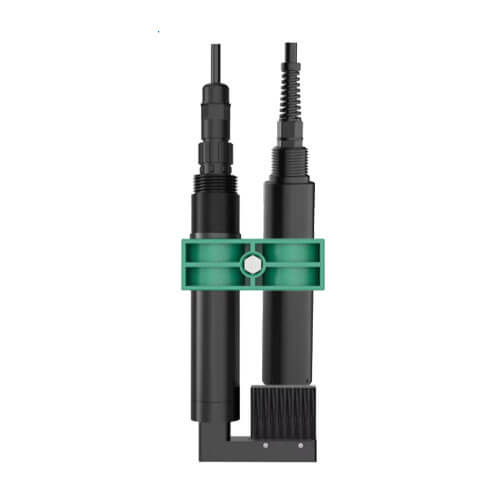
The sensor adopts an integrated design and is equipped with an NPT 3/4 thread, compatible with our waterproof pipes. The cable is routed through the waterproof pipe, allowing the sensor to be directly screwed into the threaded interface. The smooth housing design helps reduce sludge adhesion.
FAQs - Turbidity Sensor
Why is turbidity important in water quality monitoring?
Turbidity is a key indicator of overall water quality because high turbidity can:
Reduce light penetration and affect aquatic photosynthesis
Interfere with drinking water disinfection
Indicate the presence of pathogens or pollution
Degrade aesthetic quality (appearance and taste)
For these reasons, turbidity is widely regulated in drinking water and wastewater standards.
What is a turbidity sensor?
A turbidity sensor is a device that utilizes optical principles to measure the turbidity of water. The lower the amount of light that can pass through, the higher the turbidity of the water sample. It is widely used in areas such as water quality monitoring, wastewater treatment, water treatment plants, and water feature engineering.
How does a turbidity sensor work?
When a beam of light is directed into a water sample, the turbidity particles in the water cause the light to scatter. By measuring the intensity of the scattered light in the direction perpendicular to the incident light and comparing it with internal calibration values, the turbidity of the water sample is calculated. The final value is obtained through linearization processing and is outputted as the result.
How to calibrate turbidity sensor?
- Place the device in a 0 NTU standard turbidity solution (deionized water; for less stringent requirements, calibration can be performed in clean air under dark conditions). After the reading stabilizes, send the zero-point calibration command.
- Then place the device in a standard turbidity solution at the full-scale value of the selected range. After the reading stabilizes, send the full-scale calibration command to complete the turbidity calibration.
- Note: During calibration, ensure that no air bubbles adhere to the optical window of the electrode, and keep the electrode at least 7 cm above the bottom of the container.
How to install turbidity sensor?
Our turbidity sensor comes with an NPT 3/4 thread, which can be used in conjunction with our waterproof conduit. The cable should be threaded through the conduit, and the turbidity sensor can be screwed into the thread of the waterproof conduit.
Note: Install the turbidity sensor in an area with slow water flow and no bubbles. Maintain a distance of 5 cm from surrounding walls during installation, and ensure that there are no obstacles within 7 cm below the sensor.
How to maintain the turbidity sensor?
- Please do not attempt to open or repair the turbidity meter yourself in case of any noticeable faults. Contact us as soon as possible for assistance.
- Before taking measurements, remove the black rubber protective cover.
- Regularly clean the adhered substances on the sensor probe according to the usage environment, as they can cause measurement errors. Avoid scratching the light-guiding part of the probe during cleaning. (It is recommended to clean every 30 days)
- It is recommended to rinse the outer surface of the turbidity sensor with running water. If there are still residues, use a soft damp cloth to wipe it clean.
- Calibrate the device before each use, and for long-term use, it is recommended to calibrate every 3 months. The calibration frequency should be adjusted accordingly based on the specific usage environment (degree of dirtiness in the application, deposition of chemicals, etc.).
Does temperature affect turbidity readings?
Temperature variations have an impact on the electrical output of the sensor. Even if the turbidity level remains constant, fluctuations in temperature can alter the turbidity readings. This influence can be addressed by incorporating a temperature compensation feature.
How to wire the turbidity sensor?
Our product is supplied by default with a four-core bare cable:
Brown wire: Power positive (10~30 V DC)
Black wire: Power negative (GND)
Yellow wire: RS485-A
Blue wire: RS485-B
What units are used to measure turbidity?
Turbidity is commonly measured in:
NTU (Nephelometric Turbidity Units) – most widely used
FNU (Formazin Nephelometric Units) – based on ISO standards
FTU (Formazin Turbidity Units) – older terminology
NTU and FNU values are numerically similar but are based on different measurement standards.
What is the difference between turbidity and TSS?
Turbidity measures light scattering caused by particles.
TSS (Total Suspended Solids) measures the actual mass of particles (mg/L).
While correlated, turbidity and TSS are not interchangeable and require separate calibration for conversion.
How long does a turbidity sensor last?
The typical lifespan of a turbidity sensor is 1~3 years, depending on:
Water quality and fouling level
Operating temperature and pressure
Maintenance and cleaning practices
Sensors with automatic cleaning systems often have longer service life and better data stability.
Related Blogs
Table of Contents In daily life, industrial production, and laboratory research, the terms “distilled water” and “purified water” are often mentioned. Many people mistakenly
What is dissolved oxygen? Dissolved oxygen (DO) refers to molecular oxygen dissolved in water. The unit is mg/L, which means how many milligrams oxygen
Long-term rainfall and melting snow have raised water levels and flooded city roads, causing flooding. Frequent and extreme flooding is inevitable and endangers community
Table of Contents The commonly used communication method for data acquisition and control is RS-485. RS-485 is a general communication standard. It can not
Table of Contents With the development of Internet of Things technology, sensors and wireless transmission technology are widely used in smart agriculture. Smart agriculture
Measuring tilt angles is an important part of geometric metrology. The range of angle measurement is wide. According to the spatial position of the
Table of Contents Everyone knows that the choice of water quality sensors is very important. In water measurement, the ph sensor is one of
Natural disasters such as floods and heavy rains pose threats to lives and property around the world. Without a proper flood monitoring system, these
Table of Contents Water is the source of life, integral to every aspect of human production and daily living. In many scenarios, ensuring health
Table of Contents What is a water level sensor? A water level sensor is a device designed to measure the height of a liquid,