
Table of Contents Outdoor weather stations are essential tools for monitoring and researching meteorological changes. They provide long-term and stable monitoring of various environmental parameters,
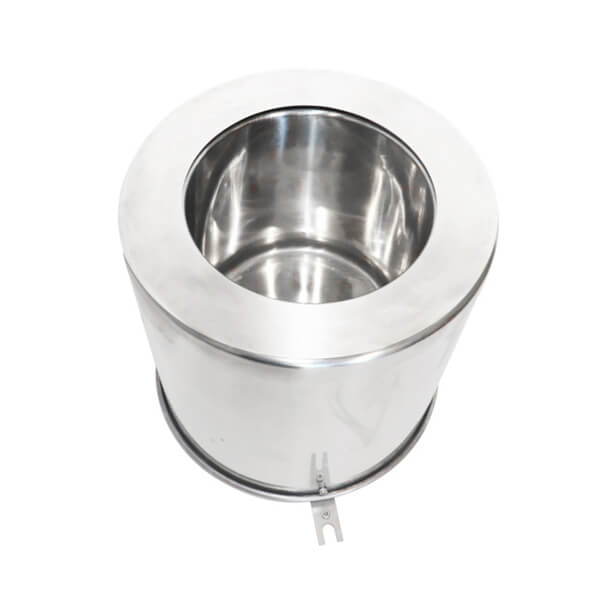
Evaporation Sensor
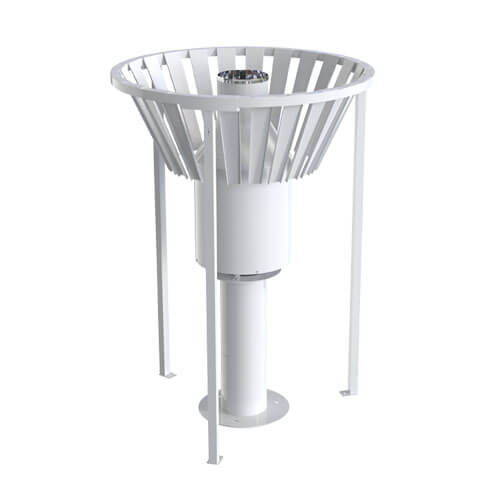
This evaporation sensor adopts a double-layer stainless steel structure design, which can prevent evaporation errors caused by direct sunlight, and has a higher accuracy value than others.
It is an instrument used to observe water surface evaporation. High sensitivity, and wide range. It can quickly and accurately measure the evaporation of water per unit area.
- Model: RS-EVA-*-2-T
- MOQ: 1 PCS
- Delivery date: within 24 hours
- Price: $136
About - Evaporation Sensor
The evaporator obtains the evaporation amount by weighing the weight change of the liquid in the evaporation vessel, and then calculating the liquid level height. It can be used with automatic water addition equipment or data acquisition and transmission equipment to realize automatic monitoring of the evaporation process, or it can be used with data acquisition and storage equipment (recorder) to realize automatic storage of evaporation data.
Features
Our evaporation sensor is constructed from 304 stainless steel, offering excellent corrosion resistance, long service life, and protection against rust. It is equipped with a built-in digital sensor, ensuring high accuracy and sensitivity, and delivers stable performance even during long-term outdoor operation. Engineered for versatility, the sensor maintains reliable monitoring under wind, wave, and rainfall conditions. With strong electromagnetic interference immunity, the sensor guarantees correct data output, even after being powered off and restarted. For ease of installation and durability, the device adopts a bottom-wiring design, effectively preventing cable faults while keeping operation simple and user-friendly.
Datasheets
| Power supply | 10~30VDC |
|---|---|
| Power consumption | 0.77W (Analog), 0.17W (RS485) |
| Measuring range | 0-200mm |
| Accuracy | ±1%FS |
| Response time | <1s |
| Protection rating | IP66 |
| Inner diameter | 18.4cm |
| Inner height | 20cm |
| Operating environment | -40°C~85°C, 0~100% RH |
| Storage environment | -40°C~125°C, <80% RH (non-condensing) |
| Signal output | RS485/4-20mA/0-5V/0-10V |
Datasheets
Working principle
Applying the principle of pressure measurement, evaporation is measured by measuring the change in the weight of the liquid in the evaporating dish and then calculating the height of the page. Water surface evaporation measurement that can adapt to various environments is not affected by liquid icing and overcomes the disadvantages of inaccurate measurement when the liquid level is measured using the ultrasonic principle, easy damage to the sensor when there is no water, and low measurement accuracy.
Installation
Before installation, loosen the three supporting screws at the bottom of the sensor by turning them counterclockwise (until the screw heads are raised at least 3 cm above the mounting platform, or remove them entirely). Then, remove the three pearl-cotton supports from the top of the sensor. If the inner cylinder shifts off-center while removing the supports, gently adjust it back into position by hand. 1. The evaporation sensor can be installed directly on the weather station mast using its tray structure. 2. Alternatively, the sensor can be installed on a concrete base elevated above ground level. This prevents rainwater from flooding the base or seeping into the equipment.
FAQs - Evaporation sensor
What is evaporation?
Evaporation refers to the phase transition process of water molecules from liquid to gas, and can also be referred to as a slow vaporization phenomenon that occurs only on the surface of the liquid at any temperature.
How to calculate evaporation?
Evaporation refers to the amount of water evaporated into the air within a certain period of time. It is usually expressed in millimeters of the thickness of the evaporated water layer. The evaporation of water from the water surface or soil is measured by different evaporation gauges.
Why is measuring evaporation important?
Measuring evaporation is essential for water resource management, irrigation planning, drought monitoring, and climate research. It helps predict crop water needs and assess hydrological balance in different environments.
What signal output of this evaporation sensor?
Our evaporation sensor offer RS485, 4-20mA, 0-5V, 0-10V four types of signal output. You can choose what you want.
What are the applications of this evaporation sensor?
The water surface evaporation sensor is a sensor used to perceive the change of water surface evaporation. It can observe the changing law of water surface evaporation in different time periods. It is suitable for meteorological observation, plant cultivation, seed cultivation, agriculture and forestry, geological survey, scientific research, and other fields.
RS-EVA-*-2-T evaporation sensor can be used with data collection and transmission devices to realize automatic monitoring of the evaporation process, and can also be combined with data collection and storage devices (recorders) to realize automatic storage of evaporation data, and can also be used with rainfall sensors, data collection, and transmission devices, etc. Use to realize automatic observation and remote transmission of evaporation and rainfall processes.
In addition, it can be used as a component of equipment such as rainfall stations, evaporation stations, weather stations, and environmental monitoring stations to observe “water surface evaporation”, which is one of the meteorological or environmental parameters.
What factors affect evaporation rate?
The main factors are:
- Air temperature (higher temperature increases evaporation)
- Relative humidity (lower humidity increases evaporation)
- Wind speed (faster wind promotes evaporation)
- Solar radiation (more radiation accelerates evaporation)
What is the difference between evaporation and evapotranspiration?
Evaporation is water loss from soil and open water surfaces, while evapotranspiration includes both evaporation and transpiration from plants. Evapotranspiration gives a fuller picture of water use in ecosystems and agriculture.
How do you maintain an evaporation sensor?
Regularly clean the inner barrel, remove dust or algae, check sensor calibration, and ensure stable installation. Proper maintenance ensures consistent and reliable data collection.
What should I pay attention to when using an evaporation sensor?
- When the water level in the evaporation sensor is too high or too low, water should be taken or added in time to make the water level suitable. In order to avoid the loss of evaporation caused by heavy precipitation or excessive evaporation. When taking water or adding water, you should seize the opportunity to reduce the error of evaporation.
- In summer, the temperature is high, the wind speed is high, and the evaporation is large. You should try to choose a time period with a small evaporation to take or add water.
- The water intake or water addition should be just after the hour, because after the water intake or addition, the evaporation from this moment to the previous hour will be cleared, and the starting point of the evaporation in this hour will be calculated from the adjustment.
- In the real-time display column, it is most suitable to take water or add water when the evaporation amount is zero in this hour, which can reduce the evaporation error.
- When there is a negative value of the old evaporation due to precipitation, the old evaporation at that time shall be treated as 0.
- The sensor should not be observed when it freezes in winter. The sensor should be removed and kept in a safe place. It will be re-installed and used after thawing.
What data does an evaporation sensor provide?
An evaporation sensor typically provides instantaneous evaporation, daily cumulative evaporation, and long-term evaporation trends. Some models also integrate with cloud platforms for real-time monitoring and remote data access.
Related Blogs
Long-term rainfall and melting snow have raised water levels and flooded city roads, causing flooding. Frequent and extreme flooding is inevitable and endangers community safety.
Table of Contents The commonly used communication method for data acquisition and control is RS-485. RS-485 is a general communication standard. It can not only
The main purpose of environmental monitoring is to provide data on environmental quality and changing trends to ensure the safety of public life and property.
Table of Contents Accurately measuring rainfall has long been a challenge, owing to its pronounced regional and diurnal variability. The emergence of modern Western scientific
The weather sensors are the sensing end of the weather station and collect various weather-related data. The weather station can obtain the main parameters and
The weather station can provide users with comprehensive weather information over the years. Regular maintenance of weather stations is an important operation to ensure measurement
what is a weather station? the weather station also called a weather center, is a device that relies on a variety of different types of
A complete set of a weather station is composed of two parts: hardware and software. The hardware part includes various weather station sensors, connecting lines,
Table of Contents Do you know where to mount weather station? The weather station should be installed as far as possible on the open ground
What is Evaporation? Meteorologically measured evaporation is the daily evaporation on the water surface (including when it freezes), which refers to the depth of the