Top 16 Weather Sensors For The Weather Station
The weather sensors are the sensing end of the weather station and collect various weather-related data. The weather station can obtain the main parameters
Professional Environment Monitoring Sensors Manufacturer

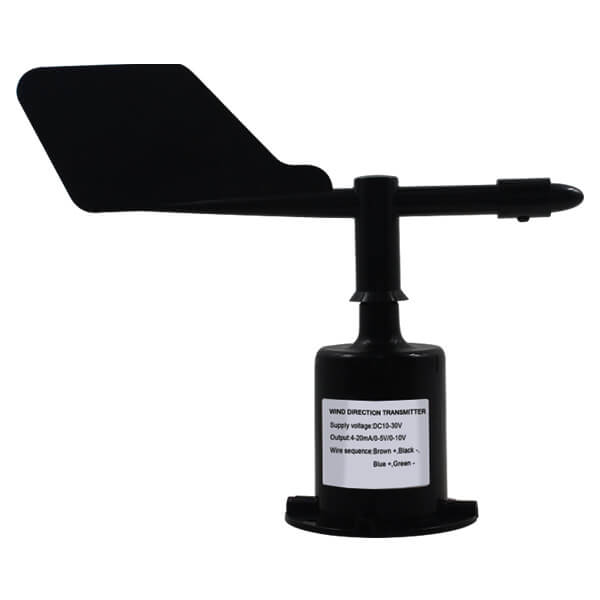
The wind direction sensor is a physical device that detects and feels the wind direction information from the outside by the rotation of the wind direction arrow and transmits it to the coaxial encoder, and at the same time outputs the corresponding wind direction related value.
According to the output mode of the wind direction sensors, there have four types of wind direction sensors: wind direction sensors 4-20ma, wind direction sensors 0-5v, wind direction sensors 0-10v, wind direction sensors rs485. According to different measuring ranges, we provide three types: 8 directions, 16 directions and 360° for you to choose.
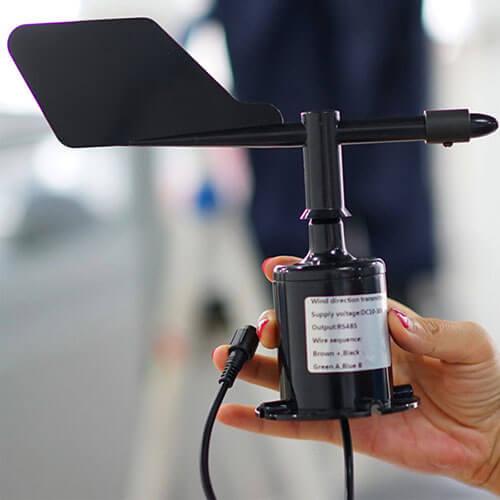
A wind direction sensor consists of a wind vane, sensor body, circuit module, transmission cable, and other components. Our wind direction sensor is compact and easy to assemble, utilizing a novel design concept to effectively obtain wind direction information. Its housing is constructed of a polycarbonate composite material, which offers excellent corrosion and erosion resistance, ensuring the sensor retains its shape over long-term use. The internal circuitry is coated with conformal coating, and the smooth bearing system ensures accurate measurement information. The circuit module features extremely robust electromagnetic interference resistance and high and low voltage protection, ensuring normal operation in environments with temperatures ranging from -40°C to 60°C and humidity levels of 0% to 80%.
Renke sensors is best-selling at home and abroad for more than 15 years, a well-known brand in China. We are the top one environment monitoring device manufacturer.
$23 ultra-low price wind direction sensor. The best selection for weather stations. Simple to deploy. Customized service. We offer a free cloud platform.
Wind direction transmitters for a variety of applications. It is widely used in greenhouses, environmental protection, weather stations, ships, breeding, and other environments.
| Output signal | RS485 | 4-20mA/0-5V/0-10V | |
|---|---|---|---|
| Power supply | 10~30V DC | 10~30V DC | |
| Power consumption | 8 directions | 0.15W | 0.75W |
| 16 directions | 0.15W | 0.75W | |
| 360° | 0.2W | 0.75W | |
| Measuring range | 8 directions/16 directions/0~360° | ||
| Accuracy | 360° | ±1° | ±1° |
| Dynamic response speed | 8 directions | ≤0.5s | ≤0.5s |
| 16 directions | ≤0.5s | ≤0.5s | |
| 360° | ≤0.8s | ≤0.8s | |
| Working environment | -40℃~+60℃, 0%RH~80%RH | ||
| Load capacity | — | Voltage output ≤ 250Ω, current output ≤ 600Ω | |
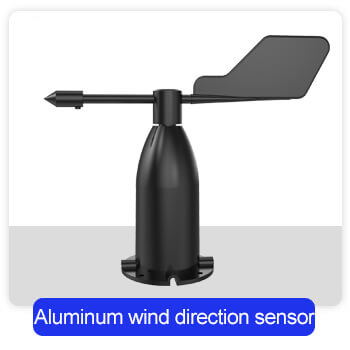
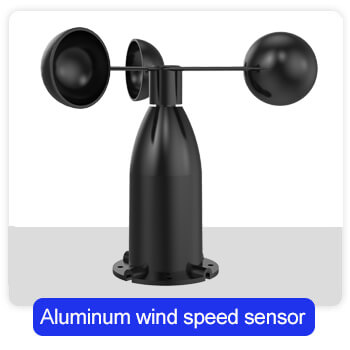
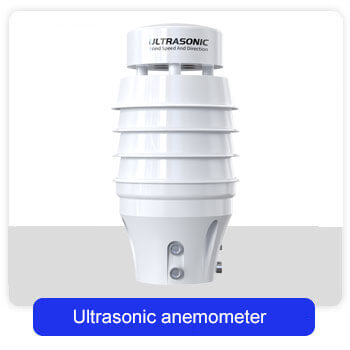
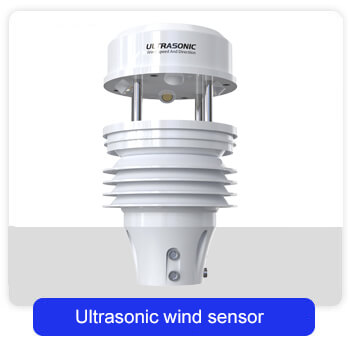
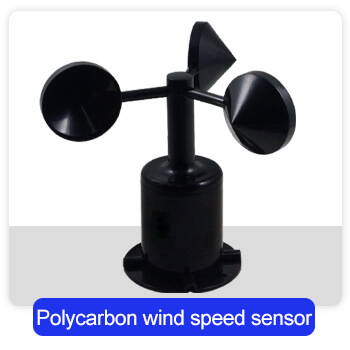
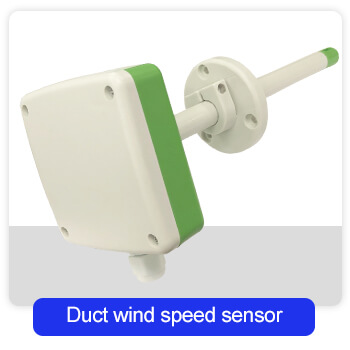
Wind direction is a crucial meteorological parameter that needs to be monitored and recorded in numerous fields, including meteorology, aviation, shipping, industry, and construction. Correctly identifying and utilizing wind direction can improve efficiency and reduce pollution in transportation. During takeoff and landing, choosing a direction against the wind is crucial to ensure aircraft stability and safety.
Wind direction is caused by pressure gradients, or areas between fronts, where air moves in the direction of low-pressure systems. Wind direction is also influenced by many other factors, including the Coriolis effect, friction, and topography. Wind direction is typically expressed as the direction from which the wind is blowing. For example, an easterly wind is expressed as an easterly wind, with the wind direction expressed as 90 degrees.
The wind direction sensor is a physical device that detects and senses the wind direction information from the outside by the rotation of the wind direction arrow, and transmits it to the coaxial code disc, and at the same time outputs the corresponding value of the wind direction.
Electromagnetic wind direction sensors: It is designed using electromagnetic principles. Because there are many types of principles, the structure is different. At present, some such sensors have begun to use gyroscope chips or electronic compasses as basic components, and their measurement accuracy has been further improved.
Photoelectric wind direction sensors: This wind direction transmitter uses an absolute gray code disc as the basic element, and uses a special customized coding code. Based on the photoelectric signal conversion principle, it can accurately output the corresponding wind direction information.
Resistive wind direction sensors: This kind of wind direction transmitter adopts a structure similar to a sliding rheostat. The maximum and minimum resistance values generated are marked as 360° and 0° respectively. When the wind vane rotates, the sliding rod of the sliding rheostat will follow The wind vane on the top rotates together, and the different voltage changes produced can calculate the angle or direction of the wind direction.
The aluminum alloy wind direction transmitter can be widely used in the fields of meteorology, ocean, environment, airport, port, laboratory, industry, agriculture, and transportation.
We provide a free cloud platform to facilitate users to view data at any time through a computer or mobile phone.
The weather sensors are the sensing end of the weather station and collect various weather-related data. The weather station can obtain the main parameters
A greenhouse is a closed environment that provides optimal conditions for plant growth and promotes plant growth by controlling indoor and outdoor environments. A
Table of Contents What is IoT? IoT is the “Internet of things“. It is an extended and expanded network based on the Internet. It
Table of Contents What is an anemometer? An anemometer is a meteorological instrument used to measure air velocity and, in many configurations, wind direction.
The weather station can provide users with comprehensive weather information over the years. Regular maintenance of weather stations is an important operation to ensure
Table of Contents Where to mount wind sensor? Installing wind sensor on the weather station The wind sensor is a crucial component of a
A complete set of a weather station is composed of two parts: hardware and software. The hardware part includes various weather station sensors, connecting
Table of Contents Do you know where to mount weather station? The weather station should be installed as far as possible on the open