Table of Contents What is the wind speed and direction? Wind is a physical quantity that represents the movement of air currents. It has both
Ultrasonic Anemometer
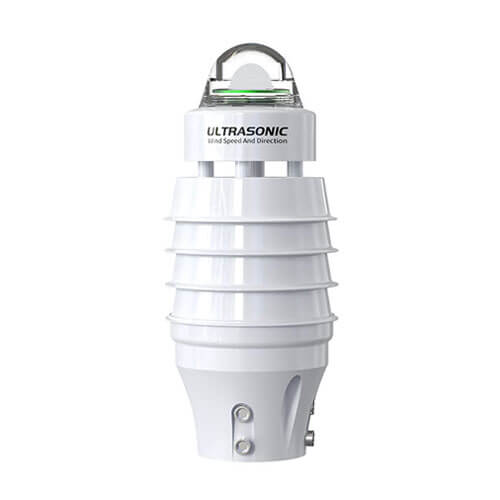
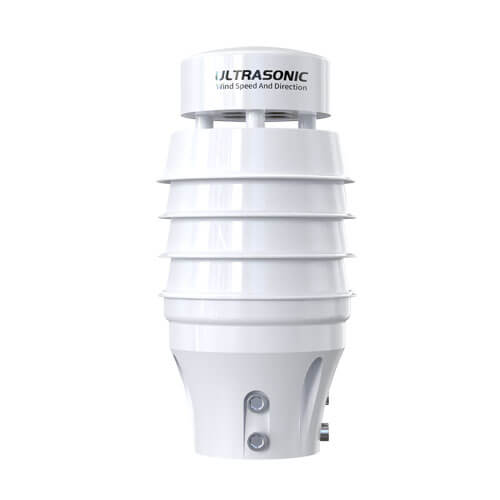
It is a small ultrasonic anemometer for outdoor measurement of wind speed and direction. It has no movable parts, compact design, high protection level, easy to install, and can be used in harsh environments. This ultrasonic anemometer price is very cheap and meets the needs of most users.
- Model: RS-CFSFX-*-3H-T
- MOQ: 1 PCS
- Delivery date: within 24 hours
- Price: $90
About - Ultrasonic Anemometer
Ultrasonic wind speed and direction sensors are currently widely used in power safety monitoring, bridges and tunnels, marine ships, urban environmental monitoring, road safety, and other fields.
Description
RS-CFSFX-*-3H-T ultrasonic anemometer is a measuring instrument that uses ultrasonic waves to propagate in the air to measure wind speed and direction. Its internal use low-power chips, RS485 output power consumption is only 0.12W. It is especially suitable for solar or battery-powered environments with relatively high power consumption. Thanks to new technology and new technology, the structure is more compact and compact. Optional temperature and air pressure modules are also provided. The shell is made of high-strength ABS material, which is convenient for users to use in different environments. We provide a free cloud platform for customers to view data.
Parameters
| Power supply | 10-30V DC | |
| Power consumption | 0.12W(RS485), 1.2W(Analog) | |
| Wind speed | Range | 0~40m/s(Can be customized) |
| Accuracy | ±0.5+2%FS(60%RH,25℃) | |
| Resolution | 0.01 m/s | |
| Wind direction | Range | 0~360° |
| Accuracy | ±3°(60%RH,25℃) | |
| Resolution | 1° | |
| Working environment | -40~80℃, 0~95%RH (non-condensing) | |
| Wind resistance | 75 m/s | |
| Response time | 1s | |
| Protection level | IP54 | |
| Output signal | RS485/4-20mA/0-5V/0-10V | |
| Starting wind speed | 0.5m/s | |
Types
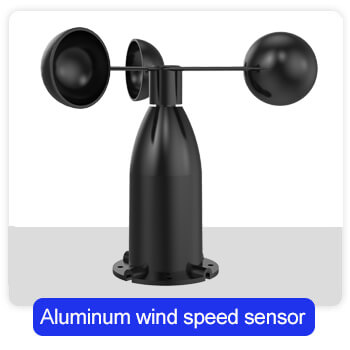
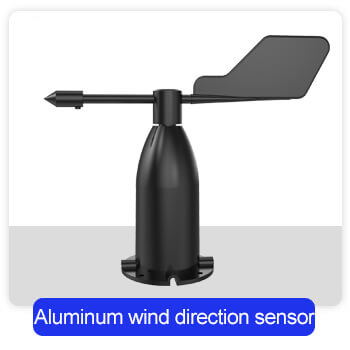
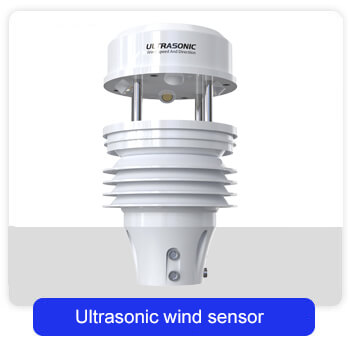
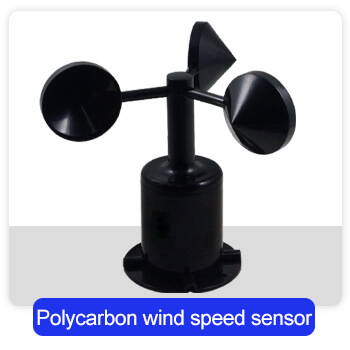
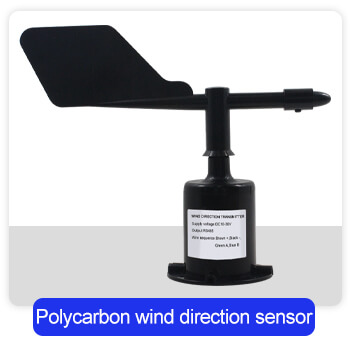
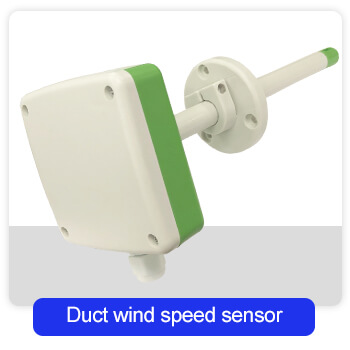
Advantages - Ultrasonic Anemometer
High quality
The shell of this small ultrasonic anemometer is made of high-quality ABS material, which can effectively resist rain, snow, and ultraviolet rays. The four ultrasonic terminals adopt an upside-down design to avoid measurement errors caused by rain, snow, or sand accumulation.
Quick install
This ultrasonic anemometer can be equipped with a built-in electronic compass and a device with a built-in electronic compass. There is no longer a position requirement during installation, just ensure that it is installed horizontally. Therefore, it can be used in mobile occasions such as marine ships, automobile transportation, etc., and there is no direct requirement during installation.
Long using life
The ultrasonic anemometer has a compact design, the entire structure does not have any parts that need to be moved, and there is no mechanical wear during use, so it has a long service life. Once installed, there is no need for maintenance and on-site calibration during use, which saves worry and effort.
Wide range
The wind speed and direction of this device are measured by the ultrasonic principle, so there is no angle limit, 360° Omni-directional, and accurate wind speed and wind direction data can be obtained at the same time.
Low price
Renke is a professional weather equipment manufacturer with 15 years of production experience and a large and complete production line. Factory-direct sales, in stock. The price of the same type of small ultrasonic anemometer on the market is generally about $130, while the price of the Renke ultrasonic anemometer is only $90, which can save you cost.
Good service
We have professional technicians to solve various after-sales problems for you, such as wiring problems, installation problems, reading problems, etc. Ultrasonic anemometers provide a one-year warranty. In addition, we have a large inventory and fast delivery. Guaranteed to ship within 24 hours.
FAQs - Ultrasonic Anemometer
What is ultrasound?
Ultrasound is a sound wave with a frequency higher than 20000 Hz. It is named after its lower frequency limit is greater than the upper limit of human hearing. It has good directivity, strong reflection ability, and is easy to obtain concentrated sound energy.
Why use an ultrasonic anemometer to measure wind speed and direction?
Compared with the mechanical wind speed and direction sensor, the ultrasonic anemometer has higher measurement accuracy and more stable performance. The structure of the measurement terminal is relatively simple. In many applications, it replaces traditional mechanical wind speed and direction sensors.
How does the ultrasonic anemometer work?
Ultrasonic wind measurement is an application of ultrasonic detection technology in gas medium. It uses the influence of air flow on the propagation speed of ultrasonic waves in the air to measure wind speed. Compared with conventional cup or rotor anemometers, the biggest feature of this measurement method is that the entire wind measurement system does not have any mechanical rotating parts, and it belongs to non-inertial measurement, so it can accurately measure the high-frequency components of gust pulsation in natural wind.
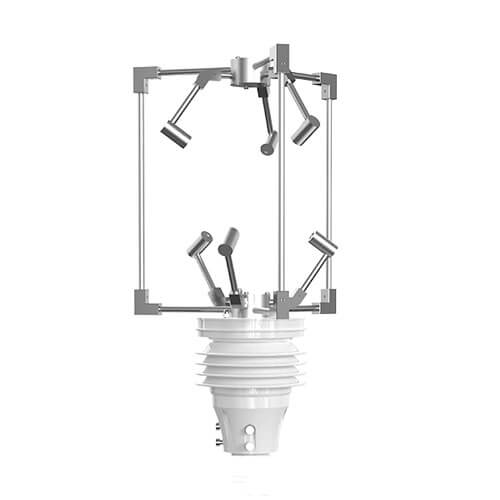
The ultrasonic wind speed and direction transmitter uses four ultrasonic probes to send and receive ultrasonic waves in a two-dimensional plane in a cycle, and measures wind speed and direction based on the principle that ultrasonic waves are affected by wind speed and increase or decrease.
How to calibrate the ultrasonic anemometer?
Our ultrasonic anemometers have been calibrated before leaving the factory, and they can be used directly without the customer’s secondary calibration.
What are the advantages of ultrasonic anemometers compared to cup or vane anemometers?
Ultrasonic anemometers have no moving parts, making them more durable and maintenance-free. They provide higher accuracy, faster response time, and multi-directional wind measurement, and are suitable for harsh environments where traditional mechanical anemometers may fail.
Can ultrasonic anemometers measure turbulence or gusts?
Yes. Ultrasonic anemometers can measure turbulence intensity, gusts, and rapid wind fluctuations because they sample at high frequency and capture small-scale variations in airflow.
What industries use ultrasonic anemometers?
They are widely used in meteorology, renewable energy (wind power), aviation, marine navigation, smart cities, agriculture, environmental monitoring, and industrial safety systems.
Where to download the manual?
To protect the patented technical parameters, please contact us for a manual.
Related Blogs
The weather sensors are the sensing end of the weather station and collect various weather-related data. The weather station can obtain the main parameters and
Table of Contents What is an anemometer? An anemometer is a meteorological instrument used to measure air velocity and, in many configurations, wind direction. In
The weather station can provide users with comprehensive weather information over the years. Regular maintenance of weather stations is an important operation to ensure measurement
Table of Contents How wind sensor work? Wind speed sensor working principle Wind speed sensor is a physical device used to measure wind speed. The
Table of Contents Where to mount wind sensor? Installing wind sensor on the weather station The wind sensor is a crucial component of a weather
A complete set of a weather station is composed of two parts: hardware and software. The hardware part includes various weather station sensors, connecting lines,
Table of Contents Do you know where to mount weather station? The weather station should be installed as far as possible on the open ground
Difference between wind speed sensor and air volume sensor The difference between the wind speed sensor and the air volume sensor starts with the wind