

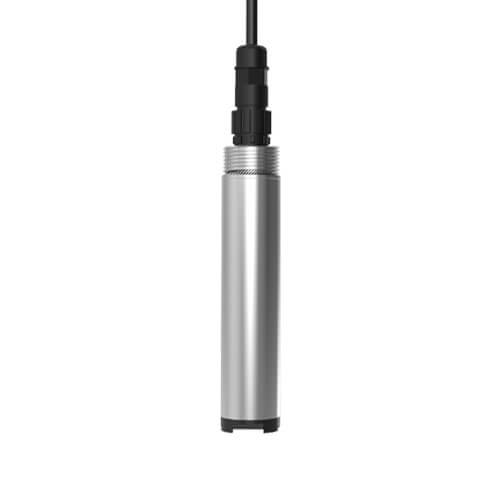
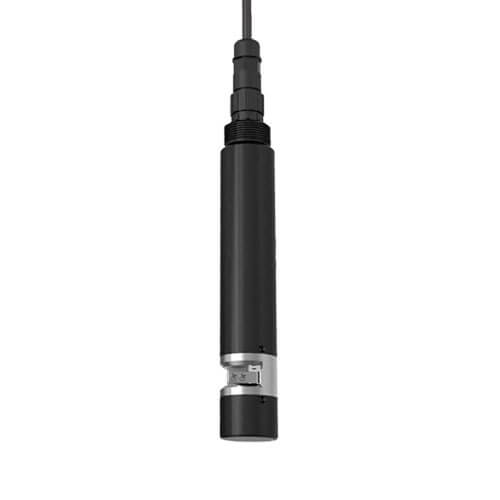
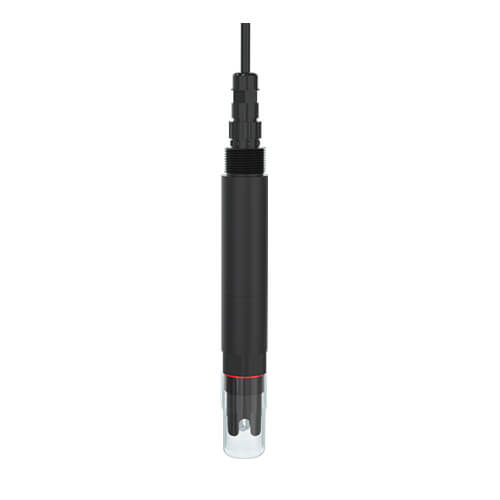
Table of Contents Water quality parameters are indicators used to assess the condition and trends of aquatic environments. Monitoring is essential for various water
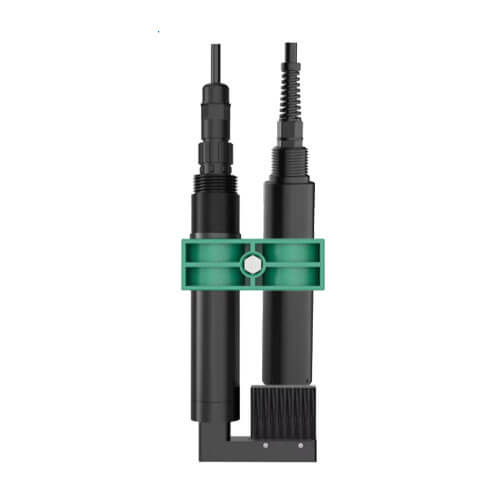
Chlorophyll sensor
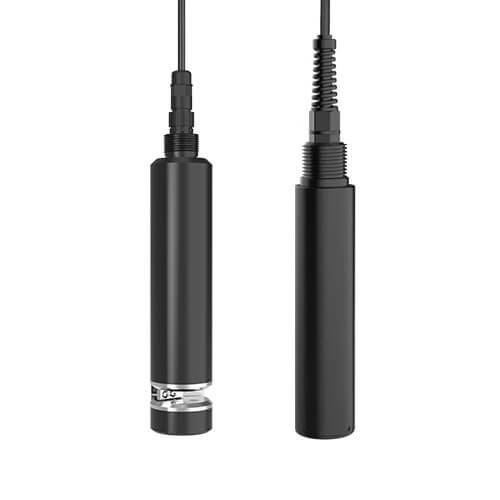
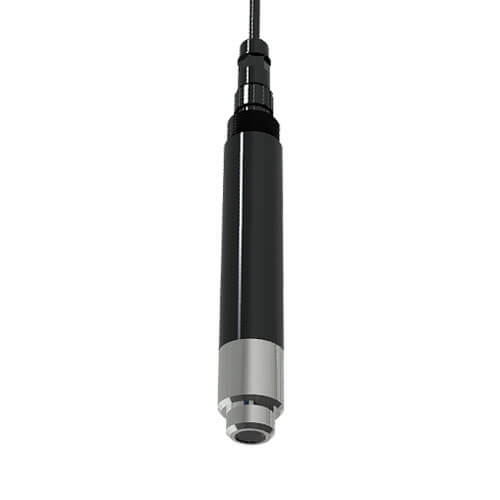
The chlorophyll sensor adopts leading optical technology with an automatic cleaning brush, which can automatically monitor the chlorophyll content in water in real time. The blue-green algae sensor adopts the principle of the fluorescence method, which can play an early warning role in the reproduction of algae. Using RS485 output mode, the signal is stable and the data is accurate.
- Model: RS-CH-N01-2-T / RS-BA-N01-2-T
- MOQ: 1 PCS
- Delivery date: within 24 hours
- Price: $252~$420
About - Chlorophyll Sensor
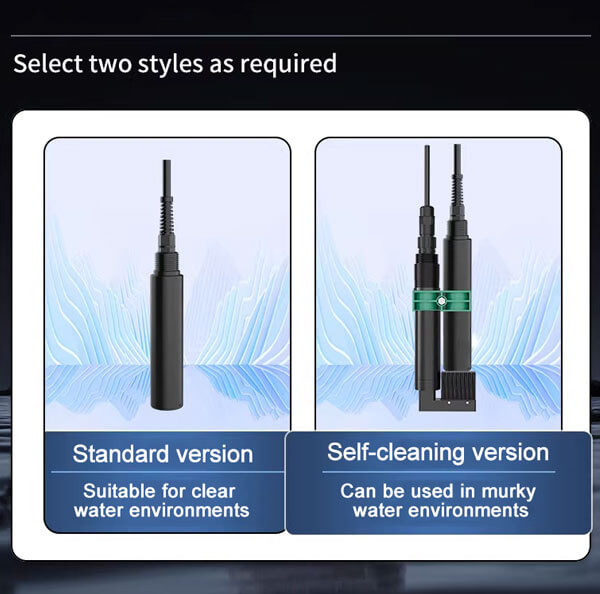
Chlorophyll in water is a key indicator of algal biomass and the degree of eutrophication. Continuous monitoring of chlorophyll enables timely tracking of algal dynamics and provides critical data support for eutrophication assessment, algal bloom risk identification, and aquatic ecological status evaluation. Our chlorophyll sensors are designed for continuous online monitoring of chlorophyll variations in water. They feature an integrated structure with excellent waterproof and corrosion-resistant performance, and the protection rating can reach IP68. Currently, our two most popular chlorophyll sensors include a standard version suitable for clear water, and a self-cleaning version designed specifically for turbid water conditions.
Chlorophyll sensor features
RS-CH-N01-2-T is a device designed to measure chlorophyll concentration in water. It is equipped with an automatic cleaning brush that effectively removes bubbles and reduces the impact of fouling on measurement accuracy. Based on the fluorescence principle, it adopts a fiber-optic light path design and built-in filtering algorithms, providing strong resistance to ambient light interference. This chlorophyll sensor features an integrated structure, requires no chemical reagents, is easy to use, and is environmentally friendly. An internal temperature transmitter enables automatic temperature compensation. The sensor outputs relative fluorescence units, from which chlorophyll concentration can be analyzed according to fluorescence intensity. It is widely used in rivers, lakes, ponds, ocean surveys, aquaculture, drinking water sources, and in the research and monitoring of algae and phytoplankton.
Chlorophyll sensor parameters
| Power supply | DC 7~30V |
|---|---|
| Power consumption | 0.4W |
| Measurement range | 0~400μg/L; 0~100RFU |
| Measurement error | ±5%FS (25℃); ±0.5℃ |
| Resolution | 0.1μg/L, 0.1RFU, Temperature: 0.1℃ |
| Response time | ≤30s |
| Operating conditions | 0~40℃ |
| Communication interface | RS485, standard ModBus-RTU protocol. Communication baud rate: Default 4800 (1200, 2400, 4800, 9600, 19200, 38400, 57600, 115200 adjustable) |
| Measurement principle | Fluorescence method |
| Waterproof rating | IP68 |
| Electrode cable length | Default 5m |
| Housing material | Corrosion-resistant plastic |
Chlorophyll sensor calibration
Our chlorophyll sensor supports one point or two point calibration. Two point calibration using zero and 100 μg/L chlorophyll (0.5 mg/L Rhodamine B) is generally recommended. Use deionized water as the zero solution and 100 μg/L chlorophyll (0.5 mg/L Rhodamine B) solution as the second calibration point.
1. First restore the chlorophyll concentration slope K and offset B to their default values, K = 1 and B = 0.
2. Place the sensor in deionized water, avoiding direct sunlight on the optical window. Make sure the sensing end is immersed at least 2 cm below the liquid surface and at least 7 cm away from the container bottom. Read the chlorophyll value, for example 0.2 μg/L, and record it as X.
3. Place the sensor in the 100 μg/L (0.5 mg/L Rhodamine B) solution and repeat step 2, then record the reading as Y.
4. Calculate K and B using the following formulas: K = 100 / (Y – X), B = -X.
5. Write the calculated K and B values into the sensor according to the register instructions.
Note: Rhodamine B is classified as a potentially carcinogenic and mutagenic substance. Protective gloves must be worn during handling.
Chlorophyll sensor maintenance
1. If the chlorophyll sensor shows obvious faults, do not open or attempt to repair it yourself. Please contact us as soon as possible.
2. Remove the black rubber protective cap before measurement.
3. Clean any deposits on the sensor probe regularly according to the operating environment, as fouling can affect measurement accuracy. Do not scratch the optical window during cleaning. It is recommended to clean the sensor every 30 days.
4. It is recommended to rinse the outer surface of the sensor with running water. If contamination remains, wipe it gently with a soft, damp cloth.
5. Calibrate the device before each use. For long-term operation, calibration is recommended every three months. The calibration interval should be adjusted according to the actual environment, such as the degree of fouling or chemical deposition.
6. Do not immerse the cable connector in water before it is securely tightened to the device connector.
7. When installing the chlorophyll sensor, consider water level fluctuations. Ensure the sensor is positioned at least 10 cm below the water surface, with at least 5 cm of clearance around it, and placed in an area with slow water flow and no air bubbles.
About - Cyanobacteria Sensor
Cyanobacteria are aquatic microorganisms capable of producing toxins, and their abundance and growth directly indicate potential ecological risks and biological anomalies in water bodies. Continuous monitoring of cyanobacteria provides crucial data for tracking algal proliferation trends. Our cyanobacteria sensor features RS485 output with a standard Modbus protocol, ensuring stable signals and precise measurements. An optional automatic cleaning function is available for use in turbid water conditions.
Cyanobacteria sensor features
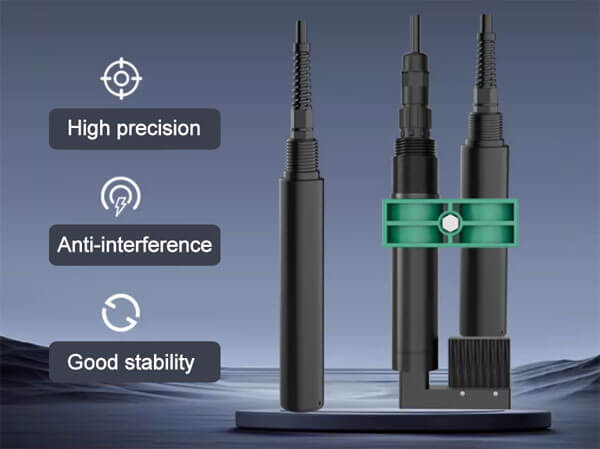
RS-BA-N01-2-T is a device designed for real-time monitoring of cyanobacteria concentration in water. It is based on the fluorescence principle, which offers much higher efficiency and sensitivity than traditional manual counting methods. Our cyanobacteria sensor features automatic temperature compensation and is suitable for long-term online monitoring. With a built-in optical filtering algorithm, it provides strong resistance to ambient light interference and delivers accurate measurement results. The sensor has a long service life and maintains excellent stability even during extended operation. It can also serve as an early warning tool for excessive algal growth.
Cyanobacteria sensor parameters
| Power supply | DC 7~30V |
|---|---|
| Power consumption | 0.4W |
| Measurement range | 0~300000 cells/ml |
| Temperature error | ±0.5℃ |
| Resolution | 1 cell/ml; Temperature: 0.1℃ |
| Linearity | R²>0.999 |
| Communication interface | RS485, standard ModBus-RTU protocol. Communication baud rate: default 4800 (configurable at 1200, 2400, 4800, 9600, 19200, 38400, 57600, 115200). |
| Measurement principle | Fluorescence method |
| Waterproof rating | IP68 |
| Electrode wire length | Default 5m |
| Housing material | Corrosion-resistant plastic |
| Pressure resistance | <0.6MPa |
Cyanobacteria sensor calibration
Our cyanobacteria sensor supports 1-point or 2-point calibration, with the recommended method being zero-point and 20,000 cells/mL (0.3 mg/L Rhodamine B) two-point calibration. Use deionized or distilled water as the zero-point solution and the 20,000 cells/mL (0.3 mg/L Rhodamine B) solution as the second point. Prepared standard solutions should be used within 24 hours.
1. Reset the cyanobacteria concentration slope K and offset B to default values (K = 1, B = 0).
2. Immerse the sensor in deionized water (avoid direct sunlight on the optical window; submerge the sensor <2 cm and keep>7 cm from the container bottom), record the measured value, e.g., X = 300 cells/mL.
3. Immerse the sensor in the 20,000 cells/mL (0.3 mg/L Rhodamine B) solution and record the measured value, Y.
4. Calculate K and B using: K = 20000 / (Y – X), B = -X
5. Write the K and B values into the sensor according to the register instructions.
Warning: Rhodamine B is classified as a potentially carcinogenic/mutagenic substance. Always wear gloves when handling.
Note: Rhodamine B is classified as a potentially carcinogenic and mutagenic substance. Protective gloves must be worn during handling.
Cyanobacteria sensor maintenance
1. If the sensor shows obvious faults, do not attempt to repair it yourself. Contact us immediately.
2. Before measurement, remove the black rubber protective cover.
3. Cyanobacteria in water are unevenly distributed, so multi-point monitoring is recommended. Monitor under water turbidity below 50 NTU.
4. Regularly clean any deposits on the probe according to the usage environment, as deposits can affect measurement accuracy. Avoid scratching the optical parts of the probe during cleaning. (Recommended: clean every 30 days.)
5. Rinse the sensor exterior with flowing water; if residue remains, gently wipe with a soft, damp cloth.
6. Calibrate the device before each use. For long-term use, recalibrate every 3 months. Calibration frequency should be adjusted according to the application environment (e.g., contamination level, chemical deposition).
7. Do not immerse the connector part in water before locking the cable and device connectors.
8. When installing the sensor, consider water level fluctuations. Ensure the probe is submerged at least 10 cm below the water surface, in a slow-flow, bubble-free area. Maintain 5 cm clearance from surrounding walls and ensure 7 cm below the probe is free of obstacles.
Related Blogs
Table of Contents Chlorine is a widely utilized chemical element, indispensable in global water treatment strategies due to its potent disinfection capabilities. Its effectiveness
Table of Contents What do pH Mean in Water? The water pH is an important indicator of its acidity or alkalinity. pH (Potential of
Table of Contents What is conductivity in water? Conductivity in water is the ability of water to conduct electricity. It is primarily related to
What is dissolved oxygen? Dissolved oxygen (DO) refers to molecular oxygen dissolved in water. The unit is mg/L, which means how many milligrams oxygen
Table of Contents The commonly used communication method for data acquisition and control is RS-485. RS-485 is a general communication standard. It can not
Table of Contents Everyone knows that the choice of water quality sensors is very important. In water measurement, the ph sensor is one of
Natural disasters such as floods and heavy rains pose threats to lives and property around the world. Without a proper flood monitoring system, these
Table of Contents Water is the source of life, integral to every aspect of human production and daily living. In many scenarios, ensuring health
Table of Contents Have you or your friends ever experienced a burst pipe or indoor flooding? Even if you don’t live in a flood-prone
Table of Contents What is a water level sensor? A water level sensor is a device designed to measure the height of a liquid,