

Table of Contents In wastewater treatment projects, it is essential to monitor water quality at every stage to ensure that the treated water meets
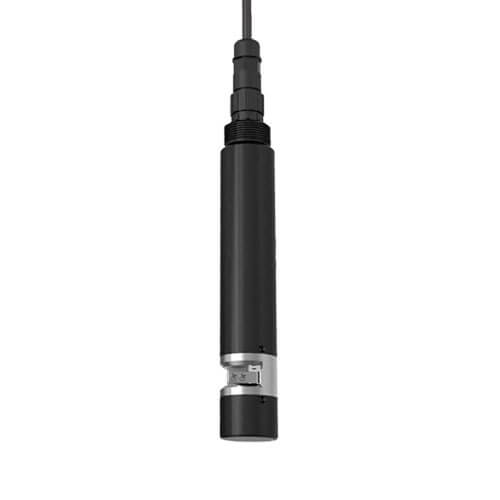
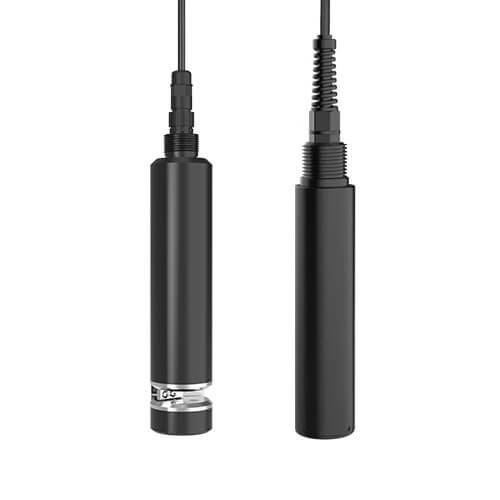
COD Sensor
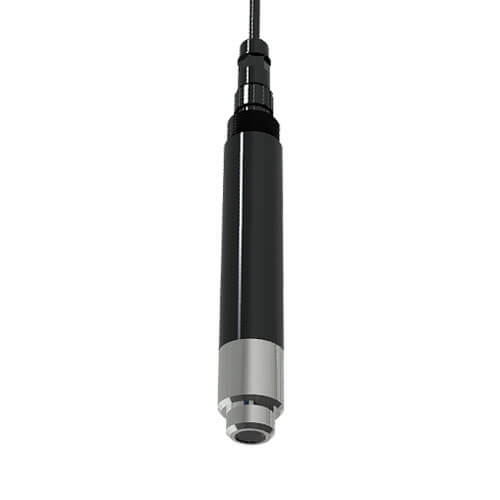
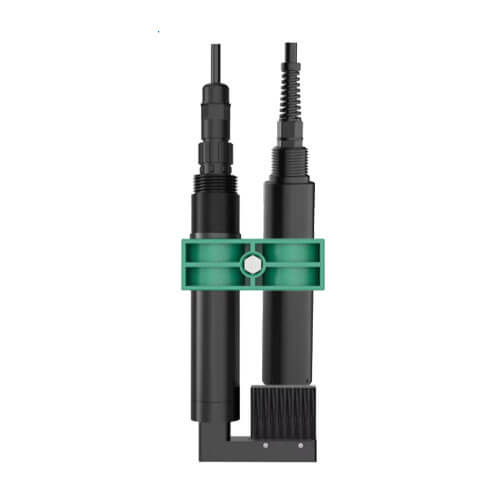
Renke’s COD sensors use the ultraviolet absorption method to monitor the chemical oxygen demand (COD) in solutions. It does not require chemical reagents, preventing secondary pollution. With fast response speed and high sensitivity, it is unaffected by chloride ions, ensuring greater accuracy. Designed with a focus on intelligence, high precision, and low maintenance, this COD sensor integrates IoT and cloud platforms to enable continuous water quality monitoring.
- Model: RS-COD-N01-2*-500-T
- MOQ: 1 PCS
- Delivery date: within 24 hours
- Price: $346
About - COD Sensor
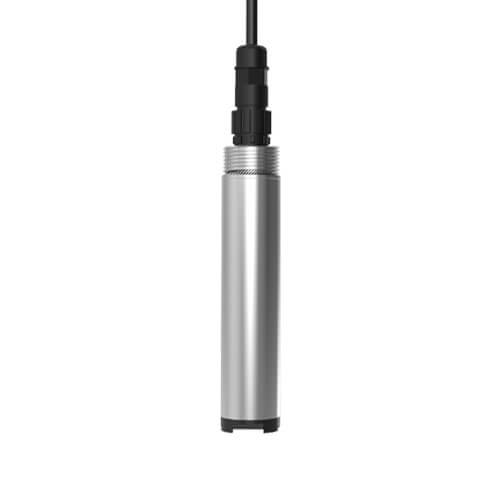
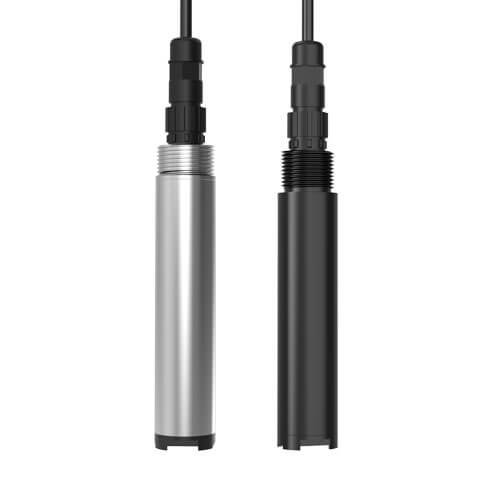
Our RS-COD-N01-2*-500-T COD sensor is a device that measures chemical oxygen demand (COD) in liquids using the ultraviolet absorption method. It requires no chemical reagents, ensuring zero environmental pollution. The sensor needs no additional accessories, is easy to install, offers high accuracy, and enables long-term stable monitoring of COD in water.
The sensor is equipped with an integrated automatic cleaning system that effectively removes impurities and prevents biofouling. In addition, it has a built-in temperature transmitter for automatic temperature compensation, ensuring measurement accuracy. By using a modulated light signal, it effectively reduces interference from visible light.
Our COD sensor supports multiple signal outputs, including RS485, 4-20 mA, 0-5 V, and 0-10 V. The RS485 output version also includes turbidity measurement, which compensates for the influence of turbidity on COD readings. At present, our COD sensors are widely used in water treatment, aquaculture, and environmental monitoring industries.
Features
- COD measurement range: 0~500 mg/L; turbidity measurement range: 0~200 NTU.
- Modulated light signal is used to reduce interference from light.
- Dual optical path measurement compensates for the influence of turbidity on COD measurement.
- Automatic cleaning system effectively prevents biofouling.
- ModBus communication address can be configured, and the baud rate can be adjusted.
- The device supports wide voltage power supply DC 12~30 V.
How to view data?
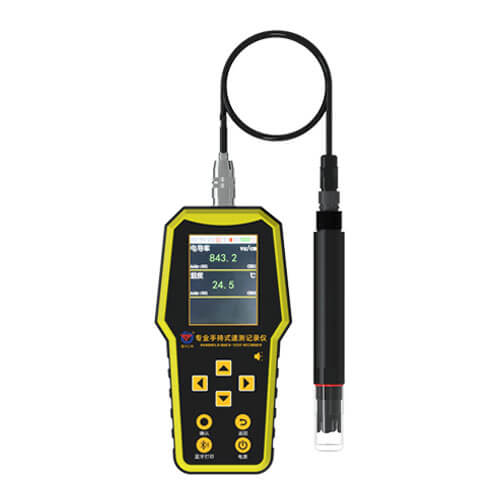
- The integrated COD sensor can be paired with our portable water quality analyzer, allowing measurement data to be directly read on the LCD screen. Stored records can be uploaded to a computer via USB.
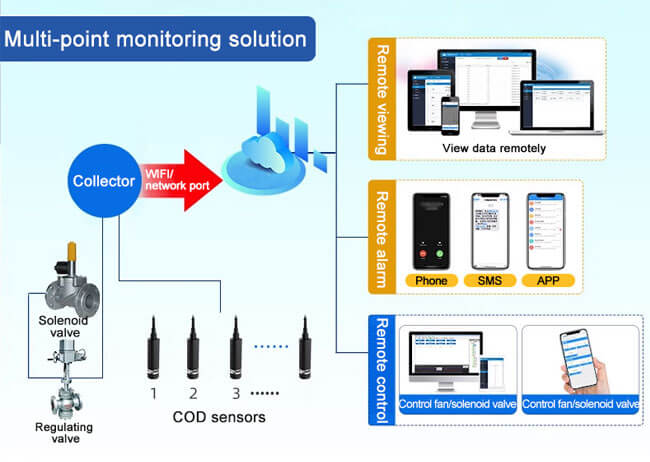
- The COD sensor can be connected to an environmental monitoring host and uploaded to our free cloud platform, enabling remote monitoring via APP, PC, or tablet.
- The sensor can be connected to the customer’s own upper computer software through an RS485 to USB converter for real-time monitoring.
Parameters
| Parameters | RS485 output | 4-20mA/0-5V/0-10V output |
|---|---|---|
| Power supply | DC 12~30V | DC 10~30V |
| Power consumption | 0.6W (normal); 4.5w (cleaning) | ≤1.2W (normal); ≤5W (cleaning) |
| Measuring principle | Dual wavelength ultraviolet absorption method | Dual wavelength ultraviolet absorption method |
| Measuring range | COD: 0~500mg/L equiv.KHP, Turbidity: 0~200NTU | 0~500mg/L equiv.KHP |
| Accuracy | COD: ±5%FS equiv.KHP (25℃), Turbidity: ±5%FS (25℃) | ±5%FS equiv.KHP(25℃) |
| Resolution | COD: 0.1mg/L, Turbidity: 0.1NTU | 0.1mg/L |
| Repeatability | ±1%FS equiv.KHP (25℃) | ±1%FS equiv.KHP (25℃) |
| Response time | ≤20sec | ≤20sec |
| Working conditions | 0~40℃ | 0~40℃ |
| Protection level | IP68 | Electrode: IP68, conversion module: IP65 |
| Flow rate | <3m/s | <3m/s |
| Pressure resistance | <0.1MPa | <0.1MPa |
| Electrode line length | 5m by default (customization supported) | 5m by default (customization supported) |
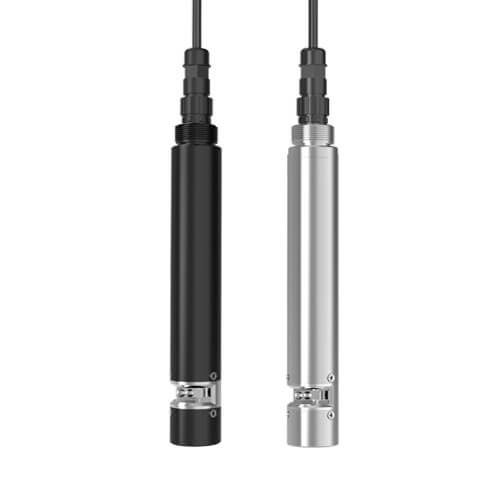
| Casing material | Corrosion-resistant plastic, stainless steel | Corrosion-resistant plastic, stainless steel |
| Maintenance frequency | 3 months | 3 months |
| Self-cleaning life | 18 months | 18 months |
Maintenance
How to install COD sensor?
1. Although the COD sensor does not have specific orientation requirements when placed in water, it is recommended to place it horizontally for optimal positioning. This helps avoid the impact of debris and foreign objects in the water on the measurements.
2. When suspending the sensor, ensure it does not collide with the container walls due to water flow. If the water flow at the measurement point is fast, make sure to securely fix the sensor.
3. The device should be placed in an area free from bubbles, and when installing the sensor, the depth below the water surface should not exceed 2 meters. Considering water level fluctuations, it is advised to submerge the sensor at least 30 cm below the lowest water level.
4. The device is equipped with an NPT3/4 thread and can be used with our waterproof pipe. The cable should pass through the pipe, and the sensor can be screwed into the waterproof pipe thread.
How to maintain COD sensor?
1. Regularly check the measurement window for any attachments. It can be cleaned with tap water or wiped with a damp soft cloth. For stubborn stains, add a small amount of household detergent to tap water for cleaning. Be careful not to scratch the measurement window during the process.
2. Periodically inspect whether the self-cleaning brush is functioning properly and check for any damage.
3. If the measurement readings are too high, too low, or consistently unstable, check whether the sensor’s measurement window is clean.
4. After 18 months of continuous use, the dynamic sealing component of the self-cleaning device should be returned to the factory for replacement.
5. The device should be calibrated before each use. For long-term use, calibration is recommended every three months.
FAQs - COD Sensor
What is COD?
COD (Chemical Oxygen Demand) is an indicator used to measure the amount of reducing substances in water. These substances are primarily organic matter, making COD a key parameter for assessing organic pollution levels in water. A higher COD value indicates a higher level of organic pollution in the water body.
What is a COD sensor?
A COD (Chemical Oxygen Demand) sensor is a device used to measure the level of organic pollution in water. COD represents the amount of oxygen consumed when organic matter in water is oxidized and decomposed, typically expressed in mg/L.
How does a COD sensor work?
Our COD sensor uses the ultraviolet absorption method. Its measurement principle is based on the absorption characteristics of organic matter at ultraviolet wavelengths. By measuring the attenuation of 254 nm wavelength light as it passes through the water, the sensor calculates the COD value at the measurement point.
What is the Ultraviolet Absorption Method?
The Ultraviolet Absorption Method (UV method) is a physical technique for COD detection. This method does not require chemical reagents and is based on the selective absorption of specific wavelengths of ultraviolet and visible light by organic substances in water. By measuring the absorption of monochromatic light by the water sample, the concentration of organic matter is determined, establishing a relationship between absorbance at a specific wavelength and the COD value. The COD value mainly depends on the composition and concentration of organic matter, which strongly absorbs light at 254 nm. By measuring the absorbance of wastewater at 254 nm and using a pre-established correlation between absorbance and COD concentration, the COD value is calculated.
How to calibrate the COD sensor?
For the RS485 output model with turbidity compensation, calibration is divided into turbidity calibration and COD calibration.
1. Turbidity calibration
- Zero Calibration: Pour an appropriate amount of zero-turbidity solution into a beaker. Place the electrode vertically into the solution, keeping it about 2 cm away from the sides of the beaker. After the reading stabilizes, perform zero calibration. Refer to the register details in the manual for the specific command.
- Slope calibration: Place the electrode into a 200 NTU standard solution. After the reading stabilizes, perform slope calibration. Refer to the register details in the manual for the specific command.
2. COD calibration
KHP (Potassium Hydrogen Phthalate, C8H5KO4), CAS# 877-24-7, commonly used as a standard substance in environmental research, can be used for COD calibration.
- Preparation of standard solution: First, accurately weigh 0.8503 g of KHP and place it into a 1000 mL volumetric flask. Fill with distilled or deionized water to the mark. This solution has a COD concentration of 1000 mg/L. Then, take 200 mL, 300 mL, 400 mL, and 500 mL of this solution respectively and transfer each into separate 1000 mL volumetric flasks. Fill each to the mark with distilled or deionized water and mix well. The resulting COD concentrations will be 200 mg/L, 300 mg/L, 400 mg/L, and 500 mg/L. Store the concentrated standard solution in a dark glass bottle at low temperature to prevent decomposition. The diluted standard solutions should be used within 24 hours after preparation.
- Calibration (8-point calibration): Place the electrode into distilled or deionized water, ensuring it is immersed at least 2 cm below the surface, with no bubbles or obstructions blocking the optical path. After the reading stabilizes, perform zero calibration according to the register instructions in the manual. Then place the electrode into COD standard solutions of 10, 50, 100, 200, 300, 400, and 500 mg/L respectively. After each reading stabilizes, perform slope calibration according to the register instructions.
- Note: During calibration, perform turbidity calibration first, followed by COD calibration. KHP poses a carcinogenic risk. Please wear gloves during operation.
What should we pay attention to when using COD sensor?
1. The device contains sensitive optical and electronic components; ensure it is not subjected to strong mechanical impacts.
2. Avoid excessive tension or stress on the cables during installation.
3. Prevent the device from prolonged exposure to direct sunlight.
4. Do not touch the measurement window with your hands.
5. Avoid any damage to the measurement window.
6. Ensure no bubbles adhere to the device surface, especially the measurement window, during measurement and calibration.
7. Avoid applying any direct mechanical stress to the device during use.
8. Do not forcibly rotate the self-cleaning brush shaft.
What are the applications of COD sensors?
In addition to traditional industrial wastewater and municipal sewage monitoring, COD sensors can also be applied in various fields such as environmental monitoring, healthcare, and food processing. In environmental monitoring, they can be used to measure the organic matter content in natural water bodies such as lakes, rivers, and oceans, providing data support for environmental protection agencies. In the healthcare sector, they can detect organic substances in intravenous fluids to ensure medical safety. In the food processing industry, they can monitor organic matter in food wastewater and during processing to ensure product quality.
What’s in the packing list?
- RS485 Type: Self-cleaning COD sensor, 5m cable, certificate of conformity, warranty card, etc.
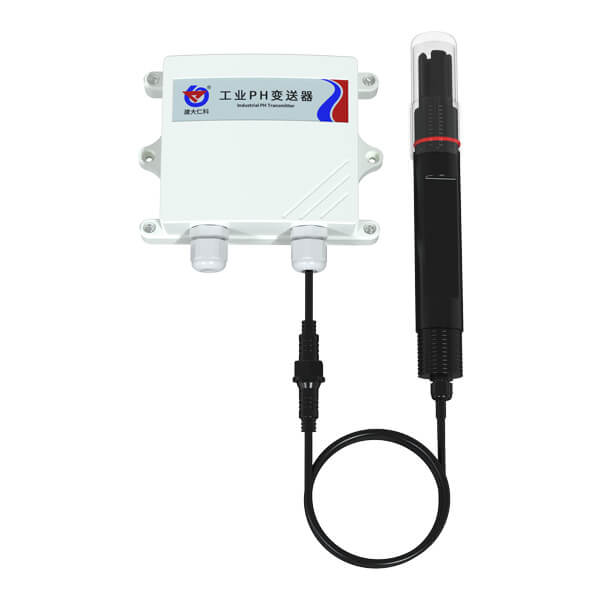
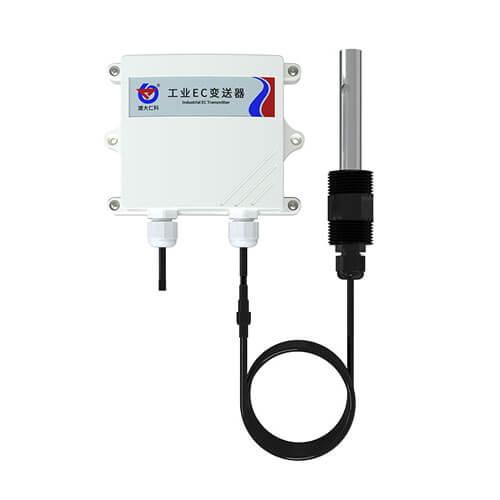
- Analog Type: Self-cleaning COD sensor, Wang-shaped shell conversion module, 5m cable, certificate of conformity, warranty card, etc.
Related Blogs
Table of Contents Chlorine is a widely utilized chemical element, indispensable in global water treatment strategies due to its potent disinfection capabilities. Its effectiveness
Table of Contents A consistently balanced pool pH is essential for ensuring water quality, user safety, and equipment longevity. The pH value indicates the
Table of Contents In daily life, industrial production, and laboratory research, the terms “distilled water” and “purified water” are often mentioned. Many people mistakenly
Table of Contents What is Hydrology? Hydrology refers to the various phenomena of water changes and movement in nature. It studies the formation, circulation,
Table of Contents What do pH Mean in Water? The water pH is an important indicator of its acidity or alkalinity. pH (Potential of
Table of Contents What is conductivity in water? Conductivity in water is the ability of water to conduct electricity. It is primarily related to
Table of Contents The commonly used communication method for data acquisition and control is RS-485. RS-485 is a general communication standard. It can not
Table of Contents Everyone knows that the choice of water quality sensors is very important. In water measurement, the ph sensor is one of
Natural disasters such as floods and heavy rains pose threats to lives and property around the world. Without a proper flood monitoring system, these
Table of Contents Water is the source of life, integral to every aspect of human production and daily living. In many scenarios, ensuring health