


Table of Contents Carbon monoxide is a colorless and odorless toxic gas at room temperature. People cannot perceive its presence through smell. Therefore, carbon
Ammonia Sensor
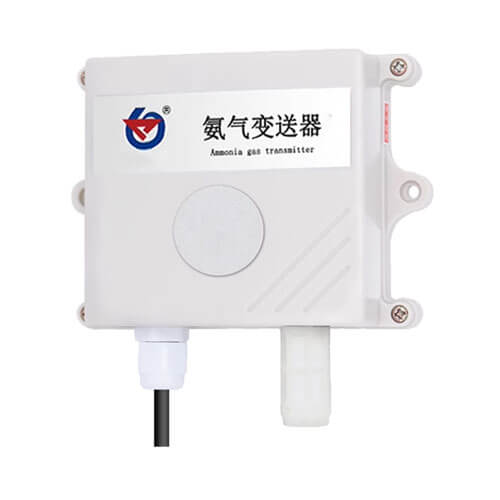
Our company offers ammonia sensors with three measurement ranges: 0~50 ppm, 0~100 ppm, and 0~500 ppm, which can meet the monitoring requirements of the vast majority of different environments. This wall-mounted ammonia sensor is compact, highly responsive, and long using life, making it an excellent industrial ammonia transmitter. The prices for the ammonia sensors are as follows:
- Model: RS-NH3-*-2-*-T
- MOQ: 1 PCS
- Delivery date: within 24 hours
- Price: $38~$113.4
About - Ammonia Sensor
As animal manure decomposes over time, it produces large amounts of ammonia gas. In such cases, it is necessary to accurately monitor the concentration of these gases to prevent accidents during manual operations. In addition, real-time monitoring or control of ammonia concentrations is required in settings where ammonia is generated, such as pesticide manufacturing plants, chemical plants, and fertilizer plants.
RS-NH3-*-2-*-T
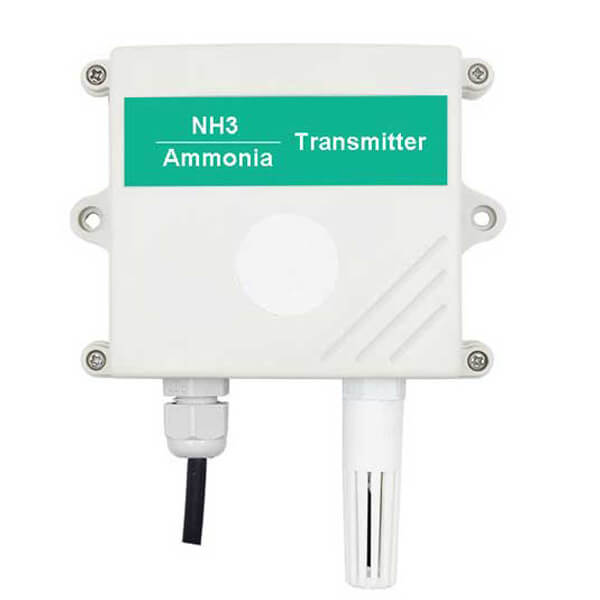
Our wall-mounted ammonia sensor (RS-NH3-*-2-*-T) offers four output options: RS485, 0-5 V, 0-10 V, and 4-20 mA. The built-in components have undergone three-proof treatment to effectively resist moisture, smoke, and mold. This ammonia sensor features rapid and sensitive response, as well as strong resistance to interference. Thanks to our company’s proprietary compensation algorithm and multi-point calibration with standard gases, it offers high accuracy, repeatability, and stability. It can be integrated with temperature and humidity sensors to simultaneously measure ammonia, temperature, and humidity. It is an ideal ammonia sensor for industrial production and the livestock industry. For locations requiring on-site data viewing, an OLED display model is available as an option, supporting a 170° wide viewing angle.
Wall-mounted NH3 sensor features
1. Multiple measurement ranges available: 0~50 ppm, 0~100 ppm, and 0~500 ppm.
2. High measurement accuracy, with a maximum tolerance of ±8%, and repeatability of up to 2%.
3. Optional high-quality OLED display allows for direct on-site viewing of readings, with clear visibility even at night.
4. On-site power supply uses a wide-range 10~30 V DC input, compatible with a variety of on-site DC power sources.
5. Features a wall-mounted, waterproof housing for easy installation; its high protection rating allows for use in harsh on-site environments.
Wall-mounted NH3 sensor parameters
| Power supply | 10-30V DC |
| Power consumption | 0.12W |
| Operating Environment | -20~50℃, 15~90%RH non-condensing |
| Pressure range | 90~110Kpa |
| Stability | ≤2% signal strength/month |
| Response time | 50/100ppm≤90s; 500ppm≤25s |
| Preheating time | 0~50ppm/0~100ppm≥5min; 0~500ppm≥48h |
| Ammonia zero-point drift (-20~40℃) | 0~50ppm/0~100ppm≤±2ppm; 0~500ppm≤±15ppm |
| Repeatability | 0~50ppm/0~100ppm≤2%; 0~500ppm≤5% |
| Measure range | 0-50ppm, 0-100ppm, 0-500ppm |
| Accuracy | 0~50ppm/0~100ppm: ±8%; 0~500ppm: ±5%FS(@100ppm,25℃,50%RH) |
| Resolution | 0~50ppm: 0.1ppm; 0~100ppm/0~500ppm: 1ppm |
| Output signal | RS485/0-5v/0-10v/4-20ma |
RS-NH3-*-FL-*-T
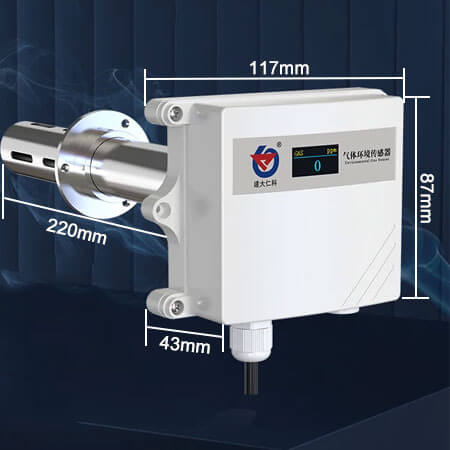
This RS-NH3-*-FL-*-T ammonia transmitter is specifically designed to monitor ammonia gas concentrations in pipelines. It features a waterproof housing and is designed for duct installation, making it easy to install. The internal circuit is designed to resist interference and can withstand various strong electromagnetic disturbances, such as those from on-site variable frequency drives. Equipped with a built-in electrochemical sensor, it features low power consumption and a sensitive response. This ducted ammonia sensor is available in two measurement ranges: 0~50 ppm and 0~100 ppm. It is widely used in factories, underground mines, chemical plants, fertilizer production, pharmaceuticals, materials synthesis, and environmental protection—any setting requiring gas detection.
FAQs - Ammonia Sensor
How to wire an ammonia transmitter with RS485 or Analog output respectively?
RS485 Output:
When connecting the 485 signal lines, be careful not to reverse the A and B wires, and ensure that addresses do not conflict among multiple devices on the bus. Connect the brown wire to the positive power supply (10~30 VDC), the black wire to the negative power supply, the yellow wire to 485-A, and the blue wire to 485-B.
Analog Output:
Connect the brown wire to the positive power supply terminal, the black wire to the negative power supply terminal, the blue wire to the positive ammonia signal terminal, and the yellow (or green) wire to the negative ammonia signal terminal.
Where should the NH3 sensor location?
Ammonia transmitters should be installed in a location free from shock, vibration, and strong electromagnetic interference, and where maintenance is easily accessible. The clearance between the installation site and surrounding process piping or equipment should be greater than 0.5 m. It is recommended to install the transmitter within 2 m above the release source.
What are the types of ammonia sensors?
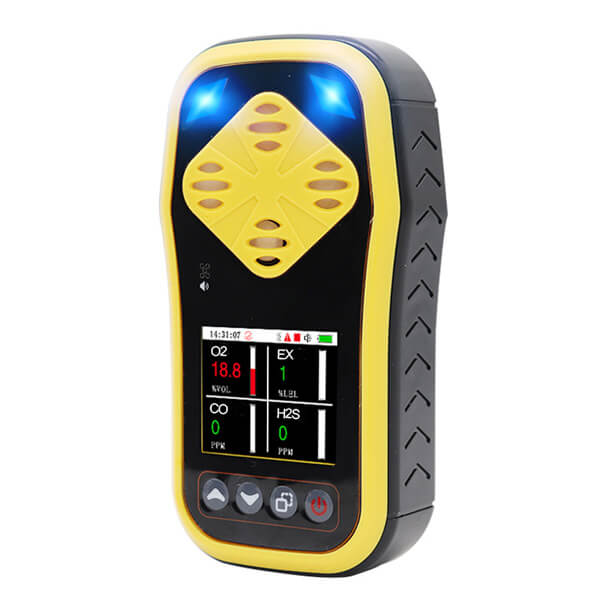
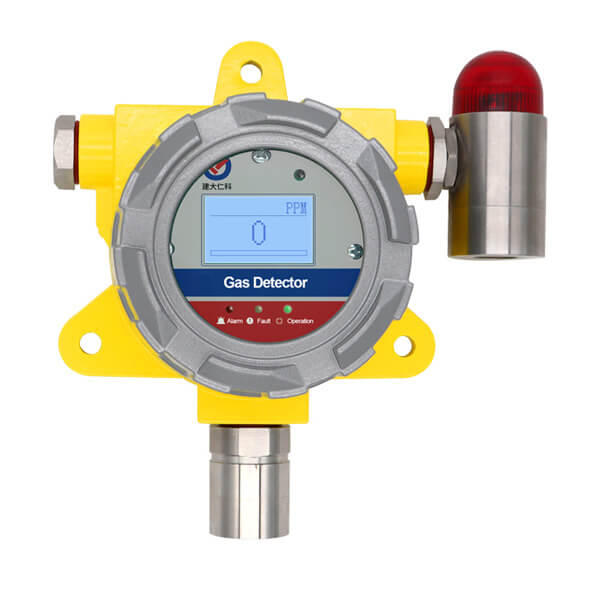
Our company provides three types of NH3 sensors according to the different places where customers use them: wall-mounted ammonia sensors, portable ammonia detectors, and fixed ammonia alarms.
How do I choose an ammonia sensor for a poultry house?
When selecting an ammonia sensor for a poultry farm, consider the following key points:
1. In terms of measurement range and accuracy, ammonia levels in chicken coops are typically monitored within the range of 0 to 100 ppm. Levels exceeding 25 ppm should be cause for concern. Levels above 50 ppm are harmful to both chickens and workers, so the resolution must be at least 1 ppm.
2. Electrochemical sensors are the most suitable choice, as they are well-suited for detecting low- to medium-concentration levels and are less susceptible to interference from dust and other gases.
3. Environmental adaptability is key. Since chicken coops are characterized by high humidity, heavy dust, and corrosive conditions, sensors should ideally have an IP54 or higher protection rating and feature a dust-proof membrane to protect the probe.
4. Consider the interface requirements: determine whether a 4-20 mA analog output is needed to interface with the ventilation control system, or an RS485/Modbus digital output, and whether it includes an alarm relay to trigger the ventilation system.
5. Check whether on-site calibration is possible without disassembling the unit.
The Renkeer wall-mounted ammonia transmitter fully meets the above requirements and is the optimal ammonia transmitter for use in poultry farms.
How many ammonia sensors do I need in a livestock building?
Taking a typical 12m x 150m tunnel-style ventilated chicken house as an example, installing 3 to 4 sensors along its length is a reasonable starting point. While more sensors provide better spatial resolution, they also increase costs and maintenance burdens. Most farms will initially install sensors in high-risk areas, such as exhaust fans, and add more based on the actual distribution of air flow.
Electrochemical vs semiconductor ammonia sensor?
Electrochemical and semiconductor ammonia sensors each have their own advantages and disadvantages. Electrochemical sensors offer good selectivity, can accurately measure specific concentrations, are less susceptible to interference from other gases, and have low power consumption. They are suitable for applications requiring precise ppm readings, such as safety monitoring, livestock farms, and cold chain leak detection. However, they have a relatively short lifespan(typically one to three years) and degrade more rapidly in humid, corrosive environments; they are also susceptible to fluctuations in temperature and humidity. Semiconductor-based sensors are low-cost and have a more durable design, but they lack selectivity and are easily interfered with by other gases such as VOCs and hydrogen, leading to inaccurate readings. They also exhibit significant drift over time, requiring more frequent calibration, and consume more power because they typically require a heating element to operate. If accurate ammonia concentration measurements are required and interference from other gases must be eliminated, electrochemical sensors are the preferred choice. If only a rough leak warning is needed and cost and durability are prioritized, semiconductor sensors can be considered, though maintenance frequency and data reliability will be compromised.
Why is my NH3 sensor reading zero?
If an ammonia sensor reads zero, it may be due to a low ambient ammonia concentration or a sensor malfunction. First, check that the power supply and wiring are functioning properly. Then, determine whether the sensor has just been powered on; electrochemical sensors typically require a warm-up period ranging from a few minutes to several hours. If the sensor has been in use for more than one to three years(especially in corrosive environments such as chicken coops) the electrolyte may have been depleted, causing the sensor to fail completely. Additionally, check whether the gas inlet or diffusion membrane is clogged with dust or condensation, which is common in dusty environments. You should also verify whether the sensor has not been calibrated for an extended period or was calibrated incorrectly, resulting in a zero-point shift.
Where are Renke ammonia sensors used?
This wall-mounted NH3 sensor is made of waterproof and dust-proof materials, with a high degree of protection, and can be used in harsh environments. Our company provides a free cloud platform to monitor the data of one or more devices. Support customization and secondary development. This IoT ammonia sensor is cheap and stable. It is suitable for occasions requiring real-time monitoring and control of ammonia gas, such as agricultural greenhouses, breeding farms, pesticide manufacturing plants, and chemical plants.
Are you a manufacturer? Do you provide customized services?
Yes, we are professional sensor manufacturers and have been engaged in the production and sales of gas detectors for 15 years. We can provide customized services. We have a professional R&D team.
How to calibrate the ammonia sensor?
Our ammonia sensor has been calibrated before leaving the factory, and can be used directly after installation, without the customer’s secondary calibration.
Do you provide customized services?
Yes, we are a manufacturer and can provide you with software or hardware customization.
How to obtain the instruction manual of this sensor?
To protect the patented technical parameters, please contact us for a manual.
Related Blogs
Table of Contents Ammonia is the most dominant alkaline gas in the atmosphere and plays an important role in aerosol nucleation. It is also
Table of Contents Biologists estimate that the human nose can distinguish on the order of ten thousand odor types, while dogs can identify hundreds
Table of Contents Smart buildings are the product of the development of modern science. The smart building system is mainly composed of Internet of
We all know that the chemical properties of ozone are extremely active. Its energy when it is free produces strong oxidation in an instant,
Why is a gas detector necessary? In the industrial production process, the leakage of flammable, toxic and harmful gases often occurs, which will cause
Table of Contents What is IoT? IoT is the “Internet of things“. It is an extended and expanded network based on the Internet. It
Monitoring of toxic and harmful gases such as formaldehyde and carbon monoxide in the home environment After the renovation of many new houses, more