





Table of Contents Carbon monoxide is a colorless and odorless toxic gas at room temperature. People cannot perceive its presence through smell. Therefore, carbon
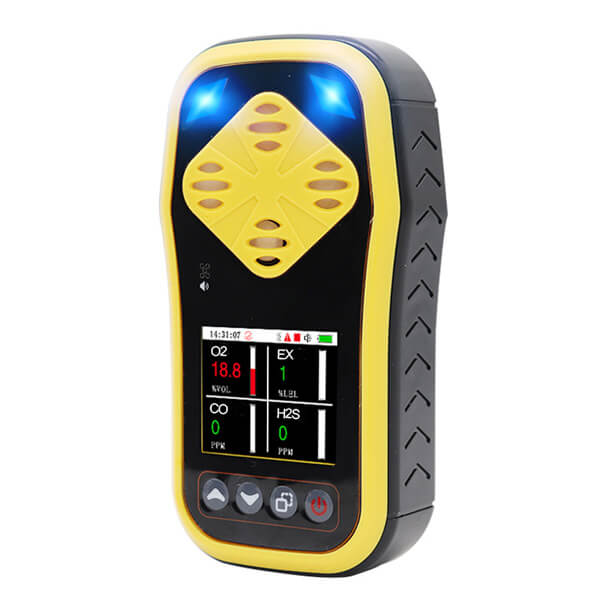
Portable 3 Gas Detector
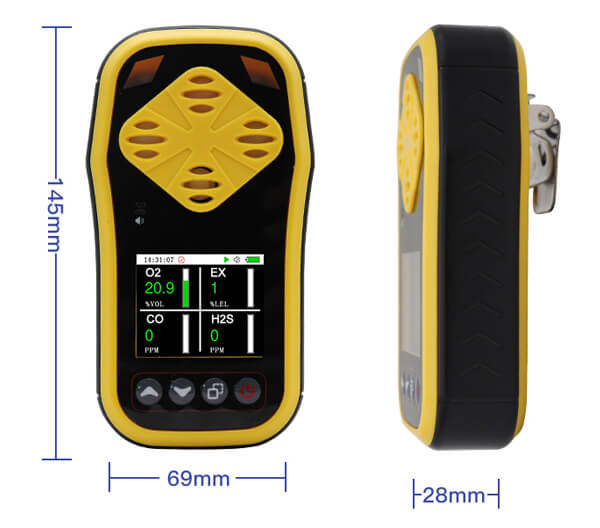
This is our most popular 3 gas detector. It features built in high quality sensors and a large backlit LCD screen. Rugged and durable, this four gas monitor is ideal for utility workers, refinery personnel, firefighters, and maintenance engineers, as well as those working in industries such as sewers, waterworks, underground storage tanks, oil rigs, and silos.
- Model: RS-MG41-3-T
- MOQ: 1 PCS
- Delivery date: within 24 hours
- Price: $92
About - 4 Gas Detector
Many industrial production processes utilize or generate gases that are potentially toxic or explosive. The RS-MG41-3-T is a 3 gas detector developed by our company specifically for environments containing explosive or poisonous gases. It utilizes natural diffusion to detect gas levels and employs electrochemical and combustion gas sensors, offering excellent sensitivity and outstanding repeatability.
This 3 gas detector monitors four specific gases: oxygen, hydrogen sulfide, carbon monoxide. The gas analyzer can store up to 130,000 test data records, and historical data can be reviewed at any time using the included software. This wireless gas detector is simple to operate, easy to maintain, and fully complies with the requirements for industrial safety monitoring equipment.
Features
- This portable gas detector can measure three gases at the same time. It is generally used to detect oxygen, hydrogen sulfide, carbon monoxide.
- This 3 gas detector shell is made of high-strength engineering plastics and composite non-slip rubber, with high strength and good hand feeling. It waterproof, dustproof, and explosion-proof.
- This multi gas detector features full functional self testing and utilizes a three stage alarm system consisting of sound, light, and vibration. Each unit is fully calibrated before leaving the factory.
- Users can set high and low alarm thresholds and use shortcut keys to quickly toggle the audible alarm and storage modes on or off.
- Equipped with a high capacity battery, the device can operate continuously for at least 8 hours in constant on mode.
Parameters
| Gas detection | CO | H2S | O2 |
|---|---|---|---|
| Range | 0-1000 ppm | 0-100ppm | 0-30.0% VOL |
| Calibrated flow rate | 0.2 L/min | 0.2 L/min | 0.3 L/min |
| Reading error | Absolute error: ± 5ppm | Absolute error: ±2ppm | ± 3% FS |
| Relative error: ± 10% | Relative error: ±10% | ||
| Duplicate value | ≤ 2% | ≤ 2% | ≤ 1% |
| Zero drift | ± 3ppm | ± 2ppm | ± 1% |
| Range drift | ± 5% | ± 3ppm | ± 1% |
| Response time | Diffuse≤ 60s | ||
| Insulation resistance | ≥100MΩ | ||
| Working temperature | Temperature -10 ℃ ~50 ℃; Humidity <95% RH non-condensing | ||
| Operating voltage | DC 3.7V (2500mAh lithium battery), Type-C port power supply is 5VDC. | ||
| Alarm functions | Sound, light, vibration | ||
| Charging time | 6-8 hours | ||
| Standby time: | More than 8 hours continuously | ||
Data export
Open the “multi gas detector configuration software” and connect the gas detector to your computer using a USB cable. Click “Read Stored Data” to import the records saved on the device into the software. You can then click on individual data points to view historical records. To save the information to a specific file path, select your preferred format from the toolbar (TXT, XLS, or PDF). After choosing the format (taking PDF as an example), the system will confirm when the export is successful.
FAQs - Portable Gas Detector
What do 3 gas monitors detect?
The 3 gas monitor can simultaneously detect the concentration of oxygen(O2), carbon monoxide(CO), and hydrogen sulfide(H2S). It is the most widely used personal gas monitor. It can be found in industrial, mineral, medical, or confined space workers around the world.
How to calibrate this 3 gas detector?
- Precautions:
1. Calibration is strictly prohibited for non-professionals.
2. Calibration must be performed in clean air or a pure nitrogen environment.
3. If you need to perform calibration yourself, it is recommended to contact the manufacturer’s technical personnel for guidance. - Calibration Steps:
- 1. Zero-point calibration: Operate in a clean air or pure nitrogen environment.
After entering the corresponding interface, move the cursor to the confirmation button.
After confirmation, return to the main page; the gas value will be displayed as 0 (oxygen will display 20.9%). - 2. Mid-point calibration (low concentration calibration):
Install the calibration gas hood and introduce the corresponding standard gas.
Wait for the value to stabilize before confirming. - 3. High-point calibration (high concentration calibration):
Install the calibration gas hood and introduce the corresponding high-concentration standard gas.
Wait for the value to stabilize before confirming. - Calibration flow rate requirements:
Carbon monoxide: 0.2 L/min
Hydrogen sulfide: 0.2 L/min
Oxygen: 0.3 L/min
What are the applications of a 3 gas detector?
- Industrial Storage Tanks: Before entering a storage tank, workers must place a gas leak detector inside to screen for any residual toxic or flammable gases. Personnel are only permitted to enter the tank once readings fall within the confirmed safe range.
- Plumbers and Electricians: Enclosed spaces within residential and commercial buildings often suffer from poor ventilation and stagnant air. In these scenarios, oxygen deficiency is a primary concern, making a three gas detector the ideal choice for technicians.
- Sewage and Sewers: When cleaning these areas, workers frequently operate in confined spaces where biological decomposition can release combustible substances. In addition to the hazards posed by methane and hydrogen sulfide, sewage and sewer environments are also prone to oxygen depletion.
- Mining: Similar to wastewater environments, mining operations involve risks of exposure to methane and hydrogen sulfide. Carbon monoxide, a toxic gas, may also be present, and oxygen levels can significantly decrease.
What is gas detector calibration?
Gas detector calibration is a requirement for all gas sensors. This is the act of exposing the sensor to a target gas of a specific concentration and then adjusting the detector to correctly read the gas concentration. When the target gas is not in the air, many sensors also need to use zero gas to adjust the voltage being output. This process needs to be operated by professional technicians.
What is the working principle of this 3 gas detector?
The gas enters the inside of the device through natural diffusion, is detected by the built-in gas sensor module, and converts the value into an electrical signal for output.
What does LEL mean in gas?
LEL is “Lower Explosive Limit”, which refers to the lowest concentration of combustible gas that explodes in the air when exposed to an open flame.
How many types of gas detectors are there?
Gas detectors come packaged into two main form factors: portable devices and fixed gas detectors.
Where to download this 3 gas detector manual?
To protect the patented technical parameters, please contact us for a manual.
Related Blogs
Table of Contents Ammonia is the most dominant alkaline gas in the atmosphere and plays an important role in aerosol nucleation. It is also
Table of Contents Biologists estimate that the human nose can distinguish on the order of ten thousand odor types, while dogs can identify hundreds
Monitoring hazardous gases in the surrounding environment is fundamental to ensuring workplace safety. Many gases, such as carbon monoxide, hydrogen sulfide, etc., are difficult
We all know that the chemical properties of ozone are extremely active. Its energy when it is free produces strong oxidation in an instant,
Why is a gas detector necessary? In the industrial production process, the leakage of flammable, toxic and harmful gases often occurs, which will cause
What is an air quality monitor? An instrument used to detect air quality can be called an air quality monitor. However, due to the
Monitoring of toxic and harmful gases such as formaldehyde and carbon monoxide in the home environment After the renovation of many new houses, more