Table of Contents Did you know that most people spend about 90% of their time indoors? While we often worry about outdoor air pollution,
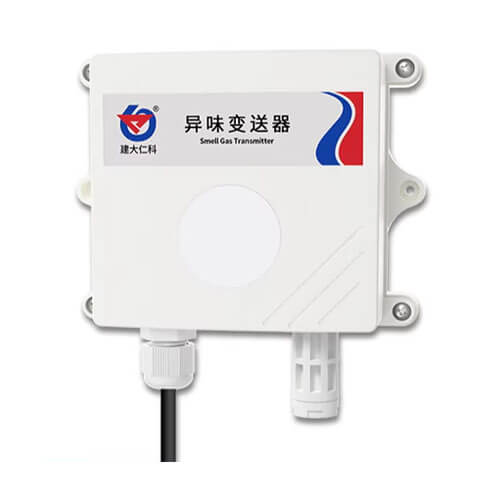
Odor Sensor
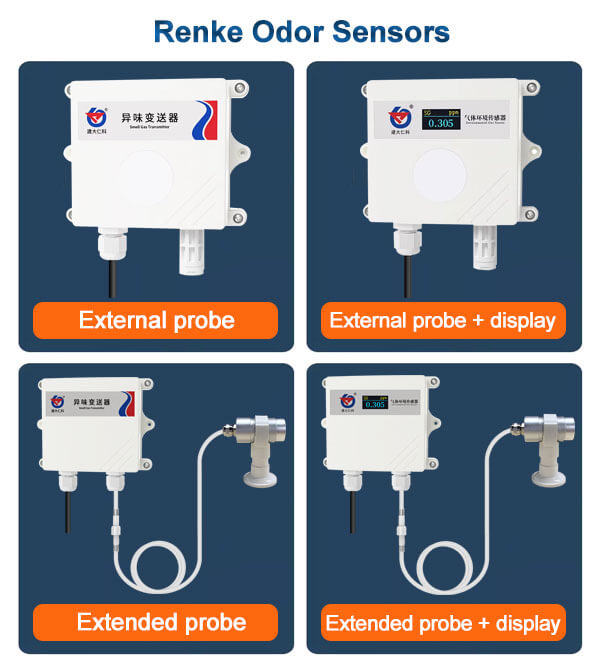
Our odor sensor adopts a wall mounted installation method and is mainly used to measure odor concentration in landfills and restrooms. Odor is not a single gas component but a mixture of multiple gases. Our odor sensor is available in electrochemical type and semiconductor type, and can be used to detect smells from food decay, animal waste, and other odor sources in the environment.
- Model: RS-SG-*-*-*-2-EX
- MOQ: 1 PCS
- Delivery date: within 24 hours
- Price: $90.2~$154
About - Odor Sensor
This device uses imported electrochemical and semiconductor odor sensors, offering high sensitivity and strong resistance to interference. With our proprietary compensation algorithms and multi-point standard gas calibration, it delivers long service life, high accuracy, excellent repeatability, and outstanding stability. It is well suited for applications that require odor concentration monitoring, such as garbage dumps, pig farms, and public restrooms.
Features
- Our odor sensor features a high density housing with built in waterproof sealing strips. The protection rating reaches IP65, allowing stable operation even in harsh environments with high temperature, dust, and humidity.
- It uses a waterproof and breathable membrane that effectively blocks moisture while allowing gas molecules to pass through, ensuring good stability. The sensor provides high measurement accuracy, with repeatability within 2%.
- Our devices use the standard MODBUS RTU communication protocol and support KingView, ForceControl, MCGS, Kunlun Tongtai configuration software, HMI screens, PLCs, and user developed platforms.
- Our odor sensor can be customized with relay outputs, supporting up to two channels for linkage control. When gas concentration exceeds the set limit, it can trigger fans, exhaust systems, solenoid valves, and other equipment to reduce gas concentration.
Types
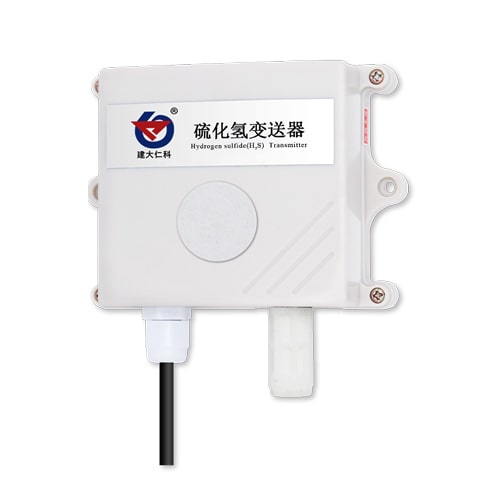
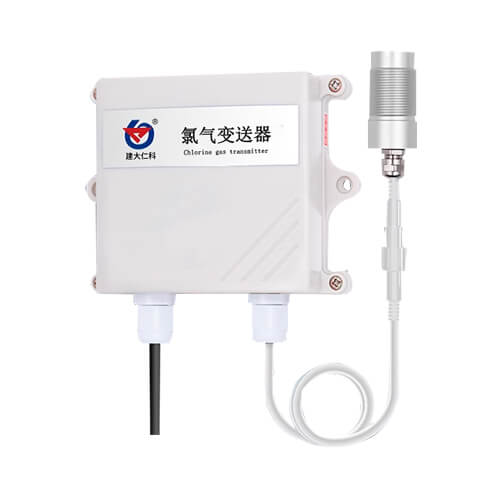
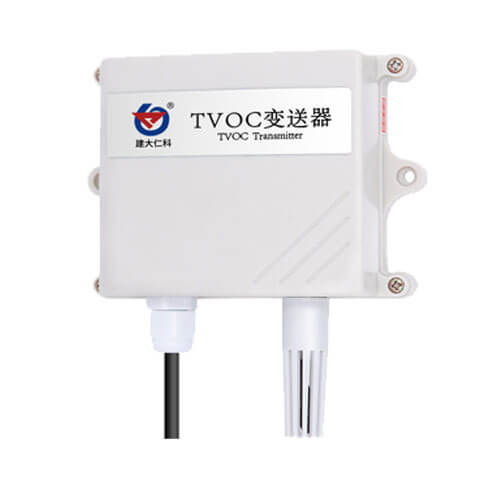
| Model | RS-SG-*-2-5P-2-EX | RS-SG-*-2-5PH-2-EX | RS-SG-*-2-3P-2-EX |
|---|---|---|---|
| Appearance Images | ![]() | ![]() | ![]() |
| Working principle | Electrochemical type | High-precision electrochemical type | Semiconductor type |
| Range | 0~5ppm | 0~5ppm | 0.3~3ppm |
| Accuracy | ±10%FS(@H2S, 5ppm) | ±5%FS(@H2S, 500ppb) | ±13%FS(@C2H60, 5ppm,20℃, 65%RH) |
| Detection | It reacts significantly with hydrogen sulfide gas. | It reacts significantly with hydrogen sulfide, styrene, methanethiol, dimethyl sulfide, and dimethyl disulfide. It reacts to ammonia to some extent. | It reacts significantly with trimethylamine, hydrogen sulfide, ammonia, methanethiol, ethanol, etc. |
| Pros | High accuracy, high stability, short warm-up time, and relatively less affected by ambient temperature and humidity. | High stability, relatively less affected by ambient temperature and humidity, high accuracy, and short warm-up time. Capable of measuring a wider range of gases than electrochemical types. | The advantages of semiconductor types are long lifespan and less performance degradation. |
| Cons | Its lifespan is relatively short. | Its lifespan is relatively short. | It has low accuracy, is greatly affected by ambient temperature and humidity, has average stability, and the measured values are prone to fluctuation. |
Parameters
| Power supply | 10~30V DC |
|---|---|
| Average power consumption | 0.18W |
| Output signal | RS485/4-20mA/0-5V/0-10V |
| Measuring range | 0~5ppm (electrochemical type), 0.3~3ppm (semiconductor type) |
| Accuracy | High-precision type: ±5%FS (@H2S, 500ppb), Electrochemical type: ±10%FS (@H2S, 5ppm), Semiconductor type: ±13%FS (@C2H6O, 5ppm, 20℃, 65%RH) |
| Resolution | 0.001ppm |
| Zero drift | ±0.5ppm |
| Operating environment | -20~50℃, 15~90%RH (non-condensing) |
| Stability | Electrochemical type: ≤10% signal value/year |
| Response time | ≤80s |
| Preheating time | ≥5min |
| Repeatability | ≤2% |
| Pressure range | 90~110kPa |
FAQs - Odor Sensor
What is an odor sensor?
An odor sensor, also known as a smell sensor, uses specific sensitive materials to capture odor molecules in the environment and converts the physicochemical reactions on the sensor surface into precise electrical signals, turning invisible odors into quantifiable and analyzable data.
What are odors composed of?
In general, odors in public restrooms mainly include trimethylamine, hydrogen sulfide, methyl mercaptan, dimethyl sulfide, and ammonia.
Odors at waste transfer stations typically include mercaptans, ammonia, hydrogen sulfide, methyl sulfide, trimethylamine, formaldehyde, and styrene.
Why do different odor sensors give different readings?
The odor concentration measured by an odor sensor actually represents the concentration of several major gases within the odor mixture. Different sensors respond to different odor components, so their measurement results will vary. Even in the same environment, readings from different sensors may not be consistent. Therefore, the performance of devices from different manufacturers cannot be compared simply by their concentration values, and the concentration values from our two sensors based on different principles cannot be directly compared either.
All odor sensors only reflect the concentration of the specific target gases they characterize, so they cannot quantitatively represent the overall odor concentration of the environment, but only indicate the relative odor intensity. A higher measured value means a stronger odor.
Where should an odor sensor be installed?
The odor sensor should be installed in a location free from impact, vibration, and strong electromagnetic interference, and where maintenance is convenient. The clearance between the installation point and surrounding process pipelines or equipment should be no less than 0.5 m.
What should be noted when installing an odor sensor?
To ensure proper use of the product and prevent malfunctions, please do not install the odor sensor in the following locations:
1. Areas directly exposed to steam or oil fumes.
2. Places with strong airflow, such as air inlets/outlets, ventilation fans, or near doors.
3. Environments with heavy moisture or water droplets (relative humidity ≥ 95% RH or where condensation may occur).
4. Locations where the temperature exceeds the device’s operating range.
5. Areas with strong electromagnetic interference.
What's included in the package list?
Odor sensor 1 unit
Self-tapping screws (2 pieces), expansion plugs (2 pieces)
Product certificate, warranty card, wiring instructions, etc.
Related Blogs
Table of Contents What is TVOC? Is it a gas? TVOC refers to Total Volatile Organic Compounds, which is one of the air quality
Table of Contents What is air quality sensor? An air quality sensor is a device used to detect the concentration of pollutants in the
Table of Contents Carbon monoxide is a colorless and odorless toxic gas at room temperature. People cannot perceive its presence through smell. Therefore, carbon
Table of Contents Biologists estimate that the human nose can distinguish on the order of ten thousand odor types, while dogs can identify hundreds
Air is a precious natural resource. But air pollution is increasing due to industrial production and human activities. At present, air pollutants include carbon
Breeding environment monitoring has a great influence on the growth of poultry. Changes in factors such as temperature, humidity, carbon dioxide, and ammonia in