

Table of Contents In our daily lives and at work, we typically use terms like “bright” or “dim” to intuitively assess the lighting conditions around
Illumination Sensor
What is a sunlight sensor? The sunlight sensor is a high-precision light-sensitive transmitter with an output value measurement unit of Lux. An illumination sensor is used for the outdoor measurement of light intensity. The illuminance sensor adopts a wall-mounted waterproof shell. There are two ranges of 0-65535 lux and 0-20 million lux. We provide sunlight sensor and temperature, humidity, sunlight 3 in 1 sensor.
- Model: RS-GZ-N01-XD-*-T
- MOQ: 1 PCS
- Delivery date: within 24 hours
- Price: $19~25
About - Illumination Sensor
To meet the needs of different applications, we offer three types of light sensors: wall-mounted, ceiling-mounted, and aluminum-housing models. Renke solar light sensor is small in size and low in price. It is a product that is very worth buying.

RS-GZ*-2-T
The RS-GZ*-2-T is a wall-mounted illuminance sensor featuring a waterproof enclosure with an IP65 protection rating. Its light-sensing dome is made of high-polymer waterproof material, providing excellent light sensitivity, high responsiveness, and strong anti-interference performance. It supports multiple output options, including 0-5V / 0-10V / 4-20mA, LoRa, and RS485. The RS485 version can be integrated with temperature and humidity measurement. This wall-mounted illuminance sensor is ideal for use in gardens, greenhouses, offices, campuses, and other similar environments.

RS-GZ-N01-XD-*-T
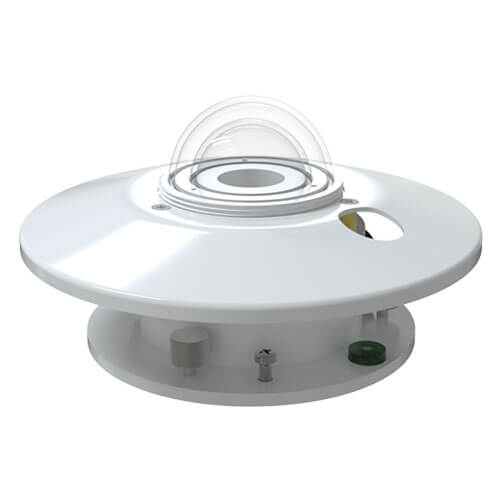
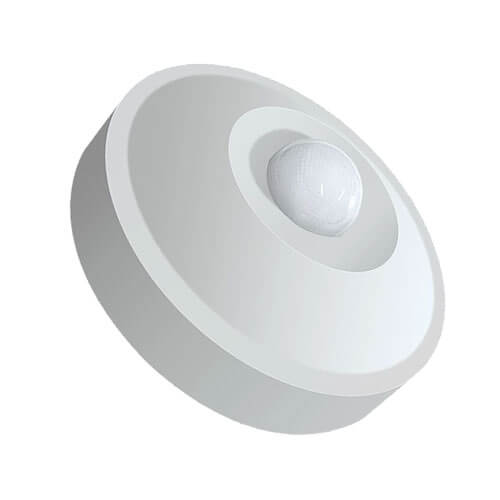
RS-GZ-N01-XD-*-T ceiling-mounted light sensor is a high-precision light transducer with output measured in lux. It features a sleek and compact ceiling-mount design that is both aesthetically pleasing and easy to install. The device utilizes RS485 communication with a standard ModBus-RTU protocol, allowing configurable communication addresses and baud rates. It supports a maximum communication distance of up to 2000 meters. The RS-GZ-N01-XD-*-T operates on a wide voltage range of 10–30V and is primarily used in laboratories, archives, and electronic equipment production lines.
| Wall-mounted illumination sensor | Ceiling illumination sensor | ||
|---|---|---|---|
| Power supply | 10-30VDC | Power supply | 10-30VDC |
| Max. power consumption | 1.2W (Analog), 0.4W (RS485) | Max. power consumption | 0.4W |
| Range | 0~65535Lux / 0~200000Lux | Range | 0~65535Lux / 0~200000Lux |
| Accuracy | ±7% (25℃) | Accuracy | ±7% (25℃) |
| Working environment | -40℃~+60℃, 0%RH~95%RH (non-condensing) | Working environment | -20℃~+60℃, 0%RH~80%RH (non-condensing) |
| Long-term stability | ≤5%/y | Long-term stability | ≤5%/y |
| Response time | Analog: 0.1s, RS485: ≤2s | Response time | ≤2s |
| Signal output | RS485/4-20mA/0-5V/0-10V | Signal output | RS485 |

RS-GZ-*-AL-*-T
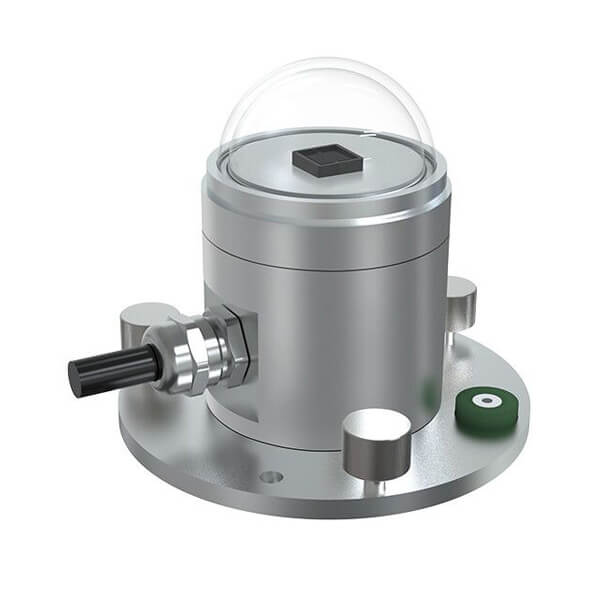
The RS-GZ-*-AL-*-T is a high-precision light sensor with a durable aluminum housing. It features a robust structure with excellent UV resistance and corrosion protection. The sensor is well-sealed for waterproof and dustproof performance, with a protection rating of up to IP65, making it suitable for outdoor and harsh environments. This illuminance sensor is ideal for use in agriculture, weather stations, construction sites, forestry, and other outdoor applications.
Installation method:
1. Use screws through the mounting holes on the sensor to securely fix the sensor at the desired installation location.
2. Ensure the device is parallel to the ground. You can adjust the hand-tightened screws and check the level bubble to confirm alignment.
3. After installation is complete, remove the protective cover.
| Aluminum shell illumination sensor datasheets | ||
|---|---|---|
| Output signal | RS485 | Analog(4-20mA/0-5V/0-10V) |
| Power supply | 7-30V DC | 10-30VDC (0~10V only be powered by DC 24V) |
| Max. power consumption | 0.4W | 0.7W |
| Range | 0-65535Lux / 0-200000Lux | 0-65535Lux / 0-200000Lux |
| Accuracy | ±7% (25℃) | ±7% (25℃) |
| Working environment | -40℃~+60℃, 0%RH~80%RH | -40℃~+60℃, 0%RH~80%RH |
| Long-term stability | ≤5%/y | ≤5%/y |
| Response time | <1s | <1s |
FAQs - Illumination Sensor
Why do we need to measure light?
Sunlight is of great significance to agriculture, especially in water-scarce areas. Different crops require different amounts of sunlight, so it is important to know which land is most exposed. As the water supply in many areas is becoming tighter and tighter, farmers have financial and social obligations to limit water consumption while maintaining the hydration of crops. One strategy adopted is to water the crops in the afternoon or evening to prevent the soil and plants from being scorched by the sun before they absorb the water. You can use the light sensor to automatically manage the sprinkler system and only water when the sun is not the brightest. When combined with other weather monitoring equipment to collect data about temperature, pressure, and humidity, the system can not only water in dim sunlight but also intelligently detect upcoming rain or clouds to optimize its watering schedule.
How to measure light?
How to measure light?
The light can be directly measured with an illuminance sensor. The unit of illuminance is lux. For an object that is uniformly illuminated by light, when the luminous flux obtained on an area of 1 square meter is 1 lumen, its illuminance is 1 lux.
How to install the light sensor?
The illumination sensor should be installed in an open surrounding area without any obstacles above the sensing surface. Then put the radiometer cable plug directly to the north, adjust the horizontal position, and fix it firmly, and then connect the total radiometer output cable with the recorder to observe. It is best to fix the cable firmly on the mounting frame to reduce breakage or intermittent interruption on windy days.
How does the sunlight sensor work?
Illumination sensor working principle: the illumination sensor is based on the principle of the hot spot effect. This sensor mainly uses detection components that have a high response to low light. These sensing elements are actually like the photosensitive matrix of the camera. The wire-wound electroplating multi-junction thermopile has a black coating with high absorptivity on its surface. The hot junction is on the sensing surface, and the cold junction is located in the body. The hot and cold junctions generate a thermoelectric potential. In the linear range, the output signal is proportional to the solar irradiance. The visible light through the filter irradiates the imported photodiode, and the photodiode converts into an electrical signal according to the visible illuminance, and then the electrical signal enters the sensor’s processor system to output the binary signal that needs to be obtained.
The light sensor can convert the light intensity value into a voltage value. The light intensity sensor is composed of a transmitter, a receiver, and a detection circuit. The transmitter is aimed at the target to emit a beam, and the beam continuously emits or changes the pulse width; the triangular reflector has a firm structure The transmitter can accurately return the light beam from the reflector; the receiver is composed of photodiodes, phototransistors, and photocells; in front of the receiver, there are optical elements such as lenses and apertures, and behind it is the detection circuit. It can filter out valid signals and send them.
Do you have this sensor video?
Here is illuminance sensor video
Where to use light sensor?
Light sensor is widely used in agriculture, forestry, greenhouse cultivation, breeding, and construction of light measurement and research. The application of the light sensor in agricultural planting and livestock and poultry breeding can help us accurately grasp the sunshine time law, light saturation point, and light compensation point of plants and livestock and poultry production and growth, and then adjust their illumination through artificial control technology. Preference, to control and improve the scientific growth of livestock, poultry, and crops to achieve the goal of high yield.
What are the types of light sensors?
Common types include:
Photoresistor (LDR)
Photodiode
Phototransistor
Illuminance sensor module (with digital output)
Spectral response sensor (measures ultraviolet light, infrared light, etc.)
Why does the light sensor always output 0?
Possible reasons include:
The probe is blocked or contaminated
The light intensity is too low
The power or signal line connection is abnormal
The communication parameters (address, baud rate) are wrong
Does the light sensor need maintenance?
Yes. The sensor surface should be cleaned regularly to prevent dust, spider webs, etc. from affecting the measurement. Outdoor sensors are recommended to be maintained once every six months to one year to maintain their measurement accuracy and long-term stability.
What are the applications of light sensors?
- Agricultural planting (smart greenhouse)
- Smart lighting system
- Weather station monitoring
- Educational experiments
- Industrial automation
- Urban environment monitoring
Related Blogs
Table of Contents The Internet of Things (IoT) is one of the hottest technology words in the past few years, which can collect, share, analyze
Table of Contents What is a light sensor? A light sensor is a device that is sensitive to light and can detect light and convert
Table of Contents With the development of Internet of Things technology, sensors and wireless transmission technology are widely used in smart agriculture. Smart agriculture is
The weather sensors are the sensing end of the weather station and collect various weather-related data. The weather station can obtain the main parameters and
A greenhouse is a closed environment that provides optimal conditions for plant growth and promotes plant growth by controlling indoor and outdoor environments. A complete
The weather station can provide users with comprehensive weather information over the years. Regular maintenance of weather stations is an important operation to ensure measurement
A complete set of a weather station is composed of two parts: hardware and software. The hardware part includes various weather station sensors, connecting lines,
Table of Contents Do you know where to mount weather station? The weather station should be installed as far as possible on the open ground
Table of Contents A sensor is a device that can sense the measured information and transform it into an electrical signal or other required forms