Table of Contents What is the wind speed and direction? Wind is a physical quantity that represents the movement of air currents. It has both
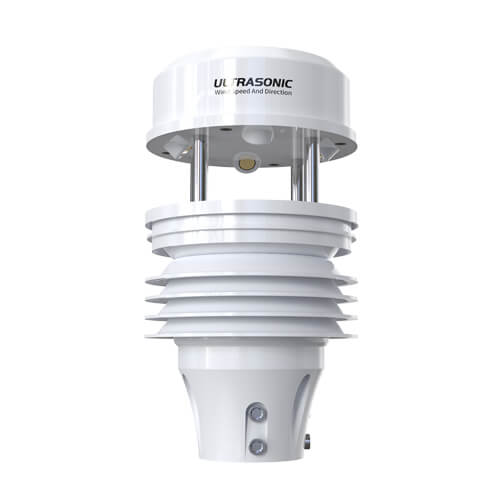
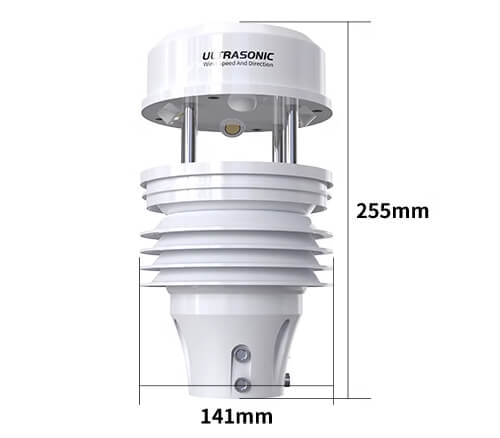
Ultrasonic Wind Sensor
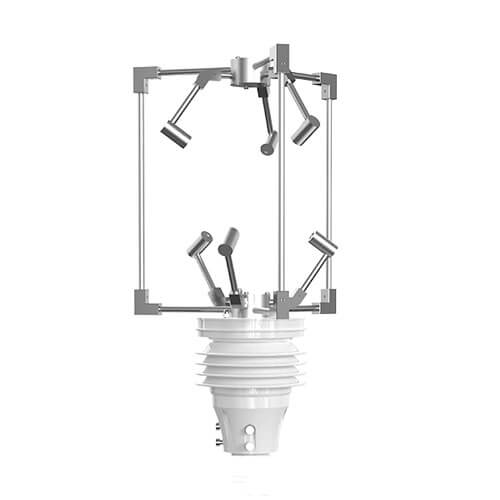
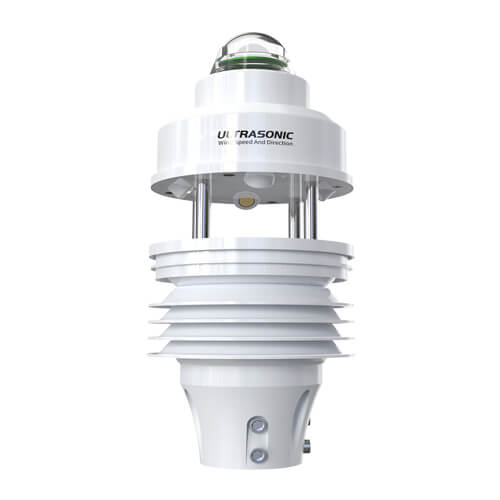
The ultrasonic wind speed direction sensor is a wind speed and direction measuring instrument developed based on the principle of ultrasonic waves. It uses the transmitted sound wave pulse to measure the time or frequency (Doppler transform) difference at the receiving end to calculate Wind speed and direction. The sensor can simultaneously measure the instantaneous values of wind speed and wind direction.
- Model: RS-CFSFX-*-2H-T
- MOQ: 1 PCS
- Delivery date: within 24 hours
- Price: $132
About - Ultrasonic Wind Speed Direction Sensor
The ultrasonic wind sensor is a more advanced instrument for measuring wind speed and direction. Because it overcomes the inherent shortcomings of mechanical anemometers, ultrasonic win sensor can work normally all-weather and for a long time, and is more and more widely used. It will be a powerful substitute for mechanical anemometers. We provide a free cloud platform for you to view data, with a one-year warranty and support customization.
Features
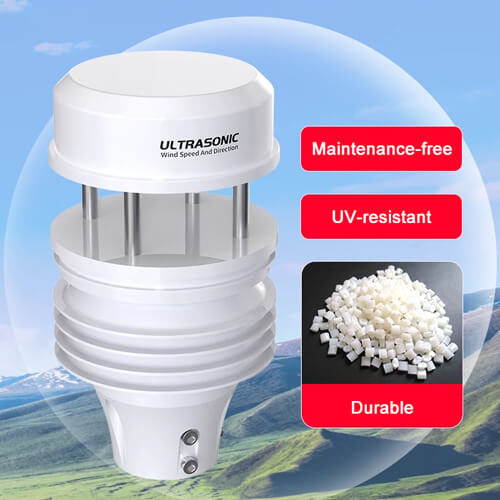
The ultrasonic wind speed direction sensor has the characteristics of lightweight, no moving parts, sturdiness, and durability, and does not require maintenance and on-site calibration. It can output wind speed and direction at the same time. Customers can choose wind speed units, output frequency, and output format according to their needs. This ultrasonic wind sensor can be used in conjunction with a computer, data collector, or other collection equipment with RS485 or analog output. If necessary, multiple units can be used to form a network.
Our ultrasonic wind speed and direction sensor features a built-in electronic compass, eliminating the need for directional adjustment during installation – simply ensure it is mounted level. The housing is made of high quality waterproof ABS material, offering lightweight construction and excellent stability, with minimal maintenance and calibration required. This sensor is widely applicable for meteorological monitoring, maritime and aviation operations, port logistics, laboratories, agriculture, and road traffic management.
Parameters
| Power supply | 10-30VDC (24V for 0-10V output) |
|---|---|
| Max. power consumption | 0.5W (Analog), 0.6W (RS485) |
| Measure range | 0-60m/s(customizable), 0-359° |
| Accuracy | ±(0.2m/s±0.02*v) (60% RH, 25°C), ±3° (60% RH, 25°C) |
| Resolution | 0.01m/s, 1° |
| Temperature and humidity resistance | -40°C~70°C, 0~95% non-condensing |
| Wind resistance | 75m/s |
| Response time | 1s |
| IP rating | IP65 |
| Output signal | RS485/0-5V/0-10V/4~20mA |
Advantages
Renke is a leading manufacturer of environmental monitoring devices. We have a large production line and professional technicians. We can provide you with the following services:
- Support secondary development
- Logo customization
- Free cloud platform
Compared with the traditional mechanical wind speed and direction sensor, the ultrasonic wind sensor has the following four advantages:
No inertial measurement
No inertial measurement, no start-up wind speed limit, zero wind speed work, 360° Omni-directional no angle limit, can obtain wind speed and wind direction values at the same time.
Integrated structure design
Adopt an integrated structure design, no moving parts as a whole, and the shell is made of engineering plastic material, which has low wear and long service life.
Random error identification
Using random error identification technology, can ensure low dispersion error of measurement even under strong wind, making the output more stable.
Easy maintenance
The ultrasonic wind sensor is equipped with four downward-pointing ultrasonic probes on top. It transmits and receives ultrasonic waves in a two-dimensional plane. It is unaffected by rain, snow, and dust.
How Does an Ultrasonic Wind Sensor Work?
Working principle
The working principle of the ultrasonic wind sensor is to use the ultrasonic time difference method to measure wind speed and direction. Because the speed of sound in the air will be superimposed with the speed of airflow in the wind. If the propagation direction of the ultrasonic wave is the same as the wind direction, then its speed will increase. Conversely, if the propagation direction of the ultrasonic wave is opposite to the wind direction, then its speed will slow down. Therefore, under fixed detection conditions, the speed of ultrasonic propagation in the air can correspond to the wind speed function. The precise wind speed and direction can be obtained by calculation. As the sound wave propagates in the air, its speed is greatly affected by temperature; the wind speed sensor detects two opposite directions on the two channels, so the effect of temperature on the sound wave speed can be ignored.
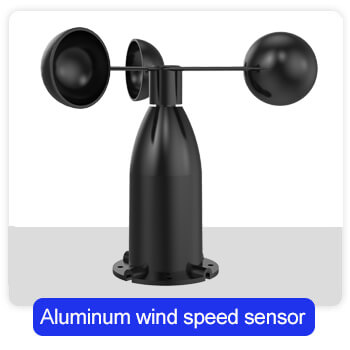
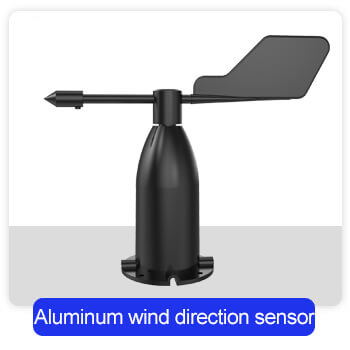
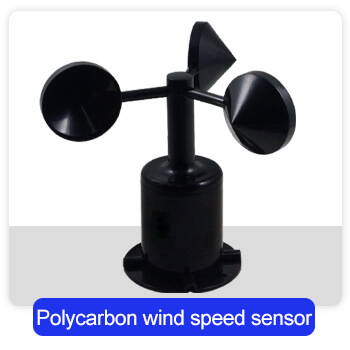
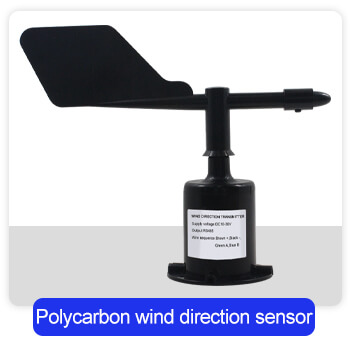
Types of wind sensor
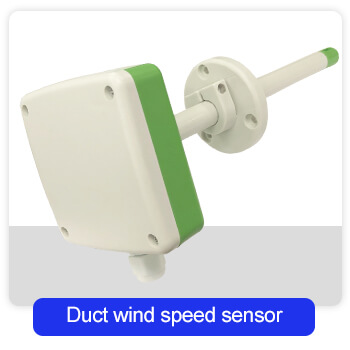
FAQs - Ultrasonic Wind Speed Direction Sensor
How to maintain the ultrasonic wind speed direction sensor?
When operating in harsh environments, it is important to keep the sensor’s transducer surface clean. Ultrasonic wind sensors generally have no mechanical moving parts, but accumulated dust, water, bird droppings, or ice on the transducer can affect sound wave propagation and measurement accuracy.
Clean the sensor with a soft cloth or lint-free cotton. Use clean water or a small amount of neutral detergent if necessary, and avoid strong acids, strong alkalis, or corrosive solvents. Since the transducer is a precision ultrasonic device, do not scrape or strike it with hard objects.
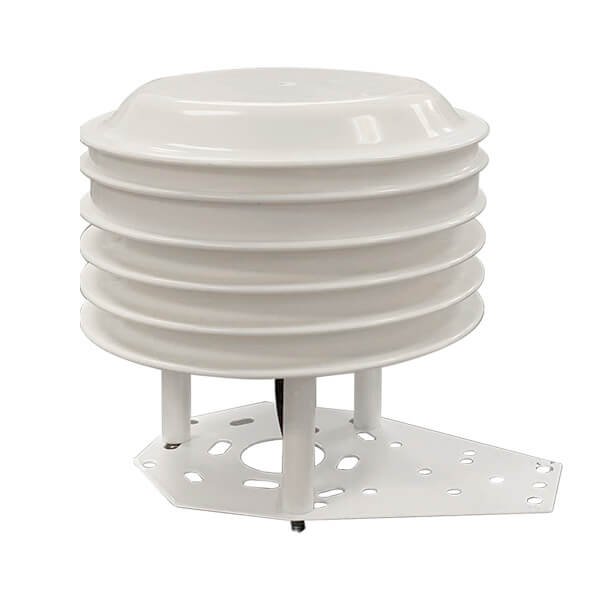
Regularly inspect the sensor housing, mounting brackets, and screws for looseness or corrosion to ensure stability. Also check signal and power cables for aging, damage, or looseness to prevent short circuits or signal loss. For models equipped with rain shields or protective covers, periodically remove accumulated water or snow to maintain optimal performance.
How to install the ultrasonic wind speed direction sensor?
When selecting an installation location, avoid strong interference sources, such as high-power motors, variable frequency drives, or large metal obstacles, which can affect ultrasonic wave propagation. Wind speed and direction measurements require an open area, ideally at least 10 meters above the ground. Avoid buildings, trees, or other obstructions that could create turbulence and impact data accuracy.
If your device does not include an electronic compass, ensure that the “N” mark on the sensor points to true north when installed level. If your device includes an electronic compass, simply install it horizontally, no directional adjustment is necessary.
How to wire an RS485 output ultrasonic wind sensor?
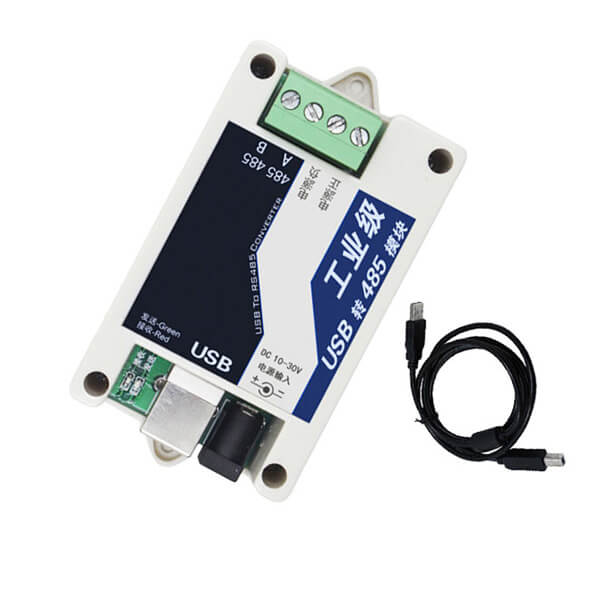
The sensor supports a wide voltage DC power input of 12~30V. When connecting the RS485 signal lines, ensure that the A and B lines are not reversed, and that device addresses do not conflict when multiple units are connected on the same bus.
Wiring Instructions:
- Brown wire: Connect to power positive (12~30V DC)
- Black wire: Connect to power ground (GND)
- Yellow (or green) wire: Connect to RS485-A
- Blue wire: Connect to RS485-B
How to wire an analog output ultrasonic wind sensor?
The sensor uses a default 12~30V DC power input. For devices with 0~10V output, supply 24V DC.
Wire Color Assignments:
- Brown wire: Power positive (V+)
- Black wire: Power ground (GND)
- Yellow wire: Wind speed signal positive
- White wire: Wind speed signal negative
- Blue wire: Wind direction signal positive
- Green wire: Wind direction signal negative
Why is wind direction data unstable or abnormal?
Possible causes:
1. Obstructions around the sensor (such as buildings or trees) causing local turbulence.
2. The sensor is installed unevenly or at an angle.
3. The ultrasonic transducer is dirty or damaged.
Solutions:
1. Install the sensor in an open area.
2. Use a level to check the installation angle.
3. Clean or replace the transducer.
Why does the ultrasonic wind sensor measure zero wind speed?
Possible causes:
1. The wind speed is too low, below the sensor’s minimum measurement threshold (typically around 0.01–0.1 m/s).
2. The transducer surface is covered with dust, water, or ice/snow.
3. Data or power lines are faulty, preventing the sensor from outputting a signal.
Solutions:
1. Clean the transducer surface.
2. Check the power supply and wiring.
3. Compare with a reference instrument to confirm whether the low reading reflects actual low wind speed.
Why does the ultrasonic wind sensor not output any data?
- Power issues or insufficient supply: Measure the input voltage to ensure it is stable.
- RS485 or analog signal wiring errors: Check cables, connectors, and communication settings (baud rate, address, etc.).
- Sensor damage or communication failure: If the device is damaged, contact professional technical support. Do not attempt to disassemble it yourself.
Related Blogs
The weather sensors are the sensing end of the weather station and collect various weather-related data. The weather station can obtain the main parameters and
Table of Contents What is an anemometer? An anemometer is a meteorological instrument used to measure air velocity and, in many configurations, wind direction. In
The weather station can provide users with comprehensive weather information over the years. Regular maintenance of weather stations is an important operation to ensure measurement
Table of Contents How wind sensor work? Wind speed sensor working principle Wind speed sensor is a physical device used to measure wind speed. The
Table of Contents Where to mount wind sensor? Installing wind sensor on the weather station The wind sensor is a crucial component of a weather
A complete set of a weather station is composed of two parts: hardware and software. The hardware part includes various weather station sensors, connecting lines,
Table of Contents Do you know where to mount weather station? The weather station should be installed as far as possible on the open ground
Difference between wind speed sensor and air volume sensor The difference between the wind speed sensor and the air volume sensor starts with the wind
Popular Weather Sensors