

Table of Contents Over the past few years, large language models have demonstrated remarkable reasoning and generative capabilities. They can write code, analyze data,
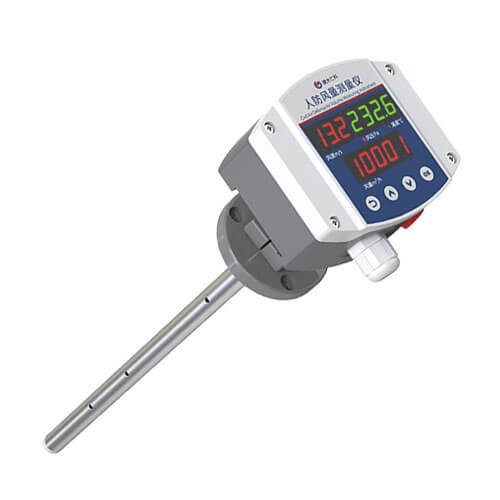
Air Flow Transmitter
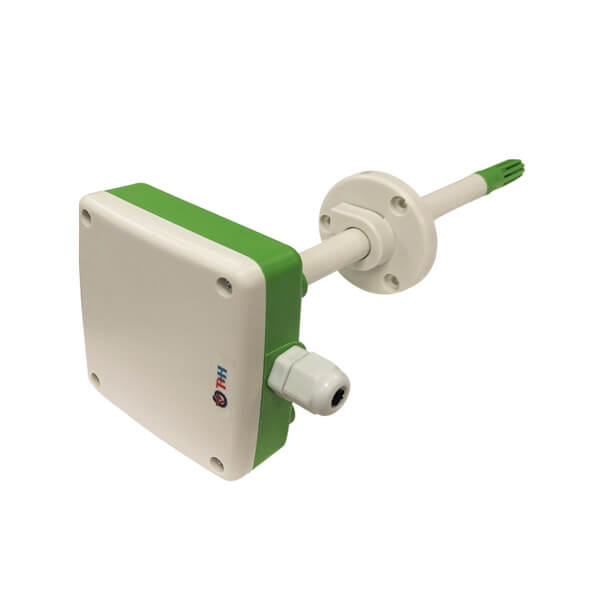
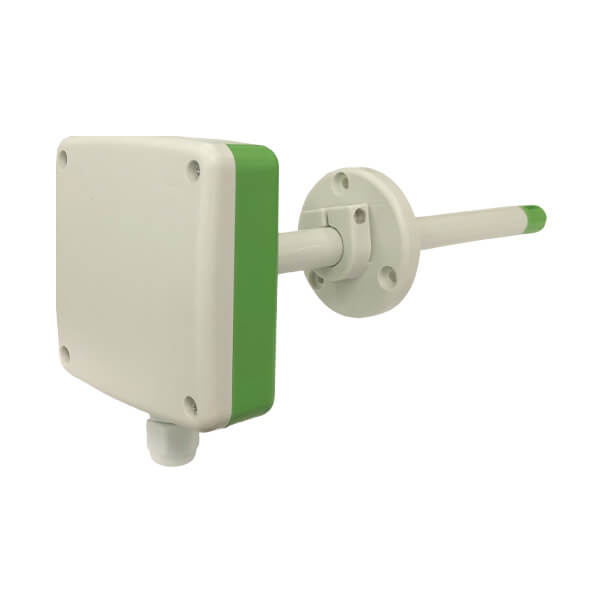
An air flow transmitter measures the speed of air moving through a duct, cleanroom, or exhaust system. Equipped with a built-in high-precision wind speed measurement unit, it is highly responsive and can accurately measure minute wind speeds with minimal drift. It can calculate real-time airflow based on the input duct cross-sectional area.
- Model: RS-RFS-*-DC-N01-1-T
- MOQ: 1 PCS
- Delivery date: within 24 hours
- Price: $53
About - Air Flow Transmitter
The air flow transmitter can monitor the air volume of a filtered air intake system in real time, ensuring that the air volume meets engineering protection standards and air quality requirements. Designed for duct velocity measurement, it can be widely used in core components of civil defense projects such as filtered ventilation and clean ventilation. It is also suitable for harsh environments such as ventilation ducts and fume extraction ducts, and can be put into routine operation without complex commissioning.
Features
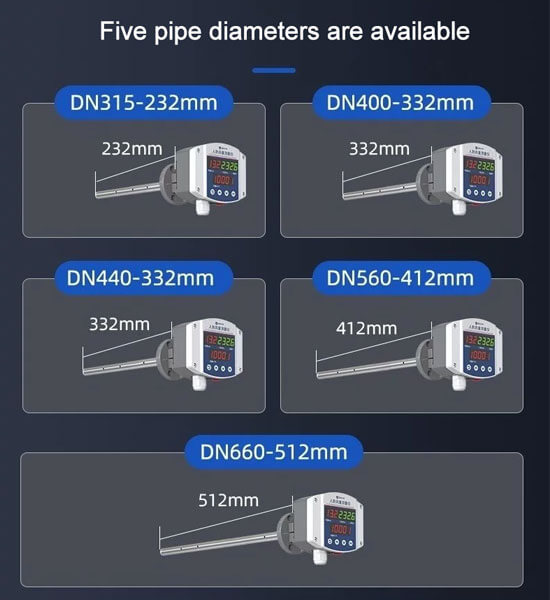
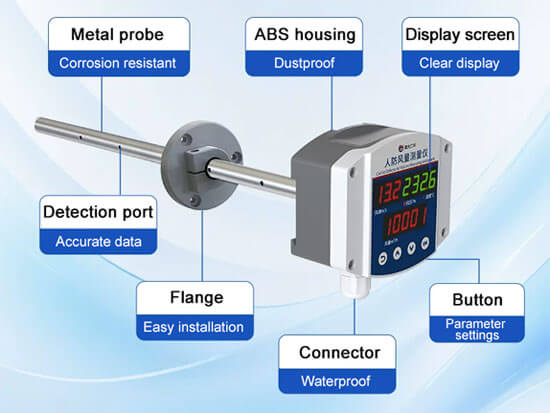
Our air flow transmitter features a built-in high-precision air velocity measurement unit that is highly responsive and capable of accurately measuring even minute air velocities. It offers excellent stability, minimal drift, and high accuracy, making it suitable for applications such as ventilation ducts and exhaust ducts. Utilizing our company’s proprietary full-range secondary calibration method, it delivers excellent linearity and high accuracy. The probe utilizes multi-point measurement for greater accuracy. Our air flow transmitter calculates real-time air volume values based on the configured duct cross-sectional area. It features a through-hole flange mounting design paired with high quality silicone sealing ring, ensuring an airtight seal and long-lasting durability. The transmitter incorporates an anti-interference circuit design and is powered by 10~30 V DC for greater convenience. The measurement density is configurable and can be adjusted based on actual on-site conditions, ensuring greater measurement precision. To meet the needs of various applications, we offer a range of models compatible with duct sizes including DN315 mm, DN400 mm, DN440 mm, DN560 mm, and DN660 mm.
Parameters
| Power supply | 10-30V DC |
|---|---|
| Measuring medium | Air, nitrogen, oil fumes, etc. |
| Operating environment | -40℃~+80℃, ≦95%RH |
| Wind speed range | 0~30m/s |
| Accuracy | ±2%FS |
| Wind pressure range | 0-500Pa |
| Wind speed resolution | 0.1m/s |
| Protection rating | IP65 |
| Long-term stability | ≤0.1m/s/year |
| Output signal | RS485 (Modbus-RTU Protocol) |
| Parameter settings | Can be set via buttons or 485 commands |
Installation and Wiring
This air flow transmitter must be installed on the side or bottom of the duct; it can not be installed from top to bottom.
To install, first drill a 20mm-diameter hole in the ventilation duct, insert the probe into the hole, and adjust the orientation of the air flow transmitter so that the measurement opening on the probe aligns with the direction of the airflow. You can adjust the height of the device by repositioning the flange. Secure the device by tightening the three screws on the flange to complete the installation.
For wiring, connect the brown wire to the positive power terminal, the black wire to the negative power terminal, the yellow wire to 485-A, and the blue wire to 485-B.
Advantages
- Our air flow transmitter can measure a variety of media, including air, nitrogen, and cooking fume exhaust, covering the types of gases commonly found in civil defense project ventilation systems. They are also suitable for industrial ventilation, cooking fume treatment, and other applications, making them widely applicable.
- The measurement accuracy is ±2% FS. Based on actual calibration tests, under standard operating conditions (25°C, standard airflow velocity), the measurement error is maintained within the specified range. The data accuracy meets the requirements for ventilation monitoring in civil defense projects, providing reliable data support for ventilation system control and compliance testing.
- The operating temperature range is -40°C~+80°C, with relative humidity ≤95% RH. Whether in extremely cold regions or areas with high temperatures and humidity, the air flow transmitter operates stably without performance degradation or malfunctions caused by changes in temperature or humidity. Field tests confirmed that when the transmitter was placed in environments ranging from -40°C to +80°C and operated continuously for 72 hours, the device functioned normally, with stable measurement data and no instances of downtime or data loss.
- The air velocity range is 0-30 m/s, with a resolution of 0.1 m/s. It accurately captures both low airflow velocities during clean ventilation and medium-to-high airflow velocities during filtered ventilation, with no measurement blind spots.
- The air pressure range is 0-500 Pa. It can simultaneously measure air pressure data within ducts to assist in assessing the operational status of the ventilation system, providing reference data for fan control and duct maintenance.
- The protection rating is IP65. Field tests have shown that the air flow transmitter effectively resists dust ingress and can withstand moderate rain without the need for additional protective devices.
- It uses standard communication protocols and supports remote data transmission, allowing for easy integration into automated monitoring systems for civil defense projects. The communication range can exceed 1,000 meters (adjustable based on the material of the communication line). Data transmission is stable, with no packet loss or delays.
- Outstanding interference resistance, suitable for complex electromagnetic environments. Construction sites typically contain various types of electrical equipment, such as variable-frequency drives and control cabinets, which can easily generate strong electromagnetic interference. Our air flow transmitter features an interference-resistant circuit design that can withstand strong electromagnetic interference from on-site variable-frequency drives and other sources, ensuring stable operation even in complex electromagnetic environments and preventing interference with measurement data.
Related Blogs
Table of Contents Before the advent of AIoT, traditional monitoring systems primarily relied on a “passive data collection + manual judgment” model. This process
Table of Contents “IoT devices” is one of the most familiar terms in the tech world today. From the smartwatch on your wrist to
Table of Contents A pressure transducer is a device that measures the pressure of a gas or liquid and converts it into an electrical
Table of Contents Have you ever faced unexpected equipment failures that forced production to halt? Or struggled with high repair costs and unplanned downtime?
Table of Contents Did you know that most people spend about 90% of their time indoors? While we often worry about outdoor air pollution,
Table of Contents What is Heat Flux? Heat flux, also known as heat flow density, refers to the amount of heat transferred per unit
Table of Contents In the fields of electrical engineering and electronics, we frequently encounter various analog signals such as voltage and current. In nature,
Table of Contents What are wireless sensors? Wireless sensors are miniature electronic devices that integrate sensing, data processing, and wireless communication functions. They are
Table of Contents The commonly used communication method for data acquisition and control is RS-485. RS-485 is a general communication standard. It can not